Czech Cuisine — A Short History of Dumplings, Beer and Hearty Food
Most visitors arrive in Prague expecting heavy, one-note food. Meat and potatoes, maybe a goulash, probably nothing worth writing home about. That's the reputation Czech cuisine has carried for decades — and it's about half right.
The truth is more interesting. Czech food is a survival cuisine shaped by geography, centuries of foreign rule, and a national stubbornness about doing things a certain way. When our guests sit down to their first plate of svíčková — beef sirloin in a creamy root-vegetable sauce with cranberries and bread dumplings — the reaction is almost always the same: "This is nothing like what I expected."
The Foundations — Dumplings, Sauces, Meat
Czech cooking starts with three elements: knedlíky (dumplings), sauce, and meat. This combination has been the backbone of Bohemian meals for centuries, and it's still what most Czechs eat for Sunday lunch.
The dumplings are the most distinctive part. They're not the stuffed pockets you find in Polish or Italian cooking. Czech knedlíky are sliced from a steamed loaf — firm, absorbent, designed to soak up sauce. Bread dumplings (houskové knedlíky) use day-old bread in the dough. Potato dumplings (bramborové knedlíky) are denser and pair with fattier meats. There are also plum dumplings (švestkové knedlíky), which are stuffed with fruit and served as a main course or dessert — visitors never expect that.
The sauces matter as much as the meat. Svíčková na smetaně — that slow-cooked root-vegetable cream sauce — takes hours to prepare properly. Dill sauce (koprová omáčka) with boiled beef is a weekday staple. Tomato sauce, mushroom sauce, onion sauce — each has its place in the rotation. Czechs grew up eating these, and they have strong opinions about whose grandmother made the best version.
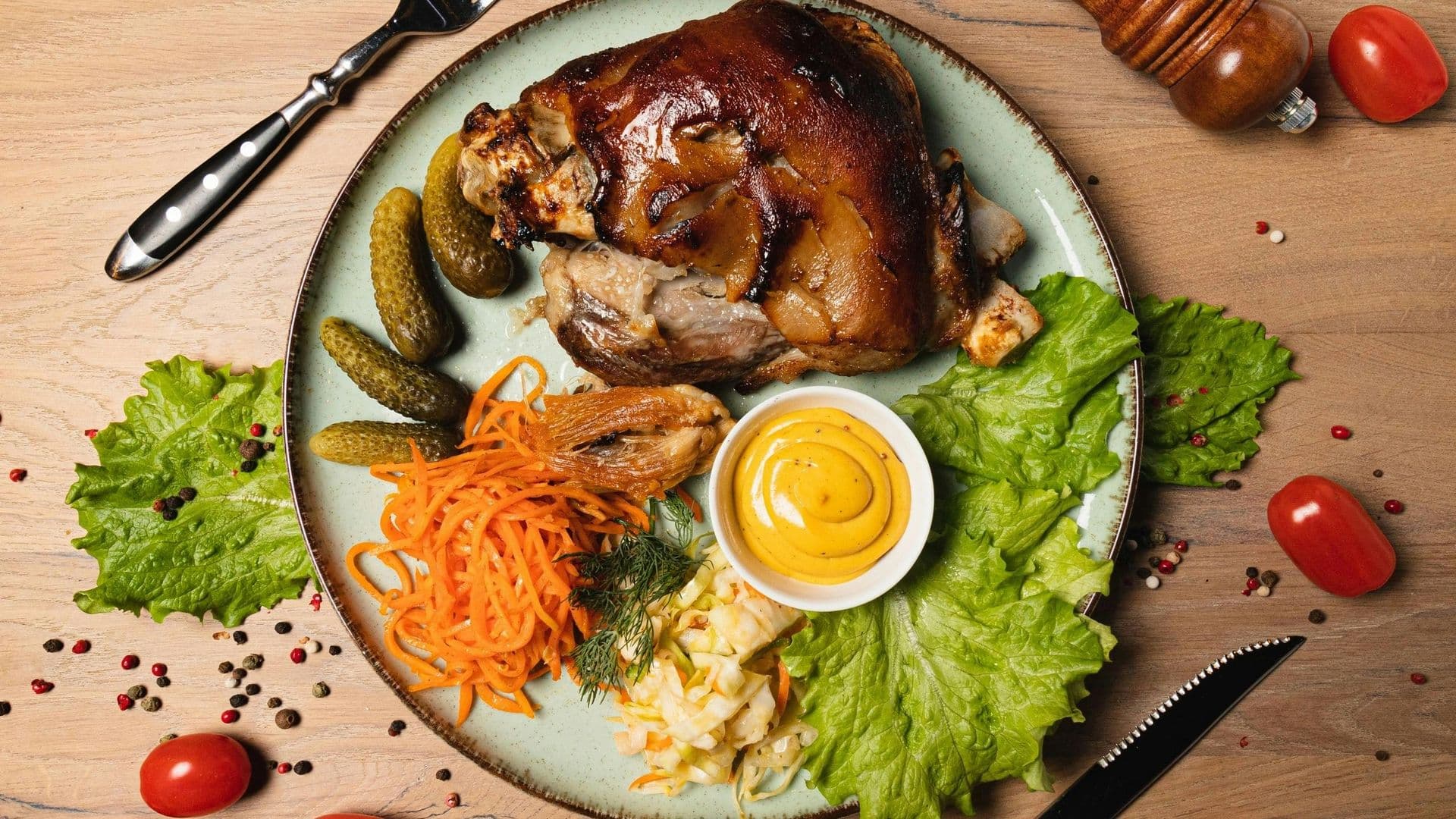
The meat itself is straightforward: pork dominates, followed by beef and duck. Roast pork with dumplings and sauerkraut (vepřo-knedlo-zelo) is the dish Czechs call their national meal. The sauerkraut here is milder than the German version — slightly sweet, often cooked with caraway seeds.
Beer — The National Drink
The Czech Republic drinks more beer per person than any country on earth. This isn't a recent trend — it's been true for decades, and the tradition stretches back centuries. Beer here isn't a luxury or a hobby. It's a basic food group.
Czech beer culture revolves around lagers — pale, golden, bottom-fermented, and served with more foam than most foreigners expect. That thick head of foam is intentional. Czech bartenders take pride in the pour, and asking them to reduce the foam is roughly equivalent to asking an Italian chef to overcook the pasta.
The brewing tradition took shape in Bohemia during the Middle Ages. The town of Plzeň created the world's first pale lager in 1842 — Pilsner Urquell — and that single beer essentially defined the style that most of the world now drinks. Before Plzeň, most beer was dark, cloudy, and unpredictable. The Czech innovation was clarity, consistency, and a clean hop bitterness that hadn't existed before.
But Plzeň is only part of the story. Every region in Bohemia and Moravia had its own breweries, and the tradition of local brewing survived even when large-scale production took over. Today, the Czech Republic has hundreds of small breweries — minipivovar culture has boomed since the 2000s. Our guests on the Kozel Brewery day trip are often surprised that Czech beer goes far beyond the international brands they know. The unfiltered tank beer (tankové pivo) served at good pubs tastes nothing like bottled exports.
From Medieval Feasts to Habsburg Influence
Go back far enough and Czech food was simple peasant cooking — grains, root vegetables, preserved meats, whatever grew in the short growing season. The medieval period added structure. Feast culture was real — long tables, roasted game, bread, and plenty of mead and beer.
You can still experience something close to this at a medieval feast evening in Prague, where the food is served on wooden boards and you eat with your hands. It's entertainment, not a history lecture, but the spirit of communal eating with hearty portions and free-flowing drinks is genuinely rooted in how Bohemians ate for centuries.
The real transformation came under Habsburg rule. From the 16th century onward, Austrian and Central European influences reshaped Czech cooking. Wiener schnitzel became řízek. Austrian pastry traditions merged with local baking — the result is a Czech dessert culture far richer than the country's "heavy food" reputation suggests. Strudel, fruit dumplings, koláče (round pastries with sweet fillings), and buchty (filled buns) all have roots in this period.
The Habsburgs also formalized dining. Czech cuisine moved from one-pot peasant meals to structured courses with soup, main dish, and dessert. The famous Czech habit of eating a hot lunch as the main meal — rather than dinner — dates to this era and persists today. When we bring guests to lunch spots in Vinohrady or Žižkov, we always explain that the midday "menu" (a fixed lunch special for 150-200 CZK, as of 2026) is how most working Czechs actually eat.
The Communist Era and Its Culinary Legacy
Forty years of communism did more damage to Czech food culture than any previous period. State-run restaurants, centralized supply chains, and limited ingredients flattened regional variety into a narrow set of institutional dishes. Menus across the country became interchangeable. Innovation disappeared.
The canteen culture (jídelna) that many Czechs remember from childhood served food that was nutritionally adequate but rarely inspiring. Fried cheese (smažený sýr) — a breaded and deep-fried block of Edam — became a ubiquitous cheap meal. It's still on most pub menus today, and visitors either love it or find it baffling. We've watched guests take their first bite with deep suspicion, then quietly order a second portion.
The positive legacy, if there is one, is that communism preserved certain traditional recipes by freezing them in time. Dishes that might have evolved or disappeared in a market economy survived because state canteens kept cooking them decade after decade. Svíčková, bramboračka (potato soup), and kulajda (a creamy dill-and-mushroom soup with a poached egg) remained in regular rotation.
Czech Food Today
The post-1989 food revolution has been slow but real. Prague's restaurant scene in the 1990s was grim — bad service, limited menus, everything geared toward tourists. That's changed substantially.
Today, a new generation of Czech chefs is doing something interesting: returning to traditional recipes but applying modern technique and sourcing. Farm-to-table concepts, which sound trendy, are actually a return to how Czechs ate before industrialization. Seasonal cooking — heavy soups and roasts in winter, fresh herbs and lighter dishes in summer — is back.
The street food scene has evolved too. Trdelník — the rolled chimney cake you see at every tourist corner — is actually a Slovak import that became associated with Prague only in the last 20 years. Czechs find it amusing that tourists treat it as traditional Czech food. The more authentic street options are klobása (grilled sausage) from a stand, or bramborák (a crispy potato pancake) that you eat standing up, ideally in cold weather when the warmth matters.
Our guides know the best local spots — far from the tourist traps. Learn more about our team.
One seasonal detail worth knowing: Czech food changes noticeably with the calendar. Spring brings fresh herbs and lighter soups. Summer means grilled meats and tatarák (steak tartare, served raw on toast — a Czech pub staple). Autumn is mushroom season, and Czechs take wild mushroom foraging seriously — families have secret forest spots they've used for generations. Winter brings heavy stews, carp at Christmas, and svařák (mulled wine) at market stalls.
What to Try First
If you're visiting Prague and want to taste Czech food as it's meant to be eaten, here's what we recommend to guests — in order:
- Svíčková na smetaně — the ultimate Czech dish. Marinated beef sirloin, creamy root-vegetable sauce, bread dumplings, cranberries, and a slice of lemon. Order this at a traditional restaurant in Malá Strana or Staré Město and judge Czech cuisine by its best.
- Vepřo-knedlo-zelo — roast pork, dumplings, sauerkraut. The national dish. Simple but satisfying, and the quality varies enormously between places. The sauerkraut should be slightly sweet, not sour.
- Kulajda — thick, creamy soup with dill, potatoes, mushrooms, and a poached egg. This is the soup that surprises people. Look for it in pubs around Karlín or Letná where locals eat lunch.
- Bramborák — a crispy potato pancake, often with garlic and marjoram. Best in winter from a street vendor.
- Czech beer on tap — specifically, ask for a světlý ležák (pale lager) from the tap, not from a bottle. The difference is significant. Any decent pub in Prague serves this well.
Experience It With a Private Guide
Food is the part of Czech culture that most visitors experience only by accident — wandering into a random restaurant in the tourist zone, ordering badly translated menu items, and leaving with the impression that Czech food is forgettable. It doesn't have to work that way.
On our medieval feast evening, you get a taste of how Bohemians have eaten for centuries — long communal tables, roasted meats, unlimited beer and mead, all in a candlelit medieval cellar. It's theatrical, it's loud, and the food is far better than you'd expect. And our Kozel Brewery day trip takes you outside Prague to see how Czech beer is brewed at one of Bohemia's oldest breweries — with tastings straight from the source.
Every tour is private — exclusively yours, with your own guide. We tailor the pace, the stops, and the food recommendations to what you actually want to eat. Browse all our private tours and let us know what interests you most.
Pilsner Urquell is more interesting in the cellars than in the bottle, and a guide makes the difference between a brewery walk and the full 1842 story. See our private Pilsner Urquell brewery tour from Prague for the source.
Frequently Asked Questions
What is the most traditional Czech dish?
Svíčková na smetaně — marinated beef sirloin with a creamy root-vegetable sauce, bread dumplings, and cranberries. It's the dish Czechs are most particular about, and every family claims theirs is the best version.
Is Czech food only meat and dumplings?
No. While meat dishes dominate traditional menus, Czech cuisine includes excellent soups (kulajda, bramboračka, česnečka), fresh salads in summer, mushroom dishes in autumn, and a rich pastry tradition influenced by Austrian baking. Vegetarian options are increasingly available in Prague restaurants.
What is trdelnik — is it really Czech?
Trdelník is a sweet chimney cake now sold at nearly every tourist spot in Prague. It's actually of Slovak and Hungarian origin and became popular in Prague only in the 2000s. Czechs don't consider it a traditional Czech food, though it tastes good enough.
What Czech beer should I try first?
Start with a světlý ležák (pale lager) on tap — Pilsner Urquell or Budvar are widely available and well-made. For something more interesting, look for tankové pivo (tank beer) at a good pub — it's unpasteurized, unfiltered, and has a freshness that bottled beer can't match.
Where is the best area in Prague for Czech food?
Avoid the restaurants directly on Old Town Square — they charge tourist prices for mediocre food. Walk ten minutes into Vinohrady, Žižkov, Karlín, or Holešovice for the same dishes at local quality and local prices. Lunchtime "daily menus" (denní menu) at neighbourhood pubs are where Czechs eat best.
You May Also Like
Want to see Prague for yourself?
Try our medieval dinner experience