What to Eat in Prague — Czech Food You Actually Want to Try
Czech cuisine has a reputation problem. Visitors arrive expecting heavy, bland, meat-and-potatoes fare — and some of them leave thinking that is exactly what they got. But the visitors who ate well in Prague usually had one advantage: someone told them what to order.
The food here is not subtle in the way French or Japanese food is subtle. It is direct, generous, and built for satisfaction. When a dish works — a properly made svíčková, a bowl of kulajda on a cold afternoon, a golden bramborák straight from the pan — it works completely. The problem is that tourist-trap menus across the Old Town serve approximations of these dishes at inflated prices, which gives Czech food a worse name than it deserves.
We take our guests to places where the food is genuine, and we tell them what to order. This guide covers the second part — the dishes themselves, what makes them good, and what to look for on a menu. For where to find them, see our separate guide to where to eat in Prague.
Svíčková na Smetaně — The National Dish
If Czech cuisine had a single representative dish, svíčková would win by a wide margin. It is beef sirloin marinated and slow-cooked until tender, served in a thick cream sauce made from root vegetables (carrot, celeriac, parsnip, onion), topped with a dollop of cranberry sauce and a slice of lemon. It comes with bread dumplings — houskové knedlíky — which are sliced rounds of steamed bread dough, perfect for soaking up the sauce.
The dish takes hours to prepare properly. The sauce should be smooth, slightly sweet from the vegetables, and rich without being heavy. The beef should fall apart under a fork.
The cranberry sauce is not decoration — it cuts through the cream and adds a necessary tartness. Eat everything together: meat, sauce, dumpling, cranberry, lemon squeeze. That is the intended experience.
What to watch for: tourist restaurants sometimes serve svíčková with thin, watery sauce and dry meat. If the sauce does not coat the back of a spoon, it has been rushed. A good svíčková costs 280–380 CZK in a local restaurant (as of 2026) — under 200 CZK signals compromised quality, over 500 CZK signals a tourist trap.
Insider detail: Czechs argue about svíčková the way Italians argue about carbonara. Every family has a recipe, every grandmother's version is the definitive one, and suggesting that one restaurant makes it better than another is a reliable way to start a debate. The cranberry sauce — brusinka — should be made from real lingonberries, not from a jar of generic red jam. You can tell the difference.
Vepřové Koleno — Roast Pork Knee
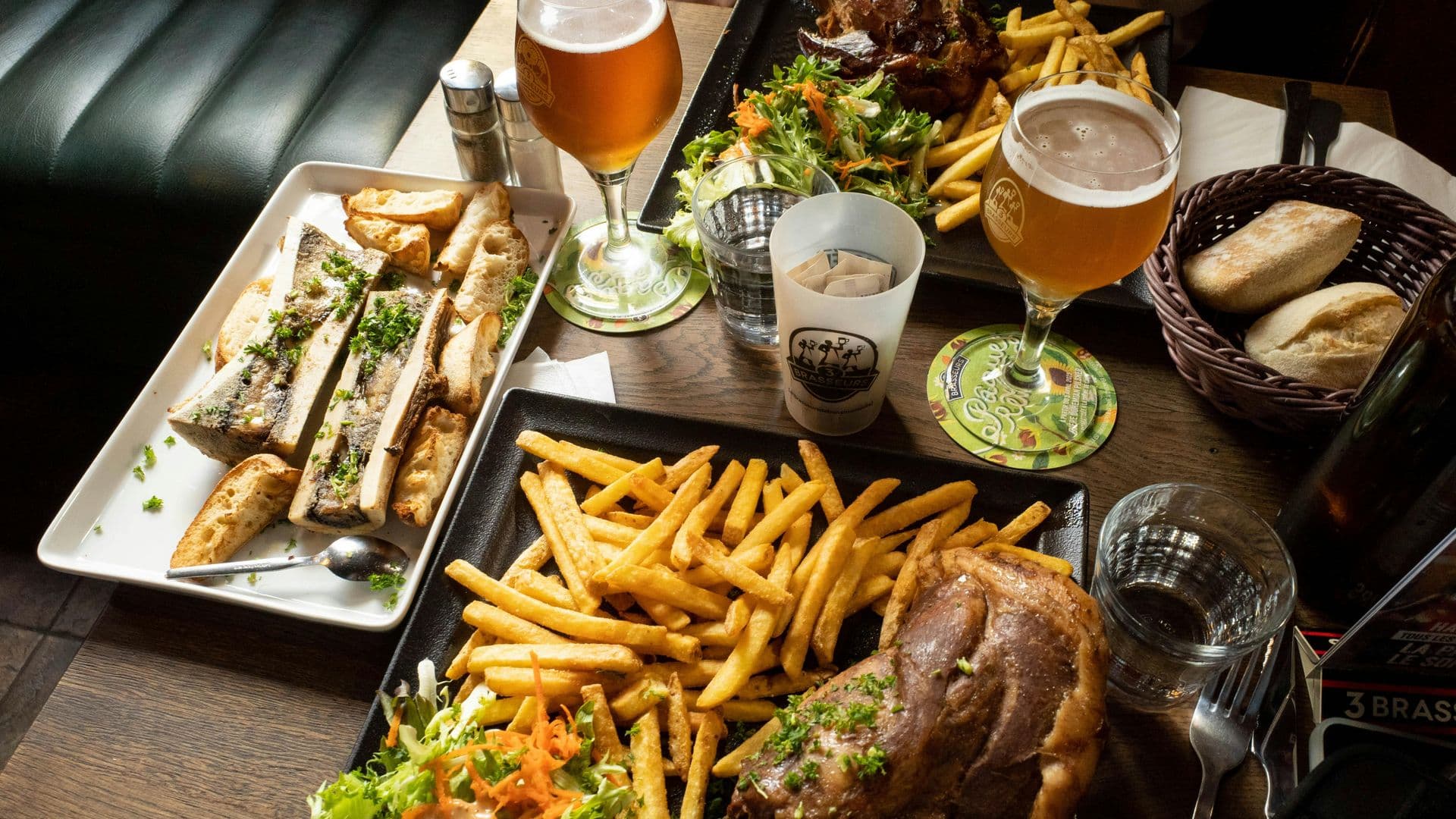
This is the dish that makes Instagram before any other Czech food. A whole pork knee — bone in, skin on — roasted or braised until the meat is falling-off-the-bone tender and the skin is crackling-crisp. It arrives on a wooden board with mustard, horseradish, vegetables in brine, and bread — enormous and meant to be shared.
Koleno is a communal dish — two people can comfortably share one, three people easily. Ordering one per person is ambitious and will result in leftovers or regret. The meat should be moist and rich, the skin audibly crunchy, and the mustard sharp enough to balance the richness.
What to watch for: some places pre-cook the knee and finish it for presentation, which results in dry meat under impressive-looking skin. A properly done koleno takes 3–4 hours of slow roasting. Ask if it is made fresh — the best places sell out by evening. Expect to pay 350–480 CZK for a whole knee (as of 2026).
The medieval dinner at U Pavouka Tavern serves a version of roast meat alongside other traditional dishes in a setting that makes the meal feel like an event — candlelit vaulted cellar, live entertainment, five courses.
Kulajda — The Soup You Did Not Know You Needed
Czech soups are serious. They are not starters — they are a course, substantial enough that many Czechs eat soup as a light lunch. Kulajda is the standout: a creamy, dill-heavy potato soup with mushrooms and a poached egg floating on top, finished with a splash of vinegar that gives the whole thing a gentle tang.
The combination sounds unusual, but it works perfectly. The earthiness of the mushrooms, the freshness of the dill, the richness of the cream, and the vinegar's sharpness create something that is simultaneously comforting and interesting. Break the poached egg into the soup and let the yolk enrich the broth. A bowl of kulajda on a cold Prague afternoon is one of those food moments that stays with you.
Insider detail: kulajda is a South Bohemian dish originally, and older recipes use wild mushrooms foraged from the forests — a tradition that is still alive in the Czech Republic, where mushroom hunting is practically a national sport. If a menu specifies houby z lesa (forest mushrooms), that version is worth ordering.
Other soups worth trying: česnečka (garlic soup — simple, punchy, often with croutons and cheese), bramboračka (potato soup, sometimes served in a bread bowl), and zelňačka (sauerkraut soup with sausage and cream — a winter staple).
Bramboráky — Czech Potato Pancakes
Bramboráky are grated potato pancakes, seasoned with garlic and marjoram, fried until golden and crispy on the outside, soft inside. They are street food, beer-garden food, grandmother food. Simple, satisfying, and almost impossible to stop eating once you start.
The marjoram is what makes them Czech rather than generic. That herb — dried, aromatic, slightly floral — runs through Czech cooking the way basil runs through Italian. In a bramborák, it combines with the garlic and the caramelized potato edges to create a flavour that is distinctly Central European.
You will find bramboráky at beer gardens, market stalls, and traditional restaurants. They cost 60–120 CZK for a plate of two or three (as of 2026). They are best eaten immediately — they lose their crunch within minutes. Sour cream on the side is optional but recommended.
Insider detail: at Prague's Christmas and Easter markets, bramboráky vendors fry them to order in huge pans. The market versions are thicker and more rustic than restaurant versions, and eating one while standing in the cold with a cup of svařák (mulled wine) is a quintessential Prague moment.
Smažený Sýr — The Fried Cheese
Smažený sýr — fried cheese — is the Czech answer to a question nobody asked but everyone needed answered: what happens when you bread and deep-fry a thick slab of Edam or Hermelín cheese and serve it with tartar sauce and fries? The answer is: something wonderful.
This is not a gourmet dish. It is pub food, student food, Friday-night food. A slab of cheese coated in flour, egg, and breadcrumbs, fried until the coating is golden and the inside is molten. It is served with a ramekin of tartar sauce (Czech tartar sauce is tangier and less sweet than many Western versions) and either fries or boiled potatoes.
Smažený sýr appears on almost every traditional Czech menu and costs 180–260 CZK (as of 2026). It is one of the most popular dishes in the country. Vegetarians who struggle with meat-heavy Czech menus will find it reliable and satisfying, though it is obviously not health food.
What to watch for: the cheese should be thick enough — at least 1.5 cm — that the inside melts properly while the outside crisps. Thin slices cook too fast and stay rubbery. The tartar sauce should be house-made; the bottled versions taste industrial.
Trdelník — The Complicated Truth
We should address the trdelník. The chimney-shaped pastry rolled in cinnamon sugar and sold from every other street corner in the Old Town is presented as a "traditional Czech treat." It is not. Trdelník is originally Slovak and Hungarian, and its current ubiquity in Prague is a tourism phenomenon that dates to the early 2000s, not to medieval Bohemia.
That said — is it good? The plain version, fresh from the rotating spit, warm and slightly crispy with cinnamon sugar, is perfectly pleasant. It is dough, sugar, and warmth. There is nothing wrong with enjoying one.
What has happened to trdelník in recent years, however, is aggressive. Versions filled with ice cream, Nutella, whipped cream, and fruit have turned it into an Instagram prop that costs 150–200 CZK and delivers mostly sugar and regret. If you want one, get the plain version from a vendor who is actively baking them — not from a stand with pre-made ones sitting under a heat lamp.
Insider detail: if you want a genuinely traditional Czech pastry, look for koláče (round pastries filled with tvaroh/quark, poppy seed, or plum jam) at a bakery rather than a tourist stand. Buchty (filled sweet buns) and vdolky (small fried pastries with jam and cream) are other authentic options that most visitors never encounter because they do not have Instagram accounts.
Czech Desserts Worth Finding
Beyond the trdelník conversation, Czech desserts are substantial, unfussy, and built for comfort.
Palačinky — thin Czech crepes filled with jam (strawberry or apricot), tvaroh (fresh quark cheese), chocolate, or fruit, then dusted with powdered sugar. Every Czech child grows up eating these, and they appear on most restaurant menus as a dessert or a light meal.
Ovocné knedlíky — fruit dumplings — are boiled dough wrapped around whole strawberries, plums, or apricots, served with melted butter, tvaroh, and powdered sugar. They are a main course in many Czech households, not a dessert, and ordering them as your entire meal is completely acceptable. Plum dumplings (švestkové knedlíky) in late summer and autumn, when the plums are in season, are the peak version.
Medovník — honey cake — is layers of thin honey-infused pastry with cream filling, pressed together and chilled. It is dense, rich, and mildly addictive. Czech bakeries and cafes serve it by the slice, and it pairs perfectly with coffee.
Our guides know the best local spots — far from the tourist traps. Learn more about our team.
Insider detail: trubičky — small rolled wafer tubes filled with whipped cream or meringue — appear at markets and in bakeries. They are delicate, inexpensive (30–50 CZK), and disappear from your hand faster than seems possible. Locals buy them by the bag.
How to Read a Czech Menu
A few translations that help:
- Polévky — soups
- Předkrmy — starters
- Hlavní jídla — main courses
- Přílohy — side dishes (often ordered separately)
- Dezerty — desserts
- Nápoje — drinks
- Denní menu — daily lunch menu (weekdays, usually 11:00–14:00, significantly cheaper than the regular menu — 150–200 CZK for soup + main course)
Side dishes in Czech restaurants are often not included with the main course. If your svíčková does not come with dumplings listed in the description, you may need to order knedlíky separately from the přílohy section. This catches visitors off guard — ask your server.
The denní menu (daily menu) deserves special attention. Most local restaurants offer a weekday lunch special that includes soup and a main course for a fraction of the regular menu price. The food is typically home-style Czech cooking — exactly the kind of dishes described in this guide — and the clientele is office workers and tradespeople, which is a reliable quality indicator.
Taste It on a Tour
Czech food makes more sense with context — the history, the ingredients, the regional traditions that shaped each dish. On our Kozel Brewery tour, the food served alongside the beer is traditional Czech pub fare, the kind of cooking that pairs with lager the way it was designed to. For an evening built around food and atmosphere, the medieval dinner at U Pavouka Tavern serves a five-course feast of roasted meats, soups, and desserts in a candlelit Gothic cellar.
Exclusively yours, with your own guide — we set the pace around what interests you, and we always know what to order.
Browse all our private tours in Prague.
Where to Eat — Lokal Dlouhááá and Other Authentic Czech Restaurants
If you want to eat the way Prague locals do, Lokal Dlouhááá on Dlouhá street is where we send most of our guests. Run by the Ambiente restaurant group, it serves classic Czech dishes — svíčková, roasted duck, pork knee — made from quality ingredients and served in a space that feels like an upgraded beer hall. The tank Pilsner Urquell is consistently excellent.
Beyond Lokal, several other restaurants serve authentic Czech food without the tourist markup. Kantýna on Politických vězňů offers butcher-quality meats and excellent steaks in a no-frills setting. Eska in Karlín takes Czech ingredients and applies modern technique — their fermented dishes and freshly baked bread are worth the trip across the river. For a traditional pub atmosphere, U Fleků has been brewing its own dark lager since 1499, though it leans touristy — go for the beer and the courtyard, not the menu.
A practical tip: look for restaurants displaying a denní menu (daily menu) sign. These lunch specials, served on weekdays from roughly 11:00 to 14:00, offer a soup and main course for around 150–200 CZK (as of 2026) — the same food locals eat, at local prices.
Sapa — Prague's Vietnamese Quarter
Prague has the largest Vietnamese community in Europe outside of France — roughly 80,000-90,000 people — and the epicentre of Vietnamese life in the city is Sapa, a sprawling market and cultural hub in the southern district of Libuš. Named after the mountain town in northern Vietnam, it is part wholesale market, part food destination, and part living community. For food lovers willing to venture beyond the city centre, it is extraordinary.
What to eat at Sapa:
The food stalls inside the market halls serve some of the most authentic Vietnamese food in Europe. Phở here is made with beef bones simmered for 12+ hours — a different universe from the tourist-centre versions. Bánh mì sandwiches are assembled to order with pork pâté, pickled daikon, fresh coriander, and chilli. You will find bún chả (grilled pork with rice noodles), gỏi cuốn (fresh spring rolls), and dishes that rarely appear on Prague's downtown Vietnamese menus — like bún bò Huế (spicy beef noodle soup from central Vietnam) or chả cá (turmeric fish with dill).
A full meal at Sapa costs 100-180 CZK — half or less of what you would pay in the centre — and the flavours are startlingly good.
How to get there:
From central Prague, take the metro C (red line) to Kačerov, then switch to bus 113, 170, or 197 toward Libuš. The ride takes about 30 minutes total. The market complex is at Libušská 319/126. It looks industrial from outside — do not let that deter you.
Why it matters culturally:
The Vietnamese community in Czechia dates to the 1950s-1980s, when Czechoslovakia and North Vietnam had a bilateral labour and education agreement. Thousands of Vietnamese students and workers came to study and work. After 1989, many stayed and built businesses. Today, Vietnamese-Czechs are one of the country's most integrated immigrant communities — the "potraviny" (convenience stores) run by Vietnamese families are a fixture of every Prague neighbourhood.
Sapa itself is evolving. Newer restaurants with modern interiors have opened alongside the traditional stalls, and weekend food events draw Czech and international foodies from across the city. It is Prague at its most genuinely multicultural — and a side of the city most visitors never discover.
Explore More Prague Food Guides
Czech cuisine is only part of the story. Prague caters to every dietary need and craving, from late-night bites after a night out to specialist restaurants for gluten-free, halal, and kosher diners. These guides help you eat well no matter your preferences or the hour.
- Where to eat late at night in Prague -- best spots after midnight
- Gluten-free restaurants in Prague -- a coeliac-friendly guide
- Halal food in Prague -- where to find certified restaurants
- Kosher restaurants in Prague -- dining in the Jewish Quarter and beyond
- Best ice cream and gelato in Prague -- local favourites and artisan shops
- How to order beer in Prague -- etiquette, vocabulary, and tips
Frequently Asked Questions
What is the most popular Czech dish?
Svickova na smetane — beef sirloin in cream sauce with bread dumplings and cranberry sauce. It is considered the Czech national dish and appears on virtually every traditional restaurant menu. A properly made version takes hours to prepare and costs 280-380 CZK in a local restaurant (as of 2026).
Is Czech food just meat and potatoes?
Czech cuisine is meat-heavy, but there is more variety than the stereotype suggests. Soups like kulajda and cesnecka are standout dishes. Smazeny syr (fried cheese) is a popular vegetarian option. Fruit dumplings and palacinky (crepes) can work as full meals. The daily lunch menus at local restaurants often include lighter options.
Is trdelnik a traditional Czech food?
Trdelnik is originally Slovak and Hungarian. Its current popularity in Prague is a tourism phenomenon from the early 2000s. The plain version fresh from the spit is pleasant, but it is not a historic Czech treat. For authentic Czech pastries, look for kolace, buchty, or vdolky at bakeries.
How much does a typical Czech meal cost?
A main course at a local restaurant costs 200-380 CZK (as of 2026). The weekday daily lunch menu (denni menu) offers soup and a main for 150-200 CZK. Tourist-area restaurants charge 30-50% more for the same dishes. Beer is 50-80 CZK for a half-litre.
You May Also Like
Want to see Prague for yourself?
Try our medieval dinner experience