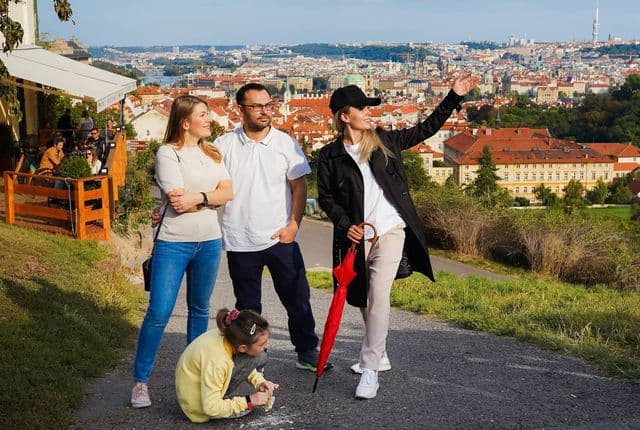
Prague Off the Beaten Path — 15 Places Tourists Miss
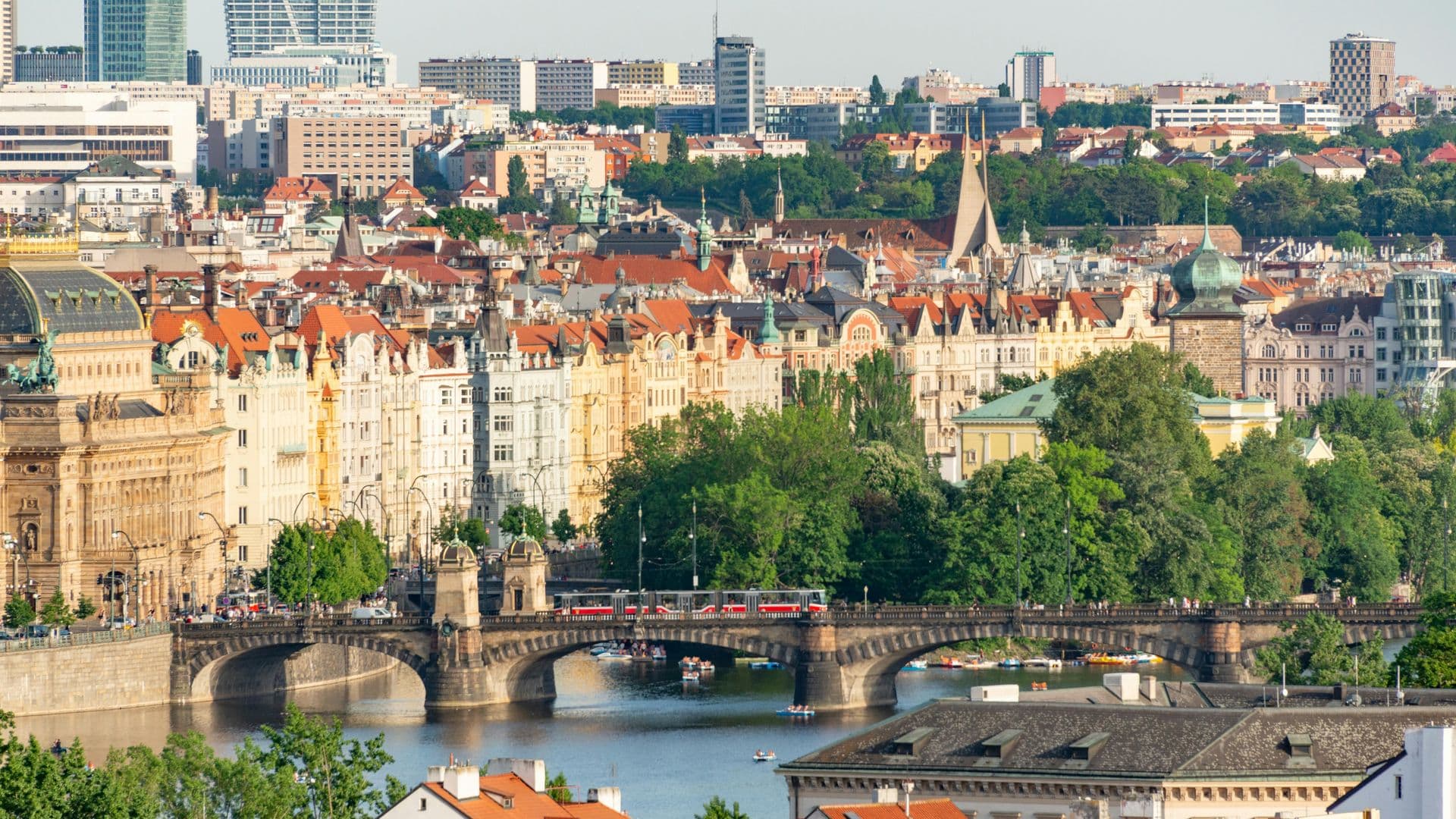
The tourist corridor in Prague runs from Old Town Square across Charles Bridge to Prague Castle and back. It's a magnificent route and everyone should walk it. But it covers about 5% of what makes Prague extraordinary. The other 95% — the neighbourhoods, parks, hidden courtyards, and local landmarks that don't appear on the standard itinerary — is where the city reveals its real character.
We guide visitors through Prague every day, and after years of watching the same crowds follow the same path, we know exactly where the rest of Prague hides in plain sight. These fifteen places are all within the city limits, most are free, and none of them appear on the typical day-trip checklist.
1. Vítkov Hill and the National Monument
A massive functionalist monument sits on a hill above Žižkov, crowned by one of the world's largest equestrian statues — Jan Žižka, the one-eyed Hussite military commander, on a horse that weighs 16.5 tonnes. The monument was built between the wars, repurposed as a communist mausoleum (Klement Gottwald's embalmed body lay here until 1962), and is now a museum about Czech 20th-century history.
The views from the terrace are extraordinary — the entire city spreads out below, from the castle to the modern towers on the Pankrác plain. On clear days, you can see the Krkonoše mountains 150 km to the northeast. Almost nobody comes here.
2. Vyšehrad Cemetery
Most visitors know Vyšehrad for the fortress walls and river views. Fewer make it to the cemetery, where the greatest figures of Czech culture are buried. Composers Bedřich Smetana and Antonín Dvořák lie here, alongside writer Karel Čapek (who coined the word "robot"), painter Alfons Mucha, and dozens of other national icons. The Slavín tomb — a communal memorial for the most distinguished — is at the cemetery's heart. It's a quiet, deeply moving place, and the Art Nouveau and Cubist gravestones are works of art in themselves. Our guided Vyšehrad cemetery walk covers the fortress, the Slavín, and the basilica in one visit.
3. Žižkov Television Tower (and the Crawling Babies)
The tallest structure in Prague (216 metres) is also its most controversial. The Žižkov TV Tower was built in the 1980s and is either a communist eyesore or a striking piece of brutalist design, depending on whom you ask. In 2000, sculptor David Černý added ten giant crawling babies to the exterior — faceless bronze figures that climb the tower's columns and have become an unlikely symbol of the city.
The observation deck at 93 metres offers a 360-degree panorama that includes angles you can't get anywhere else — particularly the view south toward Vyšehrad and the Vltava bends. There's a bar and a small restaurant at the top. Entry is around 350 CZK (as of 2026).
4. Riegrovy Sady Beer Garden
Letná gets the fame, but Riegrovy Sady in Vinohrady has a beer garden with equally impressive views and a more neighbourhood feel. The garden sits on the park's western edge with a panorama of Prague Castle, the Old Town skyline, and the Petřín lookout tower. In summer, they set up a large outdoor screen for football matches and films.
This is where Vinohrady residents go on weekday evenings — it's a ten-minute walk from the tourist zone but feels like a different city. A half-litre of Pilsner costs about 55 CZK, and the grilled sausages are better than anything near Old Town Square.
5. Nový Svět (New World)
A tiny cluster of streets behind Prague Castle that feels more like a Moravian village than a capital city. Nový Svět was a neighbourhood of goldsmiths and castle servants in the 17th century, and its small, colourful houses — some barely wider than a doorway — have barely changed since. The street Nový Svět itself has about twenty houses, a small gallery, and one of Prague's best wine bars (U Raka).
We often bring guests here after their castle visit. The contrast between the grand courtyards of Prague Castle and this intimate lane, just 200 metres away, is one of Prague's best surprises.
6. Stromovka — The Royal Game Reserve
Prague's largest park (95 hectares) was originally a royal hunting ground, established in the 13th century and opened to the public in 1804. Stromovka connects to Letná Park on the east and to Troja on the north, creating a green corridor that stretches several kilometres. The park has mature oak and beech forests, a large pond, and paths that are popular with joggers and cyclists.
What most people miss is the Šlechtova restaurace — a recently restored Renaissance building at the park's eastern end that serves Czech and international food. The building's history stretches back to the 16th century, and the renovation preserved original architectural details.
7. DOX Centre for Contemporary Art
In the Holešovice industrial district, DOX occupies a converted factory that now hosts rotating exhibitions of contemporary art, architecture, and design. The building itself is striking — raw industrial architecture with modern glass additions. On the roof sits the Gulliver airship, a 42-metre zeppelin-shaped structure that serves as a reading room and event space.
DOX is one of Prague's most intellectually stimulating spaces, and the exhibitions are often provocative. Entry is about 250 CZK. The cafe is good, and the neighbourhood (Holešovice) is worth exploring on foot — it's Prague's most rapidly evolving district.
8. Havlíčkovy Sady (Grébovka)
A 19th-century park in Vinohrady built around a neo-Renaissance villa and a working vineyard. Yes — there's a vineyard inside Prague city limits, on a south-facing slope that produces wine sold at the annual vinobraní (wine harvest) festival in September. The park also has a grotto with artificial waterfalls, a wooden pavilion, and views over the rooftops of Vinohrady.
Grébovka is where locals go for picnics, wine, and sunset watching. The vineyard slope catches evening light beautifully, and on warm nights, the park buzzes with groups sharing bottles on blankets.
9. Karlín — Prague's Foodie Neighbourhood
Karlín was devastated by the 2002 floods, and the rebuilding transformed it from a working-class area into Prague's most interesting food neighbourhood. The grid of 19th-century streets now houses some of the city's best restaurants, bakeries, and cafes — Eska (fermentation-focused modern Czech), Můj šálek kávy (speciality coffee), and Proti Proudu (craft beer).
Walk the main street, Sokolovská, and detour into the side streets. The architecture is Art Nouveau and industrial, the crowds are local, and the prices are lower than the Old Town. The Church of Saints Cyril and Methodius on Karlínské náměstí has a remarkable neo-Byzantine interior.
10. Divadlo Na zábradlí (Theatre on the Balustrade)
Václav Havel was the resident playwright here before he became president. This small theatre, tucked behind the National Theatre on Anenské náměstí, has been a centre of experimental Czech theatre since the 1950s. Performances are often in Czech, but even non-Czech speakers can find accessible shows, and the building's history makes a visit worthwhile. It was here that the absurdist tradition that shaped Czech literature and politics was nurtured.
11. Letenské sady (Letná Park) — The Other Side
Most visitors who reach Letná go to the beer garden and the Metronome. Walk west instead, past the main promenade, and you'll reach the quieter end of the park — old trees, winding paths, a small carousel, and benches with views that don't appear on Instagram. The transition from the Metronome's skateboard crowd to the silence of the western park takes about ten minutes.
A private guide makes all the difference when exploring this part of Prague.
12. Olšany Cemetery
Prague's largest cemetery (50+ hectares) is a place most tourists never consider visiting. But Olšany holds graves from the 17th century onward, including some of the most elaborate and eclectic funerary art in Central Europe — Art Nouveau mausoleums, Soviet-era monuments, and a Russian Orthodox section with onion-domed chapels. The cemetery also holds the grave of Franz Kafka's close friend, author Jan Neruda, and many figures from Czech cultural history.
13. Kasárna Karlín (Karlín Barracks)
A former military barracks complex transformed into a cultural centre. Kasárna Karlín hosts concerts, film screenings, art exhibitions, markets, and community events in a sprawling courtyard setting. The programming changes weekly — check their schedule online. The atmosphere is relaxed and local, with food trucks, a bar, and enough space to wander. This is the Prague that young Czechs actually inhabit.
14. Troja Château and Botanical Garden
Cross the river north of Holešovice and you reach Troja — a Baroque château from the 1690s with a monumental painted staircase, frescoed ceilings, and formal French gardens. Admission is about 150 CZK. Next door, Prague's Botanical Garden covers a hillside above the Vltava with greenhouses, a Japanese garden, and the Fata Morgana tropical greenhouse — one of the largest in Central Europe. The vineyard of St. Clare, within the botanical garden, produces wine and has river valley views.
15. Speculum Alchemiae
Hidden beneath a building in the Old Town, this underground laboratory was rediscovered during the 2002 floods when water broke through a wall and revealed rooms that had been sealed for centuries. The tunnels allegedly connect to Prague Castle and were used by alchemists working for Emperor Rudolf II in the 16th century. Tours are small-group, atmospheric, and genuinely surprising — even after guiding in Prague for years, this place still impresses us. Cash only, about 200 CZK admission.
Experience the Hidden Side of Prague
These fifteen places are the Prague we love showing our guests. Our All Prague in One Day private tour covers the essential landmarks, and we weave in hidden spots — quiet courtyards, local-favourite viewpoints, and streets that don't appear in guidebooks. Exclusively yours, with your own guide.
For something truly unexpected, our Underground Prague tour takes you beneath the streets into medieval cellars and Romanesque chambers that most visitors walk over without knowing they exist.
The Medieval Dinner Show at U Pavouka is another Prague experience that sits firmly off the beaten path — a Gothic cellar feast with fire dancers and sword swallowers.
Browse all our private tours of Prague and Czech Republic.
Prague's Hidden Courtyards and Passageways
One of Prague's best-kept architectural secrets is hiding in plain sight: a network of courtyards, covered passages, and arcades that cut through city blocks, linking streets in ways that aren't visible from outside. Locals use them daily as shortcuts. Visitors walk right past the entrances without noticing. Once you start looking for them, you'll find a quieter, more intimate Prague layered behind the main facades.
Lucerna Passage The most famous — and most eccentric — of Prague's passages runs through the Lucerna Palace on Wenceslas Square. Built by Václav Havel's grandfather in 1907-1921, the Art Nouveau arcade houses a cinema, a music club, shops, and David Černý's satirical sculpture of St. Wenceslas riding an upside-down dead horse. The passage connects Vodičkova and Štěpánská streets and offers one of the best shortcuts from Wenceslas Square to the Franciscan Garden. Most tourists stare at the square and never step inside.
Franciscan Garden (Františkánská zahrada) Speaking of which — the entrance to this hidden garden is through an inconspicuous archway off Jungmannovo náměstí, just steps from Wenceslas Square. One moment you're in urban traffic; the next you're in a walled Renaissance garden with rose beds, herb plantings, and benches under the apple trees. The Franciscan monks have maintained it since the 17th century. It's the most peaceful five minutes you'll spend in Nové Město.
Ungelt (Týn Courtyard) Tucked behind the Church of Our Lady before Týn on Old Town Square, Ungelt is an 11th-century merchants' courtyard that served as Prague's customs house and foreign traders' compound for 500 years. Today it's a quiet cobblestoned square with cafes and boutiques — and barely any foot traffic compared to the square just 30 metres away. Enter through the narrow passage beside the Týn Church's northern wall.
U Zlatého hada and the Old Town arcade network Between Old Town Square and the Estates Theatre, a web of passages runs through the medieval blocks — the U Zlatého hada (At the Golden Snake) passage, the Myslbek arcade, and the Černá Růže (Black Rose) passage. These interconnected routes let you walk from Celetná Street to Na Příkopě almost entirely under cover, passing through Renaissance and baroque courtyards.
We weave several of these passages into our Charles Bridge & Old Town and Hidden Prague tours — they're the kind of details that reward walking with a guide who knows which unmarked door to push open.
Explore More Hidden Prague
Once you step off the tourist trail, Prague rewards curiosity. These guides go deeper into the neighbourhoods, experiences, and perspectives that most visitors miss -- from a bohemian street in Vrsovice to ideas for a second visit and ways to give back to the city you are exploring.
- Vrsovice and Krymska Street -- Prague's most creative neighbourhood
- Second time in Prague -- what to do when you have already seen the highlights
- Volunteering and responsible tourism in Prague -- how to travel with purpose
Frequently Asked Questions
What is the most underrated area of Prague?
Vinohrady and Karlín are the two neighbourhoods that visitors most consistently wish they'd explored sooner. Both have excellent food, beautiful architecture, and almost no tourist crowds. Žižkov adds grit and nightlife to the mix.
Can you explore off-the-beaten-path Prague on your own?
Absolutely. Most of the places on this list are accessible by tram or metro, free or inexpensive, and don't require a guide. That said, a local guide adds context — the stories behind the buildings, the cultural significance, and the timing tricks that make visits better.
Is Prague safe outside the tourist centre?
Very safe. Neighbourhoods like Vinohrady, Karlín, Holešovice, and Žižkov are residential areas with low crime rates. Prague is one of the safest capital cities in Europe across all districts.
How many days do you need to explore beyond the main sights?
Two extra days beyond the standard two to three gives you time to explore two or three neighbourhoods and several hidden spots. A full week in Prague lets you discover the city at a local's pace.
You May Also Like
Want to see Prague for yourself?
Take our flagship Prague tour-6-640x430.jpg&w=3840&q=75)