Wheelchair Accessible Prague — What's Possible and What's Not
Prague is a medieval city built on hills, with cobblestone streets and buildings that predate the concept of accessibility. That is the honest starting point. But it is also a city that has made significant progress in the last two decades, and with the right information, wheelchair users and visitors with mobility limitations can experience far more than most guides suggest.
This article gives you the practical truth — which attractions work, which don't, where the elevators are, and how a private tour adapted to your needs changes what's possible.
Cobblestone Reality
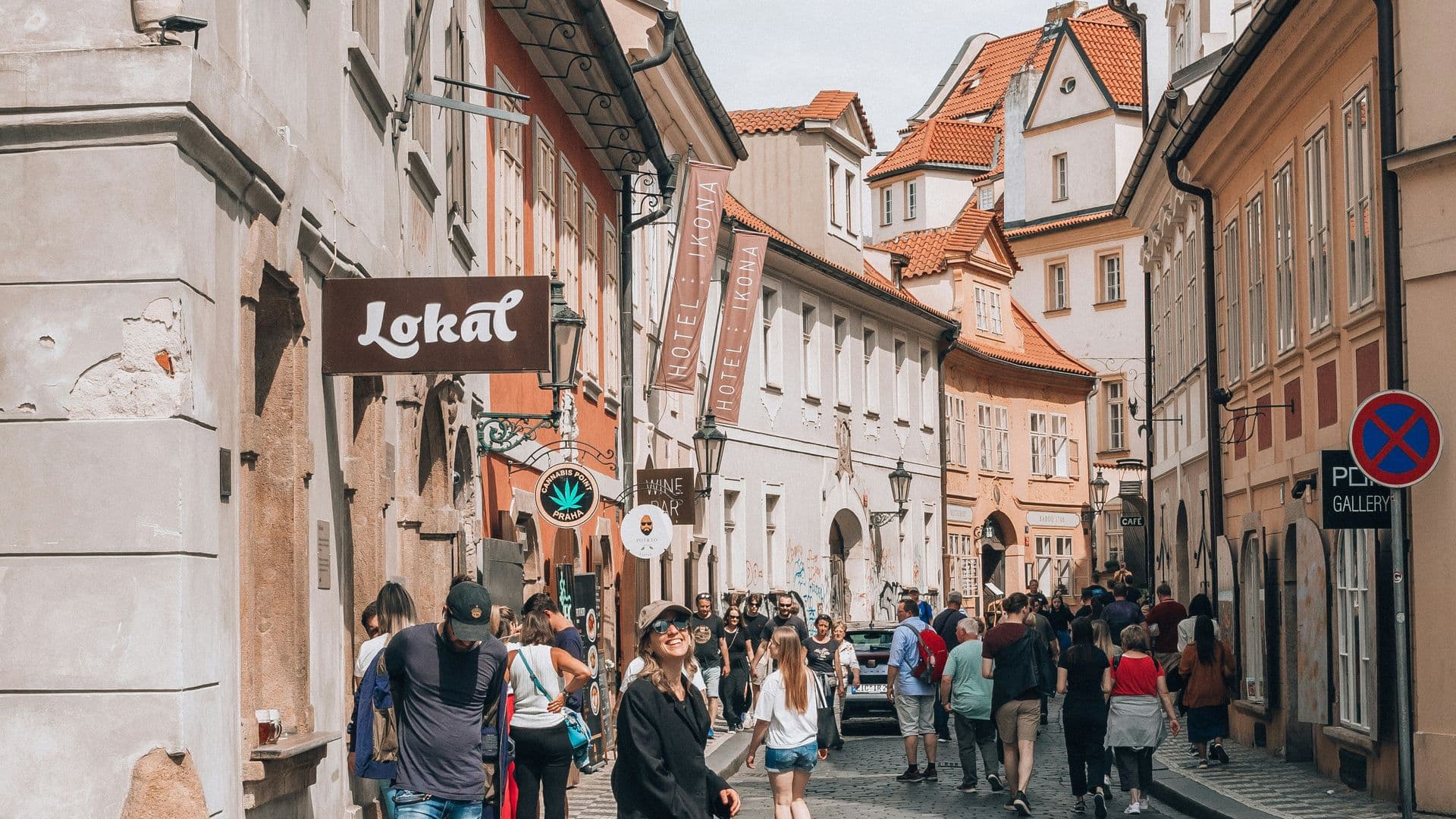
Prague's historic centre is a UNESCO World Heritage Site, and its streets are paved with cobblestones (technically, small stone setts). Some are smooth granite, worn flat by centuries of foot traffic. Others are rough, uneven, and challenging for manual wheelchair users without assistance.
The smoothest surfaces are on Old Town Square (Staroměstské náměstí), Wenceslas Square (Václavské náměstí) and the main pedestrian route along Na Příkopě connecting the two. These areas have been repaved with flat, relatively even stones. Power wheelchair users typically manage them without difficulty.
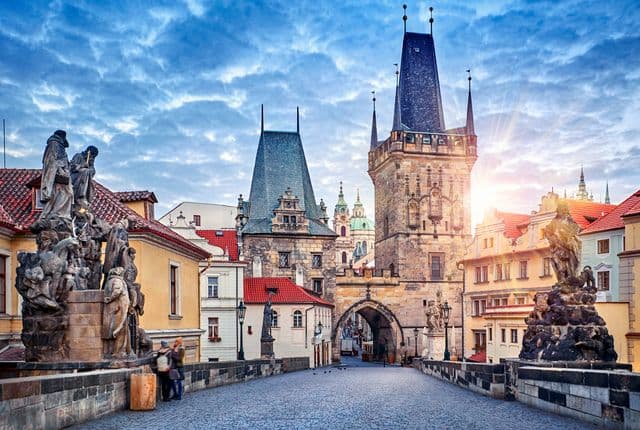
Charles Bridge (Karlův most) has an uneven stone surface and slight upward arch at the centre. It is technically passable in a wheelchair, but assistance helps on the slope sections. The bridge is flat at both ends where it meets the towers.
The streets of Malá Strana and the approaches to Prague Castle are steeper and rougher. Nerudova street — the classic walking route to the castle — has a gradient of roughly 12 percent and cobblestones that would challenge most wheelchair users. The accessible alternative is Tram 22.
Insider detail: The smoothest route from Old Town to Malá Strana is not across Charles Bridge. Instead, cross the Vltava on Most Legií (Legion Bridge), which has flat, modern pavement and gentle kerb ramps on both ends. From the west end, Újezd street leads to Malá Strana on a relatively flat surface.
Metro Elevators — Which Stations Have Them
Prague's metro was built in the 1970s-80s Soviet era, without accessibility in mind. Retrofitting elevators has been gradual. As of 2026, the following central stations have barrier-free access (elevator from street level to platform):
- Line A (green): Nemocnice Motol, Petřiny, Nádraží Veleslavín, Dejvická, Hradčanská, Malostranská, Staroměstská, Flora, Želivského, Skalka, Depo Hostivař
- Line B (yellow): Zličín, Stodůlky, Luka, Hůrka, Nové Butovice, Jinonice, Smíchovské nádraží, Florenc, Českomoravská, Vysočanská, Kolbenova, Hloubětín, Rajská zahrada, Černý Most
- Line C (red): Letňany, Prosek, Střížkov, Ládví, Kobylisy, Háje
Key gap: Můstek (the central transfer station connecting Lines A and B) has elevator access on the Line A side only. Muzeum (transfer between A and C) has limited access. For journeys requiring transfers, plan your route on the DPP website accessibility map.
Insider detail: The DPP (Prague Public Transport) website has a dedicated barrier-free journey planner at dpp.cz. Enter your start and end points, select "barrier-free route," and it generates a path using only accessible stations, low-floor trams and elevator-equipped stops.
Accessible Attractions
Old Town Square and Surroundings
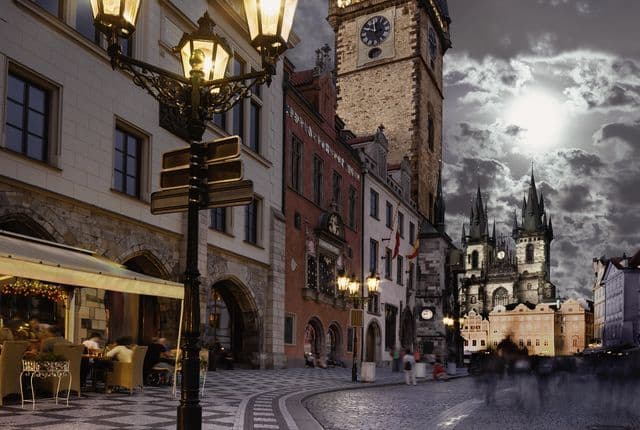
Old Town Square is fully accessible — flat paved surface, no steps to enter the square, and sightlines to the Astronomical Clock, Týn Church facade and St. Nicholas Church. The Astronomical Clock show happens on the hour and is visible from ground level.
The Jewish Museum complex in Josefov presents mixed accessibility. The Old Jewish Cemetery is visible from street level through the fence, but the internal paths are narrow gravel. The Spanish Synagogue, the Maisel Synagogue and the Pinkas Synagogue each have different levels of access — check the museum website for current details, as renovations periodically change the situation.
Prague Castle
Prague Castle (Pražský hrad) is partially accessible. The main courtyards are flat and paved. St. Vitus Cathedral has step-free entry through the main west door. The nave interior is level.
Golden Lane is narrow but step-free along its main path. The small houses have high thresholds that may require assistance.
The Old Royal Palace has the famous Riders' Staircase — a wide stone ramp originally built for horsemen that now serves as an accessible route to Vladislav Hall. It is one of Prague's oldest "accessibility features," dating to the late 1400s.
To reach the castle without climbing, take Tram 22 to Pražský hrad stop. The tram stop is roughly 200 metres from the main entrance on flat ground. Low-floor trams run on this route regularly.
Insider detail: The castle's northern garden (Královská zahrada — Royal Garden) has smooth gravel paths and flat terrain. It is quieter than the main courtyards and offers excellent views of St. Vitus Cathedral from the north side. Open April through October.
Vyšehrad
Vyšehrad fortress sits on a cliff above the Vltava. The main path from the Vyšehrad metro station (Line C, with elevator) to the fortress grounds is uphill but paved and manageable for power wheelchairs. The grounds inside the fortress walls — including the cemetery where Dvořák and Smetana are buried, the Romanesque rotunda and the park — are flat with paved or packed-earth paths.
National Gallery Collections
The Veletržní palác (Trade Fair Palace) in Holešovice houses the National Gallery's modern and contemporary art. The building is a functionalist masterpiece from the 1920s with wide corridors, elevators between all floors and step-free access throughout. It is one of Prague's most wheelchair-friendly cultural venues.
River Cruises
Vltava river cruises are surprisingly accessible. Most large boats have ramp boarding from the dock level. Prague Boats and Prague Steamboat Company both operate vessels with accessible main decks. Confirm when booking — not all boats in their fleets are the same.
The embarkment points at Čechův most (near Josefov) and Rašínovo nábřeží have paved paths to the dock. The river gives you views of Charles Bridge, Prague Castle, the National Theatre and Vyšehrad — all without a single cobblestone.
Accessible Dining
Most modern restaurants in Vinohrady, Karlin and Holesovice have step-free entries and wheelchair-navigable interiors. The challenge is in Old Town and Mala Strana, where many restaurants occupy medieval cellars reached by narrow staircases.
Restaurants with confirmed step-free access in central Prague include Cafe Louvre on Narodni trida (elevator available), Cafe Imperial on Na Porici (street-level entry, spacious interior), and several restaurants on Wenceslas Square that have been modernized.
Insider detail: When booking a restaurant, call ahead and mention wheelchair access. Many Prague restaurants that appear inaccessible from the front entrance have a side or rear entry at street level. Staff are generally helpful and willing to arrange access — you just need to ask in advance rather than arriving unannounced.
Shopping centres (Palladium near Namesti Republiky, Novy Smichov in Smichov) are fully accessible with elevators, wide corridors and accessible toilets. They also contain restaurants and food courts that are wheelchair-friendly alternatives to Old Town's challenging street-level dining.
Accessible Toilets
Public toilets in Prague vary widely. The cleanest and most accessible facilities are in shopping centres (Palladium, Kotva, Novy Smichov), major museums (National Gallery, National Museum) and some metro stations. Most charge a small fee (10 to 20 CZK).
The Eurokey system for accessible toilets is being introduced in Prague but coverage is still limited. Your best approach is to use facilities at museums, cafes and shopping centres during the day, and at your hotel as a reliable base.
Adapted Private Tours
Standard group walking tours cover 6 to 10 kilometres on Prague's most challenging terrain, at a pace set by the guide and the fastest walkers. For wheelchair users, that format simply doesn't work.
A private tour with our team changes the equation. We plan routes in advance based on your specific mobility needs. We know which streets have drop kerbs, which museum entrances have ramps, and which "accessible" tram stops actually have level boarding.
Our guides carry this knowledge from years of experience adapting tours. We've guided visitors in manual wheelchairs, power chairs and mobility scooters through Prague — each time adjusting the route to maximize what's possible while being honest about what's not.
For visitors who want to explore beyond the city, our Český Krumlov day trip includes private transport, and we can advise in advance on accessibility at the destination. Some day trips work better than others for wheelchair users — we'll tell you honestly which ones.
Insider detail: We can arrange accessible taxi transfers between attractions, effectively connecting the accessible "islands" of Prague (Old Town Square, castle courtyards, river embankment) while bypassing the cobblestone streets between them. This approach lets wheelchair users see more in a day than trying to navigate every street connection.
Finish your Prague day with our Medieval Dinner Show — the U Pavouka tavern is at street level with a flat interior.
See all our private tours. Exclusively yours, with your own guide. Every itinerary adapted to your needs.
Vyšehrad rewards an unhurried morning, and a guide makes the difference between empty ramparts and the layered story behind them. See our private Vyšehrad Fortress tour for a deeper visit.
Frequently Asked Questions
Can you visit Prague in a wheelchair?
Yes, with planning. Old Town Square, Wenceslas Square, parts of Prague Castle, Vyšehrad, the National Gallery at Veletržní palác and river cruises are all accessible. The cobblestone streets between attractions require navigation or taxi bridging. Prague is not effortless for wheelchair users, but it is far more accessible than its medieval appearance suggests.
Is Prague Castle wheelchair accessible?
Partially. The main courtyards, St. Vitus Cathedral and the Old Royal Palace (via the Riders' Staircase ramp) are accessible. Some interior exhibits have steps. Reach the castle via Tram 22 to avoid the steep climb from Malá Strana.
Are Prague trams accessible?
Modern low-floor trams run on most routes and have designated wheelchair spaces. Check the DPP app or timetable displays — low-floor services are marked. Older trams with high steps still operate on some routes, but you can let them pass and wait for a low-floor vehicle.
Is Charles Bridge passable in a wheelchair?
Technically yes, though the stone surface is uneven and the bridge has a gentle arch. Power wheelchair users can manage it. Manual wheelchair users may need assistance on the uphill sections. The bridge is flat at both tower ends.
Where can I rent a wheelchair or mobility scooter in Prague?
Several companies offer rental and delivery to your hotel, including Prague Wheelchair Rental and Medical Prague. Reserve at least a few days in advance during peak summer season.
You May Also Like
Want to see Prague for yourself?
Take our flagship Prague tour
-6-640x430.jpg&w=3840&q=75)