First Time in Prague? Here's What You Need to Know
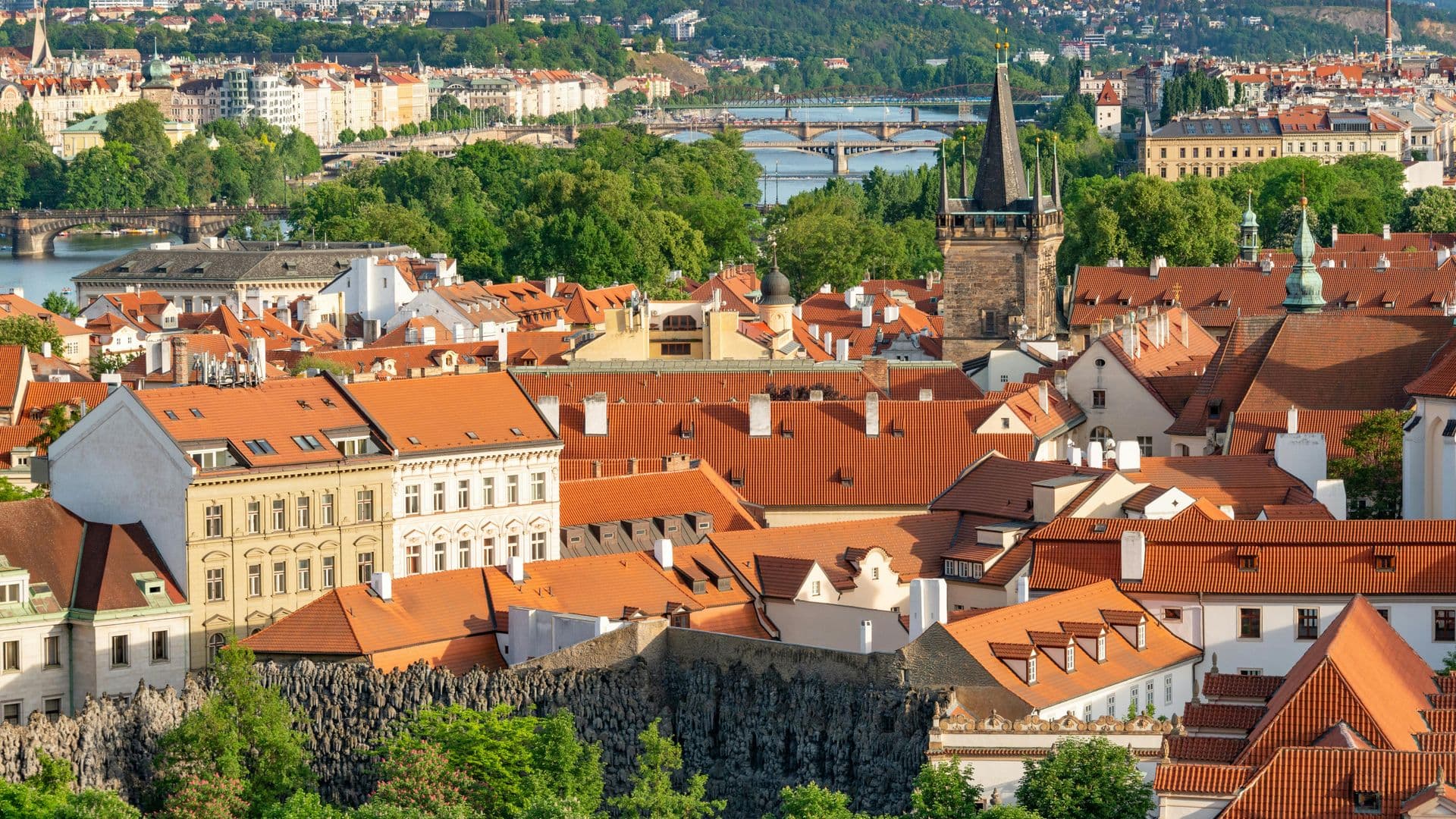
Prague will surprise you. The city is safer than you expect, cheaper than Western Europe, more walkable than it looks on a map, and packed with history that goes far deeper than the postcard views. But first-time visitors make the same handful of mistakes — paying in euros, skipping entire districts, crowding onto Charles Bridge at noon. This guide helps you avoid all of them.
We've introduced hundreds of first-time visitors to Prague over 17 years of guiding. The advice below is what we tell every guest before their first morning in the city. Bookmark it, skim it on the plane, and you'll arrive sharper than 90% of the tourists around you.
Arriving in Prague
Václav Havel Airport (PRG) is Prague's only commercial airport, about 30 minutes west of the city centre. Getting into town is straightforward — here are your options, best to worst.
Airport Express bus (AE) runs every 30 minutes to the main train station (Praha hlavní nádraží). Cost: 200 CZK for adults, 100 CZK for children 6-15 (roughly €8 / €4). It's direct, takes about 35 minutes, and drops you at a major metro hub. From the train station, one metro ride puts you almost anywhere in the centre.
Trolleybus 59 (which replaced bus 119 in 2024) connects the airport to Nádraží Veleslavín metro station (line A, the green line) for a 90-minute ticket — 50 CZK paper, 46 CZK in the PID Lítačka app. The trolleybus takes 15-20 minutes, then you transfer to the metro — total travel time to Old Town is about 40-45 minutes. This is the cheapest option and perfectly comfortable (a 24-hour or 72-hour ticket also covers one piece of luggage).
Bolt or ride-share to the centre runs 400-600 CZK (€16-24) depending on time of day. Convenient if you have heavy luggage or arrive late. Order through the app — the pickup zone is clearly marked outside arrivals.
Official airport taxis are metered and cost roughly 600-800 CZK to the centre. They're fine, but the ride-share apps offer the same service for less.
One important note: do not exchange money at the airport. The exchange booths in the arrivals hall offer terrible rates — typically 15-20% worse than the city average. Use an ATM instead (there are several in the arrivals hall), or wait until you reach the centre. More on money below.
Getting Around the City
Prague's centre is compact — Old Town Square to Charles Bridge is 10 minutes on foot, Charles Bridge to Prague Castle is 15 minutes uphill, Wenceslas Square to Old Town is 5 minutes. You can see all the major landmarks on foot in a single day, though doing them justice takes longer.
Public transport is excellent and cheap. The system combines metro (three lines: A green, B yellow, C red), trams (31 daytime lines, 9 night lines), and buses. Everything runs on integrated tickets — buy through the Lítačka app on your phone, which activates tickets on first use.
Useful tickets for visitors:
- 30-minute ticket: 39 CZK paper, 36 CZK in the app — enough for a single metro ride across the centre
- 24-hour pass: 150 CZK paper, 140 CZK in the app — unlimited rides, the best value for a full day of exploring
- 72-hour pass: 350 CZK paper, 340 CZK in the app — if you're staying three days or more
Tram 22 is worth knowing. It runs from the centre through Malá Strana and up to Prague Castle — essentially a sightseeing tour on public transport. Sit on the right side for the best views climbing up to the castle.
Night trams run every 30 minutes from midnight to 5 AM. The hub for night trams is Lazarská in New Town — most night routes pass through there. Check the departure boards or the PID Lítačka app for real-time arrivals.
Walking tip: wear shoes with grip. Prague's cobblestones are beautiful but uneven, and some streets in Malá Strana and the Castle district are steeply pitched. Flat shoes with rubber soles beat any kind of heel or smooth-bottomed shoe.
Money and Paying
The Czech Republic uses the česká koruna (Czech crown, CZK). It is not in the eurozone. This catches many first-time visitors off guard.
The exchange rate is approximately 25 CZK to 1 EUR (or 22-23 CZK to 1 USD). The easiest approach: think of 100 CZK as roughly €4 or $4.50.
Always pay in Czech crowns. Many tourist-area restaurants and shops accept euros, but they set their own conversion rates, which are consistently unfavorable. A meal costing 300 CZK might be listed at €15 in euros — but 300 CZK is actually about €12. You lose money on every euro transaction.
ATMs are the best way to get crowns. Use bank-operated ATMs (look for Česká spořitelna, ČSOB, Komerční banka, or Raiffeisenbank). When the ATM asks whether to charge you in your home currency or in CZK, always choose CZK — this avoids dynamic currency conversion, which adds 3-5% to the cost.
Avoid exchange offices on the main tourist streets, especially around Wenceslas Square, Old Town Square, and the area near the Astronomical Clock. Their posted "0% commission" rates use misleading buy/sell spreads. If you must use an exchange office, Exchange (the chain with the bright yellow signs on Kaprova street) offers fair rates. But an ATM is simpler.
Cards are accepted almost everywhere in the centre — restaurants, shops, museums, transport ticket machines. Smaller pubs, market stalls, and some bakeries still prefer cash. Carry 500-1,000 CZK in small notes (100s and 200s) for these situations. For a complete budget breakdown, see our guide to Prague costs.
Safety
Prague is very safe. It regularly ranks among Europe's safest capitals, and violent crime against tourists is extraordinarily rare. We've guided guests for 17 years without a safety incident.
Pickpocketing is the main risk, concentrated in a few specific areas: crowded trams (especially line 22 during the day), Old Town Square during peak hours, and the Astronomical Clock crowd. Front pockets, zipped bags, and basic awareness are sufficient.
Scams to know about: the "helpful" stranger at an ATM offering to assist with the machine (decline and cover your PIN); overpriced restaurants that don't list prices on the menu (always check before ordering); unlicensed taxis at the train station quoting flat rates (use ride-share apps instead).
At night, the centre is well-lit and safe for walking. The Wenceslas Square area gets noisy with nightlife after midnight, but it's rowdy rather than dangerous. Residential neighbourhoods like Vinohrady, Letná, and Dejvice are quiet and safe at any hour.
Emergency number: 112 (EU-wide). Police: 158. Ambulance: 155.
Language
Czech is a Slavic language that uses Latin script with diacritical marks (háčky and čárky — the symbols above letters like č, š, ž, á, é, í). You don't need to learn it, but understanding the pronunciation of a few place names helps enormously.
English is widely spoken in the centre, especially by anyone under 40 and in all tourist-facing businesses. You won't struggle to order food, buy tickets, or ask for directions in English.
Three words that change your experience: dobrý den (good day — pronounced "DOB-ree den"), prosím (please — "PRO-seem"), and děkuji (thank you — "DYEH-koo-yee"). Use "dobrý den" when entering any shop or restaurant. Czechs notice, and the service improves.
Place name pronunciation that helps with navigation:
- Václavské náměstí (Wenceslas Square): "VAHTS-lahv-skeh NAH-myeh-stee"
- Staroměstské náměstí (Old Town Square): "STAH-roh-mnyehst-skeh NAH-myeh-stee"
- Karlův most (Charles Bridge): "KAR-loov MOST"
- Pražský hrad (Prague Castle): "PRAZH-skee HRAD"
Reading menus: pivo is beer, víno is wine, voda is water, káva is coffee. Polévka is soup, hlavní jídlo is main course. These few words cover 90% of Czech menu navigation.
What to See First
If you have limited time, here's the priority order we recommend to first-time visitors.
Prague Castle (Pražský hrad) — the largest ancient castle complex in the world (according to Guinness), including St. Vitus Cathedral, the Old Royal Palace, Golden Lane, and sweeping views over the city. Go early (before 10 AM) to avoid the worst crowds at the security checkpoint, and allow 2-3 hours for a proper visit.
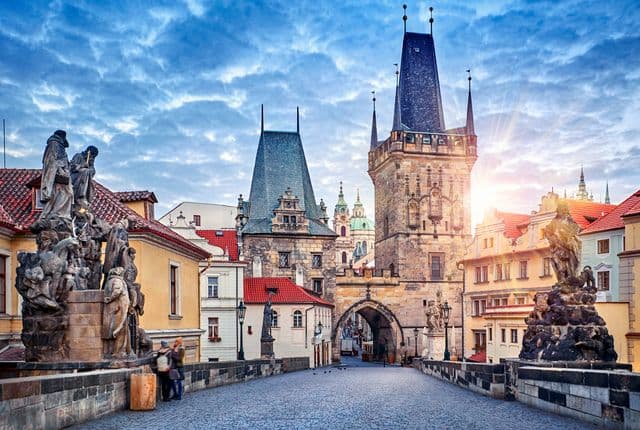
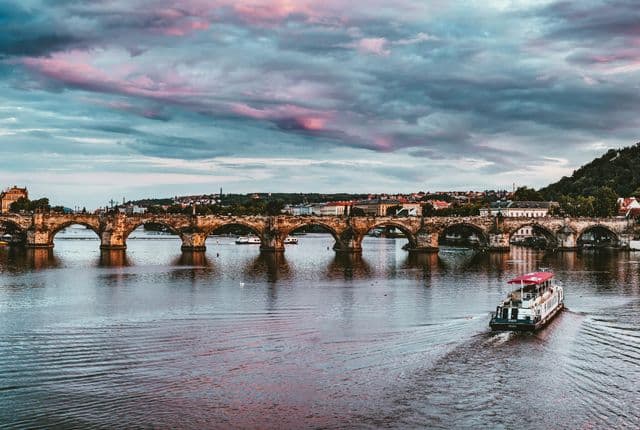
Charles Bridge (Karlův most) — the 14th-century stone bridge with 30 baroque statues. Walk it early morning or after sunset. At midday it's shoulder-to-shoulder. The view from the Old Town Bridge Tower (climb it — the stairs are worth it) is one of the finest in Prague.
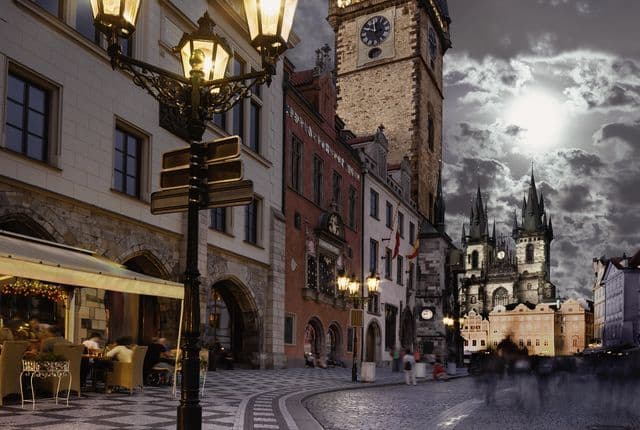
Old Town Square (Staroměstské náměstí) — the Astronomical Clock, Týn Church, the pastel baroque facades. Watch the clock's hourly show (it's brief and frankly underwhelming, but it's tradition). The square itself is more impressive than the clock.
Josefov (the Jewish Quarter) — one of the best-preserved Jewish heritage sites in Europe. The Old Jewish Cemetery, the Spanish Synagogue, the Pinkas Synagogue memorial. This is Prague's most emotionally powerful district.
Vyšehrad — the ancient fortress on the hill south of the centre. Almost no tourists, incredible river views, a Romanesque rotunda from the 11th century, and a cemetery where Dvořák and Smetana are buried. If you only visit one "off the beaten path" place, make it this one.
For a structured route through all of these, our All Prague in One Day private tour covers everything above in a single day with a guide who adjusts the pace to your interests. For the full itinerary, see our one-day Prague itinerary.
Common Mistakes First-Time Visitors Make
Exchanging money at the airport or on the main streets. Already covered above — use ATMs or the Exchange chain on Kaprova.
Visiting Charles Bridge at midday. The bridge is magnificent but brutal between 11 AM and 5 PM in season. Early morning and evening transform the experience. Our Charles Bridge and Old Town tour is timed specifically to avoid the crush.
Eating on Old Town Square. The restaurants ringing the square charge tourist prices for mediocre food. Walk two blocks in any direction and the quality doubles while the price halves. The same applies to Wenceslas Square. For specific recommendations, see our local food guide.
Not validating transit tickets. Prague uses an honour system — you must validate (timestamp) your ticket before boarding. Plainclothes inspectors check tickets on trams and metros regularly. The fine for an invalid ticket is 1,500 CZK (€60), payable on the spot. The Lítačka app handles validation automatically when you activate a ticket.
Staying only in the tourist centre. Old Town and Malá Strana are beautiful, but Prague's best dining, nightlife, and local atmosphere are in Vinohrady, Žižkov, Karlín, and Letná. Even one evening in these neighbourhoods changes your understanding of the city.
Skipping Vyšehrad. We mentioned it above, but it bears repeating. The fortress is free to enter, offers the best panoramic views of the river and city, and has a fraction of the visitors that Prague Castle gets. It's a 10-minute metro ride from the centre (line C to Vyšehrad station).
Ordering trdelník as "traditional Czech food." The chimney cake sold everywhere in Old Town is Hungarian in origin and was not a Prague tradition until tourism created the demand. It's fine as a snack — just don't think you're experiencing Czech culinary heritage. Actual Czech sweets: koláče (filled pastries), trubičky (cream rolls), medovník (honey cake).
When to Visit Prague
May and September are the best months. Warm weather, manageable crowds, longer daylight hours. May brings blooming gardens at Prague Castle and Vyšehrad. September has warm days, cool evenings, and the grape harvest season in nearby Moravia.
June through August is peak season. The weather is warmest, but the crowds are heaviest and accommodation prices peak. July and August afternoons can hit 35°C — Prague doesn't have widespread air conditioning in older buildings. If you visit in summer, start early and plan indoor time during the hottest hours.
October and November bring autumn colours and thinning crowds. Temperatures drop, but the city is atmospheric and you'll have major sites largely to yourself. The Letná Park and Stromovka overlooks are particularly beautiful in mid-October.
December is Christmas market season. Stalls go up on Old Town Square and Wenceslas Square in late November and run through early January. It's festive and photogenic, but the centre gets very crowded on weekends. Weekday evenings are the sweet spot.
January through March is the quietest period. Cold (often below freezing), shorter days, but hotel prices drop significantly and the major attractions are uncrowded. A winter visit gives you a completely different Prague — moodier, quieter, and more local. Pair it with a medieval dinner show for a warm evening underground.
Do You Need to Book Tickets in Advance?
The short answer: for most things, no. Prague isn't a city where you need to pre-book your entire itinerary weeks ahead. But there are a few notable exceptions where advance tickets save real time and frustration.
Book in advance:
- Prague Castle — Since the introduction of timed entry tickets, advance booking is strongly recommended during peak season (April-October). Walk-up visitors often face long waits or sold-out time slots by midday. Buy tickets at hrad.cz — the official site charges no markup.
- Concerts and opera — Performances at the Estates Theatre (Stavovské divadlo), the Rudolfinum, and the National Theatre sell out weeks ahead, especially for Mozart operas and Czech Philharmonic evenings. Third-party reseller sites charge 2-3x face value; always buy directly from the venue.
- High-end restaurants — Spots like Field, La Degustation, and Alcron need reservations days or weeks ahead. Mid-range Czech restaurants generally seat walk-ins without trouble.
- Jewish Quarter (combined ticket) — The Jewish Museum combo ticket can sell out on busy days. Booking online guarantees your entry time and lets you skip the ticket office queue.
No advance booking needed:
- Charles Bridge — It's a public bridge. Walk across anytime (we recommend before 8 a.m. or after 8 p.m. for the best experience).
- Old Town Square and Astronomical Clock — Open public space. The Clock's hourly show is free to watch from below.
- Most museums — The National Gallery, DOX Centre, Kampa Museum, and City Gallery Prague all handle walk-ins comfortably, even in summer.
- Public transport — Buy a pass via the Lítačka app on your phone. No advance purchase needed — activate it when you arrive.
- Our guided tours — Every tour is private, so attention is personal — but booking a day or two ahead secures your preferred date. Browse our available tours here.
General rule of thumb: If it's a specific time slot at a popular interior (Castle, synagogues, concerts), book ahead. If it's outdoors, a neighbourhood, or a restaurant below Michelin level — just show up.
Practical Guides for Your Trip
First-time visitors always have more questions once the basics are covered. These companion guides tackle the everyday details -- from useful apps and daily budgets to tap water safety and essential Czech phrases -- so you can arrive prepared and spend less time worrying.
- Best apps for visiting Prague -- transport, maps, and translation
- Prague daily cost breakdown -- how much to budget per day
- Can you drink tap water in Prague? Safety and taste explained
- Essential Czech phrases for tourists -- greetings, ordering, and polite basics
- Prague senior discounts and free transport -- what over-65s get
- Prague for Americans -- cultural differences, tipping, and common surprises
With so many practical details to sort out before your first trip, it is easy to overlook one of the biggest decisions: how you will actually explore the city once you arrive. Free walking tours, private guides, bus loops, and river cruises all compete for your attention, and the wrong pick can waste half a day. Our separate guide on choosing the right tour for your first visit ranks the top options by value, flexibility, and what first-timers enjoy most.
Experience It With a Private Guide
First-time visitors get the most from Prague when someone who knows the city walks them through it — not because Prague is complicated, but because context transforms what you see. The Astronomical Clock becomes more interesting when you know the legend of the clockmaker who was blinded, and Charles Bridge changes when you understand which statues tell which stories. The backstreets of Old Town reveal hidden courtyards and passage systems that aren't on any map.
Our All Prague in One Day tour is designed specifically for first-time visitors. We cover the castle, the bridge, Old Town, and Vyšehrad in a single day, with the flexibility to go deeper wherever your interests lead. Exclusively yours, with your own guide — which means the pace and the conversation are entirely yours.
For a shorter introduction, the Charles Bridge and Old Town tour covers the historic core in a half-day. It's a sharp way to orient yourself on day one, so the rest of your visit is more focused and independent.
Once you feel oriented, you might also want our Prague dos and don'ts — a quick guide to local etiquette that helps you blend in from day one.
Browse all our private tours in Prague.
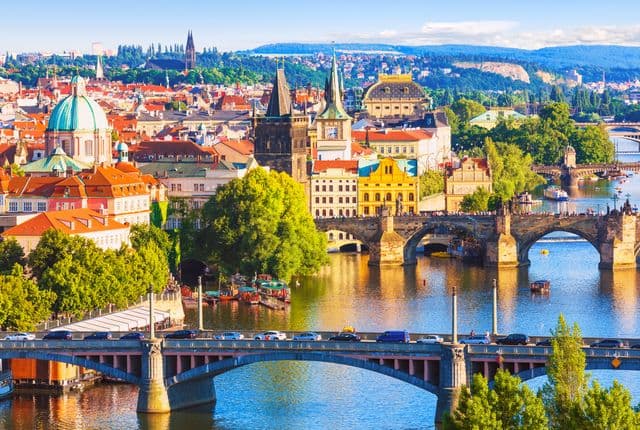
Want to see the Prague castle without the tourist crush? Book our private Vyšehrad Fortress tour — exclusively yours, with your own licensed guide, and Prague's most photographed skyline view from the hill the founding myth set the city on.
Frequently Asked Questions
How many days do I need in Prague?
Three days is the sweet spot for first-time visitors. Day one for the castle and Malá Strana, day two for Old Town and the Jewish Quarter, day three for Vyšehrad and a neighbourhood like Vinohrady or Karlín. Four days lets you add a day trip to Český Krumlov or Kutná Hora.
Is Prague expensive?
By Western European standards, no. A good lunch costs €6-8, a beer in a pub is €2-3, a 24-hour transit pass is about €5, and hotels in the centre start around €60-80 per night. The main tourist traps are the only expensive parts — see our full budget guide for details.
Do I need a visa for Prague?
The Czech Republic is in the Schengen Area and the EU. Citizens of EU/EEA countries need only an ID card. US, Canadian, Australian, and UK citizens can visit visa-free for up to 90 days. Check your country's specific requirements before travel.
Is Prague walkable?
Very. The entire historic centre is compact and pedestrian-friendly. Most major sights are within a 30-minute walk of each other. The main challenge is cobblestones and some steep hills in the Castle district — wear comfortable shoes with grip.
What is the best area to stay for first-time visitors?
Old Town puts you closest to the main sights but can be noisy and pricey. Vinohrady is our recommendation — a 10-minute walk from the centre with better restaurants, quieter streets, and lower accommodation costs. Malá Strana is charming but has fewer dining options.
You May Also Like
- Is Prague Expensive? A Realistic Budget Guide
- One Day in Prague — The Perfect Itinerary
- Prague Dos and Don'ts — Local Etiquette for Visitors
Planning your trip? See our Prague tour guide for details.
Planning your trip? See our private walking tours of Prague for details.
Want to see Prague for yourself?
Take our private Prague tour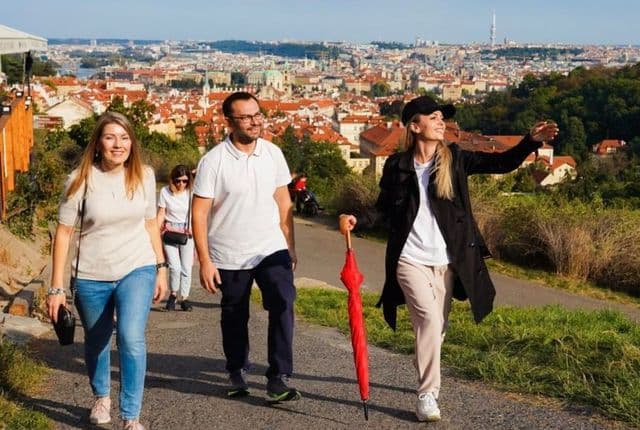
-6-640x430.jpg&w=3840&q=75)