Prague Souvenirs — What's Worth Buying and What to Skip
The souvenir shops along Prague's Royal Route — from Old Town Square through Karlova to Charles Bridge — are filled with things you shouldn't buy. Russian nesting dolls. Neon-coloured absinthe. T-shirts that say "Prague Drinking Team." None of it has anything to do with Czech culture, and most of it is made in China.
But Prague does produce genuinely excellent things worth taking home. Bohemian crystal, Czech garnet jewelry, wooden toys, Becherovka, spa wafers — these are products with real craft traditions behind them, and buying them from the right places means supporting actual Czech makers. The trick is knowing the difference between authentic goods and tourist-zone imitations.
What's Worth Buying
Bohemian Crystal and Glass
Czech glassmaking dates to the 13th century, and the quality of hand-blown and hand-cut Bohemian crystal remains among the finest in the world. This is the souvenir that justifies a real budget.
The distinction matters: Bohemian crystal (containing at least 24% lead oxide) has a clarity and weight that's immediately noticeable compared to ordinary glass. When you tap a crystal wine glass, it rings. When you hold it to the light, the cut facets throw prismatic colours across the table. The difference between a €15 glass from a tourist shop and a €40 glass from a proper crystal studio is the difference between decoration and craft.
What to look for: hand-cut patterns (you can feel the edges with your fingertip — machine-cut glass is smoother), a clean ring when tapped, and weight that feels substantial for its size. Vases, wine glasses, whisky tumblers, and decorative bowls are the traditional strengths. Many workshops also produce modern designs — clean lines, minimal cutting — that look as good in a contemporary apartment as in a traditional one.
Where to buy: avoid the shops on Karlova and the streets immediately around Old Town Square. Prices are inflated 30–50%, and the selection mixes genuine Czech crystal with lower-quality imports. Instead, look for shops in residential neighbourhoods — Vinohrady, Dejvice, Smíchov — or the factory outlet stores operated by major Czech producers like Moser. The Moser shop on Na Příkopě street is a central option with guaranteed authenticity, though prices reflect the brand's premium positioning.
Insider detail: the village of Nižbor, about 40 minutes from Prague, is home to a major crystal factory that offers guided tours and a factory shop with prices 20–40% below Prague retail. If you're serious about crystal, the day trip is worth it.
Czech Garnet Jewelry (Český Granát)
Czech garnet — český granát — is a deep-red pyrope garnet mined in northern Bohemia. It's been used in jewelry since the Middle Ages, and the traditional style features clusters of small garnets set closely together in gold or silver, creating a dense, glowing surface.
The stones are smaller than most garnets you'll see elsewhere (typically 2–4 mm), and that's actually the mark of authenticity. Czech pyrope garnets don't grow large — if you see a "Czech garnet" ring with a single large stone, it's almost certainly an import from India or Mozambique.
The only company authorized to sell certified Czech garnet is Granát Turnov, a cooperative founded in 1953 that controls mining and production. Their pieces come with a certificate of authenticity and a hallmark. Other shops may sell garnet jewelry, but without the Turnov certificate, you can't be sure the stones are Czech.
Where to buy: Granát Turnov operates retail shops in Prague — the most convenient is on Dlouhá street near Old Town. Prices range from around 1,500 CZK for simple earrings to 15,000+ CZK for elaborate necklaces. The quality-to-price ratio is excellent compared to buying Czech garnet abroad, where markups are significant.
Becherovka and Czech Spirits
Becherovka is a herbal bitters produced in Karlovy Vary since 1807. The recipe uses over 20 herbs and spices, and the flavour — warm, slightly sweet, with cinnamon and clove notes — is distinctly Czech. A bottle of the original Becherovka is available in any supermarket for 200–280 CZK, making it one of the most affordable and genuinely Czech souvenirs you can bring home. The town that produces it makes a worthwhile day trip on its own — see our guided Karlovy Vary and Loket day trip for details.
Beyond Becherovka, Czech spirits worth considering include Slivovice (plum brandy, especially from Moravia — the good stuff has a clean fruit flavour, not the harsh burn of cheap versions), Meruňkovice (apricot brandy), and Fernet Stock (a bitter liqueur that's practically a national drink, consumed as a digestif in every Czech pub).
Insider detail: supermarkets (Billa, Albert, Tesco) stock the same bottles as airport duty-free and tourist shops, at 30–50% lower prices. Buy your spirits at a supermarket and save the premium for crystal or garnet.
Spa Wafers (Lázeňské Oplatky)
These thin, round wafers filled with chocolate, hazelnut, vanilla, or sugar cream originated in the Karlovy Vary spa district. They've been produced since the 18th century and remain a popular Czech sweet. A pack of Kolonáda brand wafers costs 50–80 CZK and makes an easy, packable gift.
The key detail: fresh spa wafers from a specialty shop taste notably better than the packaged supermarket versions. If you visit Karlovy Vary on a day trip, buy them there. In Prague, look for shops specializing in regional Czech foods — several exist in Nové Město and Vinohrady.
Czech Wooden Toys
Czech wooden toy-making has UNESCO recognition, and the tradition centres on small-scale workshops producing hand-painted figures, puzzles, and mechanical toys. The quality is immediately apparent — smooth wood, bright lacquer finishes, moving parts that actually work.
The best Prague sources are specialty toy shops (not the tourist shops selling mass-produced marionettes). Look in Malá Strana and the side streets off Nerudova. A hand-made wooden toy costs more than a factory product — typically 200–800 CZK depending on complexity — but it's a gift that lasts generations.
Czech Ceramics
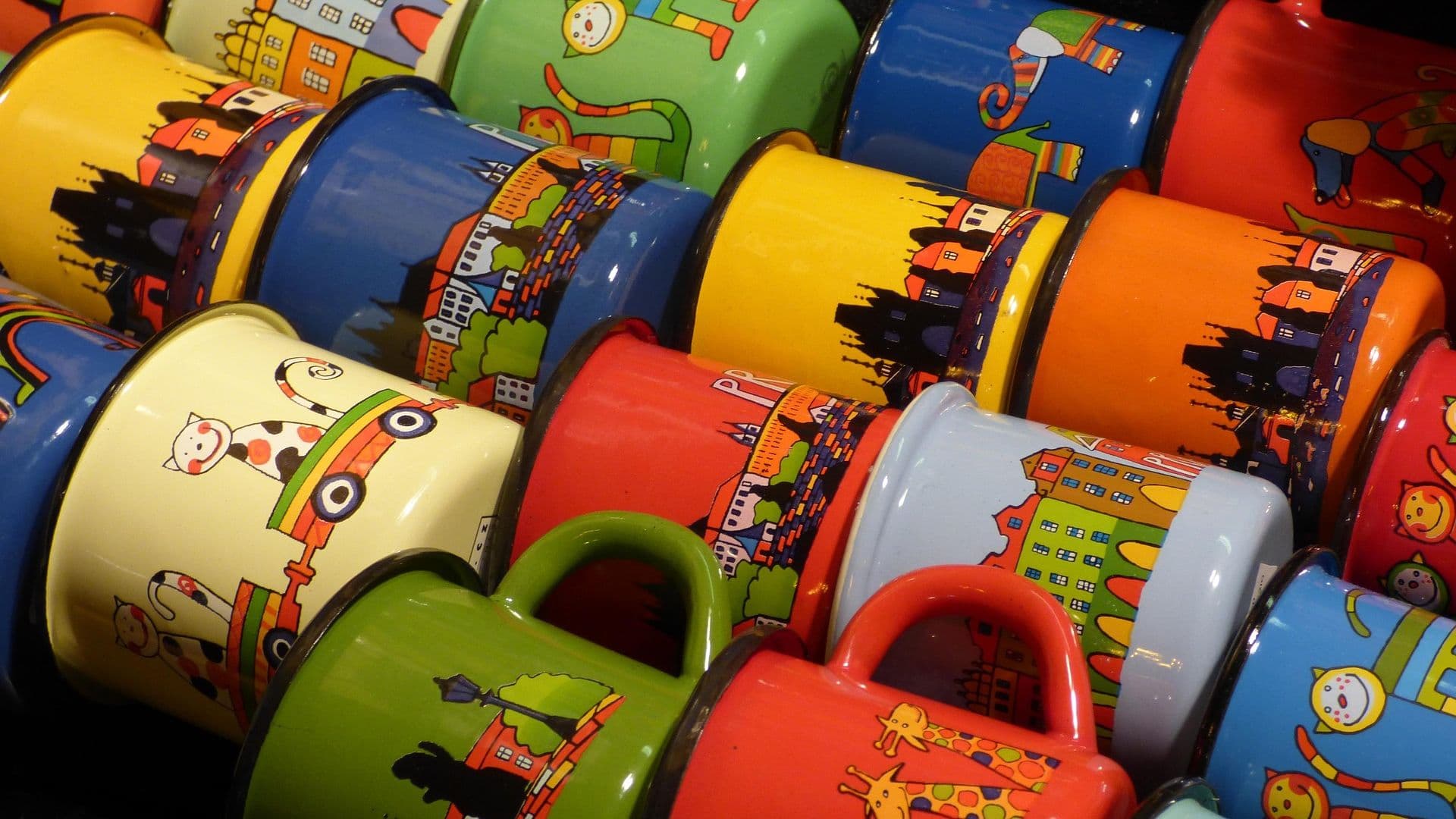
Bohemian ceramics, particularly blue-and-white patterns and the traditional Chodsko folk designs from western Bohemia, are handsome and practical. Mugs, plates, and decorative tiles make durable souvenirs. The town of Karlovy Vary is a traditional centre for porcelain production, but Prague shops carry a good selection.
Look for pieces marked with a manufacturer stamp on the base — this indicates genuine Czech production. Český porcelán and Thun are established brands with consistent quality.
What to Skip
Russian Nesting Dolls (Matryoshka)
This is the most common souvenir-shop fraud in Prague. Matryoshka dolls are Russian, not Czech. They have zero connection to Czech culture, Czech craft traditions, or Czech history. They're sold in Prague because tourists buy them — nothing more. If you see a shop window full of nesting dolls, that's your signal to keep walking.
Overpriced Absinthe
Prague positioned itself as an absinthe destination in the 1990s and early 2000s, and the legacy persists in tourist shops selling brightly coloured bottles at inflated prices. Here's the reality: most of the "absinthe" sold in Prague souvenir shops is low-quality spirit with artificial colouring, bearing little resemblance to traditional absinthe. The neon-green and neon-blue bottles are particularly suspect.
If you actually want Czech absinthe, buy it from a liquor shop (not a souvenir shop) and look for smaller-batch producers. Expect to pay 400–800 CZK for something worth drinking. But honestly, Becherovka and Slivovice are better representations of Czech drinking culture.
Cheap "Prague" T-Shirts and Magnets
Mass-produced, printed in bulk, available in every tourist city on earth with the city name swapped out. They're not offensive — just pointless. Your money is better spent on anything with actual Czech provenance.
Tourist-Trap Marionettes
Czech marionette theatre is a genuine cultural tradition — it's on the UNESCO Intangible Heritage list. But the marionettes sold in tourist shops for 300–500 CZK are mass-produced in Asia and bear no relationship to the handmade puppets used in actual Czech puppet theatre. A genuine handmade Czech marionette costs 2,000–10,000 CZK and is a work of art. The cheap versions are just wooden dolls on strings.
If puppetry interests you, visit a marionette performance (several theatres operate in Prague's centre) and buy from the theatre shop or from a certified puppet-maker. The difference in quality is unmistakable.
Where to Shop: Neighbourhoods vs Tourist Zones
The pricing pattern in Prague is predictable: anything within a five-minute walk of Old Town Square or Charles Bridge costs 30–50% more than the identical item in a residential neighbourhood. This applies to crystal, garnet, spirits, food, and everything else.
For the best value and most authentic selection:
- Vinohrady and Vršovice — local shops, farmers' markets on weekends, and specialty food stores
- Smíchov — the Nový Smíchov shopping centre and surrounding streets have mainstream Czech brands at normal prices
- Dejvice — quieter, more residential, with small shops catering to locals
- Holešovice — Pražská tržnice (Prague Market) is a covered market where local vendors sell food, crafts, and vintage items
In the centre, the exceptions:
- Na Příkopě street (between Wenceslas Square and Old Town) has flagship stores for Czech crystal and garnet brands at fixed, non-negotiable prices
- Havelská street market, running daily in Old Town, sells seasonal produce, honey, and handmade crafts at reasonable prices — it's been operating since the 13th century and remains genuinely local
Insider detail: the best time to shop at Havelská market is weekday mornings. By afternoon, the crowd is mostly tourists and the vendors adjust accordingly.
Practical Tips
- VAT refunds: non-EU residents can claim a VAT refund (21%) on purchases over 2,001 CZK from a single shop in a single day. Ask for a tax-free form at the point of sale and process it at the airport before departure.
- Packing crystal: any reputable crystal shop will pack your purchase in protective material. If you're buying multiple pieces, ask for a cardboard shipping box — most shops provide them free of charge. Pack crystal in your checked luggage, wrapped in clothing for extra protection.
- Authenticity certificates: for garnet jewelry, always ask for the Granát Turnov certificate. For crystal, look for the manufacturer's sticker or etching on the base. If a shop can't provide proof of Czech origin, the product likely isn't Czech.
- Supermarket souvenirs: Billa and Albert supermarkets stock Becherovka, spa wafers, Czech chocolate (Studentská pečeť is the classic brand), and local honey at everyday prices. A supermarket run before your departure saves significant money.
See Prague With a Local Guide
The best souvenir from Prague is the experience of understanding the city — its history, its neighbourhoods, and the details that tourist shops can't package.
Our All Prague in One Day tour covers Old Town, Charles Bridge, Malá Strana, Prague Castle, and Vyšehrad — with local recommendations for shopping, eating, and avoiding tourist traps built into every stop. Exclusively yours — and plenty of time to ask your guide where to find the real thing.
For an evening addition, the Medieval Dinner at U Pavouka is an experience you can't put in a suitcase, but you'll remember it longer than any fridge magnet.
Planning your budget? Our guide to Prague costs and budget planning covers what things actually cost, including shopping.
Shopping in Prague
Knowing what to buy is half the battle -- knowing where to buy it is the other half. Once you have a list of souvenirs in mind, you will want a plan for the best shopping streets, neighbourhood markets, and department stores where the prices are fair and the quality is genuine. This guide covers it all, from Bohemian crystal and local fashion to antique finds and contemporary Czech design.
Karlovy Vary rewards an unhurried visit, and pairing it with Loket Castle on the same day makes the drive worth it. See our private Karlovy Vary & Loket day trip for a deeper look.
Frequently Asked Questions
What is the best souvenir from Prague?
Bohemian crystal is the standout — it's uniquely Czech, beautifully made, and available at every price point from a single wine glass to an elaborate vase. For smaller budgets, a bottle of Becherovka or a pack of Karlovy Vary spa wafers makes an authentic and affordable gift.
Are Prague souvenir shops a rip-off?
The shops in the immediate tourist zones (around Old Town Square, Karlova, Charles Bridge) charge 30-50% more than shops in residential neighbourhoods. They also mix genuine Czech products with imports. Shop outside the centre or at flagship brand stores for fair prices and guaranteed authenticity.
Is Czech garnet worth buying?
Yes — Czech pyrope garnet is a genuinely unique gemstone with centuries of mining history in northern Bohemia. Buy only from Granat Turnov (the certified producer) to ensure authentic Czech stones. The small, densely-set cluster style is the traditional and most distinctive design.
Can I get a VAT refund on souvenirs?
Non-EU residents can claim a 21% VAT refund on purchases over 2,001 CZK from a single shop in a single day. Ask for a tax-free form at the point of sale and process it at the airport before departure.
Where should I avoid buying souvenirs in Prague?
Avoid shops on Karlova street, the streets immediately around Old Town Square, and any shop with Russian nesting dolls in the window. These are tourist-trap indicators. Also avoid airport shops — the markup is substantial and the selection is limited.
You May Also Like
Want to see Prague for yourself?
Take our flagship Prague tour-6-640x430.jpg&w=3840&q=75)