Where to Stay in Prague — Best Neighborhoods Explained
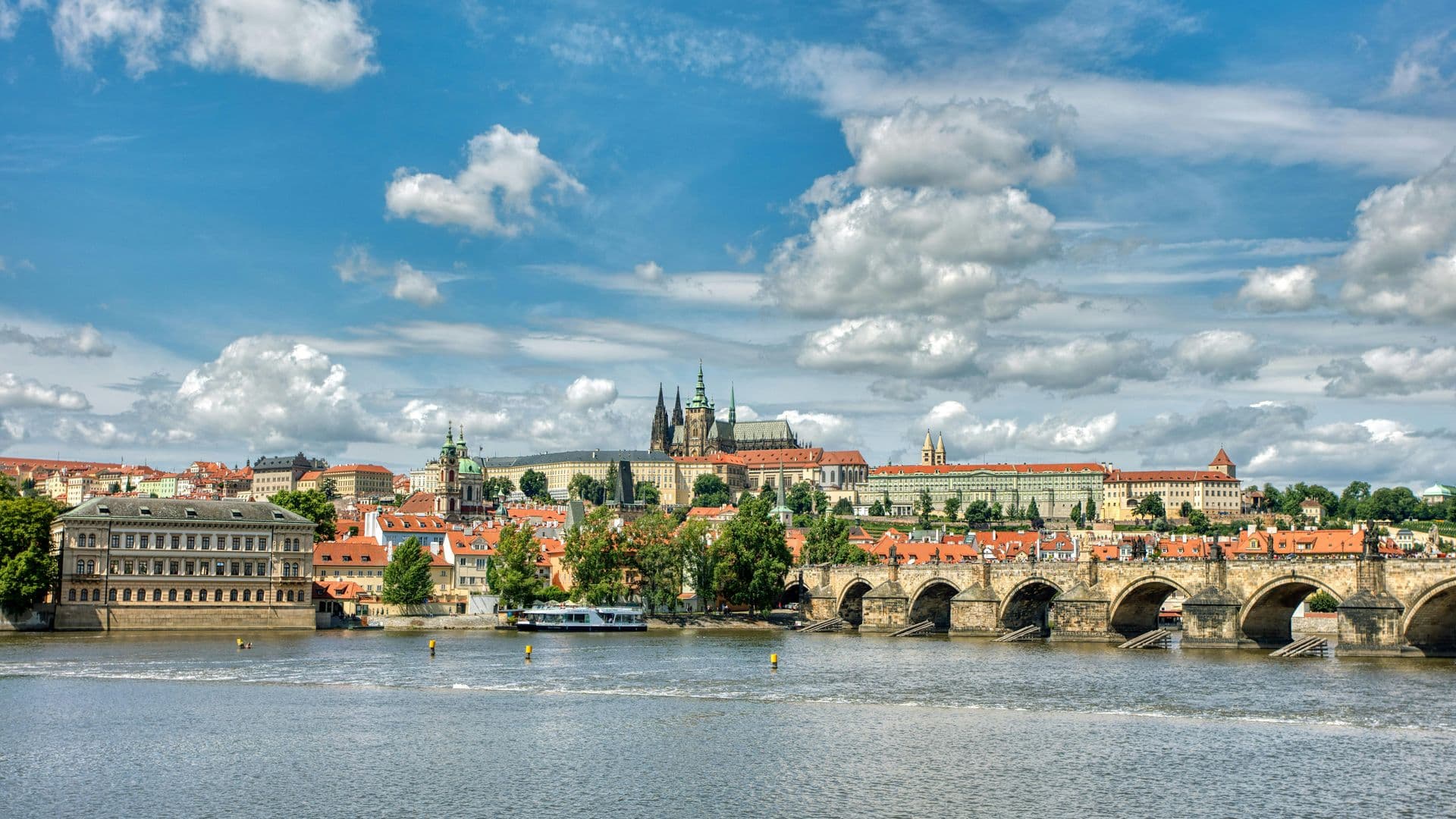
Choosing the right neighbourhood in Prague matters more than choosing the right hotel. A well-located mid-range place will give you a better trip than a luxury property in the wrong district. Prague is compact — the entire historic centre is walkable in 30 minutes — but each neighbourhood has a distinct personality, price point, and type of visitor it suits best.
We've spent years guiding guests who stay all over the city, and we see the pattern clearly: people who pick the right area enjoy Prague more from day one. Here's an honest breakdown of where to book, what to expect, and what each neighbourhood actually costs.
Staré Město (Old Town) — Central, Expensive, Crowded
Who it's for: First-time visitors who want everything within walking distance and don't mind tourist density.
Price range: High. Expect EUR 120-250/night for a good mid-range hotel, EUR 300+ for upscale properties. Budget options under EUR 80 exist but tend to be noisy apartments on busy streets.
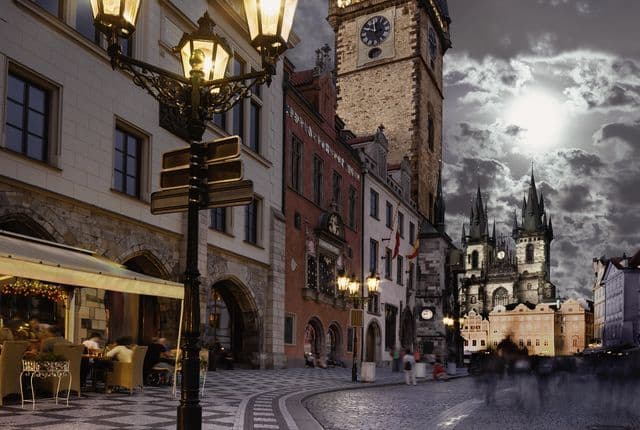
Staré Město puts you at the geographic centre of Prague. The Old Town Square, the Astronomical Clock, Charles Bridge, Josefov — it's all within a five-minute walk. You'll never need a tram or metro to reach major sights.
The trade-off is real. Streets around the Old Town Square are loud until late, especially in summer. Restaurant prices within the historic core are 40-60% higher than in surrounding neighbourhoods, and quality is often lower — the tourist-trap ratio is the highest in Prague. The Segway tours, pub crawl groups, and souvenir shops selling Russian nesting dolls can wear you down.
Insider tip: If you want to stay in Staré Město, look for properties on the quieter streets south of Národní třída or east toward Masarykovo nádraží. You're still in the Old Town, but the crowds thin out dramatically. Streets like Jilská, Konviktská, and Bartolomějská are residential-feeling even though they're minutes from the square.
Transit: Metro stations Staroměstská (line A) and Můstek (lines A/B) are both in the Old Town. Tram lines 17 and 18 run along the river. You won't need transit for most sightseeing, but connections to the airport and train stations are quick.
Malá Strana (Lesser Town) — Charming, Quiet, Historic
Who it's for: Couples, repeat visitors, anyone who values atmosphere over convenience.
Price range: Medium-high. EUR 100-200/night is typical. The neighbourhood has a good selection of boutique hotels in renovated Baroque townhouses, which are a Prague experience in themselves.
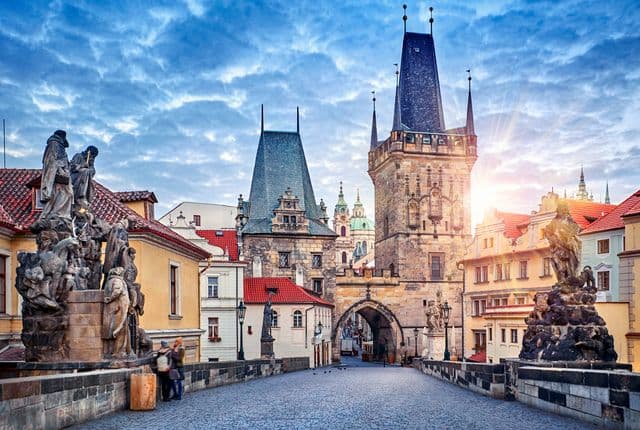
Malá Strana sits below Prague Castle on the west bank of the Vltava. It has the look of a small town that happens to be inside a capital city — cobblestone streets, walled gardens, embassy buildings in former palaces, and a quiet that surprises visitors. The main tourist artery (Mostecká, connecting Charles Bridge to the Castle) is busy, but step one street in any direction and you're alone.
The downside is that Malá Strana has relatively few restaurants and shops compared to the Old Town or Vinohrady. Evening options are limited — this is a neighbourhood that goes quiet after 10 PM. Getting to the Old Town means crossing Charles Bridge (beautiful but slow with crowds) or taking the tram.
Insider tip: The streets around Vlašská and Tržiště — the area between the embassies and the Castle steps — are some of the most beautiful residential streets in Prague. Hotels here are often in buildings with genuine 17th-century features: vaulted ceilings, original stonework, garden courtyards. You pay for the atmosphere, but you get it.
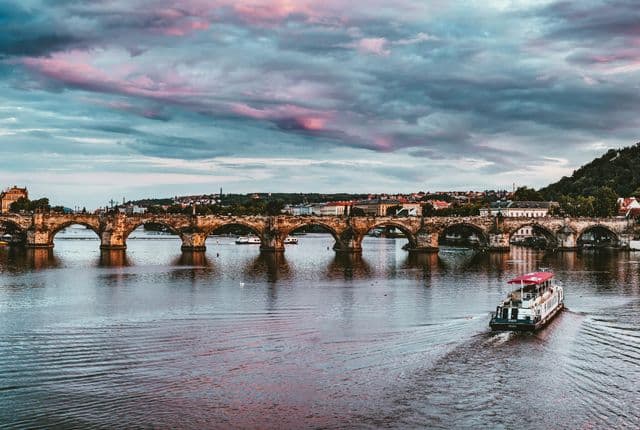
Transit: Tram line 22 runs through Malá Strana and up to the Castle. Metro station Malostranská (line A) connects to the Old Town in two stops. The 15-minute walk across Charles Bridge to the Old Town Square is one of the great Prague experiences — especially early morning.
Vinohrady — Local Feel, Great Value, Strong Dining
Who it's for: Visitors who want to live like a Prague resident — good food, good coffee, leafy streets, lower prices, and a 10-minute tram ride to the centre.
Price range: Medium. EUR 70-140/night for solid mid-range hotels and well-appointed apartments. This is where your money goes furthest in Prague without sacrificing quality.
Vinohrady is the neighbourhood we recommend most often. It's a residential district immediately east of Wenceslas Square, built in the late 19th century when Prague was booming under Austria-Hungary. The architecture is handsome — Art Nouveau apartment buildings, tree-lined streets, a central square (náměstí Míru) with a neo-Gothic church.
The dining scene here is the best in Prague for the price. Restaurants serve the same quality you'd find in the Old Town at 40-50% less, and the clientele is overwhelmingly local. Morning coffee culture is strong — there are excellent roasteries and bakeries on nearly every block around Mánesova and Korunní streets.
Insider tip: The area around náměstí Jiřího z Poděbrad (Jiřák to locals) has the best combination of food, atmosphere, and accessibility. The farmers' market on the square (Wednesday through Saturday) is the real thing — not a tourist market. From Jiřák, the green metro line (A) puts you at Staroměstská (Old Town) in four minutes.
Transit: Metro stations Náměstí Míru and Jiřího z Poděbrad (both line A) are the main hubs. Tram lines 4, 10, and 22 run along the neighbourhood's main streets. Wenceslas Square is a 10-minute walk downhill.
Žižkov — Budget-Friendly, Pub Culture, Rough Edges
Who it's for: Budget travellers, solo visitors, people who like pubs and don't care about polish.
Price range: Low-medium. EUR 40-90/night for clean, functional hotels and hostels. Apartments go for EUR 50-80. This is the cheapest central neighbourhood in Prague.
Žižkov has the highest density of pubs per capita in Prague — possibly in all of Europe, though nobody has formally verified the claim. It's a working-class district that has been slowly gentrifying for two decades without ever quite finishing the job. The streets are hilly, the facades are sometimes peeling, and the nightlife is genuine rather than curated.
The neighbourhood is named after the Hussite commander Jan Žižka, whose enormous equestrian statue sits atop Vítkov Hill at the district's edge. The Žižkov Television Tower — the 216-metre communist-era broadcasting structure with David Černý's crawling babies — is the district's landmark and visible from everywhere.
Insider tip: Žižkov's pub scene is best experienced on the streets around Bořivojova and Husitská. These are not craft cocktail bars — they're neighbourhood pubs with Pilsner on tap, regulars at the bar, and a Czech atmosphere that's increasingly rare in the centre. Prices are roughly half of what you'd pay in the Old Town.
Transit: The area is well connected by tram (lines 5, 9, 26 along Seifertova) but the metro is less convenient — the nearest stations are Jiřího z Poděbrad (line A) on the Vinohrady border and Florenc (lines B/C). Walking to the Old Town takes 15-20 minutes downhill.
Karlín — Modern, Clean, Quietly Hip
Who it's for: Visitors who prefer contemporary restaurants, clean design, and a neighbourhood that feels more 2026 than 1426.
Price range: Medium. EUR 80-160/night. The hotel stock is newer than in the historic centre, and apartments here are well-maintained modern builds.
Karlín was devastated by the 2002 floods and rebuilt almost from scratch. The result is a neighbourhood that combines 19th-century street grids with 21st-century interiors — renovated apartment buildings, modern office complexes, and a restaurant scene that's become one of Prague's best.
The dining here is notably good. Several of Prague's most talked-about restaurants are in Karlín, operating in converted industrial spaces and refurbished ground-floor units. The food tends toward modern European and Asian-influenced rather than traditional Czech.
Insider tip: Křižíkova street is the dining spine of Karlín. Walk its full length and you'll pass a dozen serious restaurants, bakeries, and wine bars. The neighbourhood park along Kaizlovy sady is a pleasant morning walk. For a genuinely local experience, visit the Karlínské náměstí farmers' market.
Transit: Metro station Křižíkova (line B) is central to the district. Florenc (lines B/C) is a five-minute walk and connects to the main bus station. Tram lines 3 and 8 run through the neighbourhood. The Old Town is a 12-minute walk across the Vltava bend or one metro stop.
Holešovice — Art Galleries, Markets, River Views
Who it's for: Art enthusiasts, market lovers, visitors who want an emerging neighbourhood with character.
Price range: Medium. EUR 70-130/night. Accommodation is a mix of converted industrial spaces and straightforward mid-range hotels.
Holešovice occupies a bend in the Vltava north of the centre. It's a former industrial district that has reinvented itself around culture: the DOX Centre for Contemporary Art, the National Gallery's Trade Fair Palace (Veletržní palác, housing the country's best collection of modern art), and the Prague Market (Pražská tržnice) — a sprawling complex of halls and courtyards with food stalls, Vietnamese restaurants, and occasional flea markets.
The neighbourhood still has rough spots — empty lots, unrenovated blocks, a grittiness that Vinohrady doesn't have. That's part of the appeal for some visitors and a drawback for others.
Insider tip: Letná Park, on the bluff above Holešovice, has the best beer garden in Prague — Letná Beer Garden — with unobstructed views over the river to the Old Town, the Castle, and the bridges. It's a plastic-chair, self-service operation with excellent beer. Go at sunset.
Transit: Metro station Vltavská (line C) and tram lines 1, 12, 14, and 25 connect Holešovice to the centre. The ride to the Old Town is about 10 minutes. Holešovice railway station (Praha-Holešovice) handles some international trains.
Planning your visit? A private guide takes the logistics off your plate.
Smíchov — Transit Hub, Practical, Underrated
Who it's for: Practical travellers who want a well-connected base, access to shopping and transport, and don't need a pretty streetscape.
Price range: Low-medium. EUR 60-120/night. Good value for functional hotels near the transit hub.
Smíchov sits on the west bank south of Malá Strana. It's Prague's main transit interchange — the Anděl metro/tram hub connects buses, trams, and the yellow metro line (B), and the Smíchovské nádraží (Smíchov railway station) is the departure point for day trips south (Český Krumlov, Karlštejn). The Nový Smíchov shopping centre provides every practical need.
The neighbourhood isn't scenic. It's a mix of 19th-century residential blocks, communist-era developments, and commercial buildings. But it works exceptionally well as a base if you're planning day trips outside Prague or arriving by bus.
Insider tip: The streets immediately west of Anděl — around Štefánikova and Kartouzská — have a growing number of good restaurants and cafes that serve the local office-worker crowd. Prices are moderate, and the food is made for regulars, not tourists. The Staropramen brewery is headquartered here, and their tap room serves beer that hasn't travelled far from the tank.
Transit: Metro station Anděl (line B) is the hub. Tram lines 6, 9, 12, and 20 pass through. Smíchovské nádraží connects to Karlštejn (40 min), Český Krumlov (2.5 hrs via České Budějovice), and other southern Bohemia destinations. Malá Strana is a 10-minute walk or one tram stop north.
How to Choose — A Quick Decision Framework
Walking distance to everything, budget flexible: Staré Město or Malá Strana.
Best overall value with food and atmosphere: Vinohrady.
Lowest prices, highest pub density: Žižkov.
Modern dining, contemporary feel: Karlín.
Art and markets, emerging neighbourhood: Holešovice.
Day trips and transit connections: Smíchov.
General rule: If this is your first time in Prague and you're staying three nights or fewer, choose Staré Město or Vinohrady. If you're staying longer, Vinohrady, Karlín, or Holešovice give you a more authentic experience at a lower price. If you're planning multiple day trips, base yourself near Smíchov or Florenc for transport access.
Exploring Prague From Any Neighbourhood
Prague's public transport is excellent, cheap, and runs until midnight (night trams take over after that). Wherever you stay, the historic centre is never more than 15-20 minutes away by tram or metro. A 30-day pass costs around 550 CZK (roughly EUR 22), and a 72-hour tourist pass is 350 CZK.
On our All Prague in One Day private tour, we meet you wherever you're staying and cover the Old Town, Charles Bridge, Malá Strana, and Prague Castle in a single walk. Exclusively yours, with your own guide — and we can adjust the route based on your neighbourhood.
For an evening experience that works from any base, a medieval dinner at U Pavouka is in the Old Town — easy to reach from every district listed above.
For more practical planning, see our guide on whether Prague is expensive, or browse all our private tours in Prague.
Prague Short-Term Rental Rules (May 2026)
Prague's relationship with short-term rentals — primarily Airbnb and Booking.com apartments — has been shifting for years, and 2026 brings significant new regulations that may affect your accommodation options and prices.
Background:
Prague's historic centre (Praha 1 and parts of Praha 2) experienced an Airbnb boom that fundamentally changed entire neighbourhoods. Residential buildings in areas like Josefov, Staré Město, and parts of Vinohrady saw large percentages of apartments converted to tourist rentals, driving up rents for locals, increasing noise complaints, and hollowing out the year-round community. By 2024, some blocks in Praha 1 had more Airbnb listings than permanent residents.
The city council, following the lead of cities like Amsterdam, Barcelona, and Lisbon, has been progressively tightening rules.
What's changing:
New regulations taking effect in May 2026 introduce stricter requirements for short-term rental operators. The precise details are still being finalised as of this writing, and we recommend checking the Prague City Hall website or your rental platform for the latest rules before booking. Key areas under regulation include:
- Registration and licensing — Operators must register with the city and obtain a licence. Unregistered listings face removal from platforms.
- Night limits — A cap on the number of nights per year that a property can be rented short-term, particularly in Praha 1 and Praha 2.
- Tax compliance — Stricter enforcement of local accommodation tax collection through platforms.
What this means for visitors:
- Fewer listings in the centre. Some casual hosts and investors operating multiple unlicensed apartments are likely to exit the market. The total number of available short-term rentals in the historic core may decrease.
- Potentially higher prices. Reduced supply with stable demand tends to push prices up, particularly during peak season (Easter, May-September, Christmas markets).
- More professional operators. The listings that remain are likely to be better-managed, licensed properties — which could mean more reliable quality and clearer accountability.
- Hotels remain unaffected. If you prefer certainty, Prague's hotel market spans every budget, from hostels at 500 CZK/night to five-star properties on the river.
Our recommendation: If you're booking accommodation for peak periods in 2026, book earlier than usual. The regulatory transition may temporarily reduce availability while the market adjusts. And always confirm that your chosen rental is properly licensed — platforms are increasingly required to display licence numbers on listings.
Accommodation and Practical Guides
Choosing where to stay is just the first step. These companion guides cover specific hotel recommendations, what to do with your bags between check-out and your flight, and whether the Prague Card actually saves money -- three questions nearly every visitor asks.
- Best hotels in Prague -- top picks by neighbourhood and budget
- Prague luggage storage -- lockers, services, and prices near the centre
- Is the Prague Card worth it? A cost breakdown for sightseers
Frequently Asked Questions
What is the best area to stay in Prague for the first time?
Vinohrady is our top recommendation for first-time visitors. It offers excellent restaurants, a safe and pleasant atmosphere, easy metro access to the Old Town, and prices that are 30-50% lower than the historic centre. If walking distance to the main sights is your priority, Stare Mesto is the obvious alternative.
Is it safe to stay outside the Prague city centre?
Yes. Prague is one of the safest capital cities in Europe. Neighbourhoods like Vinohrady, Karlin, Holesovice, and Smichov are all safe for visitors at all hours. Even Zizkov, which has a rough reputation, is safe — just visually less polished than the centre.
How much should I expect to pay for a hotel in Prague?
Budget hotels and hostels start around EUR 40-60/night in districts like Zizkov and Smichov. Good mid-range hotels in Vinohrady and Karlin run EUR 80-140. The Old Town and Mala Strana range from EUR 120-300+ depending on the property and season. Summer (June-August) and Christmas/New Year are peak pricing.
Do I need to stay in the Old Town to see Prague properly?
No. Prague's public transport is fast, cheap, and reliable. From Vinohrady, the Old Town is a 10-minute metro ride. From Karlin, it is a 12-minute walk. Staying outside the centre gives you lower prices, better food, and a more authentic sense of how the city actually works.
You May Also Like
Want to see Prague for yourself?
Take our flagship Prague tour
-6-640x430.jpg&w=3840&q=75)