Underground Prague — Cellars, Tunnels and Hidden Spaces
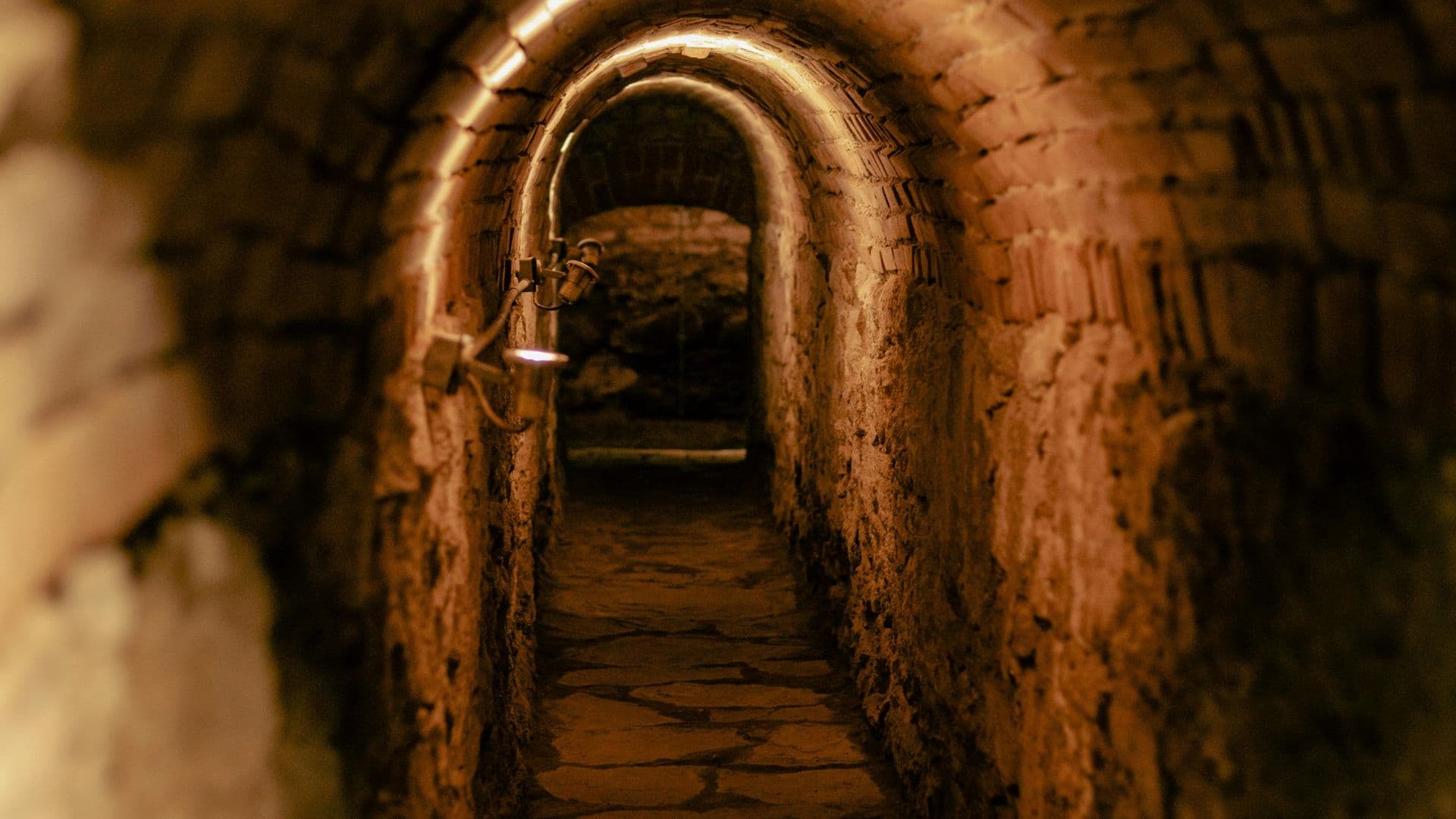
Prague's street level is not where it started. Over centuries, the city literally built itself upward — filling in flood-prone ground floors with rubble and raising roads by two to three metres. The result is a second city beneath the pavement: a network of medieval cellars, baroque tunnels, and forgotten rooms that most visitors walk directly above without knowing.
We take guests into these underground spaces regularly on our Hidden Prague — Underground and Alchemy tour, and the reaction is always the same — genuine disbelief that all of this exists one staircase below the tourist crowds. Here's what's down there and how to see it.
Why Prague Has So Much Underground
The short answer: floods. Prague sits on the Vltava, and before modern flood controls, the river regularly spilled into the Old Town. After major floods in the 12th and 13th centuries, the city decided to raise the ground level rather than keep rebuilding. New construction went on top of the old — what had been ground-floor rooms became cellars.
This happened gradually over several hundred years. A Romanesque merchant's house from the 1100s might have its original entrance two metres below today's sidewalk. Some buildings in Old Town have three basement levels, each from a different century. The deepest spaces near the river date to the earliest settlement.
The result is that Prague's underground is not a single tunnel system like Paris or Rome. It's hundreds of individual spaces — cellars, passageways, storage vaults — connected in some places and sealed off in others. New sections are still being discovered during construction work and, occasionally, by accident.
Old Town Underground
The most accessible stretch of historical underground runs beneath Staroměstské náměstí (Old Town Square) and the surrounding streets. Several buildings on the square have Romanesque cellars that are open to visitors. You descend a narrow staircase and find yourself in barrel-vaulted rooms built from rough stone blocks — rooms that were once at street level, with windows that now face solid earth.
The official Old Town underground tour covers a route beneath several connected buildings, showing how the city was built up layer by layer. You can see the original Romanesque doorframes, the fill material that raised the streets, and in some places, the old well shafts that once served surface buildings.
One detail we always point out to guests: look at the walls where the original ground level meets the later fill. You can see a clear line — lighter stone below, darker material above — marking the moment the city decided to bury its own past. It's subtle, but once you see it, the entire concept of Prague's layered history clicks into place.
Speculum Alchemiae
Speculum Alchemiae is one of Prague's strangest stories. This Renaissance-era alchemist's workshop on Haštalská ulice in Old Town was rediscovered in 2002 when the Vltava flooded and water broke through a wall in the building's cellar. Behind the wall: a network of tunnels, a hidden laboratory, and a passage that reportedly connects to Prague Castle — though only a portion is open today.
The workshop dates to the reign of Rudolf II, the Habsburg emperor obsessed with alchemy and the occult who turned Prague into the capital of esoteric Europe. The laboratory contains period furnishings — alembics, crucibles, flasks — and the tunnels are lined with stone and brick from the 16th century.
Visits are by guided tour only (around 200 CZK per adult), and they accept cash only — no cards. The tours run in Czech and English, but group sizes are small and they fill quickly. We recommend arriving at least 20 minutes before the scheduled time, especially in summer. The entrance is easy to miss — look for a small door on Haštalská, near the corner with Kozí ulice.
On our Hidden Prague — Underground and Alchemy tour, we walk through the area and explain the context of Rudolf's alchemical court — including the famous Alchemists' Lane at Prague Castle, which is connected to the same era but served a very different purpose.
Medieval Cellars Across the City
Beyond Old Town, Prague is riddled with medieval cellars that now serve as restaurants, wine bars, jazz clubs, and exhibition spaces. Many of them are Romanesque or Gothic — barrel-vaulted, low-ceilinged, built from thick sandstone blocks — and they share a particular atmosphere that no modern space can replicate.
Some of the most interesting:
- U Fleků — Prague's oldest brewery (founded 1499) has deep cellars beneath the main hall. The brewery still operates above, and the smell of malt reaches into the lower levels during brewing days.
- Lokal Dlouhááá — a popular Czech restaurant on Dlouhá ulice with Romanesque foundations visible in the basement bar. The barrel vaults predate the building above by several centuries.
- Various wine bars in Malá Strana — the cellars beneath houses on Nerudova and Mostecká often date to the 14th or 15th century. Some have exposed stonework from original medieval fortifications.
A detail that surprises guests: many Prague restaurants with underground seating are literally inside rooms that were above ground 800 years ago. The ceilings that now feel oppressively low were once normal room heights — the world just grew taller around them. We point these out during our All Prague in One Day tour whenever the route passes one.
The Nuclear Bunker
Prague also has Cold War underground spaces, though these are less well-known. During the 1950s and 1960s, the Czechoslovak government built nuclear bunkers beneath several locations in the city, designed to shelter thousands of people in the event of an atomic attack.
The most visited is Bunkr Parukářka in Žižkov — a massive concrete shelter beneath Parukářka Park that was designed to hold up to 5,000 people. It has been partially opened for tours and occasional cultural events. The interior is raw concrete, with narrow corridors, air filtration equipment, and rooms marked for decontamination. The ventilation shafts alone are worth seeing — engineered to filter radioactive particles from incoming air.
Another accessible site is the 10-Z Bunker near Hlavní nádraží (the main train station). Built in the 1950s, it was maintained as a functional shelter until the 1990s and still has its original equipment in place — bunk beds, communication gear, water treatment systems.
These bunkers are not well signposted. Most Prague residents know they exist but have never been inside. Tours operate intermittently — check locally for current schedules, as they change seasonally.
Lesser-Known Underground Spaces
A few more underground sites that we find genuinely interesting:
- Klementinum underground — the former Jesuit college near Charles Bridge has basement levels rarely included in the standard library tour. When they're accessible, the stone corridors beneath the Astronomical Tower are striking.
- Vyšehrad casemates — the 17th-century brick-lined tunnels beneath Vyšehrad fortress were built as part of the baroque military fortifications. They're open during regular Vyšehrad hours and remarkably quiet even in peak season. Inside, you'll find several original baroque statues from Charles Bridge — they were moved here for preservation when replaced by copies on the bridge above.
- Nové Město basements — scattered across the New Town, these tend to be Gothic-era and are often found in the basements of banks and shops. Most are not open to the public, but you catch glimpses through grated windows along streets like Vodičkova and Spálená.
Practical Tips for Visiting Underground Prague
Prague's underground sites share a few things in common. The temperature below ground stays around 10-12 °C year-round, so bring a light layer even in summer. Ceilings are low in many spaces — anyone above 185 cm will want to watch their head. Some sections involve steep, narrow staircases with uneven steps.
The official Old Town underground tours and Speculum Alchemiae both require advance booking in peak season (May through September). The nuclear bunker tours tend to run on weekends only and may pause during winter months.
One thing we tell every guest: photograph the details, not just the wide shots. The tool marks on Romanesque stone blocks, the graffiti scratched by medieval merchants, the fossilised shells in limestone walls — these are the things that make Prague's underground feel real, not staged.
See It With a Private Guide
The underground is where Prague stops being a postcard and starts being a city with genuine depth — literally. Most visitors walk the surface and see the towers, the bridges, the squares. Going below street level adds a layer of understanding that changes how you see everything above.
Our Hidden Prague — Underground and Alchemy tour takes you into the spaces covered in this article and adds context about Rudolf II's court, the alchemists, and why Prague has more hidden rooms than almost any other European capital. Exclusively yours, with your own guide — and we know which doors to knock on.
For guests who want to combine underground history with a broader city overview, our All Prague in One Day tour includes underground stops where time allows. And if you want to end the evening in one of Prague's finest medieval cellars, a medieval dinner at U Pavouka puts you inside a 15th-century vaulted tavern for a feast with fire shows and swordplay.
Browse all our private tours in Prague.
Frequently Asked Questions
Is the underground in Prague safe to visit?
Yes. The commercially operated sites — Old Town underground, Speculum Alchemiae, Vyšehrad casemates, nuclear bunkers — are maintained and structurally sound. Ceilings are low and staircases steep in places, but the routes are well-lit and supervised.
Can you visit Prague's underground on your own?
Some sites, like the Vyšehrad casemates, can be visited independently. Others, including Speculum Alchemiae and most Old Town cellars, require a guided tour or advance booking. A private guide helps because many of the most interesting spaces are not well signposted.
How was Prague's underground created?
Most of Prague's underground was created unintentionally. After repeated flooding, the city raised its street level over several centuries, burying ground-floor rooms that became cellars. Military tunnels, alchemical workshops, and Cold War bunkers were added deliberately in later periods.
What should I wear for underground tours in Prague?
Comfortable shoes with grip — some staircases are steep and stone floors can be damp. A light jacket is useful since underground temperatures stay around 10-12 °C regardless of the weather above.
For more detailed answers to common questions about booking, pricing, and what to expect, check our frequently asked questions page.
You May Also Like
Want to see Prague for yourself?
Explore Prague's underground-6-640x430.jpg&w=3840&q=75)