Free Things to Do in Prague — Experiences That Cost Nothing
Prague is one of those rare cities where the best experiences are often free. The architecture is the attraction, and you do not need a ticket to stand on Charles Bridge at sunrise, walk through the baroque streets of Malá Strana, or watch the light change over the Old Town rooftops from Letná Park. The city's beauty is structural — it is in the stone, the layout, the views — and nobody charges admission for it.
That does not mean Prague lacks paid attractions worth visiting. It does. But if your budget is tight, or if you simply prefer experiences over tickets, you can fill several days in Prague without spending a koruna on entrance fees. We guide visitors through Prague every week, and some of the moments our guests remember most vividly cost nothing at all.
Charles Bridge
Karlův most — Charles Bridge — is the obvious starting point, and it earns its place. The 14th-century stone bridge spans the Vltava between the Old Town and Malá Strana, lined with 30 baroque statues and offering views in both directions that are genuinely spectacular.
The bridge is free to walk, day or night, in any direction. There is no ticket, no gate, no time restriction. The experience changes dramatically depending on when you cross.
Before 7:30 in the morning, the bridge is nearly empty. The light comes from the east, hitting the castle on the hill and warming the stone beneath your feet. A few photographers, a jogger or two, and the statues. This is when the bridge is at its best — quiet enough to hear your footsteps, beautiful enough to stop and stand in the middle without being jostled.
At midday in summer, the bridge is a slow-moving river of tourists, buskers, portrait artists, and souvenir vendors. It is still photogenic — the views do not change — but the atmosphere is fundamentally different. If you can only cross once, make it early morning or after 21:00 when the crowds thin and the bridge is lit.
Insider detail: touch the bronze plaque on the statue of St. John of Nepomuk — the one with the shiny spot where thousands of hands have rubbed it smooth. The legend says it brings good luck and ensures your return to Prague. The statue is the fifth on the right side walking from Old Town — look for the two crosses and five stars in the relief, and the golden dog.
Old Town Square
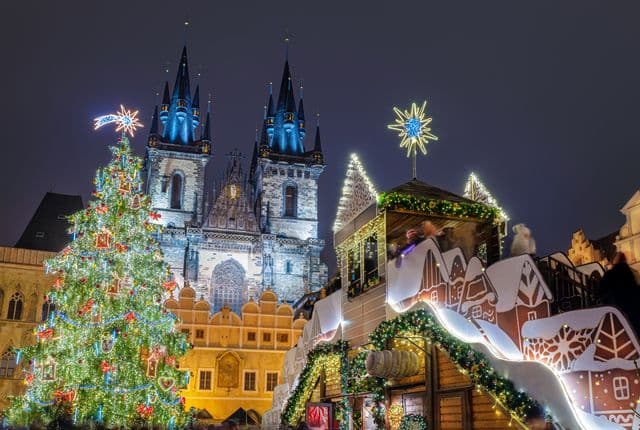
Staroměstské náměstí — Old Town Square — is Prague's heart, and walking into it for the first time still produces a reaction, even if you have seen a thousand photographs. The gothic spires of Týn Church, the baroque facade of St. Nicholas, the pastel-coloured merchant houses, and the Astronomical Clock tower all frame a space that feels theatrical in the best sense.
The square itself is free. You can sit on the benches, stand by the Jan Hus memorial, and absorb the architecture for as long as you like. The Astronomical Clock performs its apostle procession at every hour on the hour — brief but free.
Insider detail: the real detail worth studying on the Astronomical Clock is not the apostle show (which is, honestly, underwhelming) but the clock face itself. The astronomical dial shows the position of the sun and moon, sidereal time, and zodiac positions. The calendar dial below it, painted by Josef Mánes, shows the months of the year with scenes of Bohemian rural life. Stand close — it is more impressive than the hourly procession.
The square's architecture tells a compressed history of Prague — gothic, renaissance, baroque, and rococo side by side. The Kinský Palace, the House at the Stone Bell, and the massive Týn Church with its 80-metre towers are all worth studying from the outside without a ticket or a queue.
Petřín Hill
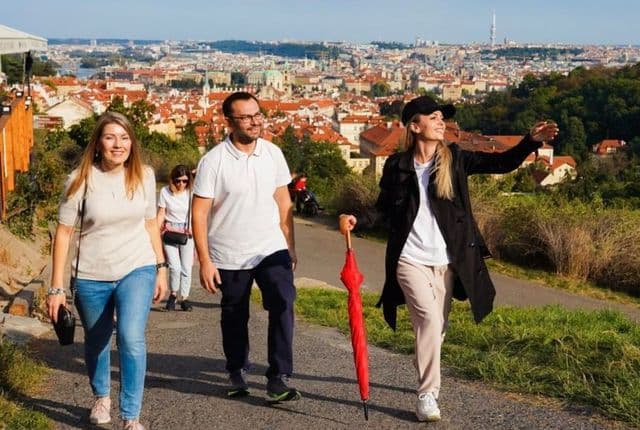
Petřín is Prague's green lung — a forested hill on the left bank of the Vltava, rising above Malá Strana and offering some of the best views in the city. Walking up is free, and the paths are varied enough that you can choose a steep direct route or a gentle winding climb through orchards and gardens.
The hill is covered with old fruit trees that bloom in spring and turn golden in autumn. The formal rose garden near the summit peaks in June and is free to enter. The paths are shaded and quiet even when the city centre below is packed.
From the top, the panoramic views are extraordinary. Prague Castle sits at eye level to the north, the Old Town spreads east across the river. The observation tower at the summit charges admission, but the views from the hillside around it are arguably just as good — and free.
Insider detail: the Strahov Monastery orchards on the northern slope of Petřín are planted with heritage apple varieties and are free to walk through. The monastery charges for the library, but the grounds and courtyard are free, and the viewpoint from the monastery wall — looking directly down onto the castle — is one of Prague's best-kept free vistas.
You can walk up from Malá Strana (starting near the tram stops on Újezd), take the funicular (a 30- or 90-minute transit ticket is not valid on it — you need a 24-hour or 72-hour ticket, or a separate funicular ticket), or approach from Strahov. The descent into Malá Strana through the winding streets is part of the experience.
Vyšehrad
Vyšehrad is Prague's other castle — older than Prague Castle in legend, quieter in reality, and entirely free to enter. The hilltop fortress sits south of the city centre on a bluff above the Vltava, surrounded by ramparts, parks, and gardens.
The fortress grounds are open year-round, and the rampart walk offers panoramic views of the river and the city. The northern ramparts look back toward Prague Castle, while the southern side faces the Vltava curving through the countryside.
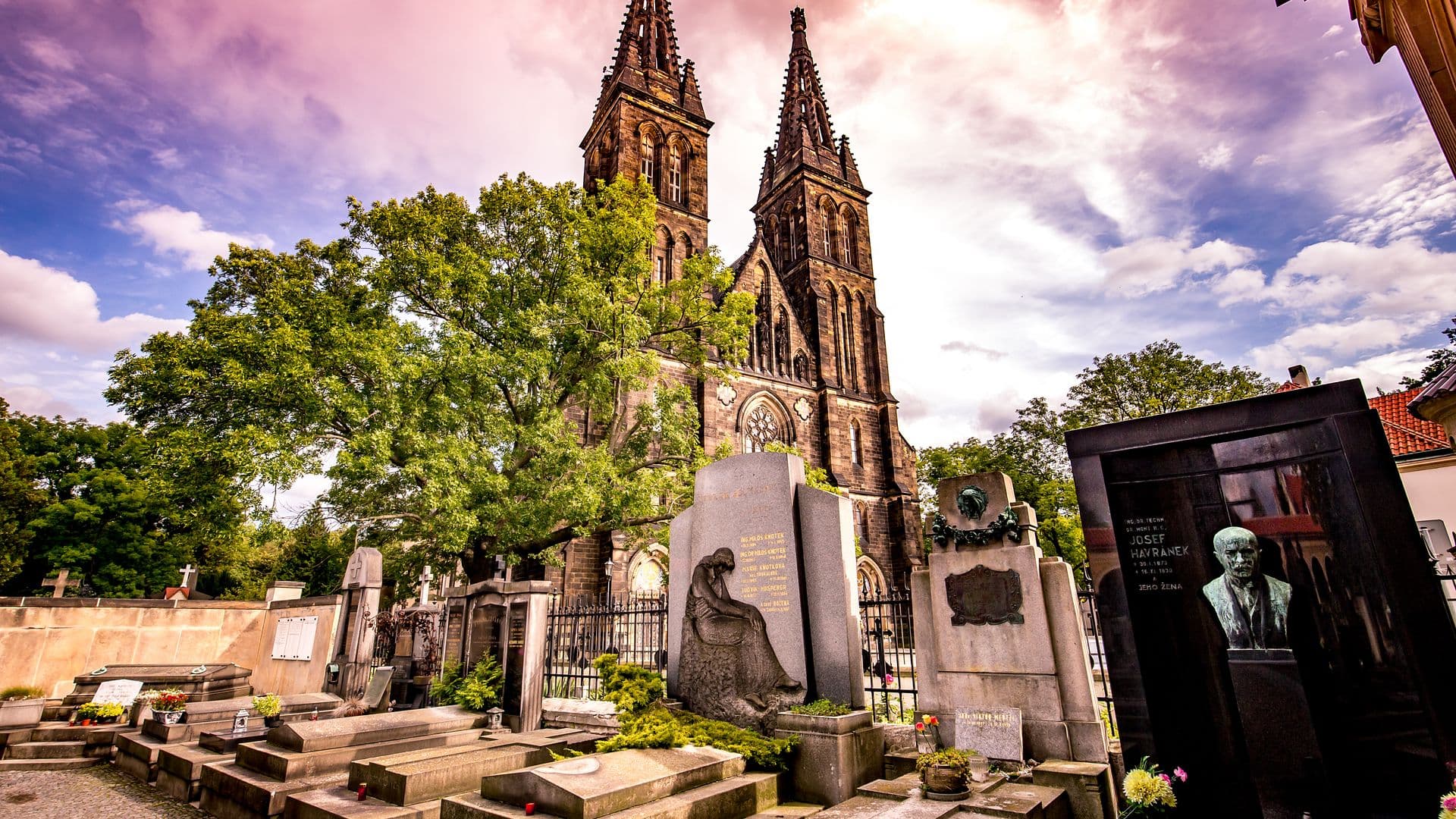
Slavín cemetery, inside the fortress walls, is where Czech cultural figures are buried — Dvořák, Smetana, Mucha, Čapek. The cemetery is beautifully maintained, shaded by mature trees, and free to visit. Walking among the ornate graves is a quiet way to connect with Czech cultural history.
The casemates (underground tunnels) and the Gorlice Hall — which houses six original baroque statues from Charles Bridge — require a small admission fee. But the rest of Vyšehrad is free: the rampart walk, the cemetery, the park, and the exteriors of the Romanesque Rotunda and the neo-Gothic Basilica. You can easily spend 90 minutes here without paying anything.
Wallenstein Garden
Valdštejnská zahrada — the Wallenstein Garden — is a full baroque garden hidden behind high walls in Malá Strana, free to enter from April through October. Bronze statues (copies — the originals were taken by Swedish troops in 1648), a baroque loggia with ceiling frescoes, an ornamental pool with koi, and free-roaming peacocks.
The garden's most unusual feature is the dripstone grotto wall — a massive artificial stalactite surface with distorted faces and organic forms embedded in the rock. It looks like something from a fever dream and rewards a slow, close look.
The peacocks are most active in the morning and tend to display their tail feathers in spring and early summer. The garden opens at 7:30 on weekdays, and at that hour you may have the entire place to yourself. The adjacent Wallenstein Palace — now the Czech Senate — opens free to the public on select weekends, typically the first weekend of each month during the garden season.
Letná Park
Letenské sady — Letná Park — occupies a long bluff above the Vltava on the city's left bank, offering the best free panoramic view in Prague. From the terrace where the enormous metronome now stands (on the plinth that once held the world's largest Stalin statue, dynamited in 1962), you look directly down the river at a lineup of bridges with the Old Town skyline beyond.
The park itself is a generous expanse of mature trees, walking paths, and open lawns. The beer garden at the eastern end is affordable rather than free, but sitting in the park with your own drinks and a view is a popular local alternative.
Insider detail: the giant metronome on the Letná plinth has been a fixture since 1991, but most visitors do not realize what stood there before. The Stalin monument — the largest group statue in Europe, 15.5 metres tall — stood for only seven years before being dynamited in 1962. The contrast between the totalitarian monument it was built for and the kinetic art sculpture it now holds is one of Prague's more pointed architectural commentaries.
A private guide makes all the difference when exploring this part of Prague.
Náplavka Riverbank
The paved embankment along the Vltava on the New Town side — Náplavka — has become one of Prague's most popular public spaces, and it costs nothing to enjoy. On warm evenings, locals gather along the river wall with drinks from the floating bars moored below.
Saturday farmers' markets run here from spring through autumn — Czech cheese, bread, pastries, honey, and seasonal specialties. The embankment walk stretches from the National Theatre south toward Vyšehrad, and doing the full length on a warm evening is one of Prague's finest free experiences.
Church Visits
Prague has dozens of churches, and many are free to enter. The interiors range from austere gothic to overwhelming baroque, and the quality of the artwork, frescoes, and architecture inside these churches is often extraordinary.
Týn Church on Old Town Square has a gothic interior with a notable baroque altarpiece — free during opening hours (typically afternoons). St. Nicholas Church in Malá Strana is one of Central Europe's great baroque interiors, with a massive ceiling fresco and an organ that Mozart played. A small admission fee applies here, but many other churches are entirely free.
Insider detail: the Church of Our Lady of the Snows (Kostel Panny Marie Sněžné) on Jungmannovo náměstí, a few minutes from Wenceslas Square, is Prague's tallest church interior — the vault soars to 33 metres. It was meant to be much larger (only the choir was completed), which gives the interior an unusual vertical drama. It is free, quiet, and almost never crowded.
Changing of the Guard
The ceremonial changing of the guard at Prague Castle takes place every hour on the hour from 7:00 to 20:00 at the main gate on Hradčanské náměstí (Castle Square). It is brief, formal, and free to watch. The noon ceremony is the most elaborate, with a full fanfare and flag exchange.
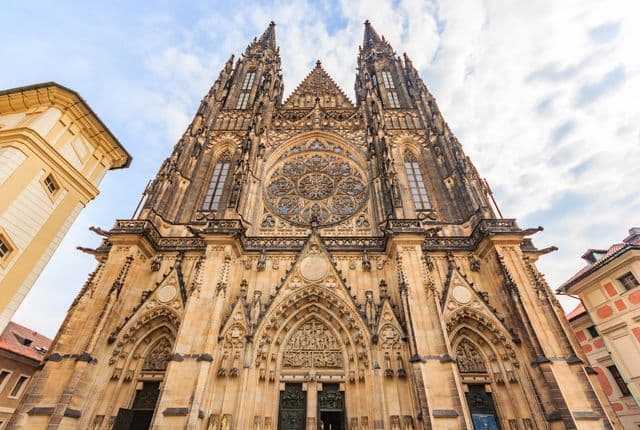
The soldiers' uniforms were designed by Theodor Pištěk, who won an Academy Award for his costume work on the film Amadeus. Standing in the castle courtyard watching the ceremony, with the Gothic spires of St. Vitus Cathedral rising behind, costs nothing and takes about five minutes.
Street Art and Window Shopping
Prague rewards aimless walking. The streets between Old Town Square and the river are full of architectural details — doorways, courtyards, decorative facades — that you notice only when you are not rushing toward a specific attraction.
Pařížská street (Paris Street), running from Old Town Square north toward the river, is Prague's luxury shopping boulevard — designer boutiques alongside art nouveau apartment buildings. Window shopping is free, and the architecture is the real attraction.
The John Lennon Wall in Malá Strana (Velkopřevorské náměstí, near the French Embassy) is free to visit and constantly evolving. The wall has been covered with graffiti, lyrics, and peace messages since the 1980s and is repainted regularly.
The narrow Zlatá ulička (Golden Lane) inside Prague Castle charges admission during the day, but the castle courtyards and gardens are free. The southern gardens — the Rajská zahrada (Paradise Garden) and Na Valech Garden — offer views, sculptures, and quiet paths, and they are open free of charge during the castle's garden season (April–October).
Free Museum Days
Several Prague museums offer free admission on specific days, typically the first Wednesday or Thursday of the month. The National Gallery branches, the City of Prague Museum, and the Czech Museum of Music all participate — check current schedules before planning around them.
The Trade Fair Palace (Veletržní palác) in Holešovice — housing the National Gallery's modern and contemporary art, including works by Klimt, Schiele, and Mucha — is the strongest free-day option. The building itself, a functionalist masterpiece from the 1920s, is worth visiting for the architecture alone.
Experience Prague With a Private Guide
The free experiences in Prague are everywhere, but knowing where to find them — and understanding the history and context behind what you are seeing — transforms a pleasant walk into something deeper. On our All Prague in One Day private tour, we combine the major landmarks with hidden gardens, quiet courtyards, and viewpoints that most visitors miss entirely.
Exclusively yours, with your own guide — we build the route around your interests, your pace, and the time of day that makes each stop work best.
For something completely different in the evening, the medieval dinner at U Pavouka Tavern is a five-course feast in a candlelit Gothic cellar with live sword fighting and fire breathing. Not free — but unforgettable.
Browse all our private tours in Prague.
Want to see the Prague castle without the tourist crush? Book our private Vyšehrad Fortress tour — exclusively yours, with your own licensed guide, and Prague's most photographed skyline view from the hill the founding myth set the city on.
Frequently Asked Questions
Can you visit Prague on a budget?
Yes. Many of Prague's best experiences are free — Charles Bridge, Old Town Square, Petřín Hill, Vyšehrad, Letná Park, and the Wallenstein Garden all cost nothing. Food and beer are affordable by European standards, and public transport is inexpensive and efficient.
Is Prague Castle free to enter?
The castle courtyards, gardens, and grounds are free. The interiors — St. Vitus Cathedral nave, Old Royal Palace, Golden Lane, and St. George's Basilica — require the Main Circuit ticket, 450 CZK for adults (300 CZK reduced). The Changing of the Guard at the main gate is free to watch.
Are there free walking tours in Prague?
Free walking tours operate daily from Old Town Square. They work on a tip-based model — no upfront cost, but a tip is expected at the end. Quality varies. For a private experience tailored to your interests, our guided tours offer a different level of depth and flexibility.
What free things can you do in Prague at night?
Walk Charles Bridge after 21:00 when the crowds thin and the bridge is lit. Watch the sunset from Letná Park. Browse the Náplavka riverbank and the floating bars. Look at the floodlit castle and cathedral from across the river. The city is beautiful after dark, and walking through it costs nothing.
You May Also Like
Want to see Prague for yourself?
Take our flagship Prague tour-6-640x430.jpg&w=3840&q=75)