Prague on a Rainy Day — What to Do When the Weather Turns
Rain in Prague is not a problem — it's a redirect. The city has more covered arcades, underground spaces, vaulted churches, and cozy cafes than most European capitals, and many of Prague's best experiences happen indoors. A rainy day often turns out better than a sunny one because you end up in places you'd otherwise walk right past.
We guide in every weather condition, and some of our most memorable tours have been in the rain. The crowds thin, the cobblestones shine, and the city takes on a mood that sunny postcards never capture. Here's how to make a wet day in Prague genuinely excellent.
Museums Worth Your Time
Prague has dozens of museums, but quality varies wildly. Here are the ones we actually recommend to guests — places where you'll spend two hours without checking the time.
The National Gallery at Veletržní palác (Trade Fair Palace) in Holešovice is the best art museum in Prague by a wide margin. The building itself is a 1920s functionalist landmark — seven floors of open galleries showing Czech and international modern art. The Kupka collection alone is worth the trip. Most visitors to Prague never make it here because it's outside the tourist centre, which means it's uncrowded even on the rainiest Saturday.
The Jewish Museum spans several synagogues and the Old Jewish Cemetery in Josefov. The Pinkas Synagogue, with the names of 77,297 Czech Holocaust victims hand-written on its walls, is one of the most powerful memorial spaces in Europe. Allow at least 90 minutes. The spaces are indoors, and the cemetery has a covered viewing area.
The National Technical Museum in Letná is a sleeper hit. Vintage cars, motorcycles, steam engines, a full-size mining tunnel replica, and an astronomy hall with historical instruments. Families love it, and so do adults who didn't expect to. The transportation hall — with dozens of perfectly preserved cars and motorcycles from the early 1900s onward — is surprisingly compelling even if you're not a car person.
One insider pick: the Lobkowicz Palace inside Prague Castle. It's a private collection — Beethoven manuscripts, Bruegel paintings, a family history spanning 700 years — housed in a palace where the audio guide is narrated by family members. It's the most personal museum experience in Prague, and see our Prague Castle guide for details on combining it with the rest of the castle complex.
Churches and Sacred Spaces
Prague's churches are extraordinary indoor spaces, and rain gives you a reason to step inside the ones you might otherwise pass.
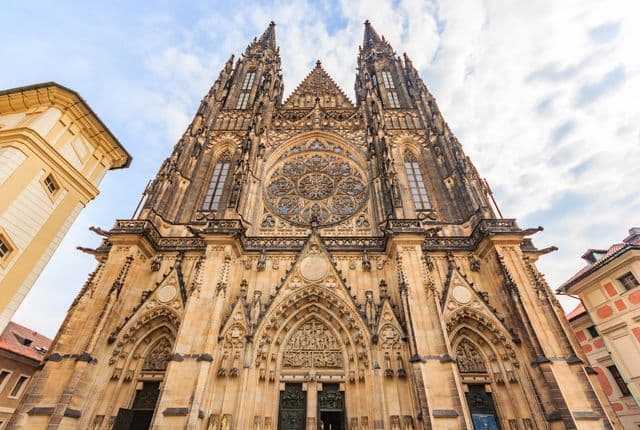
St. Vitus Cathedral inside Prague Castle is the obvious choice — and it deserves the reputation. The stained glass windows by Alfons Mucha are worth the visit alone, and on a grey day the light through the glass takes on a softer, more atmospheric quality than in bright sunshine. The cathedral is included in Prague Castle tickets, and mornings are less crowded.
The Church of St. Nicholas in Malá Strana (not the one in Old Town — there are two) is Prague's finest baroque interior. The ceiling frescoes by Johann Lucas Kracker cover over 1,500 square metres — step inside, look up, and stay for a while. Organ concerts happen regularly, often in the afternoons, so check the schedule at the entrance.
The Strahov Monastery Library is technically a library, but it functions as a sacred space. Two baroque halls — the Theological Hall and the Philosophical Hall — with original ceiling frescoes and floor-to-ceiling books from the 17th and 18th centuries. You view from the doorways (no entry into the halls themselves), so visits are quick but unforgettable. The monastery also has a small brewery on-site, where the transition from baroque manuscripts to a cold sv. Norbert beer is uniquely Prague.
A detail most visitors miss: the Bethlehem Chapel (Betlémská kaple) in Old Town is where Jan Hus preached in the early 1400s, a century before Martin Luther. The chapel is a reconstruction, but the history it represents — the Czech Reformation that preceded the Protestant Reformation — is genuine and underappreciated. Entry is inexpensive and it's almost never crowded.
Cafes with a View (or a Story)
When rain sets in, Prague's cafe culture comes alive. These aren't just places to wait out the weather — they're destinations.
Cafe Savoy in Malá Strana has a neo-Renaissance ceiling that most restaurants would charge admission to see. The breakfast and brunch are among the best in Prague, and on a rainy morning the window tables looking out at the wet Vítězná street have a cinematic quality. Arrive early — it fills up by 10 AM on weekends.
Kavárna Obecní dům inside the Municipal House is Art Nouveau at its most extravagant. Every surface — walls, ceiling, light fixtures — was designed as part of the whole. The coffee is decent, the cakes are good, and the room itself is the attraction. It's in the same building as Smetana Hall, so you're sitting inside one of Prague's most important architectural landmarks.
Grand Cafe Orient on Ovocný trh is the only Cubist cafe in the world. Yes, that's a real thing — the building is a Czech Cubist landmark from 1912, and the cafe on the first floor was recently restored to its original design. The angular furniture and geometric details are unlike anything else in Prague. It's a small space and gets full, but window seats overlooking the street are worth the wait.
For something quieter, Tricafe tucked away on Ječná street in New Town has excellent specialty coffee and a calm atmosphere that makes rainy afternoons productive rather than wasted. Locals use it as a living room — bring a book.
Covered Markets and Food Halls
Prague's indoor food scene has expanded rapidly, and rainy days are ideal for exploring it.
Manifesto Market Florenc is a permanent covered food market near the Florenc bus station. Dozens of food stalls under one roof — Vietnamese pho, Czech barbecue, Neapolitan pizza, craft beer. The setup is informal, the quality is high, and you can spend an hour sampling without a plan. The space is heated in cooler months and fully covered, so rain doesn't matter.
Hala 22 in Holešovice is another modern food hall in the former industrial district north of the centre. It leans more toward local vendors and Czech-produced goods — cheeses, charcuterie, craft spirits. Saturday mornings here feel like a neighbourhood market that happens to have a roof.
Havelský trh (Havel's Market) in Old Town is partly covered and has operated since the 13th century. The stalls sell fruit, vegetables, honey, handmade souvenirs, and seasonal items. It's not large, but it's authentic and right in the centre — a natural stop between other indoor activities.
Underground Prague
Rain makes Prague's underground spaces feel especially appropriate. You're already going below street level — the weather above becomes irrelevant.
Our Hidden Prague Underground and Alchemy tour takes you into the spaces most visitors never see: medieval cellars, alchemist workshops, and the tunnels beneath the Old Town streets. Prague's ground level has risen by several metres over the centuries (to prevent flooding), and the original medieval street level is still intact below. Walking through these spaces changes how you see the city above — you realise that every building in Old Town is standing on top of something older.
The Old Town Hall cellars are also accessible during regular visits to the Astronomical Clock tower. The Romanesque and Gothic rooms below the building date to the 12th century and show what the original ground floor looked like before the street level was raised.
Prague Castle's underground — specifically the remains beneath St. Vitus Cathedral and the Old Royal Palace — reveal foundations from the 10th century. These areas are included in castle admission and are easy to miss if you're not looking for the stairways down.
Medieval Dinner — The Best Rainy Evening in Prague
If rain has cancelled your plans for an evening stroll along the river, redirect to something better. The medieval dinner show at U Pavouka Tavern is a two-and-a-half-hour evening of fire dancers, sword fights, roasted meats, and unlimited mead — all in a 15th-century vaulted stone cellar where the weather outside is completely irrelevant.
A private guide makes all the difference when exploring this part of Prague.
The tavern is on Celetná street, a short walk from Old Town Square, so you barely need to be outside. The show runs rain or shine (it's entirely underground), and the acoustics of the stone cellars make the drums and crowd energy feel immersive. We've brought guests there on pouring-rain evenings, and every time they say it was the best part of their trip.
Book in advance — both the afternoon (16:30) and evening (20:00) shows fill up, especially when the weather pushes everyone indoors.
Covered Walks and Arcades
You can cross surprisingly large sections of central Prague without getting wet, if you know the route.
The Lucerna Passage connects Wenceslas Square to Vodičkova street through an Art Deco arcade built by Václav Havel's grandfather (yes, the former president's family). Inside you'll find a cinema, a music bar, shops, and David Černý's famous upside-down horse sculpture — a parody of the Wenceslas statue outside. The passage connects to several other arcades, and with a bit of navigation you can walk from Wenceslas Square almost to Národní třída without going outside.
The Dlouhá corridor system in Old Town links several buildings between Dlouhá street and Rybná street through interior courtyards. These aren't marked on tourist maps — ask a local or look for the open archways between buildings. The courtyards are quiet, sometimes decorated with street art, and they connect you between streets without exposure to rain.
Prague Castle itself has extensive covered areas — the long corridor along the southern gardens, the interior courtyards between the three main squares, and the covered arcade of the Vladislav Hall in the Old Royal Palace.
Theatre and Live Music
A rainy afternoon or evening is perfect for Prague's performing arts scene.
The National Theatre (Národní divadlo) on the Vltava embankment offers opera, ballet, and drama. Even if you don't catch a performance, the building itself — a neo-Renaissance landmark from 1881 — is open for guided tours. The auditorium ceiling, painted by a group of Czech artists known as the "Generation of the National Theatre," is extraordinary.
Jazz Dock on the Smíchov riverbank is a jazz club built directly over the water. The glass walls face the Vltava, and on a rainy evening the reflections on the river combine with live music in a way that makes the weather feel intentional. Shows start most evenings around 8 PM. Reserve a table by the window if you can.
The Estates Theatre (Stavovské divadlo) is where Mozart premiered Don Giovanni in 1787. The auditorium is original, intimate, and beautiful. Catching any performance here — even if it's not Mozart — puts you in the same room where European music history happened.
Practical Rainy-Day Tips
- Carry a compact umbrella — Prague rain is often intermittent, and the city is walkable between showers with a good umbrella
- Skip the raincoat poncho — cheap plastic ponchos from tourist shops tear in minutes; bring a proper waterproof layer or buy one at Decathlon (there's one near Florenc)
- Cobblestones get slippery — watch your footing on the steeper streets in Malá Strana and the castle district; rubber-soled shoes with tread make a real difference
- Museum tickets online — the National Gallery, Jewish Museum, and Prague Castle all sell tickets online; skip the indoor queues on days when everyone has the same rainy-day idea
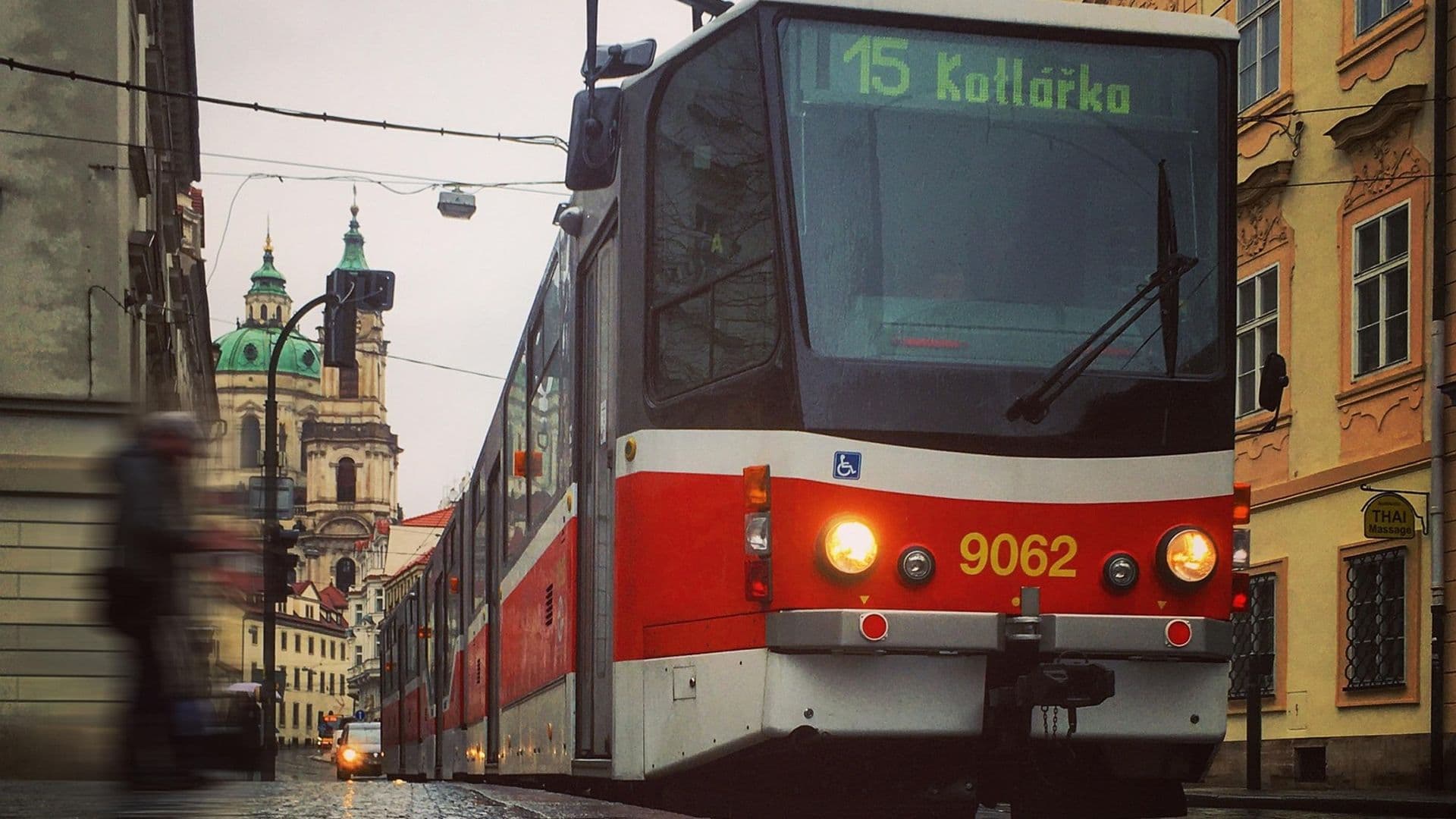
- Tram 22 as a tour — ride tram 22 from Národní třída through Malá Strana and up to Prague Castle; you get a moving tour of the city from a dry seat, and the route passes some of Prague's most scenic streets
Experience It With a Private Guide
Rain doesn't stop our tours — it changes them. We adjust routes to use more covered arcades, spend longer in the churches and museums that deserve the time, and know which cafes have the best window tables. A rainy day with a guide who knows the indoor city is often more interesting than a sunny day following a map.
Our All Prague in One Day tour adapts to weather conditions — we've run it in every kind of rain Prague can produce, and the itinerary has indoor alternatives for every outdoor section. Exclusively yours, with your own guide — and no standing in the rain waiting for a group to assemble.
For more on making the most of your Prague trip regardless of weather, check our local food guide — many of the best eating experiences in Prague happen indoors anyway.
Browse all our private tours in Prague.
Frequently Asked Questions
Does it rain a lot in Prague?
Prague gets rain throughout the year, with the wettest months being May through August. Summer rain tends to come in short afternoon showers rather than all-day drizzle. Spring and autumn can bring longer grey spells. Annual rainfall is moderate — about 500mm, less than London or Paris.
Are Prague's main attractions open when it rains?
Yes. Prague Castle, the National Gallery, the Jewish Museum, churches, and all major indoor attractions operate on their normal schedules regardless of weather. Only outdoor events like open-air concerts may be affected.
What should I wear in Prague when it rains?
Waterproof shoes with good grip are essential — Prague's cobblestones become slippery when wet. A proper rain jacket beats an umbrella on windy days. Layers work well since indoor spaces (churches, museums) can be cool.
Can I still do a walking tour in the rain?
Absolutely. Walking tours run in all weather. With a private guide, the route adjusts to include more covered passages, indoor stops, and sheltered viewpoints. Some of our most atmospheric tours have been on rainy days.
Is Prague gloomy in winter?
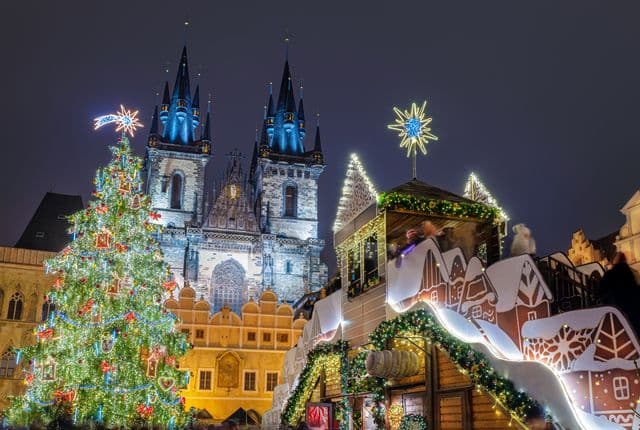
Prague gets about 6-7 hours of daylight in December and January, and overcast days are common. But the city compensates with Christmas markets (late November through early January), warm pubs, and a moody atmosphere that many visitors actually prefer to the busy summer season.
You May Also Like
Want to see Prague for yourself?
Take our flagship Prague tour-6-640x430.jpg&w=3840&q=75)