Wallenstein Garden — A Free Baroque Escape in the City Center
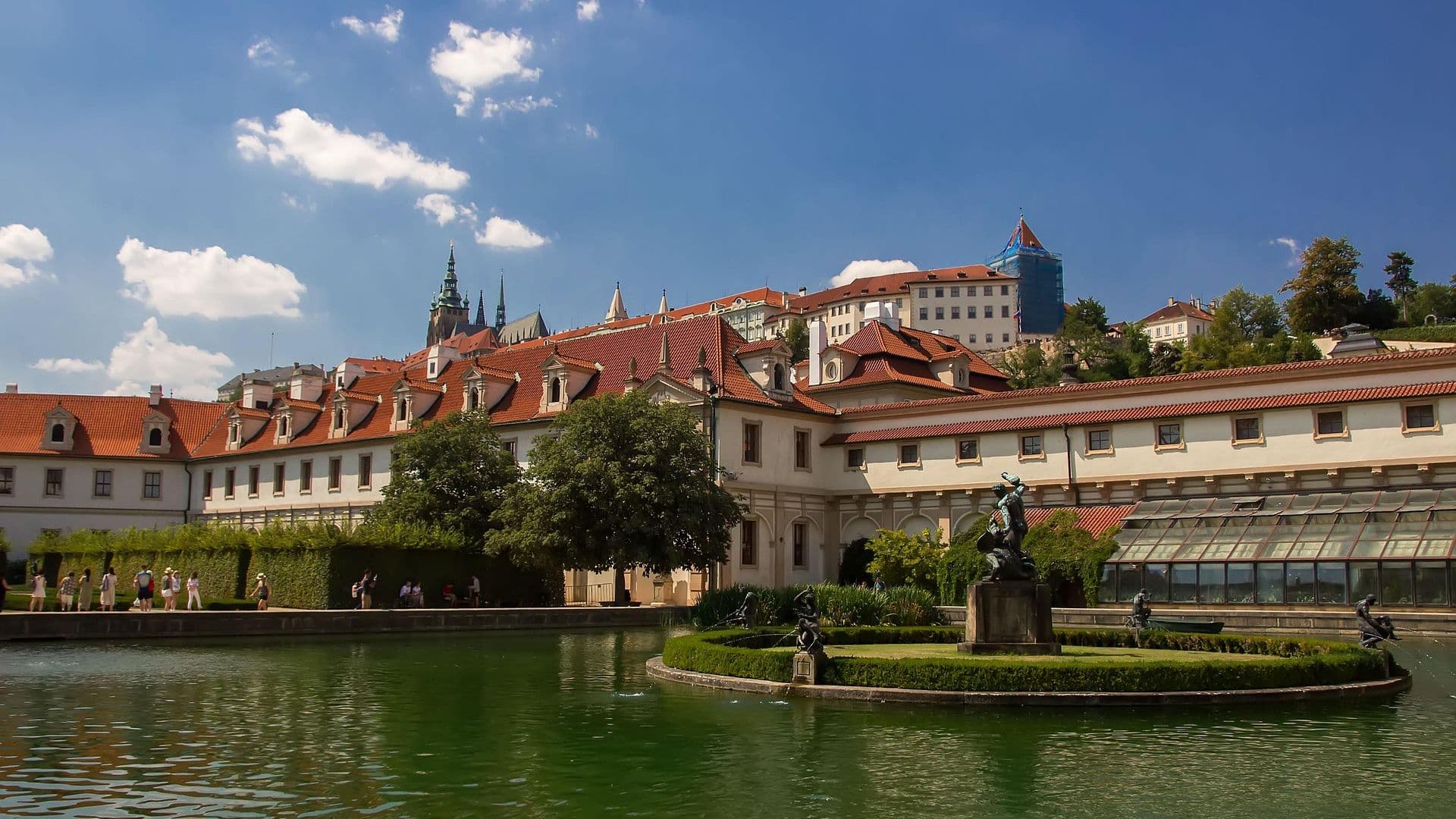
Thousands of visitors cross Charles Bridge every day, turn left into Malá Strana, and walk right past one of Prague's most peaceful places without knowing it exists. Valdštejnská zahrada — the Wallenstein Garden — sits behind high walls on a quiet street, free to enter, and almost empty on weekday mornings.
We bring guests here regularly on our Charles Bridge and Old Town walking tour, and their reaction is always the same: surprise. A full Baroque garden with bronze statues, a loggia, an ornamental pool, and free-roaming peacocks — all hidden behind a wall you could walk past a hundred times.
The Garden
Albrecht von Wallenstein — the most powerful military commander of the Thirty Years' War — built this garden in the 1620s as part of his enormous palace complex. To make room for it, he demolished 23 houses, a brickworks, and three gardens. Wallenstein was not a man who asked permission.
The main axis is a long rectangular lawn flanked by bronze statues. These are copies — the originals were taken by Swedish troops in 1648 as war spoils and now sit in Drottningholm Palace near Stockholm. The Italianate loggia at the north end, known as the sala terrena, features elaborate ceiling frescoes depicting scenes from the Trojan War. On warm mornings, it catches the light beautifully and makes for some of the best photography in Malá Strana.
The ornamental pool with its central fountain is home to large koi carp that surface lazily when visitors lean over the edge. In early summer, the garden's linden trees bloom and the scent carries across the entire space. The layout is formal — clipped hedges, gravel paths, symmetrical plantings — but the atmosphere is relaxed, more neighbourhood park than museum.
What Wallenstein built here was a statement of personal power. At the time, his palace complex was larger than Prague Castle itself. He intended it to rival the Habsburgs, and the garden was the centrepiece of that ambition. He didn't live to enjoy it long — he was assassinated in 1634 on the Emperor's orders, accused of treason.
The Grotto Wall
The most unusual feature in the garden is the dripstone wall (or grotto wall) running along the southern boundary. It looks like something from a fever dream — a massive artificial stalactite surface with distorted faces, animal shapes, and organic forms embedded in the rock.
The wall was built from limestone and calcium carbonate, designed to imitate a natural cave formation. Look closely and you'll find hidden faces staring back at you — some deliberate, others formed by centuries of mineral deposits. The effect is eerie, especially on overcast days when the textures deepen in the flat light.
Most visitors walk past it quickly, but it rewards a slow look. The craftsmanship involved was extraordinary for the 1620s, and there's nothing quite like it anywhere else in Prague. Photographers find it endlessly interesting — the textures change depending on the light and the season.
The Peacocks
The peacocks are the garden's unofficial ambassadors. Several Indian peafowl roam the grounds freely, and in spring and early summer the males display their tail feathers along the main lawn. They are entirely accustomed to visitors and will walk within a metre of you without concern.
A practical note: peacocks are loud. Their calls echo off the palace walls, and if you're not expecting it, the sound can be startling. We've seen more than one guest jump. The birds are most active in the morning — by mid-afternoon in summer they tend to find shade and settle down near the grotto wall.
Children love the peacocks. The birds are patient with small visitors, and watching a male unfurl his tail feathers at close range is one of those moments that works for every age group.
The combination of peacocks, bronze statues, and the loggia creates a scene that feels more like a private Italian villa than a public park in Central Europe. It's one of those details that makes Prague endlessly surprising.
When to Visit
The garden is open from April through October, and admission is always free. Opening hours are typically 7:30 to 18:00 in spring and autumn, extending to 19:00 or later in the summer months. Check locally for exact times, as they shift slightly each year.
Weekday mornings before 10:00 are the best time. You'll share the garden with a handful of locals reading newspapers on the benches and the occasional jogger cutting through. By midday on weekends, tour groups arrive and the atmosphere changes.
A private guide makes all the difference when exploring this part of Prague.
The adjacent Wallenstein Palace — now the seat of the Czech Senate — is open to the public on select weekends and holidays. The interior is worth seeing if your timing aligns: the main hall has a ceiling fresco that rivals anything in the garden's loggia. Senate open days are typically the first weekend of each month, but verify before planning around it.
One more tip: the garden has a second entrance from Letenská street, which is less obvious and less crowded. If you're walking from Prague Castle down through Malá Strana, this rear entrance drops you straight in.
Experience It With a Private Guide
The Wallenstein Garden is one of several places in Malá Strana that most visitors never find on their own. On our Charles Bridge and Old Town private tour, we walk through the garden and explain the history behind Wallenstein's ambition, his assassination, and why the Swedes took his statues. The context transforms what looks like a pleasant park into a story about power, war, and baroque ego.
Exclusively yours, with your own guide — we set the pace and the route around what interests you.
If you're spending a full day exploring Prague's left bank, our Prague Castle and Lesser Town tour covers the castle complex, the garden, and the winding streets of Malá Strana in a single walk. For something completely different in the evening, a medieval dinner show at U Pavouka Tavern is a favourite with our guests.
Browse all our private tours in Prague.
Frequently Asked Questions
Is Wallenstein Garden free to visit?
Yes — admission is completely free, every day the garden is open. No tickets, no reservations needed. Just walk through the gate on Letenská street or the main entrance on Valdštejnské náměstí.
When is the Wallenstein Garden open?
April through October, generally from 7:30 to 18:00 (later in summer). The garden closes for the winter months. The adjacent Senate building opens to the public on select weekends.
Can you visit the Wallenstein Palace (Czech Senate)?
The palace interior is open to the public on designated open days, typically the first weekend of each month during the garden season. Entry is free. The main hall with its enormous ceiling fresco is the highlight.
How do I get to the Wallenstein Garden?
The garden is in Malá Strana, a short walk from Malostranské náměstí (the Lesser Town Square tram stop). From Charles Bridge, walk north along Mostecká street and turn left. The main entrance is on Valdštejnské náměstí, with a second entrance on Letenská street.
You May Also Like
Want to see Prague for yourself?
Take our flagship Prague tour-6-640x430.jpg&w=3840&q=75)