Prague in Autumn — Quieter Streets and Golden Colors
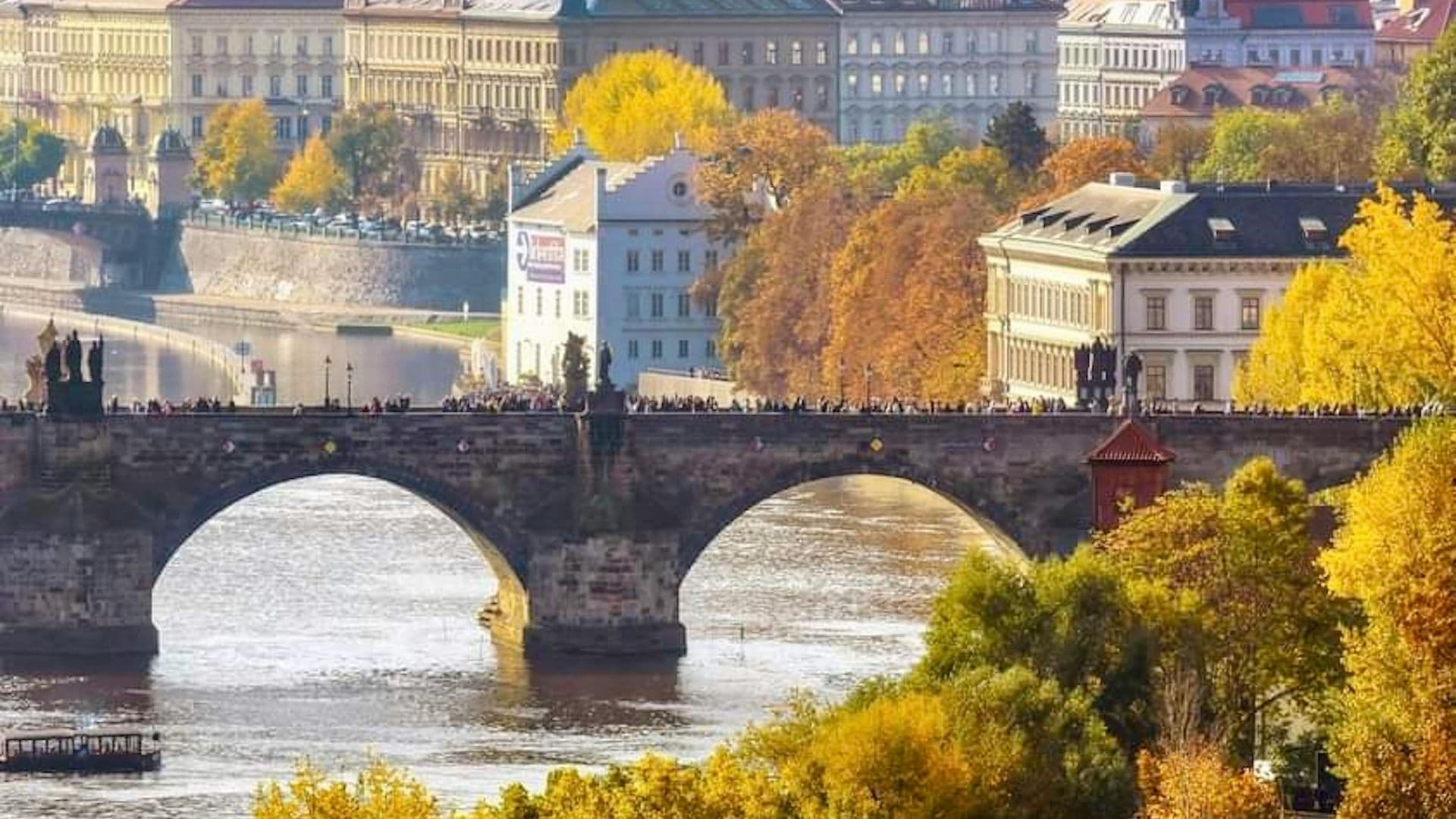
There is a week in mid-October when Prague looks like it was painted on purpose. The linden trees along the Vltava turn gold, the maples on Petřín Hill go red, and the low autumn sun hits the sandstone buildings at an angle that makes everything glow. The summer crowds have thinned, the air is cool enough for walking without overheating, and the city settles into a slower, more genuine rhythm.
We guide visitors through Prague in every season, and autumn is quietly our favourite. The light is better for photography, the queues are shorter, the locals reclaim their favourite restaurants, and the city has a warmth that has nothing to do with temperature. If you can choose when to visit, September through November deserves serious consideration.
What the Weather Actually Looks Like
Prague's autumn unfolds in three distinct acts.
September is often the best month of the year. Temperatures hover between 15–22°C, rain is relatively infrequent, and the days are still long enough (sunset around 19:00 early in the month) to pack in a full itinerary. The summer humidity breaks and the air feels clean. Late September brings the first colour changes to the parks.
October is when autumn arrives properly. Daytime temperatures drop to 10–16°C, mornings can start at 5–6°C, and the trees peak in colour around mid-month. Rain becomes more frequent — short showers rather than all-day drizzle. The clocks go back in late October, and by month's end, it gets dark around 17:00.
November is grey, cold, and honest. Temperatures range from 2–8°C, fog is common along the river, and most trees are bare by mid-month. It is the least popular month for tourism, which means the shortest queues, the lowest hotel prices, and a city that feels entirely local. If you like atmospheric, moody cities, November Prague delivers.
Pack layers regardless of the month. A morning that starts at 7°C can reach 18°C by early afternoon in September. A waterproof jacket, comfortable walking shoes, and a scarf will cover most situations from September through November.
Fall Colors — Where to Find Them
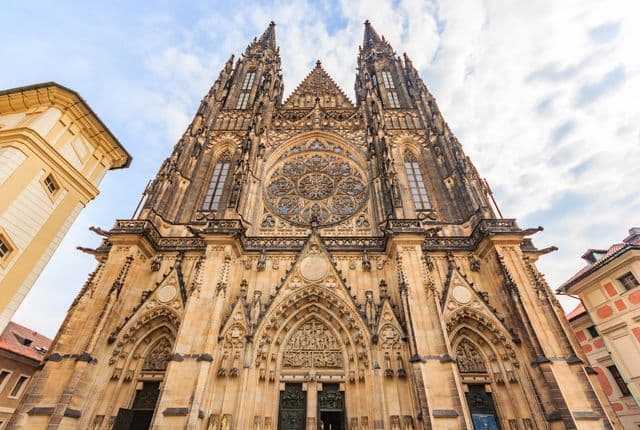
Prague is not famous as a fall foliage destination, but it should be. The city has extensive parks and gardens, many planted with species that turn spectacular colours, and the contrast of golden leaves against gothic spires and baroque facades is genuinely striking.
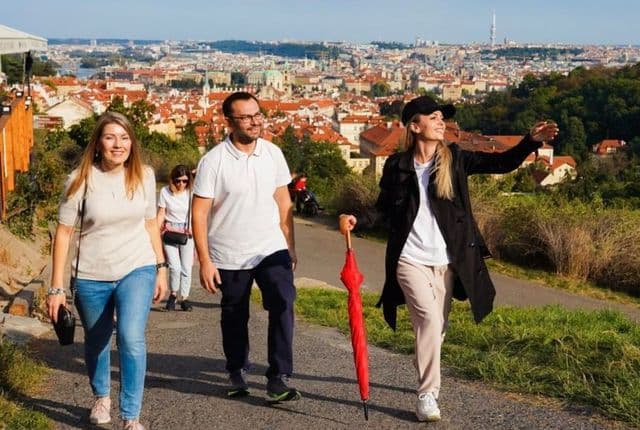
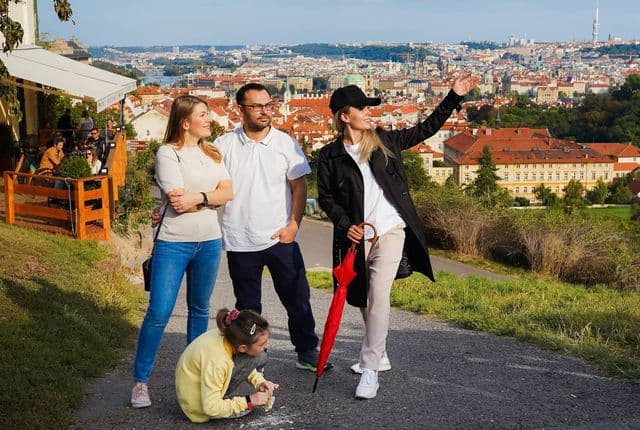
Petřín Hill is the best single location. The hillside is covered with a mix of deciduous trees — maples, oaks, chestnuts — that turn at different rates through October. Walking up from Malá Strana through the orchards and gardens, with the city opening up below you, is one of Prague's great walks — in autumn, it is extraordinary.
Once reopened after reconstruction, the funicular lets you ride up and walk down — check dpp.cz for current status.
Letná Park (Letenské sady) offers a different perspective — you are looking across the river at Old Town, with the bridges lined up below you and the park's chestnuts framing the view. The beer garden stays open into October, and drinking a Kozel on the terrace with the autumn colours behind you is the kind of moment people remember.
Stromovka — Prague's largest park — is a 15-minute walk from the centre and feels like a forest in autumn. The paths are carpeted with fallen leaves, the old-growth trees form a canopy overhead, and on weekday mornings, you might have the entire place to yourself. Locals bring dogs, children, and thermoses of coffee.
Insider detail: Vojanovy sady, the oldest garden in Malá Strana, is walled and hidden behind a gate on U Lužického semináře street. Most visitors walk past without noticing. In October, the fruit trees inside turn golden, and the garden — which is free and almost always empty — feels like stepping into a painting from another century.
Vyšehrad cemetery and ramparts are also worth visiting for autumn colour. The cemetery's mature trees create a canopy of red and gold over the ornate graves, and the views from the northern ramparts — looking back toward Prague Castle — take on a particular quality in autumn light.
Fewer Crowds, Better Experiences
The difference between summer and autumn crowds is dramatic. Charles Bridge in July can feel like a slow-moving queue. In October, you can stop, lean on the railing, and actually look at the statues without someone pushing past you.
Prague Castle interiors that require 30–45 minutes of queuing in August can be entered in under 10 minutes in October. The Jewish Quarter museums — which get genuinely uncomfortably crowded in summer — return to a manageable flow. Restaurant reservations that needed three days' notice in July are available same-day.
This is not just about comfort. The experience itself changes when you are not competing with thousands of other visitors for the same views and the same photos. You can spend 20 minutes in the Basilica of St. George listening to the acoustics rather than being shuffled through.
Insider detail: the Strahov Monastery library — two of the most photographed rooms in Prague — limits visitors to the doorway in peak season because of crowd volume. In autumn, especially on weekday mornings, you may have a few minutes of near-solitude in the Theological Hall. The painted ceiling, the gilt shelves, the smell of 300-year-old books — it all lands differently when you are not craning over someone's shoulder.
Signal Festival (October)
Prague's Signal Festival — held annually in mid-October — transforms buildings, bridges, and public spaces into canvases for light art installations. For three or four nights, artists project enormous visual displays onto facades across the city, and the streets fill with locals and visitors following mapped routes between installations.
The festival is free and spread across multiple neighbourhoods, which means the crowds distribute themselves rather than concentrating in one spot. Past installations have used the National Theatre, the Klementinum walls, churches in the Old Town, and buildings in Karlín and Holešovice.
Insider detail: the installations in the less central neighbourhoods — Karlín, Holešovice, Smíchov — tend to be more experimental and less crowded than the Old Town locations. Walking the Karlín route in particular gives you a chance to see a neighbourhood that most tourists never visit, lit up in ways its architects never imagined.
Signal Festival dates shift slightly each year, so check the official programme if your visit falls in October. It is one of the few events that makes Prague feel genuinely contemporary — a counterpoint to the medieval and baroque heritage that dominates most visits.
Wine Harvest and Autumn Food
Autumn in the Czech Republic is harvest season, and the food shifts accordingly. Restaurant menus feature game dishes — venison, wild boar, pheasant — alongside root vegetables, mushrooms, and heavier sauces. Svíčková (marinated beef in cream sauce) is available year-round, but it feels right in October in a way it does not in July.
Burčák — partially fermented young wine — appears in September and October and disappears as quickly as it arrives. It is cloudy, slightly sweet, mildly alcoholic, and dangerously easy to drink. Street vendors sell it by the cup, and wine bars across the city feature it while the season lasts. If your visit coincides with burčák season, try it at least once.
The wine regions of South Moravia harvest their grapes in September and October, and several hold harvest festivals (vinobraní) with tastings, food, and celebrations. The closest to Prague is the Grébovka wine harvest festival in the Havlíčkovy sady park in Vinohrady — a genuine local event with Moravian wine, food stalls, and folk music, reachable by tram from the centre.
A private guide makes all the difference when exploring this part of Prague.
Our Český Krumlov day trip is particularly beautiful in autumn — the drive south through the Bohemian countryside passes through rolling hills that turn gold and amber, and the town itself, wrapped in a river bend below a castle, takes on a fairy-tale quality with autumn fog and colour.
Photography Opportunities
Autumn light in Prague is a photographer's gift. The sun sits lower in the sky, casting long shadows and golden tones that last for hours rather than the brief window of summer golden hour. Morning mist along the Vltava — common in October and November — creates a layered, atmospheric effect that transforms familiar views.
The best morning photography spots in autumn are Charles Bridge at sunrise (around 7:00–7:30 in October — late enough to be civilized), Letná Park terrace overlooking the bridges, and the Strahov Monastery viewpoint above Prague Castle. All three benefit from the low sun angle and the possibility of river mist.
For autumn colours specifically, Petřín Hill in mid-October and Stromovka in late October are the strongest. The contrast of orange and gold foliage against Prague's grey-green church domes and red rooftops is the kind of image that earns its place in any travel portfolio.
Insider detail: the lesser-known viewpoint at the top of Vítkov Hill in Žižkov — where the enormous equestrian statue of Jan Žižka stands — gives you a panoramic sweep from Prague Castle to the modern skyline, with Žižkov's television tower rising behind you. In autumn, the hillside trees frame the view, and you will typically be alone up there on a weekday morning.
What to Pack
Autumn packing for Prague requires versatility. The temperature range across a single day can be 12–15 degrees, and weather can shift from clear to rainy within hours.
Essential layers: a medium-weight jacket or coat (waterproof or with a waterproof shell), a warm mid-layer (fleece or light wool), and a scarf. September leans toward light layers; November needs proper warmth.
Shoes: waterproof or water-resistant walking shoes are important. Wet cobblestones are slippery, and morning dew in the parks soaks through canvas. Ankle support helps on the hills — Petřín, Vyšehrad, and the castle approach all involve inclines.
Accessories: an umbrella (compact, sturdy), sunglasses (the autumn sun is low and direct), and gloves for November. A packable rain jacket that doubles as a wind layer is the single most useful item from October onward.
Experience Autumn Prague With a Private Guide
Autumn is when Prague reveals its character — the tourist performance fades, the locals return to their routines, and the city's beauty becomes quieter and more personal. We know which gardens are peaking in colour, which restaurants have just switched to their autumn menus, and which viewpoints catch the morning mist.
Exclusively yours, with your own guide — we adjust the route, the pace, and the focus to the weather and your interests.
Our All Prague in One Day tour works beautifully in autumn — the walking distances feel comfortable in cool air, the castle and Old Town are uncrowded, and the light makes every stop more photogenic. For a day outside the city, our Český Krumlov day trip through the autumn Bohemian countryside is unforgettable. And for an evening that matches the season's warmth, the medieval dinner at U Pavouka Tavern — candlelit, five courses, live entertainment — feels tailor-made for an October night.
Browse all our private tours in Prague.
Autumn Month Guides
Autumn transforms Prague into a tapestry of red and gold -- perfect for long walks through parks and along the Vltava. October brings colourful foliage, harvest festivals, and the spectacular Signal light-art event, while November settles into a quieter, pre-Christmas mood with dramatic skies, warming drinks, and cosy pub interiors.
- Prague in October -- autumn colours, Signal Festival, and pumpkin markets
- Prague in November -- low-season prices and the first Christmas lights
Frequently Asked Questions
What is the weather like in Prague in autumn?
September averages 15-22C with warm days and cool evenings. October drops to 10-16C with more rain and peak foliage. November is 2-8C, grey, and often foggy. Pack layers for all three months — temperature swings within a single day are common.
Is autumn a good time to visit Prague?
Autumn is arguably the best time. Crowds are significantly smaller than summer, hotel prices drop, the fall colours are beautiful, and the cooler temperatures make walking the city comfortable. October in particular offers the best balance of weather, colour, and reduced tourism.
What is Signal Festival in Prague?
Signal Festival is a free light art festival held over three or four nights in mid-October. Artists project large-scale visual installations onto buildings across the city. It attracts both locals and visitors and covers multiple neighbourhoods with different routes to follow.
What is burcak?
Burcak is young, partially fermented wine available only in September and October. It is cloudy, slightly sweet, and mildly alcoholic. Street vendors and wine bars sell it by the glass while the season lasts. It is a Czech autumn tradition worth trying at least once.
You May Also Like
Want to see Prague for yourself?
Take our flagship Prague tour-6-640x430.jpg&w=3840&q=75)