Prague Self-Guided Walking Tour — And Why a Real Guide Adds More
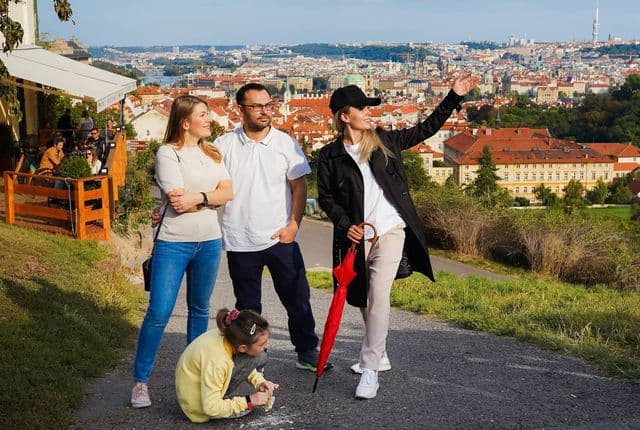
Prague is one of the best walking cities in Europe, and you genuinely don't need a guide to enjoy it. The historic centre is compact, the landmarks are visible from a distance, and the streets are safe day and night. What follows is a real, usable self-guided walking route — not a teaser designed to make you feel lost without us. Walk it, enjoy it, and see what Prague offers on your own terms.
Then, at the end, we'll explain what a knowledgeable human guide adds to the same route — because the difference is real, even if it's not strictly necessary.
The Route at a Glance
Start: Prašná brána (Powder Tower) at Náměstí Republiky End: Prague Castle (Hradčany) Total distance: Approximately 4.5 kilometres Walking time: About 90 minutes without stops Realistic time with stops: 4-5 hours Best start time: 8:30-9:00 AM (avoids midday crowds)
The route follows Prague's natural historical axis — from the medieval city gate, through Old Town, across Charles Bridge, through Malá Strana, and up to the castle. This is the path that kings took during coronation processions, and the landmarks along it are arranged in roughly the order you'd encounter them in a history book.
Stop 1: Prašná Brána (Powder Tower) — Start Here
Time needed: 15-20 minutes
The Powder Tower stands at the eastern entrance to the Old Town, a Gothic gate built in 1475. Its name comes from the 17th century, when it was used to store gunpowder. The tower is 65 metres tall, and you can climb the 186 steps for a panoramic view — though the view from the top of the Old Town Hall tower (later on this route) is better. Consider saving your energy and your knees.
Stand at the base and face west, toward the Old Town. You're looking down Celetná street, one of the oldest streets in Prague and part of the Royal Route — the path Bohemian kings walked from the court to Prague Castle for their coronation. You'll be following this route for the next few hours.
What to notice: The decorative sculptures on the tower's facade are entirely 19th-century additions by architect Josef Mocker — the same man who reconstructed Karlštejn Castle. The medieval original was much plainer.
Stop 2: Obecní dům (Municipal House) — Art Nouveau Masterpiece
Time needed: 10 minutes outside, 45-60 minutes if you go inside
Directly beside the Powder Tower stands the Obecní dům, Prague's most important Art Nouveau building, completed in 1912. The facade is decorated with a mosaic by Karel Špillar, and the interior contains the Smetana Hall, where the Prague Spring music festival opens every year.
The building sits on the site of the former royal court, where Bohemian kings lived before moving to Prague Castle. That layering — medieval royal court underneath Art Nouveau civic grandeur — is typical of Prague.
Insider detail: The ground-floor café, Kavárna Obecní dům, serves coffee in a room designed by the same architects who built the structure. The prices are slightly high, but the interior — gilded columns, painted ceilings, Art Nouveau light fixtures — is the real product.
Walk down Celetná street (5 minutes) toward Old Town Square.
Stop 3: Staroměstské náměstí (Old Town Square) — The Heart of Prague
Time needed: 30-45 minutes
Old Town Square is the centrepiece of medieval Prague, and it hits hard when you first step into it from Celetná. The space is large — about 9,000 square metres — and surrounded by buildings spanning Gothic, Baroque, Renaissance, and Rococo styles. The visual density is remarkable.
Key things to look for, working clockwise from where you enter:
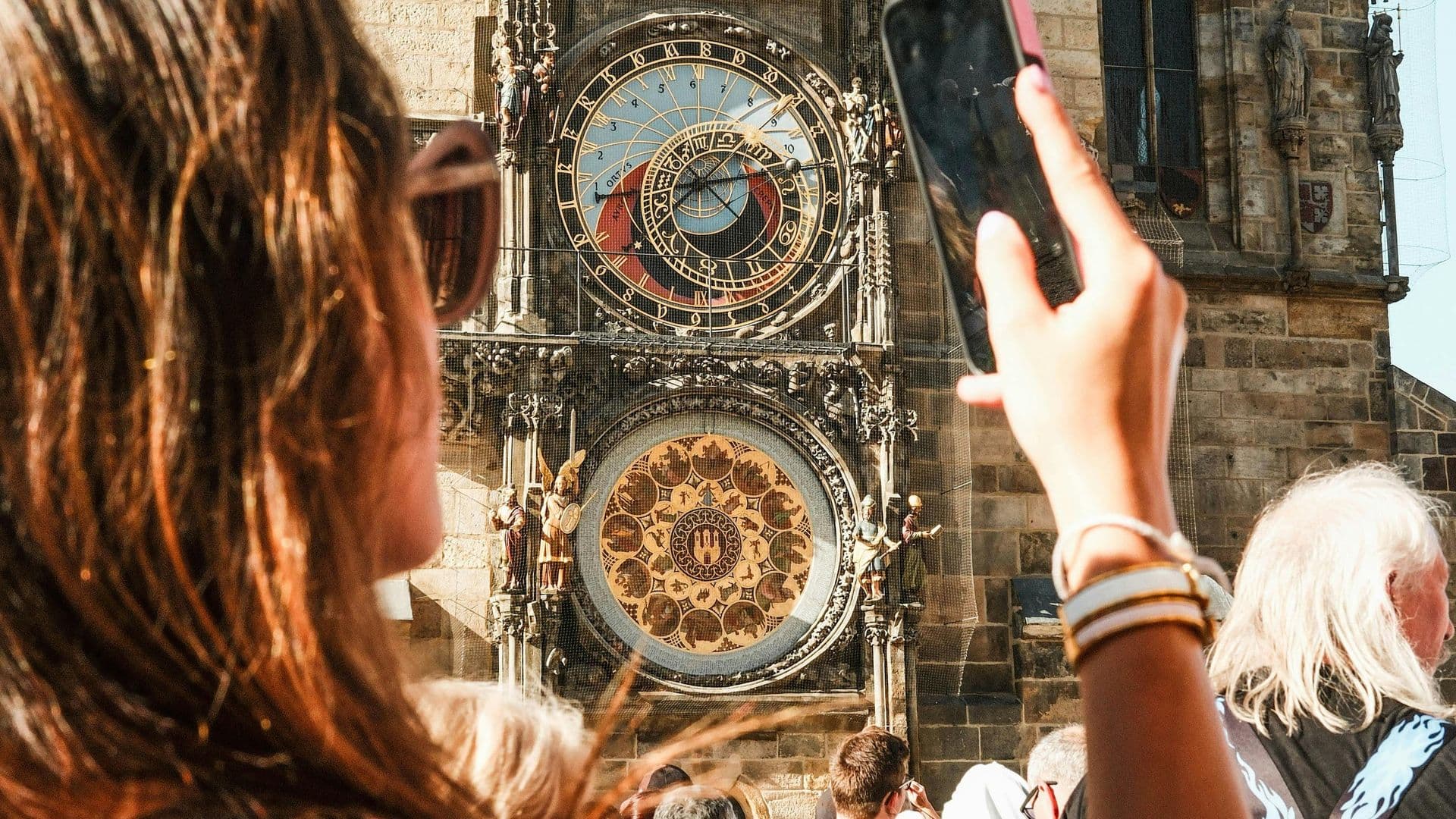
The Old Town Hall and Astronomical Clock (Orloj) — The clock performs its mechanical show every hour from 9:00 to 23:00. The twelve apostles parade through two small windows above the clock face. It lasts about 40 seconds. Honestly, the spectacle itself is underwhelming — the figures are small and move slowly. The real interest is in the clock's engineering. Built in 1410, it's the third-oldest astronomical clock in the world and the oldest still operating. The lower dial shows the months with painted scenes of rural life; the upper dial tracks the sun, moon, and zodiac.
The Jan Hus Memorial — The large statue in the square's centre commemorates the religious reformer burned at the stake in 1415. Hus challenged the Catholic Church's corruption a full century before Martin Luther. His execution triggered the Hussite Wars, which reshaped Bohemia. The memorial was unveiled in 1915, exactly 500 years after his death.
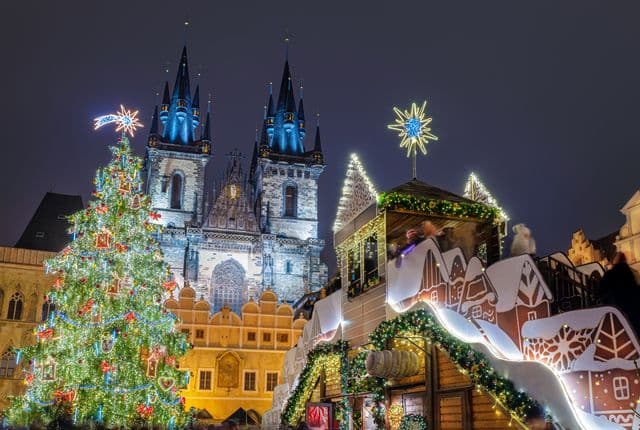
Týn Church (Kostel Matky Boží před Týnem) — The twin Gothic spires behind the row of houses on the east side of the square are Prague's most recognisable silhouette. The church dates to the 14th century and contains the tomb of Tycho Brahe, the Danish astronomer who spent his final years in Prague under Emperor Rudolf II. Entry is free but hours are limited.
Insider detail: Look at the pavement near the Old Town Hall. A line of 27 white crosses marks the spot where 27 Czech Protestant leaders were executed in 1621 after the Battle of White Mountain — the event that ended Czech independence for nearly 300 years. Most visitors walk right over them without knowing.
Stop 4: Josefov (Jewish Quarter) — Brief Detour
Time needed: 20 minutes walking through, 2+ hours if visiting museums
From Old Town Square, walk north on Pařížská street — Prague's luxury shopping boulevard — for about 3 minutes. You're now in Josefov, the former Jewish ghetto. The neighbourhood was largely demolished in the 1890s and rebuilt in Art Nouveau style, but six synagogues and the Old Jewish Cemetery survived.
The Old Jewish Cemetery is extraordinarily dense — roughly 12,000 tombstones visible, with perhaps 100,000 burials in layers beneath them, stacked over centuries because the cemetery couldn't expand beyond the ghetto walls. If you visit one paid site in Josefov, make it this one.
The Old-New Synagogue (Staronová synagoga), built around 1270, is the oldest active synagogue in Europe. It's still used for services. The legend of the Golem — the clay figure brought to life by Rabbi Loew to protect Prague's Jews — is traditionally set here. According to the story, the Golem's remains lie in the attic, which has never been opened to the public.
Return to Old Town Square (5 minutes) and continue west toward Charles Bridge.
Stop 5: Karlův most (Charles Bridge) — Take Your Time
Time needed: 20-30 minutes
Walk west from Old Town Square along Karlova street (narrow, winding, full of shops — watch your pockets) to the Old Town Bridge Tower, which marks the eastern entrance to Charles Bridge. The tower itself is considered one of the finest Gothic gates in Europe — look up at the sculptural programme on the east-facing facade before stepping onto the bridge.
Charles Bridge is 516 metres long, lined with 30 Baroque statues (most are copies — the originals are in the National Gallery's Lapidarium), and offers unobstructed views in both directions. The bridge was built between 1357 and 1402 under Emperor Charles IV, and for centuries it was the only crossing of the Vltava in Prague.
Timing matters enormously. At 10:00 AM on a summer day, the bridge is shoulder-to-shoulder with tourists, street vendors, and portrait artists. At 7:30 AM or after 8:00 PM, it's nearly empty. If you're following this route in the morning, you should arrive at the bridge by 9:30-10:00, which is manageable but not empty. For the best experience, consider returning at dawn on another day.
What to look for: The statue of St. John of Nepomuk (eighth statue on the right, heading west) is the most famous. Touch the bronze relief on the base — the metal is polished gold from millions of hands — and tradition says you'll return to Prague. The real Nepomuk was thrown from this bridge in 1393 on the orders of King Wenceslas IV, allegedly for refusing to reveal the queen's confession.
Insider detail: Halfway across the bridge, look down at the right side and find a bronze cross embedded in the wall. This marks the spot where Nepomuk went over the parapet. Five stars surround the cross — the same five stars that appear in his halo in every depiction, said to have appeared on the water's surface after he drowned.
Stop 6: Malá Strana (Lesser Town) — Baroque Prague
Time needed: 30-45 minutes
A private guide makes all the difference when exploring this part of Prague.
Cross the bridge and walk through the Lesser Town Bridge Tower (there are actually two towers, one Gothic and one Romanesque — look up). You're now in Malá Strana, the neighbourhood below the castle that was rebuilt almost entirely in Baroque style after a catastrophic fire in 1541.
Walk straight to Malostranské náměstí (Lesser Town Square), dominated by the Church of St. Nicholas (Kostel svatého Mikuláše) — not the one in Old Town, but the larger, more important one. This is the masterpiece of Prague Baroque, built by the Dientzenhofer father-and-son team between 1703 and 1761. The interior dome is one of the largest in Europe. Entry costs 100 CZK and is worth it for the frescoes alone.
From the square, you have two options for reaching the castle:
Option A: Nerudova street — The steeper, more picturesque route. This street climbs directly from the square toward the castle, lined with Baroque house signs (look for the Two Suns, the Golden Key, the Red Eagle). Named after writer Jan Neruda, whose Prague Tales (1878) depicted life on this street. The gradient is noticeable but manageable.
Option B: The Old Castle Steps (Staré zámecké schody) — Walk through Waldstein Garden first (free entry, April-October), then take the steps from Klárov. Less crowded, more atmospheric, and you approach the castle from a different angle.
Insider detail: At the top of Nerudova, just before the castle, turn right through a narrow passage to reach Nový Svět (New World) — a short lane of tiny, colourful houses that was originally a medieval slum for castle servants. Today it's one of the quietest, most charming streets in Prague, and most visitors walk right past it.
Stop 7: Pražský hrad (Prague Castle) — The Finish
Time needed: 1-2 hours
Prague Castle is the largest ancient castle complex in the world — 70,000 square metres, with buildings spanning Romanesque, Gothic, Renaissance, and Baroque periods. You don't need to see everything. Here's what matters most:
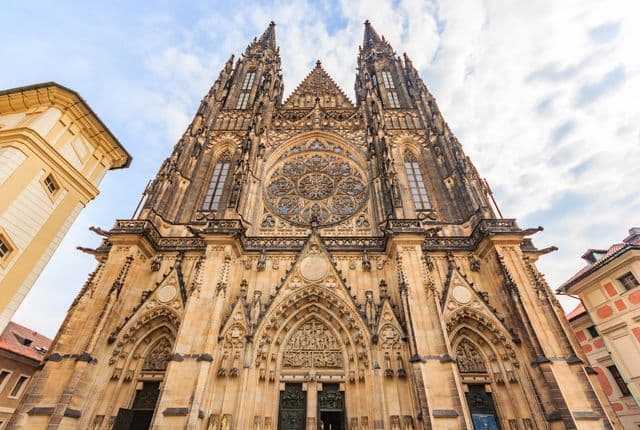
St. Vitus Cathedral (Katedrála svatého Víta) — The Gothic cathedral that dominates the Prague skyline. Construction began in 1344 and wasn't completed until 1929. The Mucha Window (third chapel on the left) was designed by Art Nouveau painter Alfons Mucha. The tomb of St. Wenceslas (the "Good King" of the Christmas carol) is in the chapel decorated with semi-precious stones.
The Old Royal Palace — Walk through Vladislav Hall, the largest secular Gothic hall in Europe at the time of its construction (1502). The hall was used for indoor jousting — the horsemen rode up a specially wide staircase, which you can still see.
Golden Lane (Zlatá ulička) — Tiny, colourful houses built into the castle wall. Franz Kafka lived at No. 22 in 1916-1917. Entry is included in the castle ticket, and after the interiors close the lane is free to walk through — 17:00 from 1 April to 31 October, 16:00 from 1 November to 31 March. The Main Circuit (450 CZK adult, 300 CZK reduced, prices effective 1 March 2024) covers the cathedral, palace, St. George's Basilica, and Golden Lane — sufficient for most visitors.
After the Walk — What a Guide Changes
You've just walked 4.5 kilometres through a thousand years of history. You saw the landmarks, read the plaques, and took the photos. That's a legitimate Prague experience, and many visitors are perfectly satisfied with it.
Here's what changes when you do the same walk with a knowledgeable guide:
Context becomes narrative. A plaque tells you Charles Bridge was built in 1357. A guide tells you *why* 1357 — Charles IV chose the date based on a numerical palindrome (1-3-5-7-9-7-5-3-1) that he believed would make the bridge indestructible. That's a conversation, not a sign.
You see what's hidden. The 27 crosses on Old Town Square pavement. The Nepomuk cross on Charles Bridge. The passage to Nový Svět. A guide knows where to stop and where to look.
Timing and routing adapt. If Charles Bridge is packed, we enter Malá Strana from a different point. If it starts raining, we know which courtyards offer shelter and interesting things to see while you wait.
Questions get real answers. Why does Prague have so many Baroque churches? What happened during the defenestrations? A guide with 17 years of experience answers immediately, with stories and specifics rather than Wikipedia summaries.
Walk With Us
Our All Prague in One Day private tour covers this route and more, with a licensed guide who has been walking these streets for nearly two decades. Exclusively yours.
For a focused exploration of the route's first half — the medieval core — our Charles Bridge and Old Town private tour goes deeper into the history of each stop between the Powder Tower and the bridge.
And if you want a Prague evening that's nothing like a walking tour, a medieval dinner at U Pavouka Tavern delivers fire dancers, sword fights, and a feast you eat with your hands — the kind of night that doesn't show up in any guidebook.
Browse all our private tours in Prague.
A self-guided walk gives you total freedom, but there are moments when you stand in front of a building and wish someone could explain what happened inside. If you have enjoyed this route and want to go deeper on a future visit, it is worth comparing guided tour options to see how free tours, small-group walks, and private guides stack up in terms of cost, depth, and the stories you simply cannot get from a map pin.
Frequently Asked Questions
How long does a self-guided walking tour of Prague take?
The route from the Powder Tower to Prague Castle is about 4.5 kilometres and takes approximately 90 minutes of pure walking time. With stops to look around, take photos, and visit interiors, plan for 4 to 5 hours. Starting at 8:30-9:00 AM lets you finish comfortably before the afternoon crowds.
Is Prague good for walking?
Prague's historic centre is compact and largely pedestrianised, making it one of the best walking cities in Europe. The only significant climb is the hill from Mala Strana up to Prague Castle. Cobblestones are everywhere — wear comfortable shoes with good soles, not sandals or heels.
Do I need a guided tour in Prague or can I explore alone?
You don't need one — Prague is safe, well-signed, and the landmarks are easy to find. But a knowledgeable guide adds context, stories, and hidden details that plaques don't cover. The difference is between seeing the city and understanding it. Our one-day Prague itinerary offers more route options.
What is the best time to walk across Charles Bridge?
Before 8:00 AM or after 8:00 PM. During peak hours (10:00 AM to 6:00 PM in summer), the bridge is extremely crowded with tourists, vendors, and portrait artists. Dawn on a clear morning is the best experience — you'll share the bridge with a handful of joggers and photographers.
Is the Astronomical Clock show worth watching?
The mechanical show lasts about 40 seconds and features twelve small apostle figures parading through windows above the clock face. It's historically interesting but visually modest. The clock itself is far more impressive than its hourly performance — the astronomical and calendar dials are genuinely remarkable pieces of medieval engineering.
You May Also Like
When self-guided isn't enough and you want depth and storytelling, browse our private walking tours of Prague led by a licensed Degree II guide.
When self-guided isn't enough and you want depth and storytelling, browse our Prague tour prices led by a licensed Degree II guide.
Want to see Prague for yourself?
Take our flagship Prague tour-6-640x430.jpg&w=3840&q=75)