Charles Bridge Prague — History, Statues and When to Visit
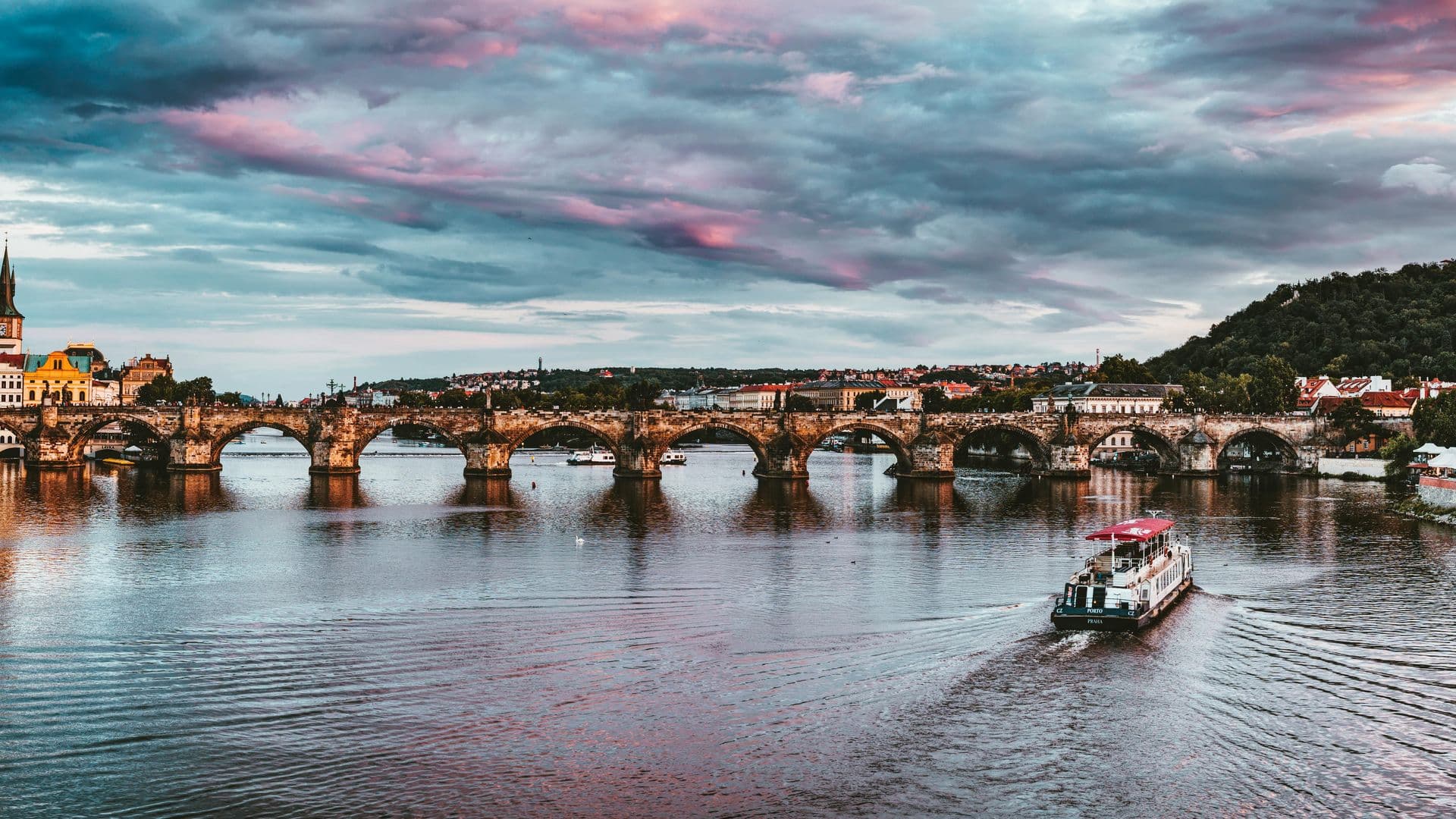
Charles Bridge is the most famous structure in Prague and one of the most photographed bridges in Europe. It connects the Old Town to Malá Strana across the Vltava, 516 metres of sandstone lined with 30 baroque statues, flanked by two medieval towers. For six centuries it was the only bridge crossing the river, and it shaped the city's geography, economy, and identity in ways that are still visible today.
But there's a gap between seeing the bridge and understanding it. Most visitors walk across, take photos of the towers and the castle, and leave without knowing what the statues mean, why the bridge curves, or when to come back for the experience without the crowds. This guide fills that gap.
History — From Judith Bridge to Charles Bridge
Prague's first stone bridge stood roughly where Charles Bridge stands now. The Judith Bridge, named after Queen Judith of Thuringia, was completed around 1172. It served the city for almost two centuries until a catastrophic flood destroyed most of it in 1342.
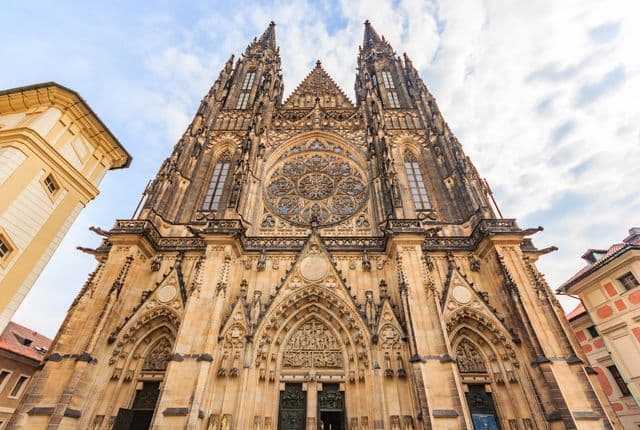
King Charles IV — Holy Roman Emperor, King of Bohemia, and the most consequential figure in Prague's history — commissioned a replacement. Construction began in 1357 under the direction of architect Peter Parler, who was also building St. Vitus Cathedral. The bridge was completed in the early 15th century, decades after Charles IV's death in 1378. It is a common misconception that the bridge was "built in 1357" — that date marks the laying of the foundation stone, not the completion.
There is a legend about the foundation date that shows how deeply numerology ran through medieval thinking. Charles IV supposedly laid the first stone on 9 July 1357 at 5:31 in the morning, creating the palindrome 1-3-5-7-9-7-5-3-1 (year 1357, month 7, day 9, hour 5, minute 31). Whether this is historically true or a later invention, it captures something real about how deliberately Prague's rulers constructed meaning.
The bridge was originally called the Stone Bridge or the Prague Bridge. The name "Charles Bridge" only became standard in 1870, more than five centuries after the king's death.
Peter Parler designed 16 arches to carry the bridge across the river, with cutwaters shaped to break up ice floes — a critical engineering detail in a city where the Vltava freezes. The slight curve in the bridge is intentional, designed to better resist the river's current by distributing force along the length rather than taking it head-on.
The 30 Statues — What to Look For
The statues weren't part of the original design. They were added mostly between 1683 and 1714, during the Counter-Reformation, when the Catholic Church used public art as a tool of persuasion. The 30 figures (mostly saints) create an open-air baroque gallery unlike anything else in Europe.
Most visitors glance at the statues without stopping. Here are the ones worth your time.
St. John of Nepomuk (1683) — the oldest statue on the bridge and the most touched. The bronze relief on the pedestal shows Nepomuk being thrown from the bridge into the river on the orders of King Wenceslas IV in 1393. Legend says he refused to reveal the queen's confession secrets. Touch the relief and you'll supposedly return to Prague — it's polished gold from millions of hands. The actual spot where he was thrown is marked by a brass cross with five stars embedded in the bridge railing, about 50 metres toward the Old Town side. Most people touch the statue but miss the cross entirely.
The Crucifix — the oldest monument on the bridge, originally erected in the 14th century (the current crucifix dates from 1629). The Hebrew inscription around the cross was paid for by a Jewish man as a fine imposed by the authorities — a detail that captures the complicated relationship between Prague's communities.
St. Luthgard (1710, by Matthias Braun) — widely considered the finest sculpture on the bridge. It depicts the blind Cistercian nun embracing the crucified Christ, who leans down from the cross to meet her. The movement and emotion in this piece set it apart from the more static figures nearby. Art historians rank it among the greatest baroque sculptures in Central Europe.
Bruncvík — not on the bridge itself but below it, on a pillar on the Kampa Island side. This knight with a golden sword is a lesser-known Prague legend. According to the story, his sword is hidden inside the bridge and will emerge when the Czech nation faces its greatest danger. Our guests are always surprised to find him — you have to look over the railing on the south side, about two-thirds of the way across from Old Town.
Ss. Cyril and Methodius (1938, by Karel Dvořák) — the newest statue, replacing one destroyed by a flood. It's also one of the few that doesn't follow the baroque style, which makes it stand out if you're paying attention.
The Bridge Towers
Both ends of the bridge are guarded by towers, and both are open to climb.
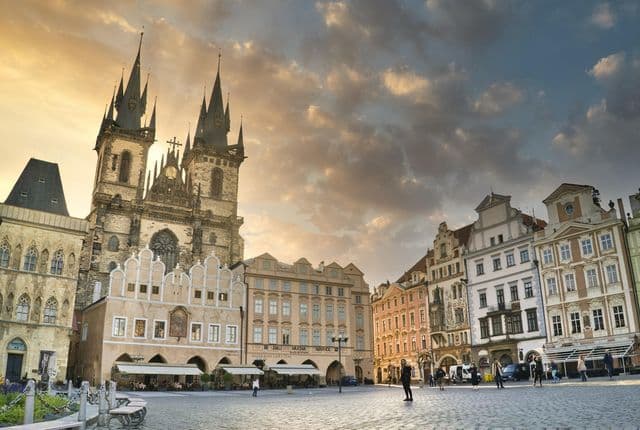
The Old Town Bridge Tower is the more impressive of the two — Peter Parler designed it as part of the original bridge construction. The eastern facade (facing Old Town Square) is covered in Gothic sculpture, including figures of Charles IV, Wenceslas IV, and St. Vitus. The sculptural program was damaged by Swedish troops in 1648 but remains one of the finest Gothic tower facades in Europe.
Climb the tower (about 138 steps) for what is arguably the single best view in Prague. You look straight down the length of the bridge toward Prague Castle and St. Vitus Cathedral. At sunset, with the castle lit golden above the river, the view is extraordinary. The tower is open daily; check hours seasonally.
The Lesser Town Bridge Towers are a pair — one smaller and Romanesque (a remnant of the Judith Bridge era), one taller and late Gothic. The taller tower is climbable and offers a different perspective, looking back toward Old Town with the bridge in the foreground.
Kampa Island — Below the Bridge
Most people cross the bridge without realizing there's an island directly below it. Kampa Island is separated from Malá Strana by the Čertovka channel (Devil's Stream), a narrow millrace that powered several water mills for centuries. One mill wheel is still visible on the channel, and it's one of Prague's most photographed details.
Access Kampa from a stairway on the Malá Strana end of the bridge — look for the steps going down on your left as you walk toward the towers. The island has a park, the Kampa Museum of modern art, and a stretch of riverside that feels removed from the tourist density above.
The David Černý baby sculptures — the crawling bronze figures with barcodes for faces — are installed on Kampa Island. They're part of Prague's long tradition of art that makes you stop and wonder what you're looking at.
When to Visit — Beating the Crowds
Charles Bridge is busy. There's no way around this fact, but there are ways to manage it.
Best time: before 7:00 AM. The bridge is open 24 hours. In the early morning, especially in spring and autumn, you may have stretches of the bridge nearly to yourself. The light is soft, the castle is lit by the rising sun, and the photographers who know what they're doing are all here at this hour.
Second best: after 21:00. The bridge at night is a different experience entirely. The statues are lit from below, the towers glow, and the crowds thin dramatically. The castle, lit against the dark sky, creates a silhouette that rewards lingering.
Worst time: 10:00 to 17:00, especially in summer. The bridge becomes a slow-moving mass of people, portrait artists, souvenir sellers, and tour groups. You can still cross, but the contemplative experience is gone.
These stories come alive when told by someone who knows them deeply. Our licensed guides share what the plaques don't say.
Weather note: overcast days produce softer, more even light for photography and keep the bridge slightly less crowded than blue-sky days. Rain clears the bridge almost completely, and the wet stone has a quality that sunny days can't match.
Insider Details Most People Miss
- The kingfisher stone: On the Old Town side, below the tower at river level, look for a carved stone marking the high-water line of the 1890 flood. It's barely visible from the bridge itself — you need to walk down to the riverbank.
- The bridge is not flat. It rises gently toward the centre and falls away at each end, following the natural profile of the arches. Most people don't notice the incline until it's pointed out.
- The original statues are indoors. Most of the statues on the bridge today are copies installed in the late 20th century. The originals, damaged by weather and pollution, are preserved in the Lapidarium at the Prague Exhibition Grounds (Výstaviště) and in the casemates at Vyšehrad. If you care about sculpture, the Lapidarium visit is worth the tram ride.
- The Čertovka waterwheel visible from the Malá Strana end of the bridge is a reconstruction, but it sits on the site of mills that operated continuously from the 15th century until the 20th century.
- Owl on the Old Town Tower: Look carefully at the carvings on the Old Town Bridge Tower — among the saints and kings, there's a small owl carved into the stonework. Medieval tradition held that the owl protected the bridge from evil.
Charles Bridge — known in Czech as Karlův most (Karluv most) — has been the most iconic crossing of the Vltava since construction began in 1357 under Charles IV. The Czech name is worth knowing: locals and signs use it, and searching for "Karlův most" will help you find Czech-language resources and less touristy perspectives on the bridge.
Explore Prague's Historic Quarter
Charles Bridge is rarely the only stop on a walk through Prague's centre. Just minutes away you will find Wenceslas Square -- the city's grand boulevard and focal point of modern Czech history -- plus a trail of playful sculptures by the Czech Republic's most provocative living artist.
- Wenceslas Square guide -- history, shopping, and what to see along the boulevard
- David Cerny sculptures in Prague -- a self-guided tour of the city's quirkiest art
Experience It With a Private Guide
Charles Bridge is the centrepiece of our Charles Bridge and Old Town private tour. We walk you through the statues, tell you which legends are real and which are romantic invention, and make sure you don't miss the details that matter — the Nepomuk cross, the Bruncvík knight, the tower climb. Exclusively yours, with your own guide.
For a full day, our All Prague in One Day tour includes the bridge along with Prague Castle, Old Town Square, Josefov, and more — connected by walking routes that make the city's geography click.
And if you want your evening to match the atmosphere of your day, a medieval dinner at U Pavouka Tavern puts you in a Gothic cellar with fire dancers, swordsmen, and roast meats — a 15th-century evening to follow a 14th-century bridge.
Browse all our private tours from Prague.
Frequently Asked Questions
Is Charles Bridge open 24 hours?
Yes. The bridge itself is always open. The bridge towers have their own opening hours (typically 10:00–18:00, extended in summer), but the bridge is public space with no gates or closing time.
How long does it take to walk across Charles Bridge?
The bridge is 516 metres — about a seven-minute walk at normal pace. But if you stop to look at statues, take photos, and enjoy the views, plan for 20 to 40 minutes. With a guide explaining the history, allow closer to 45 minutes.
Is Charles Bridge accessible for wheelchairs?
The bridge surface is cobblestoned and can be uneven in places, but it is flat enough for wheelchairs and strollers. The bridge towers involve steep spiral staircases with no lift and are not accessible.
Are the statues on Charles Bridge originals?
Most are high-quality copies installed in the late 20th and early 21st century. The originals were moved to museums — primarily the Lapidarium at the Exhibition Grounds and the Gorlice Hall at Vyšehrad — to protect them from weather damage and pollution.
What is the best side to photograph Prague Castle from Charles Bridge?
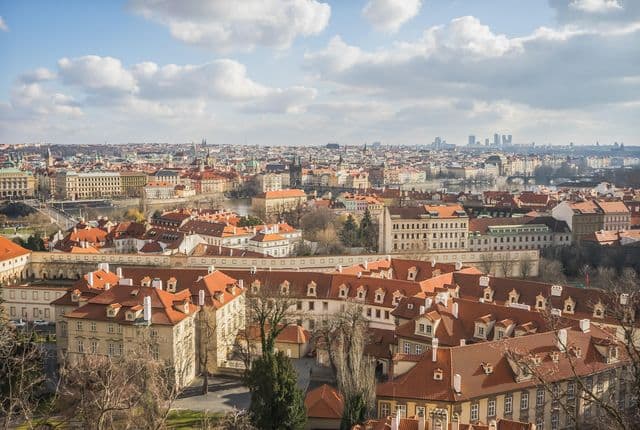
The best castle views are from the eastern (Old Town) half of the bridge, looking west. For the classic postcard shot with the bridge towers framing the castle, climb the Old Town Bridge Tower.
You May Also Like
- How to Visit Charles Bridge Prague
- Prague Bridges — A Complete Guide
- Malá Strana — Prague's Most Charming Neighborhood
Planning your trip? See our private walking tours of Prague for details.
Planning your trip? See our Prague tour prices for details.
Want to see Prague for yourself?
Walk Charles Bridge with our guide