Mala Strana — Prague's Most Charming Neighborhood
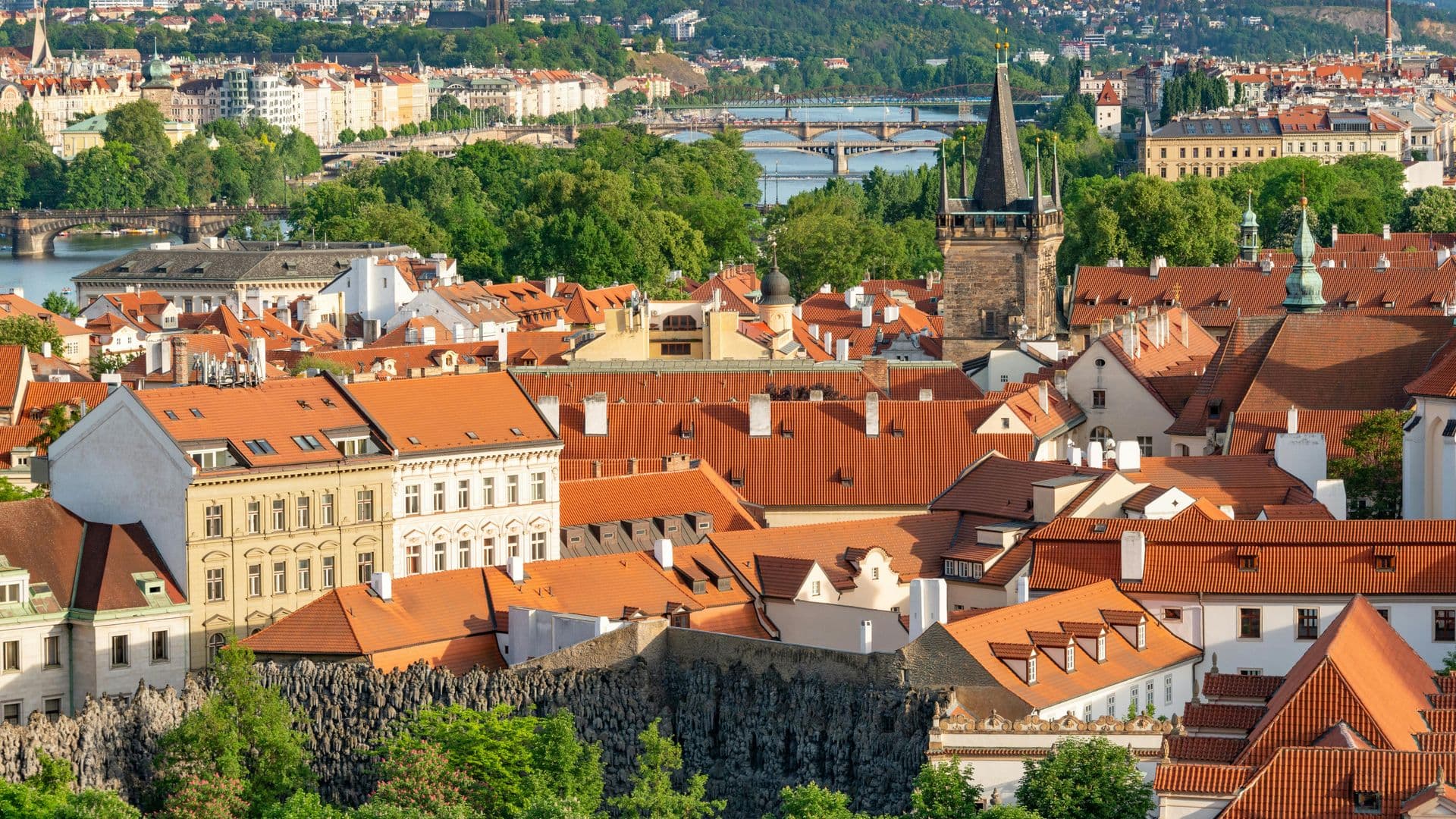
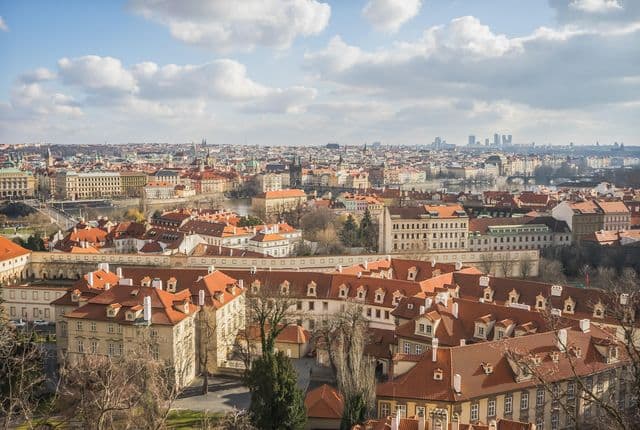
Cross Charles Bridge heading west and you step into Malá Strana — Prague's Lesser Town, a district that feels like it slowed down three centuries ago and never bothered to catch up. The baroque facades, the quiet courtyards, the church domes rising above terracotta rooftops — it all looks staged, but nobody staged it. This is simply where Prague kept its best architecture and forgot to add the crowds.
We walk through Malá Strana daily with our guests on private tours, and we always hear the same thing: this side of the river feels completely different from Old Town. It is different. The scale is smaller, the streets curve instead of grid, and there's space to stop and look up without someone bumping into you from behind.
Nerudova Street — The Steep Climb That Rewards You
Nerudova ulice climbs steeply from Malostranské náměstí toward Prague Castle, and it's one of the most beautiful streets in Prague. Before house numbers existed, buildings were identified by signs — and Nerudova has kept many of them. Look for the Red Eagle at No. 6, the Two Suns at No. 47 (where the writer Jan Neruda lived, and from whom the street takes its name), and the Three Fiddles at No. 12, once home to a family of violin makers.
Most visitors power up Nerudova on their way to Prague Castle and barely glance at the facades. That's a waste. The house signs are some of the finest in Prague, and the embassies occupying several of the palaces — the Italian Embassy at the Thun-Hohenstein Palace, the Romanian Embassy at the Morzin Palace with its enormous Moor statues holding up the balcony — give the street a weight that goes beyond decoration.
Halfway up, a small passage on the left leads to a stairway connecting to Úvoz street. Few tourists take it. The view from the top, looking back down over the rooftops of Malá Strana toward the river, is one of the best quiet vantage points in the district.
Malostranské Náměstí — The Square Nobody Rushes Through
The Lesser Town Square is divided in two by the Church of St Nicholas, and both halves have a different character. The upper part is quieter, surrounded by palaces and government buildings. The lower part has the cafes, the tram stop, and the foot traffic flowing toward Charles Bridge.
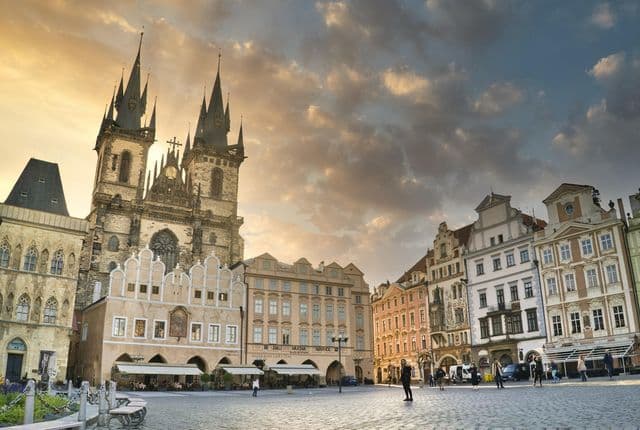
Unlike Old Town Square, which fills with tourists by 9 AM, Malostranské náměstí keeps a local rhythm. Trams rattle through every few minutes. Office workers from the nearby Czech Parliament cut across the square. In the mornings, the outdoor tables at the cafes on the lower side catch the sun, and you can sit with a coffee and watch the district wake up without feeling like you're in a theme park.
The Liechtenstein Palace on the square's north side hosts classical concerts in the evening. The Sternberg Palace, a few doors down, is one of the finest baroque buildings in Prague. Neither has a queue in front of it.
Church of St Nicholas — The Baroque Masterpiece
Chrám svatého Mikuláše is the dominant structure in Malá Strana and one of the most important baroque churches in Central Europe. Built between 1704 and 1755 by the Dientzenhofer father-and-son team, the interior is overwhelming in the best sense — soaring frescoes, gilded ornamentation, and a dome that seems to float above the nave.
The ceiling fresco in the nave, painted by Jan Lukáš Kracker, covers over 1,500 square metres and depicts scenes from the life of St Nicholas. It is the largest fresco in Europe. Stand in the centre of the nave and look up — the illusion of depth pulls you into the painting.
A detail most visitors overlook: the church tower was used as a surveillance post by the StB (communist secret police) during the Cold War. From the gallery, agents watched the embassies on Nerudova street and the movements of Western diplomats. Today you can climb the tower for one of the best views in Prague — directly down onto the red rooftops of Malá Strana, with Charles Bridge and Old Town in the distance.
Admission to the church is around 100 CZK. The tower is ticketed separately and run by the city, not the church. Both are worth the modest fee.
Kampa Island — The Venice of Prague
Walk under Charles Bridge on the Malá Strana side and you'll find Kampa, a sliver of an island separated from the mainland by the narrow Čertovka channel. The channel once powered several mills — you can still see the wooden waterwheel turning at the Grand Priory Mill, one of the most photographed details in Prague.
Kampa Park stretches along the southern end of the island, with wide lawns sloping down to the river. On warm days, locals spread out on the grass with books and picnics. The views upriver toward the Vyšehrad fortress are excellent, and the absence of souvenir stalls makes it feel like a neighbourhood park rather than a tourist stop.
The Kampa Museum (Museum Kampa) occupies a renovated mill building on the island and houses a strong collection of Central European modern art, including major works by František Kupka and Otto Gutfreund. The building itself, with its minimalist renovation against the original mill structure, is worth seeing even if modern art isn't your primary interest.
Near the museum, the David Černý babies — those giant bronze crawling figures with barcode faces — sit on the lawn. They're strange, slightly unsettling, and children love climbing on them. Černý is Prague's most provocative sculptor, and this is one of his most accessible works.
The Lennon Wall and Grand Priory Square
Just south of Charles Bridge, tucked into Velkopřevorské náměstí (Grand Priory Square), the John Lennon Wall has been a canvas for graffiti, protest messages, and Beatles lyrics since the early 1980s. The wall belongs to the Knights of Malta (the Sovereign Order of Malta still has a priory next door), and during the communist era, authorities whitewashed it repeatedly — only for new messages to appear overnight.
Today the wall is repainted constantly by visitors, so what you see changes week to week. The square itself, with the French Embassy and the baroque Church of Our Lady below the Chain, is worth a pause even without the wall. An old iron gate at the far end leads to a footbridge over the Čertovka — a crossing most guidebooks don't mention.
Vojanovy Sady — The Oldest Garden in Prague
Vojanovy sady is the oldest enclosed garden in Prague, dating to the 13th century when it served as a monastery garden. Today it's a public park, free to enter, and almost unknown to visitors. The entrance is a small wooden door on U Lužického semináře street — easy to walk past without noticing.
Inside, the garden is shaded by old fruit trees, with winding paths, benches, and a small chapel. Peacocks roam freely (Malá Strana apparently has a thing for peacocks — the Wallenstein Garden next door has them too). In spring, the garden fills with blossoming trees and the scent of lilac. It closes at dusk and has no cafe, no signage, no reason to be crowded. That's the appeal.
For a neighbourhood with this much baroque grandeur, Vojanovy sady is a reminder that Malá Strana also does quiet beauty with no admission fee.
Where to Eat and Drink in Malá Strana
Malá Strana has a quieter restaurant scene than Old Town, but what exists tends to be better. The tourist traps are fewer and the local places survive on regulars, not foot traffic.
Café Savoy on Vítězná street is one of the finest cafe interiors in Prague — a restored Neo-Renaissance ceiling, excellent coffee, and weekend brunch that draws a local crowd. Arrive before 10 AM on weekends or expect a wait. Cukrkávalimonáda on Lázeňská street is smaller, simpler, and beloved by the neighbourhood for its cakes and quiet courtyard.
For dinner, Malostranská Beseda in the building on the lower square serves reliable Czech food at fair prices — one of the few spots on the square that isn't a tourist trap. If you want something with a view, the terrace at Hergetova Cihelna overlooks the Čertovka channel with Charles Bridge above.
For a beer, follow the locals to U Hrocha (The Hippo) on Thunovská street — a tiny, no-frills pub that's been serving Pilsner Urquell to the neighbourhood for decades. There are about eight tables, no menu beyond beer and basic snacks, and no pretension at all. If it's full, you wait.
Getting Around
Malá Strana is compact and entirely walkable. The main tram stop is Malostranské náměstí, served by trams 12, 15, 20, and 22. Tram 22 is particularly useful — it climbs to Prague Castle and continues to Strahov, making it easy to combine Malá Strana with the castle district.
From Charles Bridge, Malá Strana begins immediately on the west bank. From Prague Castle, walk down Nerudova street (or take the old castle steps — Staré zámecké schody — which are less crowded and more atmospheric). From Petřín Hill, descend through the parks into the western edge of the district.
The green line metro station Malostranská sits at the north end of the district, near the Wallenstein Garden. From there, everything in Malá Strana is within a ten-minute walk.
New: Interactive Mozart Museum in Lesser Town
Prague and Mozart share a deep, reciprocal history — and as of 2025, a new interactive Mozart museum in Malá Strana gives that relationship a dedicated, modern home.
The connection is real and well-documented. Mozart visited Prague multiple times in the 1780s, and the city embraced his work with an enthusiasm that Vienna — his home base — often failed to match. The world premiere of Don Giovanni took place at Prague's Estates Theatre (Stavovské divadlo) on October 29, 1787, conducted by Mozart himself. He reportedly said: *"My Praguers understand me."*
Mozart stayed with the Dušek family at their villa in Smíchov (now the Bertramka museum), composed parts of Don Giovanni in Prague, and performed at venues across the city. Lesser Town, where the aristocratic palaces hosted private concerts and salons, was central to his Prague social world.
The new museum:
The interactive museum takes a modern, multimedia approach to telling this story — combining period instruments, digital installations, and archival documents to bring Mozart's Prague chapters to life. Rather than glass cases of static artefacts, the exhibition uses sound, projection, and interactive displays designed to engage visitors who may not have a classical music background.
Practical information:
The museum is located in Malá Strana — we recommend verifying the exact address and current opening hours before your visit, as details for newly opened cultural venues can shift in their first year of operation. Check the museum's official website or ask at your hotel concierge for the latest information.
Why it matters in context:
Prague's classical music heritage extends well beyond Mozart — Dvořák, Smetana, and Janáček are woven into the city's identity — but Mozart's Prague connection is unique because it was voluntary and emotional. He chose to premiere his greatest opera here because he trusted Prague's audiences. The new museum gives that story a permanent, accessible space in the neighbourhood where much of it unfolded.
For visitors doing our Prague Castle & Lesser Town tour, the museum makes an excellent add-on before or after — its location in Malá Strana fits naturally into a Lesser Town itinerary.
Experience It With a Private Guide
Malá Strana is the kind of neighbourhood that reveals itself slowly — behind gates, down side streets, inside gardens you'd walk past without knowing they were there. On our Charles Bridge and Old Town private tour, we cross the bridge into Malá Strana and show you the details that make this district special: the house signs, the hidden courtyards, the quiet spots that keep locals coming back.
Exclusively yours, with your own guide — we adjust the pace and the route to what interests you.
Our Prague Castle and Lesser Town tour covers the castle complex and then descends through Malá Strana, connecting the grand architecture above with the intimate streets below. It's the best way to see both in a single walk. And if you'd like something entirely different for the evening, our medieval dinner at U Pavouka Tavern is a favourite with guests who want a memorable night out.
Browse all our private tours in Prague.
Frequently Asked Questions
How do I get to Malá Strana?
Walk across Charles Bridge from Old Town, take tram 12, 15, 20, or 22 to Malostranske namesti, or use the green metro line to Malostranska station. From Prague Castle, walk down Nerudova street.
Is Malá Strana free to walk around?
Yes — the streets, squares, and most gardens (Kampa Park, Vojanovy sady) are free and open to the public. The Church of St Nicholas interior and its tower have separate small admission fees.
How much time should I spend in Malá Strana?
At least two to three hours if you want to explore properly. You could easily spend a full half-day combining the district with Kampa Island, the Lennon Wall, Vojanovy sady, and a meal. Many visitors pass through in thirty minutes on the way to Prague Castle — that's not enough.
Is Malá Strana safe at night?
Very safe. The district is residential and well-lit. The streets around Malostranske namesti have restaurants and bars open into the evening, and the area stays calm well after dark.
You May Also Like
Want to see Prague for yourself?
Discover Prague's underground tour