How to Order Beer in Prague Like a Local
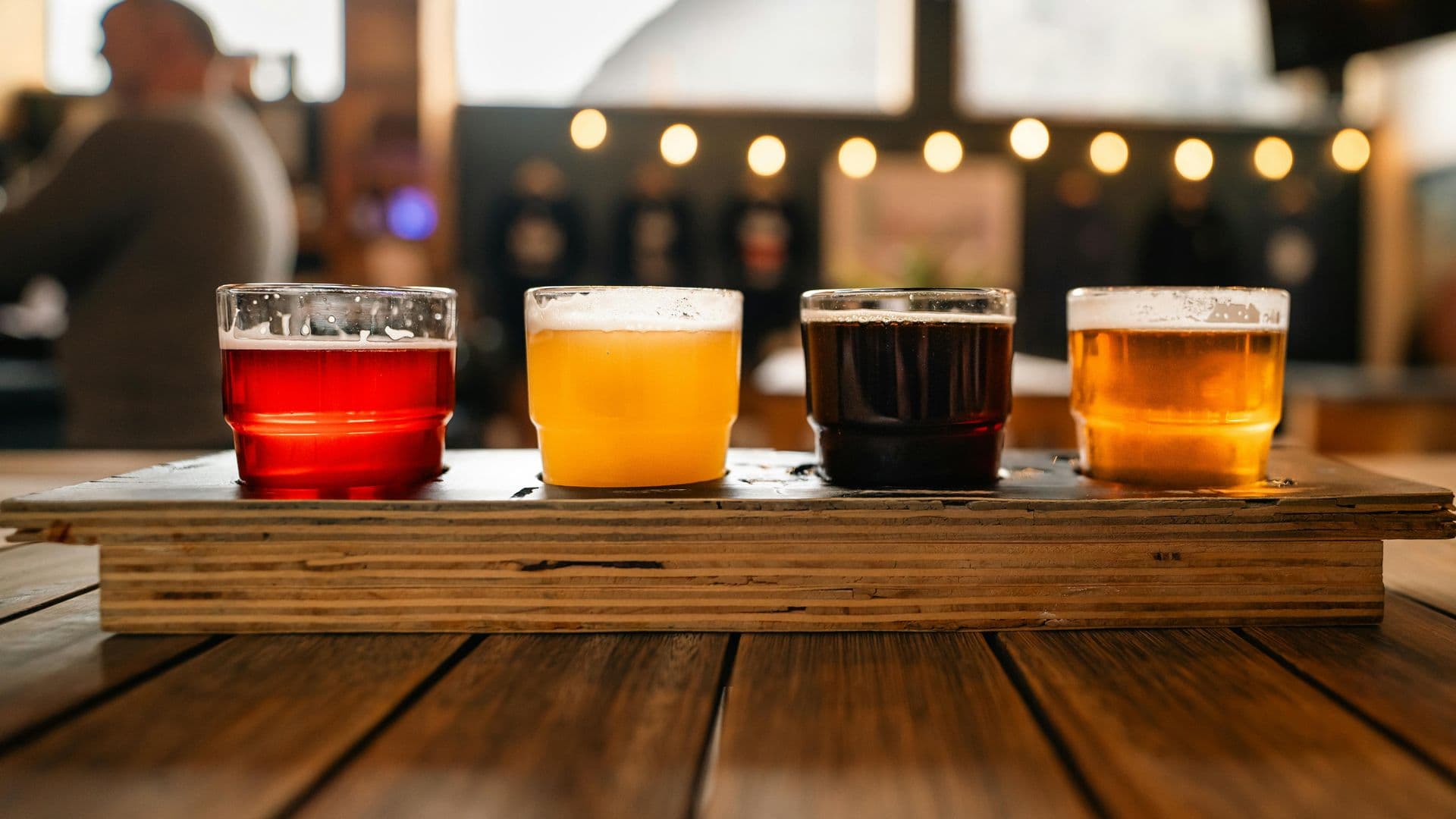
Ordering beer in Prague should be simple. You sit down, someone brings you beer, you drink it. And in the best Czech pubs, that is essentially what happens — the server will place a beer in front of you before you have said a word. But the details matter. Czech beer culture has its own vocabulary, its own measurement system, and its own etiquette that visitors almost always get wrong.
We walk visitors through Prague's pubs regularly, and the same questions come up every time. What is the difference between desítka and dvanáctka? Why does the server keep marking my coaster? And what exactly is that glass of pure foam someone just ordered?
Here is everything you need to order beer in Prague without looking like a tourist — or at least without looking like a confused one.
Point, Say "Pivo" and Wait — The Basics
The Czech word for beer is pivo (PEE-voh). In most traditional pubs, this single word is all you need. Walk in, sit down, catch the server's eye, and say "pivo, prosím" (beer, please). You will receive a half-litre glass of whatever the house draught beer is — usually a pale lager.
In a classic Czech pub (hospoda), the system is radically simple. Most pubs serve one, maybe two beers on tap. There is no menu of 47 craft options. The beer is the beer. You drink it or you go somewhere else. This is not rudeness — it is confidence. The pub chose its beer carefully and stands behind it.
Insider tip: In traditional pubs, the server (číšník for men, číšnice for women) will often bring a fresh beer to your table the moment your glass is nearly empty — without you asking. This is standard practice, not aggressive upselling. If you do not want another, place your coaster on top of your glass or simply say "ne, děkuji" (no, thank you). If you leave an empty glass without signalling, another beer will appear.
Malé vs Velké — Small (0.3L) vs Large (0.5L)
Czech beer comes in two standard sizes:
- Velké pivo (VEL-keh PEE-voh) — large beer, 0.5 litres. This is the default.
- Malé pivo (MAH-leh PEE-voh) — small beer, 0.3 litres.
When you say "pivo" without specifying, you will get a velké. If you want a smaller glass, you need to ask for it. Ordering a malé is perfectly acceptable and nobody will judge you, despite what some guides claim. Czechs themselves order small beers — particularly at lunch, or when switching between beers at a pub with multiple taps.
Insider tip: Some older pubs still use the traditional thick glass mugs (půllitr for 0.5L, třetinka for 0.3L). The weight of a full půllitr mug is substantial — roughly 1.2 kilograms of glass and beer combined. If the server carries six of them in one hand, that is roughly 7 kilograms. Watch and be impressed.
What Is "Desítka" and "Dvanáctka"?
This is where most visitors get confused. Czech beer is measured in degrees Plato (°P), not alcohol percentage. The number you see on the menu — 10°, 11°, 12° — refers to the sugar content of the wort before fermentation, expressed in degrees on the Plato scale. It is not the alcohol percentage.
- Desítka (deh-SEET-kah) — a 10° beer, roughly 4% ABV. Light, sessionable, the everyday beer.
- Jedenáctka — 11°, roughly 4.4% ABV. A step up, more body.
- Dvanáctka (DVAH-nahts-kah) — a 12° beer, roughly 5% ABV. The most popular category. Pilsner Urquell is a 12°.
Higher Plato degrees generally mean more flavour, more body, and more alcohol — but the relationship is not linear. A 10° lager from a good brewery can be more flavourful than a mediocre 12° because the quality of ingredients and brewing process matter more than the number.
Why does this matter? Because when a Czech says "dej mi desítku" (give me a ten), they are ordering a specific category of beer, not an alcohol percentage. If you ask for "a 10-percent beer," the server will look confused — Czech beers rarely exceed 5.5% ABV.
Insider tip: The Plato system dates back to Bohemia's brewing tradition and is used in Czech law to define beer categories. The tax rate on beer is based on Plato degrees, not alcohol content. This is why Czech breweries are precise about these numbers — they affect the bottom line.
Tank Beer (Tankové Pivo) — Why It Matters
Tank beer is unpasteurised, unfiltered beer delivered directly from the brewery in sealed tanks and served through a short line into your glass. It is the freshest way to drink Czech beer outside of standing in the brewery itself.
The difference between tank beer and standard keg beer is noticeable. Tank beer has a softer carbonation, a fuller body, and a flavour that tastes "rounder" — less of the sharp edge that pasteurisation introduces. The shelf life is shorter (days rather than weeks), which means the pub must sell it quickly. High turnover equals fresh beer.
Pilsner Urquell's tank beer programme (Tankovna) is the most visible example. Participating pubs receive Pilsner Urquell in temperature-controlled tanks delivered directly from the Plzeň brewery. The pubs are certified and listed on Pilsner Urquell's website.
Where to try it: Lokál Dlouhááá (Old Town), Lokál Nad Dlouhou (Old Town), Lokál U Bílé Kuželky (Malá Strana). All serve Tank Pilsner Urquell and keep their lines impeccably clean — a detail that matters more than most people realise.
Insider tip: The quality of draught beer depends enormously on line cleanliness. Czech law requires beer lines to be cleaned every seven days, but the best pubs clean them more frequently. If your first beer tastes slightly off — sour, metallic, or "old" — the lines may be dirty. Move on to another pub. In a city with this many pubs, there is no reason to tolerate a bad pour.
Mlíko (Milk Beer) — The Head-Only Pour
You may see someone at the bar receive a glass that appears to be entirely foam. This is mlíko (MLEE-koh), meaning "milk" — a pour that is almost all creamy head with just a small amount of liquid beer underneath.
Mlíko is not a prank and it is not a mistake. It is a traditional pour that showcases the creaminess of well-kept Czech lager. The foam is dense, smooth, and subtly sweet. Ordering one signals that you appreciate the beer enough to drink it in its most delicate form.
In practice, mlíko is typically ordered as a final beer — a lighter finish to a session, or a palate cleanser. It is also an effective way to check the quality of a pub's beer: if the mlíko foam is coarse, grainy, or collapses quickly, the beer or the tap system needs attention.
Not every pub will know what you mean if you order a mlíko, particularly in tourist areas. The traditional Czech pubs — Lokál, U Zlatého Tygra, U Pinkasů — will pour one without hesitation.
Our guides know the best local spots — far from the tourist traps. Learn more about our team.
Insider tip: The quality of Czech beer foam is taken seriously at a national level. The Pilsner Urquell Tapster competition judges pouring technique, and mlíko is one of three standard pours (alongside hladinka — a standard pour with a two-finger head, and šnyt — a half-glass pour). A properly poured mlíko should hold its shape for several minutes.
How to Say "Cheers" in Czech
Na zdraví! (nah ZDRAH-vee) — literally "to health." This is the standard toast in Czechia, used in pubs, restaurants, at home, and at formal dinners alike.
The etiquette is straightforward but specific:
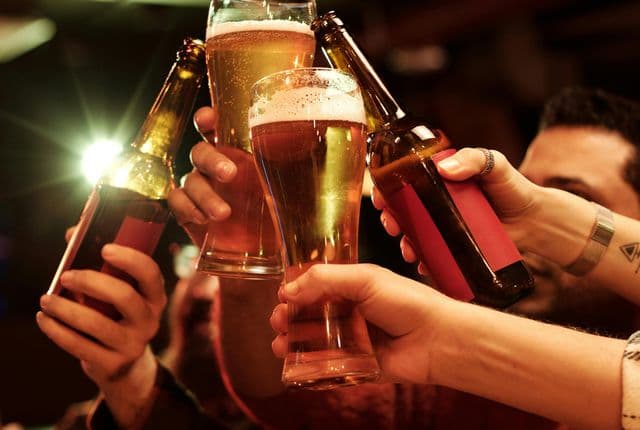
- Make eye contact with each person you clink glasses with. Czechs consider it bad luck (or at least bad manners) to toast without looking the other person in the eye.
- Clink the bottom of the glass, not the rim. Beer mugs are thick and can chip if rim-to-rim contact is too enthusiastic.
- Do not cross arms with someone else while toasting. If two people are clinking and your arms cross theirs, wait until they finish.
- Beer before everything. If wine and beer are both on the table, toast with beer first. There is a Czech superstition that toasting with water brings bad luck, so avoid it if you are drinking with locals.
The Beer Coaster Tracking System
In traditional Czech pubs, your bill is not tracked by a computer or a receipt. Instead, the server marks a paper coaster (or a small paper tab) each time they bring you a beer. A pencil mark for each drink — simple, analogue, impossible to dispute.
When you are ready to leave, you say "zaplatím" (zah-PLAH-teem) — "I will pay." The server counts the marks, calculates the total, and tells you the amount. You pay, typically in cash, and round up as a tip.
Insider tip: Do not write on the coaster yourself, move it to a different table, or accidentally spill beer on it to the point of illegibility. The server's coaster marks are your tab. Damaging or losing the coaster means the server has to reconstruct your order from memory, which they can usually do — but it is unnecessary friction.
In modern pubs and craft beer bars, the electronic POS system has largely replaced the coaster method. But in old-school hospody — U Zlatého Tygra, U Medvídků, U Černého Vola — the paper coaster system lives on.
Experience It With a Private Guide
Czech beer culture goes deeper than most pub crawls reveal. On our Kozel Brewery tour, we visit one of Bohemia's historic breweries, walk through the production process, and taste beer the way it is meant to be tasted — from the source.
For an evening that combines Czech history with drinking culture, our medieval dinner at U Pavouka Tavern pairs a candlelit feast with Czech beer and mead in a vaulted cellar. The atmosphere alone is worth the evening.
For a complete guide to Czech beer styles and where to drink them, read our Czech beer guide and our recommendations for Prague's best craft beer bars.
Explore all our private tours — exclusively yours, with your own guide.
Want to taste the original pilsner at the source? Book our private Pilsner Urquell brewery tour from Prague — full-day, transport included, plus the unfiltered tank pour straight from the oak.
Frequently Asked Questions
Do I need to speak Czech to order beer in Prague?
No. Most Prague pubs — especially those in the centre — have staff who speak basic English. Saying "pivo, prosím" (beer, please) or simply pointing at a tap handle works everywhere. Learning a few Czech beer terms (desítka, dvanáctka, malé, velké) will earn you goodwill.
How much does a beer cost in Prague?
A half-litre of quality draught Czech lager costs 45-75 CZK (roughly 2-3 EUR) in most pubs. Tourist-area pubs and craft beer bars charge more — 80-150 CZK. A beer at U Fleků, the historic brewery, costs around 199 CZK. Supermarket prices for bottled beer start at 12-15 CZK.
Is tipping expected at Czech pubs?
Tipping in Czech pubs is simple: round up to the nearest convenient amount. If the bill is 147 CZK, say "sto padesát" (150). For a larger tab or excellent service, 10% is generous. Do not leave coins on the table — tell the server the total you want to pay when they bring the bill.
What is the best Czech beer to try first?
Start with a 12° pale lager (světlý ležák) on tap — Pilsner Urquell, Budvar, or Kozel. These define the Czech lager style. Once you are comfortable, try a desítka (10°) to appreciate how flavourful a lighter beer can be when brewed well.
Can I bring children to Czech pubs?
Many traditional Czech pubs are family-friendly during daytime hours — lunchtime at a hospoda with children is perfectly normal. Evening hours shift to adults, but there is no legal restriction. Some pubs with outdoor seating (zahrádky) are particularly welcoming for families.
You May Also Like
Want to see Prague for yourself?
Brewery tour with private guide