Klementinum Prague — The Baroque Library You Almost Missed
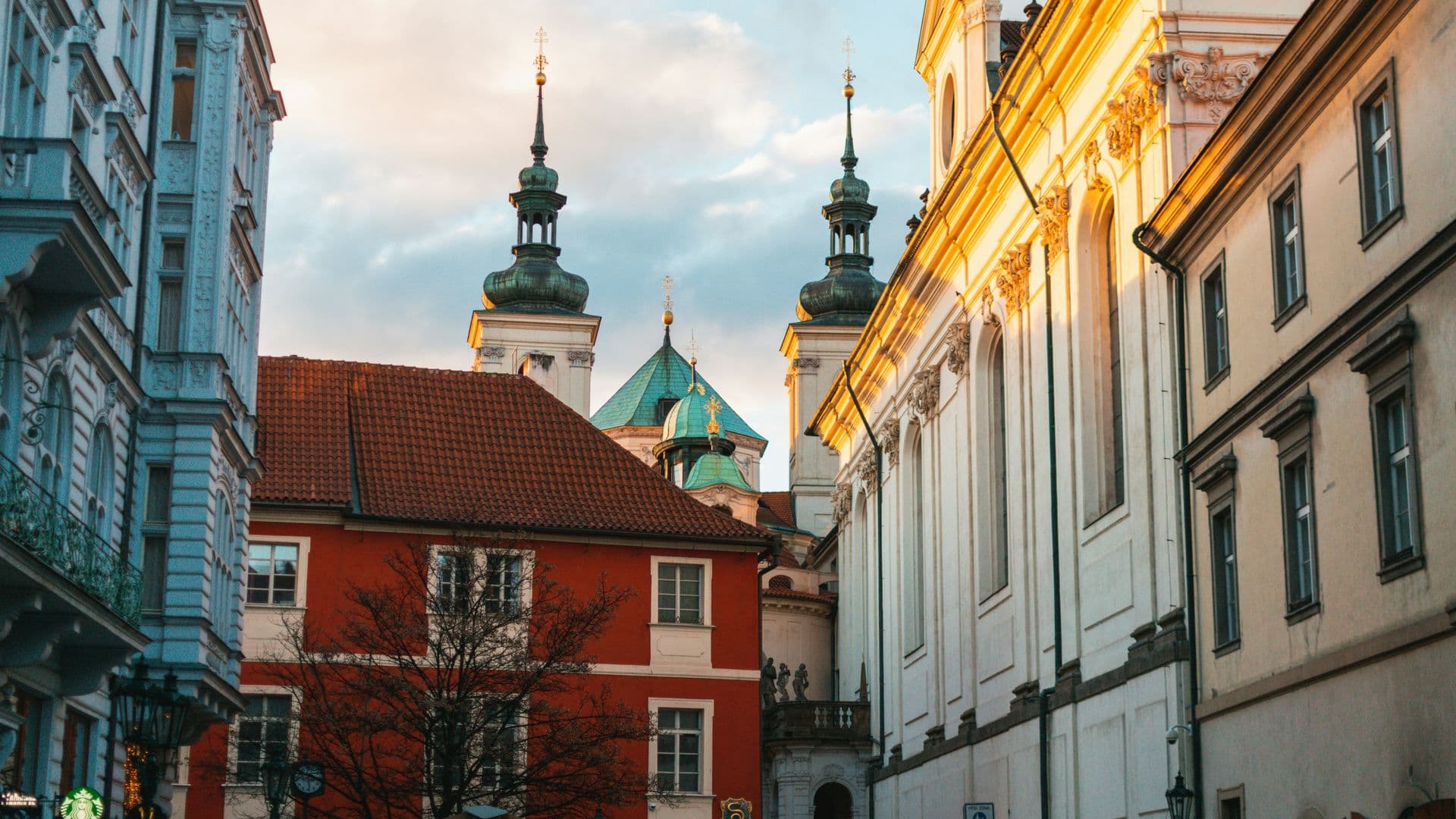
The Klementinum is the second-largest complex of buildings in Prague after the Castle, and most visitors walk past it without realizing what's inside. The entrance on Karlova or Mariánské náměstí is modest — a doorway, a ticket counter, a corridor. Then you climb a narrow staircase and step into a Baroque library hall that stops conversation. Gilded ceiling frescoes, painted globes, dark wood shelving, the smell of centuries. It is, by any measure, one of the most beautiful rooms in Europe.
We include the Klementinum on our private tours because it represents something visitors don't expect from Prague — a Jesuit intellectual powerhouse that rivaled the great libraries of Rome and Vienna, hidden inside a nondescript block of buildings that takes up an entire city quarter.
The Jesuit Legacy
The Klementinum started as a Dominican monastery in the 11th century, but its transformation began in 1556 when Ferdinand I invited the Jesuits to Prague to counter the Protestant Reformation. The Jesuits — brilliant, disciplined, and extremely well-funded — turned the site into the largest educational complex in Bohemia. Over the next two centuries, they expanded the Klementinum building by building until it occupied a vast area between Karlova street, the river, and Mariánské náměstí.
At its peak, the Klementinum contained a university, a printing press, a pharmacy, a theater, three churches, an astronomical observatory, and one of the largest libraries in Central Europe. The Jesuits used education as their primary tool of influence — they taught for free, attracted the brightest students regardless of social class, and maintained academic standards that their Protestant competitors struggled to match.
When Pope Clement XIV dissolved the Jesuit order in 1773, the Klementinum was absorbed into the Habsburg state. The library became the foundation of what is now the National Library of the Czech Republic, which still occupies the building. The institution holds approximately six million items — manuscripts, maps, incunabula, and printed books that trace a continuous line from the medieval monastery through the Jesuit academy to the modern republic.
The Baroque Library Hall
The library hall that visitors see on the guided tour was built in 1722. It is a single long room with a vaulted ceiling entirely covered by frescoes painted by Jan Hiebl, depicting allegories of education, wisdom, and the arts. The ceiling is designed to create an illusion of depth — the painted architecture extends the room upward into a false dome that looks three-dimensional from below.
The shelving holds approximately 20,000 volumes — theological, philosophical, and scientific texts from the 17th and 18th centuries. The books are not decorative — they are genuine library holdings, shelved in their original positions. The globes positioned in the hall are both terrestrial and celestial, several dating to the 17th century.
Photography is restricted in the library hall. The policy has fluctuated over the years — at times photos were permitted with a fee, at other times prohibited entirely. As of recent years, photography from the doorway with certain restrictions is the norm, but check at the ticket desk. The restriction is frustrating but understandable: the room is small, the tour groups move through quickly, and cameras slow everyone down.
One detail that most visitors miss: the theological texts on the shelves are arranged not alphabetically but by subject category, following the Jesuit classification system. The spine labels are handwritten in Latin, and the organizational logic reflects 18th-century intellectual hierarchies — theology at the top, natural philosophy below, practical sciences at the bottom.
The Astronomical Tower
The guided tour includes a climb up the Astronomická věž (Astronomical Tower), which rises above the Klementinum complex. The tower has served as an observatory since 1722, and what makes it unique in Europe is continuity: meteorological observations have been recorded here without interruption since 1 January 1775 — over 250 years of daily data.
This unbroken record — temperature, air pressure, precipitation, cloud cover — is one of the longest continuous meteorological datasets in the world. It has been used by climate scientists to reconstruct Central European weather patterns going back to the 18th century. The instruments are still calibrated and readings still taken, though modern automated stations supplement the traditional methods.
The observation gallery at the top of the tower provides a 360-degree panorama of Prague. The view includes the Charles Bridge directly below, the Old Town rooftops, Prague Castle across the river, and the spires of the Týn Church and St. Nicholas. The gallery is small and the groups are kept to a manageable size, which means you have a few minutes at the top without being crushed by crowds.
The lead statue of Atlas holding a celestial globe on the tower's rooftop is a landmark visible from many points in the Old Town. It was placed there in the 18th century and has become one of Prague's most recognizable silhouettes, though most people who see it have no idea what building it belongs to.
The Mirror Chapel
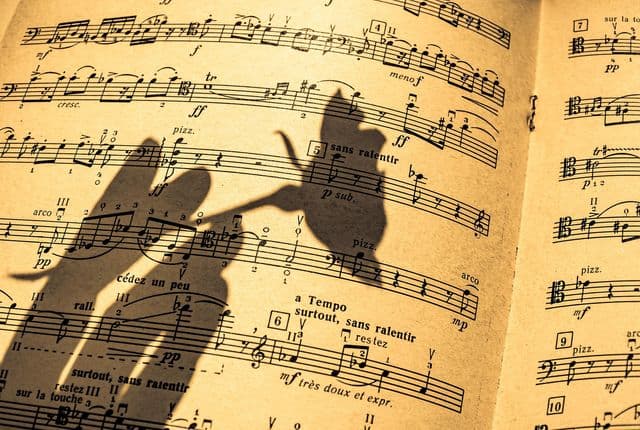
The Zrcadlová kaple (Mirror Chapel) is a small Baroque chapel inside the Klementinum that serves today primarily as a concert venue. The interior is decorated with mirrors, stucco, and frescoes — the mirrors multiply the candlelight and create an intimate, glittering atmosphere that is well suited to chamber music.
Concerts in the Mirror Chapel are a popular evening activity in Prague, typically featuring classical ensembles playing Mozart, Vivaldi, and Dvořák. The acoustics are surprisingly good for such a small space, and the visual setting adds a dimension that a modern concert hall cannot match. Tickets are widely available through various agencies and at the Klementinum itself.
The chapel is not included in the standard library-and-tower guided tour — it's accessible separately for concert events. If your visit coincides with an evening performance, it's worth attending. The combination of the Baroque interior and live music is one of Prague's genuinely atmospheric experiences.
The Guided Tour Format
The Klementinum can only be visited via a guided tour — there is no independent access to the library hall or the tower. Tours run throughout the day, last approximately fifty minutes, and cover the Baroque library hall, the Astronomical Tower, and the Meridian Hall (a room with a line on the floor that once served to calibrate the city's clocks using solar observations).
Tours are available in Czech, English, and other languages depending on demand. During peak season, it's worth arriving early or booking in advance — the tours have limited capacity, and the midday slots fill quickly. The Klementinum entrance most commonly used for tours is on Mariánské náměstí, though there is also access from Karlova street.
The tour groups are small, which is part of the experience's appeal. You are not herded through in a mass — there is time to look at the ceiling, examine the globes, and absorb the atmosphere before moving to the next room.
Walking the Klementinum With a Private Guide
The Klementinum's guided tour tells you what you're seeing; a private guide tells you why it matters. The Jesuit story — their arrival in Prague, their intellectual ambitions, their suppression — connects to Charles Bridge (which they decorated with baroque statuary), to the Old Town churches they rebuilt, and to the broader Counter-Reformation that shaped Central European culture for centuries.
On our Charles Bridge and Old Town private tour, we walk past the Klementinum and explain its role in Prague's intellectual and religious history. On our All Prague in One Day tour, we fit it into the full arc from medieval Prague to the modern city. Exclusively yours, with your own guide.
For an evening that takes you deeper into Prague's historic atmosphere, continue with a medieval dinner at U Pavouka Tavern — from Baroque grandeur to Gothic revelry, with fire dancers and unlimited mead in a vaulted cellar.
Browse all our private tours in Prague.
Frequently Asked Questions
Can you visit the Klementinum library without a guided tour?
No — the Baroque library hall and the Astronomical Tower are only accessible via the Klementinum's guided tour. There is no independent access. Tours run throughout the day and last approximately fifty minutes.
Is photography allowed in the Klementinum library?
The photography policy has changed over the years. Recent practice allows limited photography from the doorway of the library hall, but not inside the room itself. Check at the ticket desk for current rules — they can vary by season.
How long has the Klementinum recorded weather data?
Meteorological observations have been recorded at the Klementinum without interruption since 1 January 1775 — over 250 years. It is one of the longest continuous weather datasets in the world and is used by climate scientists studying long-term patterns in Central Europe.
What is the Mirror Chapel used for?
The Zrcadlova kaple (Mirror Chapel) is a small Baroque chapel inside the Klementinum that serves as a concert venue. Evening classical music concerts — typically Mozart, Vivaldi, and Dvorak performed by chamber ensembles — are held regularly. The mirrored interior and candlelight atmosphere make it one of Prague's most distinctive concert settings.
You May Also Like
Want to see Prague for yourself?
Take our flagship Prague tour-6-640x430.jpg&w=3840&q=75)