Why Hire a Licensed Guide in Prague -- And How to Verify

If you are searching for a guide in Prague, you will find hundreds of options -- from Viator listings to Instagram profiles to people handing out flyers near the Astronomical Clock. Some are licensed professionals with government-issued certification. Others are not. The difference matters more than you might think, and it goes well beyond a piece of paper.
What "Licensed Guide" Means in the Czech Republic
The Czech Republic is one of the few European countries that regulates tour guiding through a formal certification system. A licensed guide holds the Czech National Guide Card issued by the Ministry of Regional Development; Degree II is granted on documented professional qualification -- a degree in history or tourism, an accredited guide course, or the state professional qualification for tour guides -- verified by the Ministry.
Both degrees carry the same right to guide; Degree II tells you the Ministry has checked the guide's qualification.
This is not a weekend workshop. The exam has a meaningful failure rate, and guides who pass it have invested significant time and effort. The certification is not issued automatically to anyone who pays a fee.
The result is a class of professionals who know Prague at a level that casual guides simply cannot match. When a guest asks about a specific building's history, a licensed guide does not check their phone -- they know the answer. You can see what this looks like in practice on our guide team page.
Licensed vs Unlicensed -- What Is the Difference for You?
As a visitor, you might wonder why the guide's certification status matters to your experience. Here is what changes.
Inside castles, museums and galleries. Czech law requires a guide card for paid guiding, and inside castles, museums and galleries the site's own rules for guides apply -- ask the operator how a given site handles guided groups.
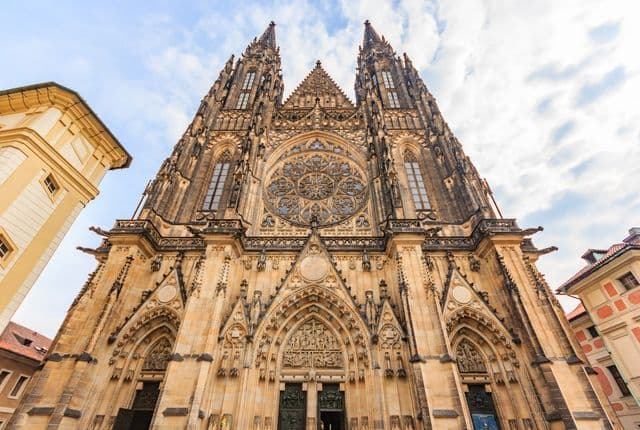
Insider detail: on our Prague Castle and Lesser Town tour, the guide walks you through St. Vitus Cathedral, Old Royal Palace, and Golden Lane while explaining what you are seeing in real time. An unlicensed guide would have to wait outside or hand you off to an audio guide. The difference in experience is significant.
Insurance and accountability. Licensed guides carry professional liability insurance and are registered with the authorities. If something goes wrong -- an injury on a walking tour, a disputed charge, a complaint about service quality -- there is a system in place. Unlicensed guides operate outside this framework.
Knowledge depth. The exam weeds out guides who rely on memorized scripts. A licensed guide can answer unexpected questions, connect events across centuries, and explain why a building looks the way it does. They can tell you what a facade's decorative details mean, who commissioned a statue, and what changed in a neighbourhood after 1989.
Quality floor. Not every licensed guide is exceptional -- certification guarantees competence, not charisma. But it establishes a minimum standard that unlicensed guides do not have to meet. The worst licensed guide is still better informed than the average unlicensed one.
How to Verify a Guide's License
If you are booking a private tour and want to confirm the guide is licensed, here are practical steps.
Ask directly. A licensed guide will not hesitate to confirm their certification. Ask: "Are you a licensed guide certified by the Czech Ministry?" If the answer is vague or deflective, that tells you something.
Look for a badge. Licensed guides carry an official identification badge issued at the time of certification. It includes their name, photo, certification number, and the languages they are qualified to guide in. Guides are required to display this badge while working.
Check with the Prague Guides Association. The Association of Prague Tourist Guides (Asociace průvodců České republiky) maintains a list of certified members. Not all licensed guides are members, but membership provides an additional layer of verification.
Review the operator's website. Reputable tour companies list their guides' qualifications on their website. If a company makes no mention of licensing, that is a red flag. If they specifically state their guides are licensed, they are making a verifiable claim.
Insider detail: we occasionally hear from guests who booked through a marketplace platform and assumed the guide would be licensed. The platform itself does not verify this -- it is the operator's responsibility. Booking directly with a company that employs licensed guides is the most reliable way to ensure you get one.
Why It Matters at Prague Castle
Prague Castle deserves its own section because it is the single site where the licensed/unlicensed distinction has the most direct impact on your experience.
The castle complex covers approximately 70,000 square metres. It includes two main tour circuits, dozens of buildings, and over a thousand years of accumulated history. Most visitors who go without a guide see St. Vitus Cathedral (impressive but confusing without context), walk through Golden Lane (charming but unexplained), and leave within 90 minutes feeling underwhelmed.
Inside such interiors the site's own rules for guides apply. A licensed guide walks beside you inside St. Vitus, explaining the Mucha window, the royal crypt, and the coronation chamber as you see them.
The castle also has security checkpoints that create queues during peak hours. Licensed guides know which entrance to use, what time the queue builds, and how to route the visit efficiently. On our tours, we typically start castle visits before 9 AM to beat the heaviest crowds. By 10 AM, the main security checkpoint line can stretch 20 minutes or more.
For a detailed look at whether you need a guide specifically for Prague Castle, see our article on Prague Castle -- guided vs self-guided.
Beyond Prague Castle -- Where Licensing Matters
Prague Castle gets the most attention in this discussion, but the licensing distinction also affects other sites.
The Jewish Quarter. Some synagogues and the Old Jewish Cemetery have rules about guided groups entering with qualified narrators. A licensed guide provides context as you move through these spaces rather than leaving you to read display panels alone.
Churches and historic interiors. Several Prague churches -- including the Church of Our Lady before Týn and St. Nicholas Church in Malá Strana -- set their own rules for guided groups, and the rules vary by season and event.
Day trips. Inside castles and museums such as Karlštejn Castle and Kutná Hora the site's own rules for guides apply; the card itself is required for paid guiding anywhere in the country.
Our Team's Credentials
Every guide on the Best Prague Guide team holds the highest-category certification issued by the Czech Republic. Our founder, Uliana Formina, earned her license years ago and has since built a team of guides who meet the same standard.
We mention this not as a sales pitch but as a verifiable fact. When you book with us, you can ask for your guide's certification number and check it. We are transparent about qualifications because too many operators are not.
Our guides speak fluent English and are based in Prague full-time. They do not fly in for the summer season and leave in October. They live here, they know the city intimately, and they keep their knowledge current as Prague changes -- new exhibitions, renovated buildings, changed opening hours, even shifted pedestrian routes due to construction.
If you are still deciding how to choose the right guide for your trip, our guide selection checklist covers seven specific things to check before booking.
Book a Private Tour
Want a licensed guide who knows Prague from the inside? Browse our private tours -- exclusively yours. Every guided tour we run — the Charles Bridge and Old Town walk, the Hidden Prague Underground tour and the rest — is led by a Degree II licensed guide. The Medieval Dinner Show is different: a booked table at a third-party venue, with no guide.
Frequently Asked Questions
Can unlicensed guides legally operate in Prague? Czech law requires a guide card for paid guiding, so an unlicensed guide operates outside the Czech state's professional recognition system; inside castles, museums and galleries the site's own rules apply.
What languages do licensed guides in Prague speak? Licensed guides must demonstrate professional fluency in at least one foreign language as part of the certification exam. English, German, Russian, Spanish, French, and Italian are the most common. Our team guides primarily in English, and every guide on our roster has been assessed for fluency, accuracy, and the ability to explain complex historical topics clearly.
How long does it take to become a licensed guide in Prague? Degree I is a basic registration; Degree II requires documented professional qualification -- a degree in history or tourism, an accredited guide course, or the state professional qualification for tour guides -- which the Ministry verifies before issuing the card.
Does a licensed guide cost more than an unlicensed one? Generally yes, though the difference is smaller than you might expect. A licensed guide charges more because they have invested in certification and carry professional insurance. The price premium is typically €10-30 per tour -- a fraction of the overall cost and well worth the difference in access and quality.
Are free walking tour guides licensed? Some are, many are not. Free walking tour companies in Prague employ a mix of licensed and unlicensed guides. Since you cannot choose your specific guide when you join a free tour, there is no way to guarantee a licensed one. For more on how to choose the right guide, see our detailed checklist.
You May Also Like
Want to see Prague for yourself?
Take our flagship Prague tour