Prague Old Town -- What a Private Guide Shows You Beyond the Square
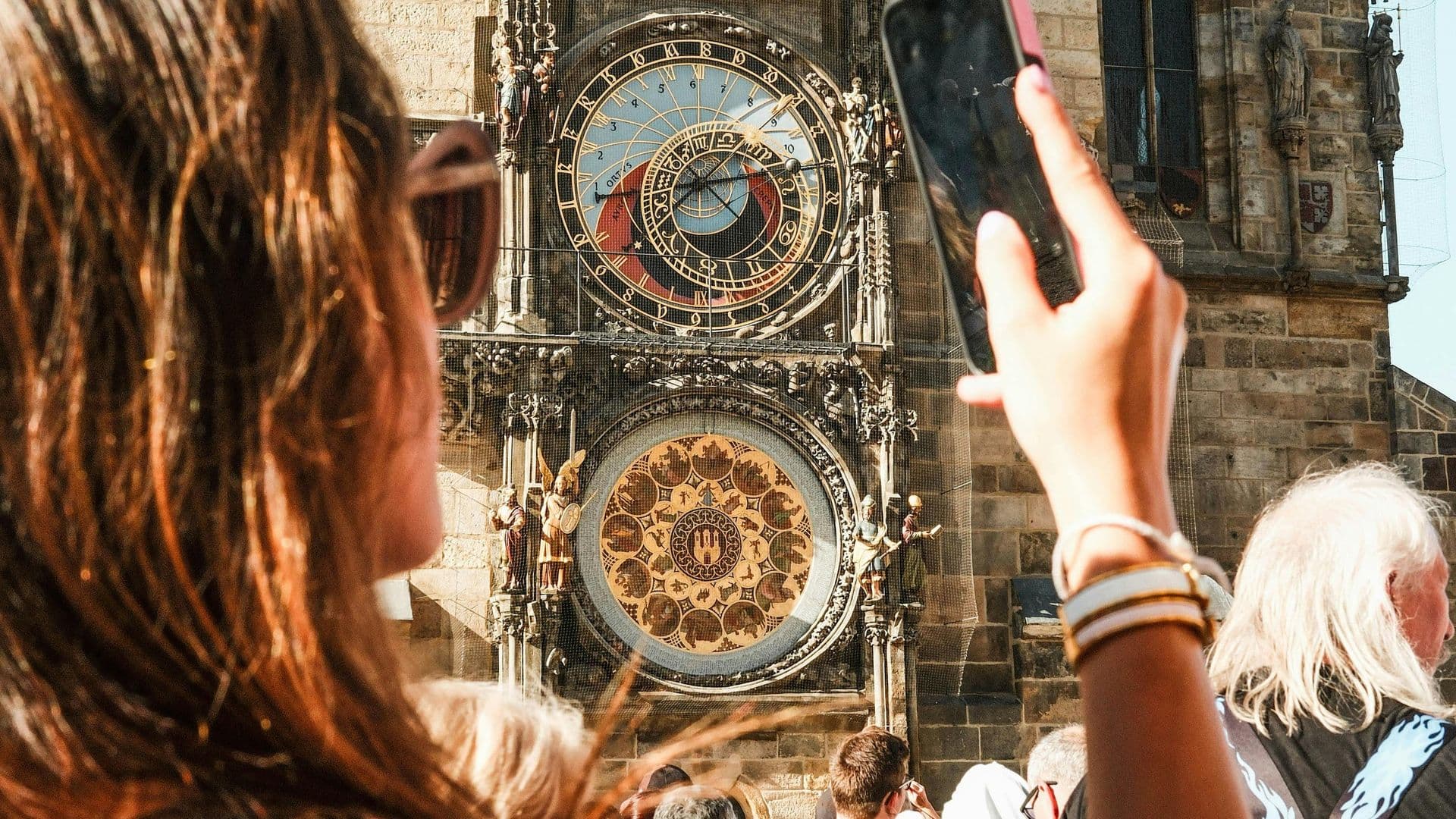
Most visitors to Prague's Old Town follow the same path. They arrive at Old Town Square, watch the Astronomical Clock strike the hour, photograph the Týn Church towers, and move on. The whole experience takes about 30 minutes. It is pleasant, but it barely scratches the surface of a neighbourhood that has been continuously inhabited for over a thousand years.
The problem is not that Old Town Square is overrated. It is genuinely remarkable. The problem is that everything surrounding the square -- the medieval passages, hidden courtyards, story-laden facades, and quiet corners where history happened -- is invisible without someone who knows where to look.
What Most Visitors See in Old Town
The standard self-guided Old Town visit covers a short list. The Astronomical Clock draws the biggest crowd. Visitors gather below it ten minutes before each hour, watch the procession of apostle figures, take photos, and disperse. The clock itself is a medieval masterpiece, but without context it looks like a brief mechanical show.
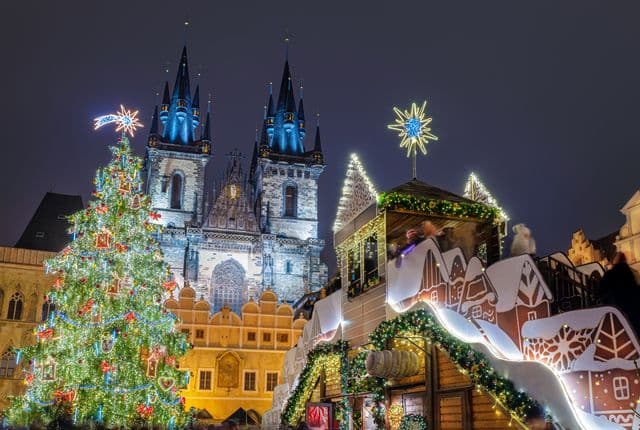
The Church of Our Lady before Týn dominates the square's eastern side with its Gothic twin spires. Most visitors photograph it from the square and move on, not realizing the interior holds the tomb of Tycho Brahe and a Gothic Madonna that survived the Hussite wars.
The Jan Hus Memorial in the centre of the square gets a glance and maybe a photo. Few visitors know who Hus was, why he was burned at the stake in 1415, or how his execution set off a chain of events that shaped Czech national identity for six centuries.
And that is usually it. The visitor continues to Charles Bridge, having spent 20-30 minutes in a neighbourhood that rewards hours of exploration.
What a Guide Shows You Beyond the Square
A private guide does not just narrate the square -- they lead you off it. The streets, courtyards, and passages surrounding Old Town Square contain more stories per square metre than almost anywhere in Europe.
Hidden courtyards. Prague's Old Town is built on a system of interconnected courtyards that most visitors walk past without noticing. Some are residential, some house galleries or cafes, and several date to the medieval period. On our Charles Bridge and Old Town tour, we route guests through courtyards that open onto quiet spaces completely invisible from the main streets.
The Cubist lamp post. At the corner of Karoliny Světlé and Novotného lávka, there is a solitary Cubist-style lamp post -- the only one of its kind in the world. It is not marked, not signposted, and not in any guidebook. Prague is the only city where architectural Cubism was applied to everyday objects, and this lamp post is one of the few surviving examples outside museums.
Medieval passages. Old Town's ground level is roughly three metres higher than it was in the 12th century. The original Romanesque floors are buried beneath the current streets, and some buildings still have accessible medieval ground-floor rooms that are now underground cellars. A guide knows which buildings allow access and how to connect these underground spaces to the visible city above.
House of the Black Madonna. This building at Ovocný trh 19 houses the Museum of Czech Cubism and is itself a masterpiece of Cubist architecture designed by Josef Gočár in 1912. The cafe inside -- Grand Cafe Orient -- is one of the few Cubist interiors you can sit in. Most visitors walk past the building without noticing it because it sits on a side street off the main tourist flow.
Bethlehem Chapel. Jan Hus preached here before his trial and execution. The reconstructed chapel sits on Betlémské náměstí, a quiet square just minutes from the tourist crowds. A guide explains why this plain-looking building changed European religious history and how the Hussite movement that followed Hus's death prefigured the Protestant Reformation by a full century.
The Stories Behind the Buildings
Prague's Old Town facades are dense with stories, but none of them are written on the buildings. Without a guide, every decorated house sign, carved relief, and architectural detail is just ornament.
The defenestrations. Prague has a tradition of throwing political opponents out of windows. The most famous defenestration (1618) happened at Prague Castle, but Old Town saw its own version in 1419 when Hussite protestors threw city councillors from the windows of the New Town Hall. A guide connects these events to the buildings you are standing beside and to the broader pattern of Czech resistance that runs through the city's entire history.
The Astronomical Clock clockmaker legend. The legend says that after master clockmaker Mikuláš of Kadaň completed the clock, the city council had him blinded so he could never build a rival for another city. In revenge, he reached into the mechanism and stopped it -- and no one could repair it for decades. The story is almost certainly apocryphal, but a guide uses it to explain how Prague mythologizes its own history and why separating fact from legend is part of the fun.
The 27 crosses in the pavement. In front of the Old Town Hall, 27 crosses are embedded in the cobblestones. They mark the spot where 27 Czech Protestant leaders were executed on 21 June 1621, after the failed Bohemian Revolt. Most visitors walk over these crosses without noticing them. A guide stops you here and explains a pivotal event in Czech history -- the moment the country lost its independence for nearly 300 years.
Insider detail: on our tours, we find that the 27 crosses are consistently the most powerful moment of the Old Town walk. Guests who walked across the square an hour earlier without noticing them now stand still and take it in. A guide does not make Prague more dramatic -- they reveal the drama that is already there.
Jan Hus and the Reformation. The monument in the centre of Old Town Square depicts Hus and his followers. A guide explains that Hus was condemned for heresy in 1415, a century before Martin Luther. The Hussite wars that followed his execution devastated Bohemia but also produced a unique Czech Protestant tradition that shaped the country's culture for centuries.
Why Walking with a Guide Changes Old Town Completely
The fundamental challenge of Prague's Old Town is that its richness is not signposted. Paris labels its landmarks. Rome has plaques on every ruin. Prague hides its stories inside the architecture, in the arrangement of streets, and in the spaces between buildings.
Every facade has a story, but none of them are written on signs. The house signs that pre-date street numbering -- "At the Golden Ring," "At the Stone Ram," "At the Two Golden Bears" -- were once a navigation system, a branding strategy, and a status symbol. A guide decodes them as you walk past.
The street layout itself tells a story. Old Town's winding streets follow a medieval plan that was never modernized. A guide explains why certain streets curve the way they do (they follow long-vanished waterways), why some buildings are set at odd angles (they pre-date their neighbours by centuries), and where the original town walls stood.
Insider detail: our guides sometimes describe Old Town as a "city built on top of itself." After the catastrophic floods of the 13th century, rather than rebuilding at ground level, Prague raised the entire neighbourhood by about three metres. The original Romanesque rooms became cellars, and new Gothic buildings were constructed on top. Walking through Old Town, you are literally walking above a buried medieval city.
This is the kind of context that transforms a pleasant walk into something you remember years later. It is also the kind of detail that no guidebook provides in the moment you need it -- standing on a specific street, looking at a specific building, wondering why it does not match anything around it.
Combine Old Town with Charles Bridge and the Jewish Quarter
Old Town is compact enough to combine with neighbouring areas in a single tour. The most natural combination is Old Town Square, Charles Bridge, and the Jewish Quarter -- all within walking distance and thematically connected.
Our Charles Bridge and Old Town tour covers this route in about 2 hours at a comfortable pace. The tour connects the medieval history of Old Town to the Baroque statues on Charles Bridge and the layered history of Josefov, the Jewish Quarter.
For visitors who want to see both sides of the river in one day, the All Prague in One Day tour adds Prague Castle and Lesser Town to the Old Town walk, covering the city's essential landmarks in a structured full-day experience.
If you are drawn to what lies beneath the surface, the Hidden Prague Underground and Alchemy tour explores the medieval cellars and Romanesque rooms that sit below Old Town's current street level.
And for an evening experience after your tour, the Medieval Dinner Show in a Gothic cellar brings Old Town's medieval atmosphere to life with food, theatre, and swordplay.
Our Approach
Our licensed guides walk Old Town's streets daily and know the neighbourhood at a level that goes far beyond tourist-guide basics. We customize every tour based on what guests tell us about their interests, and we route through quiet side streets and hidden corners that the main tourist flow misses entirely.
Old Town rewards patience and curiosity. A guide provides both -- stopping where the story demands it and moving on when the point has been made.
Book a Private Tour
Want to see what Old Town looks like when someone who knows every corner walks beside you? Browse our private tours -- exclusively yours, with your own guide. The Charles Bridge and Old Town tour is the natural starting point for anyone who wants to go beyond the square.
Frequently Asked Questions
How long does it take to properly see Prague Old Town? A self-guided walk of the main square takes 20-30 minutes. A guided walk through Old Town, including the passages, courtyards, and stories beyond the square, takes 2-3 hours. The neighbourhood rewards slower exploration -- two hours with a guide reveals more than a full day of wandering alone.
Is Old Town accessible for people with mobility limitations? The main streets and square are flat and accessible, though surfaces are uneven cobblestone throughout. Some hidden courtyards and underground cellars involve stairs. Our guides adjust the route for guests with mobility needs, keeping to accessible paths while still covering the essential stories.
Can I combine Old Town with Prague Castle in one tour? Yes. Our full-day tour covers both, typically starting at Prague Castle in the morning (when crowds are lighter) and finishing in Old Town in the afternoon. The two areas are connected by Charles Bridge, which serves as a natural midpoint.
What is the best time of day to visit Old Town? Early morning (before 9 AM) and late afternoon (after 5 PM) offer the most pleasant atmosphere with smaller crowds. Midday is the busiest period, especially around the Astronomical Clock.
How does this tour differ from visiting Old Town Square on my own? The square itself is easy to visit alone. What a guide adds is everything that surrounds it -- the context behind the buildings, the hidden passages, the stories embedded in facades, and the quiet corners that are not marked on any map. For more on what a private tour involves, see our article on what to expect on a private walking tour.
You May Also Like
Want to see Prague for yourself?
Take our flagship Prague tour-6-640x430.jpg&w=3840&q=75)