St. Vitus Cathedral — What to See Inside
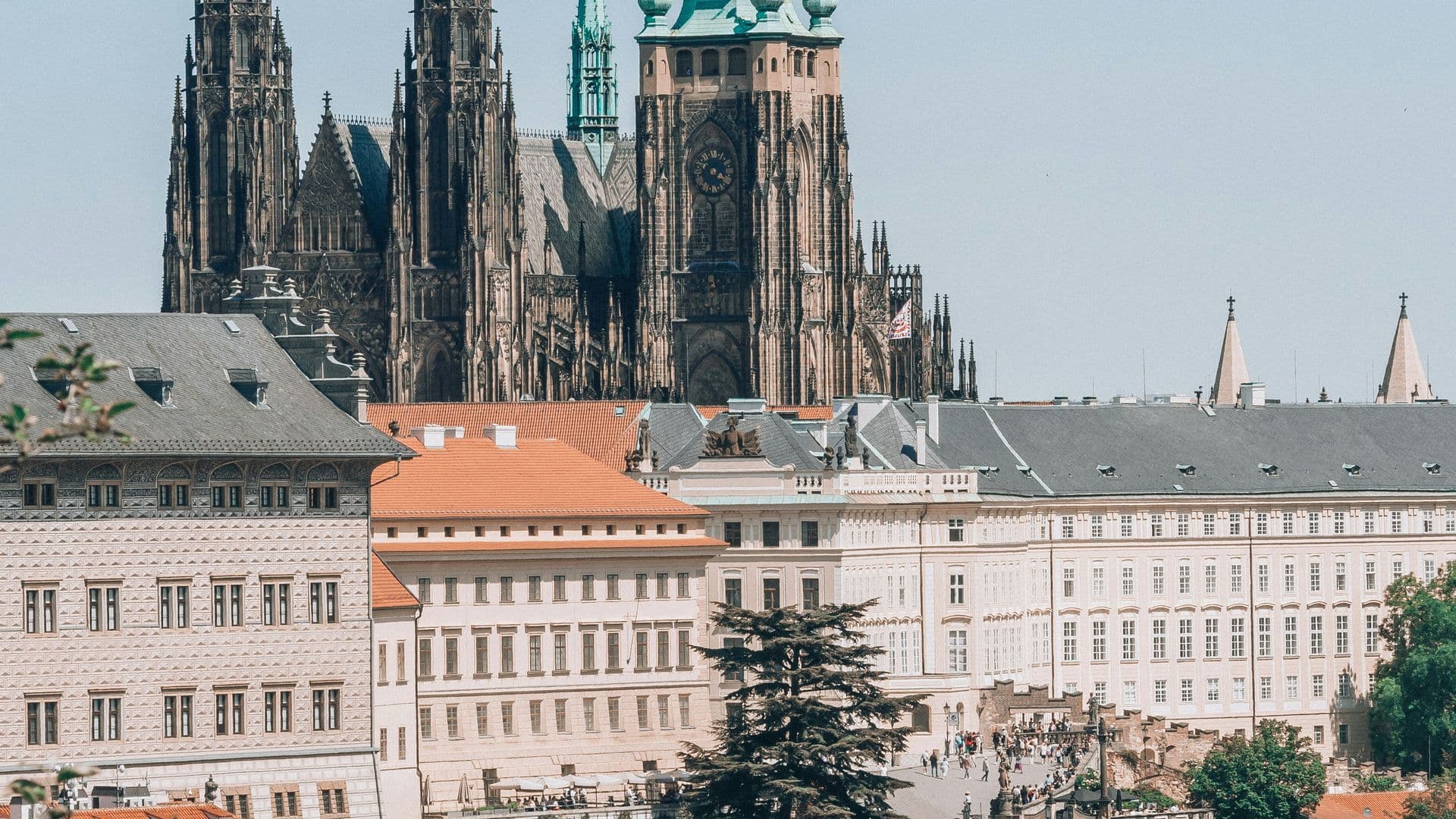
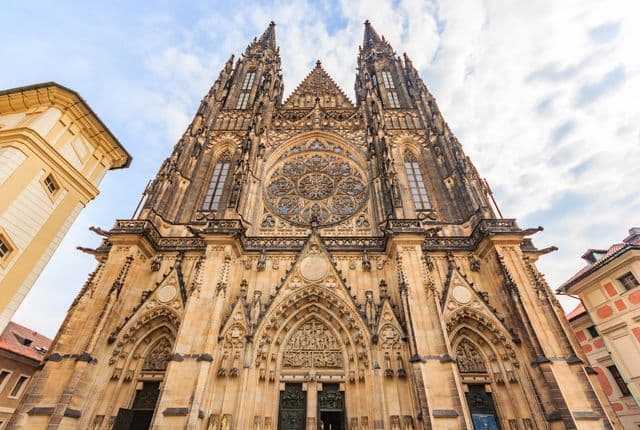
Katedrála sv. Víta is the largest and most important church in the Czech Republic, and it took nearly 600 years to build. Construction began in 1344 under Emperor Charles IV and was not officially completed until 1929. The result is a building where medieval Gothic masonry meets Art Nouveau stained glass — and somehow the combination works.
If you've read our Prague Castle guide, you know the cathedral sits at the heart of the castle complex. But the castle guide covers the entire grounds. This article goes deeper into the cathedral itself — what to look for, what most visitors walk past, and why it took six centuries to finish.
600 Years of Construction
The site has held a church since the year 930, when Prince Václav (later Saint Wenceslas) built a Romanesque rotunda here. That was replaced by a Romanesque basilica in the 11th century. In 1344, Charles IV — the king who transformed Prague into an imperial capital — commissioned a grand Gothic cathedral to replace the basilica.
The first architect was Matthias of Arras, a Frenchman who designed the eastern end in the French Gothic style he knew from cathedrals like Narbonne. When he died in 1352, a young Swabian architect named Petr Parléř took over. Parléř was only 23, and he brought something different — a more experimental Gothic style with innovative vault designs that broke from the strict French model.
Parléř built the choir, the St. Wenceslas Chapel, and began the great south tower before his death in 1399. Then the Hussite Wars erupted, and construction stopped for centuries. The nave and western facade were not completed until the late 19th and early 20th centuries — a neo-Gothic addition that deliberately matched the medieval portions.
Walk through the cathedral and you're walking through nearly every century of Czech architectural ambition. The seam between medieval and modern construction is visible if you know where to look — the stone colour shifts subtly about halfway down the nave.
The Mucha Window
The most photographed single element in the cathedral is a stained-glass window that has nothing to do with the medieval builders. Alfons Mucha — the Czech Art Nouveau master famous for his Parisian posters — designed the window on the north side of the nave in 1931.
The window depicts Saints Cyril and Methodius, who brought Christianity and a written alphabet to the Slavic peoples in the 9th century. Mucha's style is unmistakable: flowing lines, jewel-toned colours, human figures with a grace that belongs more to poster art than to church tradition. It's strikingly different from every other window in the building.
Most visitors photograph the rose window above the main western entrance — it's large and directly ahead as you enter. The Mucha window is better. It's on the left side of the nave, about a third of the way from the entrance. The morning light comes through it strongest before noon, and the colours shift as the sun moves.
We always bring our guests to this window first, before the crowds push deeper into the building. Standing directly beneath it when the light is right is one of those moments in Prague that photographs cannot capture.
The Chapel of St. Wenceslas
The Kaple sv. Václava is the spiritual heart of the cathedral and the most sacred space in Czech Christianity. Built by Petr Parléř in the 1360s, it houses the tomb of Saint Wenceslas — the "Good King Wenceslas" of the Christmas carol, the 10th-century duke who became the patron saint of the Czech nation.
The chapel walls are inlaid with over 1,300 semi-precious stones — jasper, amethyst, chalcedony, and agate — set into gilded plaster. Above the stone panels, murals depict scenes from the life of Christ and the life of St. Wenceslas. The overall effect is dense, rich, and deliberately overwhelming. This was medieval luxury at its most concentrated.
In the upper corner of the chapel, a small door leads to a staircase. Behind that door, secured with seven locks whose keys are held by seven different officials (including the president and the archbishop), sit the Czech Crown Jewels — the Crown of Saint Wenceslas, the royal orb, and the sceptre. They are displayed publicly only on extraordinary state occasions, typically once or twice per decade.
The chapel is viewable from the entrance but visitors cannot walk inside — the stone floor is protected, and the atmosphere would not survive constant foot traffic. Stand at the threshold and give your eyes time to adjust. The detail in the stone inlay only becomes apparent after the first minute.
The Royal Crypt
Below the cathedral lies the Royal Crypt, accessible by a staircase near the main altar. Here rest the remains of Czech kings and queens — including Charles IV himself, whose sarcophagus is the centrepiece of the space.
The crypt was rediscovered and opened in the early 20th century during excavation work. The atmosphere underground is cool, dim, and noticeably quieter than the nave above. The tin sarcophagi of Charles IV, his four wives, his son Wenceslas IV, and other rulers line the walls of a relatively small space.
Standing beside Charles IV's tomb connects you to the man who built the cathedral, commissioned Charles Bridge, founded Central Europe's first university, and made Prague the capital of the Holy Roman Empire. He died in 1378, and his remains have been here — through Hussite Wars, Habsburg rule, world wars, and Communist decades — ever since.
The Great South Tower
The Great South Tower rises 96.5 metres above the cathedral and offers one of the highest viewpoints in Prague. The climb is 287 steps up a narrow, spiralling staircase with no lift. The stairs are stone, worn smooth by centuries of visitors, and the passage narrows toward the top.
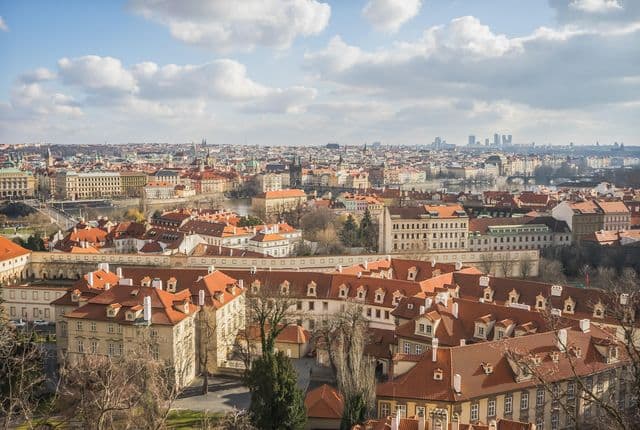
The view from the top is extraordinary — directly down into the castle courtyards, across the river to the Old Town, and on clear days, to the hills surrounding Prague. The tower also houses Zikmund, the largest church bell in the Czech Republic, cast in 1549 and weighing over 15 tonnes. You can see it up close during the climb.
These stories come alive when told by someone who knows them deeply. Our licensed guides share what the plaques don't say.
A few practical notes: the staircase is genuinely narrow, and passing someone coming down requires pressing against the wall. The climb is not recommended for anyone with claustrophobia or mobility issues. On busy days, the queue at the base can add 20-30 minutes. We recommend starting early — the tower opens with the castle, and the morning light from the top is worth the effort.
The Rose Window
The rose window above the western entrance was designed by František Kysela in 1925-1927 and depicts scenes from the biblical creation story. It's a 20th-century addition to a medieval building, and it works because the scale is right — 10.4 metres in diameter, filling the entire western wall above the main doors.
The window is best viewed from inside, standing in the nave and looking back toward the entrance. In the afternoon, when western light comes through, the colours project onto the nave floor. Many visitors enter, look forward toward the altar, and never turn around. The window behind them is worth the turn.
How the Cathedral Fits the Castle
Understanding St. Vitus means understanding its place within the Prague Castle complex. The cathedral sits in the Third Courtyard — you pass through the Second Courtyard and then suddenly the cathedral's western facade fills your entire field of vision. The narrow courtyard makes the building feel even larger than it is, because you can never step back far enough to see the whole thing at once.
The south side of the cathedral, with its mosaic of the Last Judgement above the Golden Portal, faces the courtyard where the changing of the guard takes place. This 14th-century mosaic — made of over one million glass and stone tesserae — is often overlooked because visitors enter from the west. Walk around to the south side before or after going inside. The mosaic glows in afternoon sunlight.
On our Prague Castle and Lesser Town private tour, we approach the cathedral from the angle that reveals the mosaic first, then enter when the light inside is best. Timing the visit to the cathedral's light makes a genuine difference to the experience.
Experience It With a Private Guide
The cathedral rewards attention to detail — the Mucha window at the right hour, the stone inlay in the Wenceslas Chapel that only reveals itself slowly, the shift in stone colour where medieval meets modern. On our Prague Castle and Lesser Town tour, the cathedral is the centrepiece, and we time our entry to avoid the heaviest crowds.
Our All Prague in One Day tour includes the cathedral as part of a full circuit of the city's major landmarks. And for an evening that trades Gothic stone for medieval atmosphere, the Medieval Dinner Show puts you in 15th-century vaulted cellars with live performance and period food.
Browse all our private tours in Prague.
Frequently Asked Questions
Do I need a ticket to enter St. Vitus Cathedral?
The nave of the cathedral is free to enter. To visit the inner chapels and the Royal Crypt you need a Prague Castle Main Circuit ticket; the tower is a separate ticket. The free section gives you a view of the Mucha window and the general nave, but the Wenceslas Chapel and crypt require a ticket.
How long does it take to visit St. Vitus Cathedral?
Thirty minutes covers the free nave area. With a ticket, allow one hour to see the chapels, crypt, and tower climb. The tower alone takes 20-30 minutes depending on queues and your pace on the 287 steps.
Can I climb the tower of St. Vitus Cathedral?
Yes. The Great South Tower is 287 steps with no lift. The staircase is narrow and spiral. The view from the top covers the entire castle, the river, and the Old Town. It is not recommended for anyone with claustrophobia or mobility difficulties.
What is the Mucha window in St. Vitus Cathedral?
It is a stained-glass window designed by Alfons Mucha in 1931, depicting Saints Cyril and Methodius. Located on the north side of the nave, it combines Mucha's Art Nouveau style with religious subject matter. The morning light brings out its colours most vividly.
You May Also Like
Want to see Prague for yourself?
Discover Prague's underground tour