Brno Day Trip from Prague — Catacombs, Castles and the Czech Second City
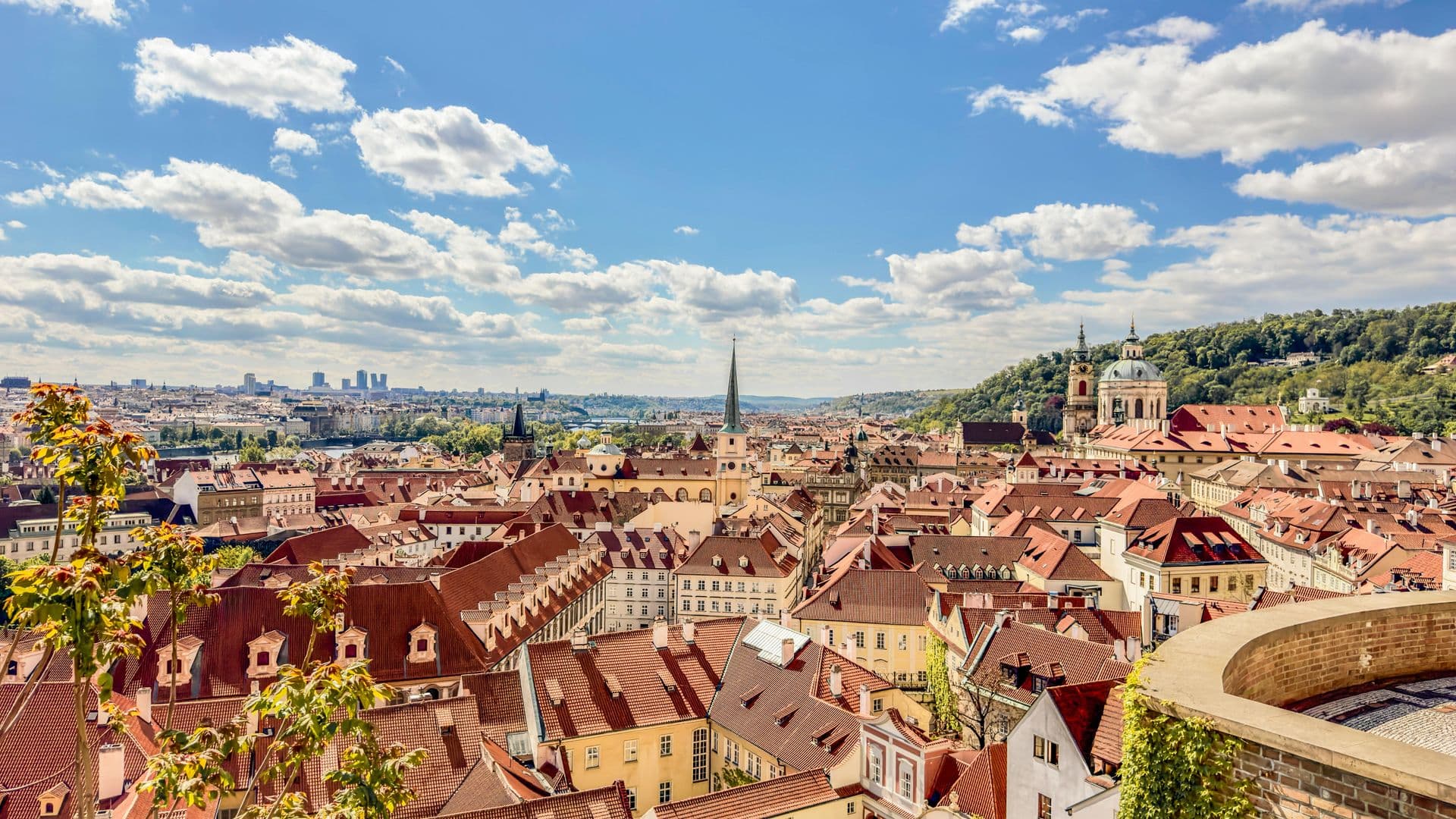
Brno is the city Praguers either love or pretend doesn't exist. The Czech Republic's second city, capital of Moravia, home to 400,000 people and two major universities, Brno has spent decades in Prague's shadow and seems perfectly comfortable there. It has none of Prague's tourist crowds and all of its own architectural depth — Romanesque crypts, a Gothic castle on a hilltop, a Functionalist masterpiece in Tugendhat Villa, and a network of catacombs beneath the old town.
Two and a half hours from Prague by train, Brno fills a day with enough variety to justify the journey. The city rewards curiosity more than checklists.
What to See
Špilberk Castle
Hrad Špilberk dominates Brno from a hilltop at the city's western edge. Originally a 13th-century royal castle, it was converted into one of the Habsburg Empire's most feared prisons in the 18th century. Prisoners from across the empire — including Italian revolutionaries and political dissidents — were held in the underground casemates, and the fortress earned the reputation as "the prison of nations."
Today, the casemates are open to visitors — narrow passages, barrel-vaulted cells and atmospheric lighting that gives a genuine sense of the conditions. The castle also houses the Brno City Museum, covering the city's history from prehistory to the present. The castle park surrounding the fortress is Brno's main green space — popular for jogging, picnics and evening strolls.
Insider detail: The walk up to Špilberk from the city centre passes through the park and takes about 15 minutes. From the ramparts, the view over Brno's red rooftops is the city's best panorama. The spires of the Cathedral of SS Peter and Paul are directly east, and on clear days you can see the Moravian hills to the south.
Tugendhat Villa
Vila Tugendhat is the most important piece of modern architecture in the Czech Republic. Designed by Ludwig Mies van der Rohe and completed in 1930, it was built for the Jewish industrialist Tugendhat family and is now a UNESCO World Heritage Site. The house pioneered the open floor plan, floor-to-ceiling glass walls and a floating chrome-and-onyx partition that became icons of Modernist design.
Tours run on a strict timed-ticket system. Book well in advance — summer slots sell out weeks ahead. The exterior is visible from the street (the garden side faces down the hill), but the interior tour reveals why this building changed architecture.
Insider detail: The famous onyx wall in the living area — a single slab of honey-coloured stone from Morocco — changes colour depending on the light. Morning tours see it glow warm amber. Afternoon light through the garden windows turns it cooler. The guides know this and time their explanations accordingly.
Brno Ossuary and Catacombs
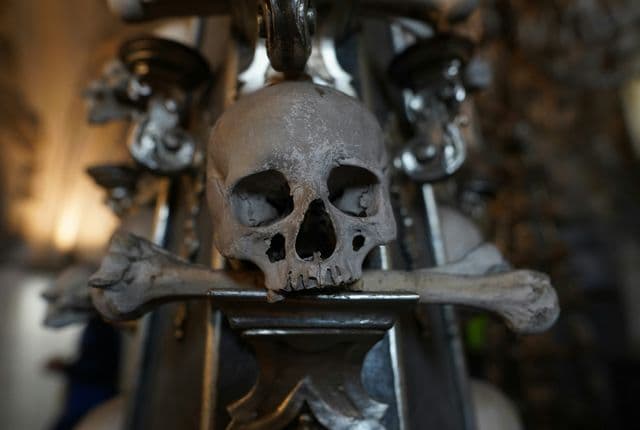
Beneath the Church of St. James (Kostel sv. Jakuba) on the main square, the Brno Ossuary is the second-largest ossuary in Europe after Paris. Discovered during renovation work in 2001, it contains the remains of an estimated 50,000 people — victims of plague, the Thirty Years' War and centuries of urban burial.
The bones are arranged in the Gothic vaulted spaces with atmospheric lighting and a sound installation that makes the visit more contemplative than macabre. The ossuary opened to the public in 2012 and is one of Brno's most visited attractions.
Separately, the Labyrinth beneath the Cabbage Market (Labyrint pod Zelným trhem) is a network of medieval cellars and passages beneath one of Brno's oldest market squares. Originally used for food storage, brewing and shelter during sieges, the tunnels now offer a guided tour with historical exhibits.
Cathedral of SS Peter and Paul
Katedrála sv. Petra a Pavla crowns the Petrov hill at the city's southeastern edge. The twin-spired Gothic cathedral is Brno's most recognizable silhouette. The interior is early 20th-century renovation in a Gothic Revival style. From the hill, the views extend across the old town to Špilberk.
Insider detail: Brno's cathedral bell famously rings noon at 11 AM. The tradition dates to the Thirty Years' War: during the Swedish siege of 1645, the defending garrison heard that the Swedish commander Lennart Torstenson had vowed to withdraw if the city wasn't taken by noon. The bell-ringer rang the midday bell an hour early. Torstenson kept his word and left. Brno still rings noon at eleven.
Zelný Trh — The Cabbage Market
Zelný trh (Cabbage Market) is Brno's oldest and most atmospheric square — a daily farmers' market selling produce, flowers, honey and seasonal goods from morning through early afternoon. The Parnassus fountain at the centre, a Baroque allegorical sculpture, sits amid the market stalls.
The market is genuine — locals shop here for vegetables. Grab a coffee and a pastry from one of the surrounding cafés and watch the morning trade.
How to Get There from Prague
By train: Direct trains from Praha hlavní nádraží to Brno hlavní nádraží take 2 hours 30 minutes to 2 hours 45 minutes. Both Czech Railways (České dráhy) and RegioJet operate the route. RegioJet's yellow trains offer free coffee and Wi-Fi. Trains run roughly every 30 to 60 minutes. One-way tickets: 200 to 400 CZK depending on operator and advance booking (as of 2026).
By bus: FlixBus and RegioJet buses take about 2.5 to 3 hours. Slightly cheaper but less comfortable.
By car: 200 km on the D1 motorway, roughly 2 to 2.5 hours. The D1 is frequently congested with roadworks. Train is generally preferable.
How Much Time to Spend
A full day from Prague works well. Take an early train (arriving by 10 AM), explore Špilberk, the ossuary, the cathedral and either Tugendhat (if pre-booked) or the Labyrinth, lunch in the old town, and catch a late afternoon train back. You'll return to Prague by 7 to 8 PM.
An overnight stay lets you add Tugendhat (if tickets are available only for the second day), the surrounding Moravian wine country, and a deeper exploration of Brno's nightlife and restaurant scene.
Where to Eat
Pavillon on Jezuitská is one of Brno's top restaurants — Moravian-influenced modern cuisine with an emphasis on local sourcing. The lunch menu is affordable. Dinner requires reservation.
Super Panda Circus on Šilingrovo náměstí is Brno's most acclaimed cocktail bar, but they also serve excellent Asian-fusion food in a creative, informal setting.
Bar, který neexistuje (The Bar That Doesn't Exist) on Dvořákova is exactly what the name suggests — an unmarked door leading to a speakeasy-style bar with inventive cocktails.
For traditional Moravian food, Stopkova Plzeňská Pivnice on Česká street serves Czech classics — roast pork, dumplings, tank beer — in a vaulted beer-hall setting that has been operating since the 1900s.
Is It Worth the Trip?
If you're spending several days in Prague and want a genuine Czech city without the tourism layer, Brno delivers. The architectural range — Romanesque to Functionalist — matches Prague's, the food scene is strong and improving rapidly, and the atmosphere is young and unpretentious (the student population keeps things lively).
Brno also works as a gateway to Moravia. The Moravian wine region starts 30 minutes south. The Lednice-Valtice UNESCO landscape is an hour away. If you have two days to spare from Prague, Brno plus a day in wine country is one of the best itineraries in the Czech Republic.
Back in Prague, our All Prague in One Day tour gives you the capital's highlights with a private guide. And the Medieval Dinner Show offers an evening experience that Brno can't match — a 15th-century tavern with fire dancers and unlimited mead.
Explore all our Prague tours and day trips. Exclusively yours, with your own guide.
Frequently Asked Questions
How long does it take to get from Prague to Brno?
About 2.5 hours by direct train, with RegioJet and Czech Railways both operating frequent services. Buses take roughly the same time. Driving on the D1 motorway takes 2 to 2.5 hours.
Is Brno worth a day trip from Prague?
For visitors who've already explored Prague and want a genuine Czech city experience without tourist crowds, yes. Brno's architectural diversity, underground attractions and food scene justify the journey. Book Tugendhat Villa in advance if Modernist architecture interests you.
Do I need to book Tugendhat Villa in advance?
Strongly recommended. Tugendhat operates timed tours with limited capacity, and summer slots often sell out weeks ahead. Book through the official website. The basic tour (exterior + main living area) takes about 60 minutes.
What is the best time to visit Brno?
May through October for the best weather and longest opening hours at attractions. September is especially good — warm, less crowded than summer, and the Moravian wine harvest is underway nearby.
You May Also Like
Want to see Prague for yourself?
Experience Český Krumlov on our day trip