What Currency Does Prague Use? Money Tips for Visitors
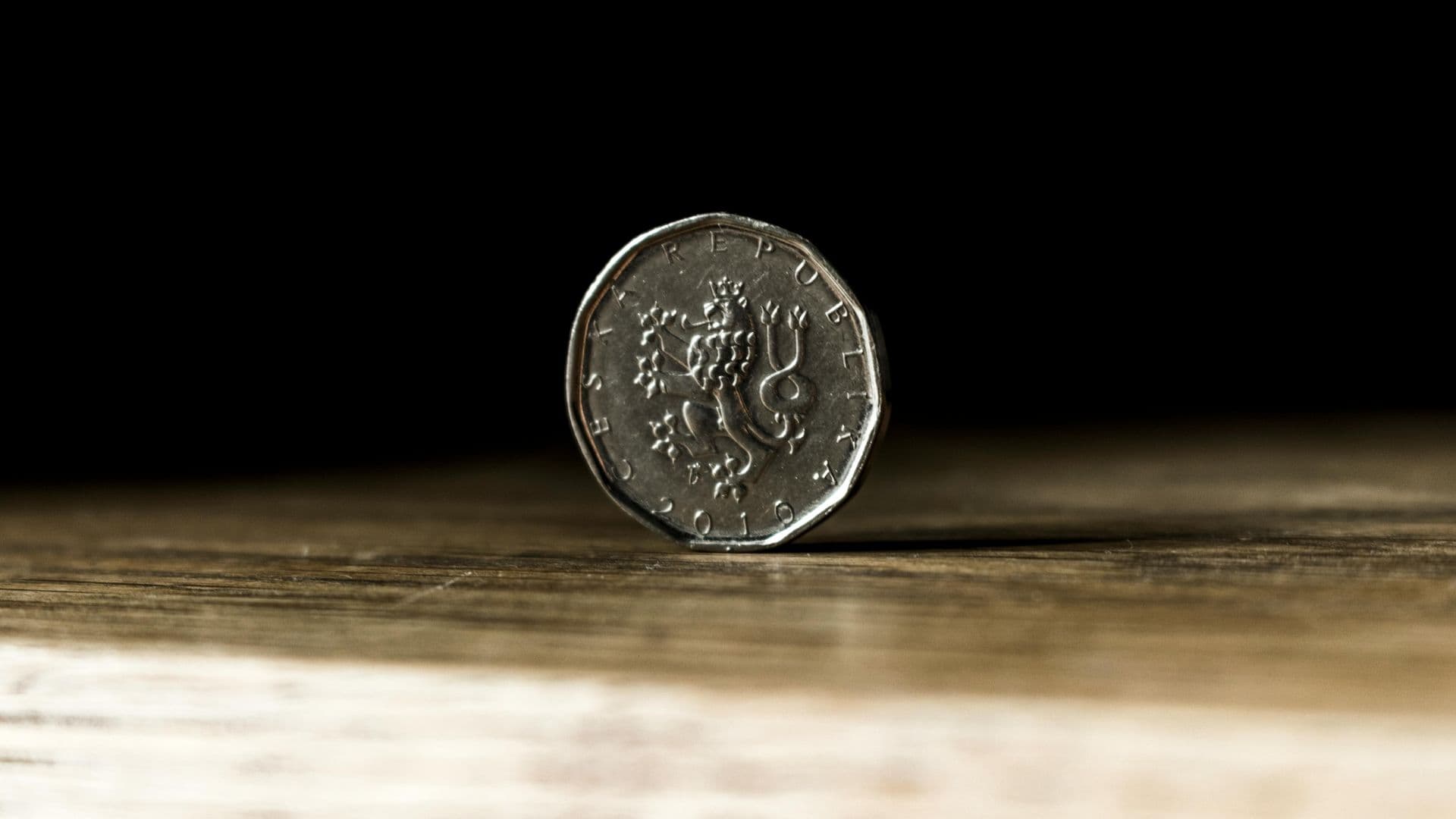
Prague and the entire Czech Republic use the česká koruna (Czech crown, CZK) — not the euro. Many tourist-zone shops accept euros, but their exchange rates are terrible. Withdraw crowns from a bank ATM, pay by card in CZK whenever possible, and avoid the exchange offices near Old Town Square. These three habits alone will save you real money.
The Czech Republic joined the EU in 2004, but it has no firm timeline for adopting the euro. The crown has been the national currency since 1993, when Czechoslovakia split into two countries. For visitors, this means you need to think about exchange rates, ATM fees, and where to get your money changed — and the wrong choice at any of those steps can cost you more than a restaurant meal.
We walk guests through these details on nearly every tour. The money questions usually come up within the first hour.
The Czech Crown — What You Need to Know
The currency code is CZK and the symbol is Kč, which you will see on price tags and menus. Notes come in 100, 200, 500, 1,000, 2,000, and 5,000 CZK denominations. Coins come in 1, 2, 5, 10, 20, and 50 CZK.
As a rough guide (as of 2026), 1 EUR gets you approximately 25 CZK, and 1 USD gets you around 23 CZK. These rates fluctuate, but they give you a working baseline. A coffee costs about 60-80 CZK, a pint of draft beer in a local pub runs 50-70 CZK, and a main course at a mid-range restaurant is typically 200-350 CZK.
One thing our guests often appreciate: the crown makes mental math easy. Divide by 25 for euros, or think of 100 CZK as roughly 4 EUR. After a day or two, you stop converting and just start thinking in crowns.
Where to Exchange Money (And Where Not To)
The exchange offices around Wenceslas Square, Old Town Square, and along Na Příkopě are the ones to avoid. They advertise "0% commission" in neon signs, then apply an exchange rate that effectively charges you 10-20%. We have seen tourists lose 30-40 EUR on a single exchange without realizing it. The rate posted on the LED board outside is often not the rate you get at the counter.
If you prefer exchanging cash, go to Exchange on Kaprova street — it consistently offers rates close to the market rate with no hidden fees. Another reliable option is any branch of a major Czech bank: Česká spořitelna, ČSOB, or Komerční banka. Bank branches charge a small fixed fee but their rates are honest.
A practical detail we share with every guest: the Czech National Bank publishes the official exchange rate daily on its website. Check it on your phone before walking into any exchange office, and you will immediately see whether the rate offered is fair.
ATMs — The Smart Way to Get Crowns
Bank-operated ATMs are the easiest and usually cheapest way to get Czech crowns. Look for machines attached to an actual bank building — Česká spořitelna (green logo), ČSOB (blue), Komerční banka (red), and Raiffeisenbank are all reliable.
Avoid standalone ATMs in tourist areas, especially the bright orange or yellow machines branded Euronet or Travelex. These are legitimate machines, but they push a feature called Dynamic Currency Conversion (DCC) — the screen offers to charge you "in your home currency" with a locked-in rate. That rate includes a markup of 3-7% above the market price. When the ATM asks whether to convert, always select "Without conversion" or "In Czech crowns (CZK)". This way, your home bank handles the conversion at its own rate, which is almost always better.
One more detail worth knowing: some standalone ATMs default to withdrawing large amounts — 10,000 or even 15,000 CZK. Always choose your own amount. For most visitors, 2,000-5,000 CZK per withdrawal covers a few days of incidental cash needs.
Card Payments in Prague
Prague is increasingly card-friendly. Restaurants, cafes, supermarkets, museums, and most shops accept Visa and Mastercard without issues. Contactless payments (tap-to-pay) work everywhere that accepts cards. Apple Pay and Google Pay are widely supported.
That said, there are still places where cash is king. Smaller neighborhood pubs — the kind with no English menu and excellent beer — sometimes accept cash only. Market stalls at Náplavka (the riverside farmers' market) and Havelské Tržiště vary by vendor. Street food stands near tourist sights are often cash-only. And some older tram ticket machines only take coins, though the Lítačka app solves that problem entirely.
We recommend carrying 500-1,000 CZK in smaller notes and coins as a backup. A 5,000 CZK note is difficult to break at small establishments — stick to 200s and 500s for everyday spending.
The DCC Trap at Card Terminals
The same Dynamic Currency Conversion trick that appears at ATMs also shows up at card payment terminals. A waiter brings the card machine, and the screen asks: "Pay in EUR?" or "Pay in your home currency?" The answer is always no. Choose CZK. The DCC markup on card terminals can run 3-5%, which adds up quickly over a week of dining out.
Guests mention this as one of the most useful things we tell them. It is a completely legal practice, but it is designed to benefit the terminal operator, not you.
Approximate Costs to Expect
Knowing the currency is one thing. Knowing what things cost helps you plan better. Here are rough ranges for common expenses (as of 2026):
- Coffee (espresso or cappuccino): 60-90 CZK in a local cafe, 100-140 CZK in a tourist-center cafe
- Draft beer (0.5L): 45-65 CZK in a neighborhood pub, 85-130 CZK in the tourist zone
- Restaurant main course: 200-350 CZK at a mid-range Czech restaurant
- Groceries (supermarket lunch supplies): 150-250 CZK
- Taxi from airport to city center: roughly 600-800 CZK via app (Bolt or Uber)
The price gap between the tourist center and neighborhoods like Vinohrady, Žižkov, or Karlín is significant. A pub in Žižkov might charge 50 CZK for the same Pilsner that costs 120 CZK at a bar on Dlouhá street. Our All Prague in One Day private walking tour takes you through several of these neighborhoods, and the difference is immediately obvious.
Tipping in Czech Crowns
Tips in Prague are given in CZK, not in euros or dollars. The standard in restaurants is 10-15% for good service, or simply rounding up the bill. In local pubs, rounding to the nearest 10 or 20 CZK is enough. The key difference from North America or Western Europe: you tell the server how much you want to pay when they come to collect. You do not leave cash on the table after walking out.
Planning your visit? A private guide takes the logistics off your plate.
We cover tipping in detail in our full Prague tipping guide.
Can You Pay by Card Everywhere in Prague?
Almost everywhere — yes. Prague has moved heavily toward card payments in recent years, and in the city centre you can tap your Visa or Mastercard (contactless) at the vast majority of restaurants, shops, cafes, supermarkets, and attractions. Apple Pay and Google Pay work at most terminals too.
But "almost" is doing some work in that sentence. Here's where you'll still need Czech crowns (CZK) in cash:
- Market stalls — The farmers' markets at Náplavka (Saturday mornings) and Jiřák (Wednesday and Saturday) are predominantly cash-only. Same goes for Christmas and Easter market vendors.
- Some traditional pubs — Smaller neighbourhood hospody (pubs), especially outside the tourist core, sometimes take only cash. If the menu is handwritten on a chalkboard and the beer costs 45 CZK, expect cash.
- Tram ticket machines — The older coin-operated machines on tram platforms accept only Czech coins. The workaround is simple: download the Lítačka app and buy tickets on your phone with a card. It works instantly and stores your tickets digitally.
- Public toilets — Most charge 10-20 CZK in coins. A minor annoyance but worth having a few coins in your pocket.
Critical warning: Avoid Euronet ATMs. These bright yellow machines are on every tourist corner and they aggressively push "dynamic currency conversion" — offering to charge you in your home currency at a brutal 12-15% markup. Always decline the conversion and choose to be charged in CZK. Your bank's exchange rate will be dramatically better.
For cash withdrawal, use ATMs attached to actual Czech banks: Česká spořitelna, ČSOB, Komerční banka, or Raiffeisenbank. These charge no withdrawal fee on the ATM side (though your home bank may charge its own fee).
How much cash to carry? For a typical tourist day in Prague — with most spending on card — having 500-800 CZK in cash (roughly 20-30 EUR) is enough to cover incidentals: a market snack, a pub round, toilet access, and a tip for your guide.
One final note: Prague does not use the euro. Some tourist-facing businesses accept euros but at a poor rate. Always pay in Czech crowns.
Once you have the currency situation sorted, the next money question most visitors ask is about experiences. Tours are one of the bigger line items in a Prague travel budget, and prices vary wildly depending on group size, duration, and whether you book through an agency or directly with a guide. Find out how much do tours in Prague cost so you can budget accurately and avoid overpaying.
Experience It With a Private Guide
Money and currency questions seem small until you are standing at an ATM screen in a foreign language or watching a waiter push a card machine toward you with a confusing conversion offer. On our private walking tour through Prague, we handle these practical details in real time — pointing out which ATMs to use, which exchange offices to skip, and where to find the best value in every neighborhood we walk through.
And when the evening comes, a medieval dinner at U Pavouka Tavern is one of those experiences where the price includes everything — unlimited food, beer, and mead — so there is nothing left to calculate except how much roasted pork you can eat.
Exclusively yours, with your own guide. Browse all our private tours of Prague.
Frequently Asked Questions
Can I use euros in Prague?
Some tourist-area restaurants and shops accept euros, but the exchange rate they apply is almost always unfavorable. You will overpay by 10-20% compared to paying in Czech crowns. Use CZK everywhere — withdraw from a bank ATM or exchange at a reputable office like Exchange on Kaprova street.
What is the best way to get Czech crowns?
A bank-operated ATM is the easiest option. Use machines from Ceska sporitelna, CSOB, Komerční banka, or Raiffeisenbank. Always decline the "pay in your home currency" option and withdraw in CZK. Your home bank's rate will be better than the ATM's conversion.
Do I need cash in Prague?
Cards are accepted at most restaurants, shops, and museums. However, smaller pubs, market stalls, and some street food vendors prefer cash. Carry 500-1,000 CZK in small notes as a backup, especially outside the city center.
How much money should I bring to Prague per day?
A comfortable daily budget for a visitor is roughly 1,500-3,000 CZK (60-120 EUR) covering meals, transport, and a few attractions. Prague is significantly cheaper than Western European capitals, especially if you eat and drink outside the main tourist streets.
Should I exchange money before arriving in Prague?
There is no need. ATMs at Prague airport dispense Czech crowns, and bank ATMs are easy to find throughout the city. Exchanging at home usually gives a worse rate. If you want cash immediately on arrival, withdraw a small amount at the airport ATM and get the rest from a bank ATM in the city center.
You May Also Like
Want to see Prague for yourself?
Take our flagship Prague tour

-6-640x430.jpg&w=3840&q=75)