How Much Does Prague Actually Cost? A Day-by-Day Breakdown
Every travel budget article about Prague says the same thing: "It's cheaper than Western Europe." That's true, but it tells you nothing useful when you're trying to figure out whether you need €50 a day or €200. The gap between a budget trip and a comfortable one in Prague is enormous, and the specifics matter more than the general impression.
We work with visitors every day and hear the same surprised reactions — people who budgeted too little and felt pinched, and people who budgeted too much and realized they could have extended their trip by two days. What follows is the honest breakdown, based on what things actually cost in Prague as of 2026, organized by spending tier so you can see exactly where your money goes.
Budget Day in Prague — Under €60 Per Person
A budget day in Prague is genuinely comfortable. This isn't the kind of travel austerity that leaves you hungry and exhausted — it's smart spending in a city where the baseline quality of food, beer, and public transport is surprisingly high even at the lowest price points.
Accommodation: €15–30. A bed in a well-reviewed hostel in Žižkov or Holešovice costs €15–25 per night. Private rooms in budget guesthouses run €25–35. At this level, you're sleeping in safe, clean neighbourhoods with excellent tram connections to the centre — a 10-minute ride puts you at Old Town Square.
Breakfast: €0–3. Most hostels include a basic breakfast. If not, a rohlík (Czech bread roll) and coffee from a local bakery costs about 50–70 CZK (€2–3). Albert or Billa supermarkets sell yoghurt, pastries, and fruit for under €2.
Lunch: €3–5. This is where Prague's budget secret lives — the polední menu (daily lunch special). Hundreds of restaurants across the city serve a two-course lunch between 11:00 and 14:00 for 130–170 CZK (€5–7). The food is proper Czech cooking — soup, a main course with sides, sometimes a drink included. Even in central neighbourhoods like Nové Město, you can find these deals on side streets away from the tourist flow.
Sightseeing: €0. Prague's greatest attractions are free. Walking across Charles Bridge, exploring Old Town Square, watching the Astronomical Clock, strolling through the castle courtyards (the grounds are free; individual buildings require tickets), wandering Petřín Hill, and visiting many churches costs nothing. A full day of walking Prague's historic centre is one of the finest free sightseeing experiences in Europe.
Dinner: €5–8. A basic Czech meal at a neighbourhood restaurant — svíčková (marinated beef with cream sauce), knedlíky (dumplings), and a beer — costs 180–250 CZK (€7–10). At a hospoda (pub) in Žižkov or Vinohrady, portions are generous and the beer is fresh from the tap.
Transport: €2. A 24-hour public transport pass costs 150 CZK paper, 140 CZK in the app (about €6), but if you're staying centrally, you may not need one at all. Prague's historic core is walkable — Old Town to the castle is about 25 minutes on foot. A single 90-minute ticket costs 50 CZK paper, 46 CZK in the app.
Beer: €2–4. A half-litre of Czech lager at a local pub runs 45–70 CZK. Two or three evening beers add €4–8 to your day.
Realistic budget-day total: €40–60 per person.
Mid-Range Day in Prague — €80–150 Per Person
This is the sweet spot for most visitors. You're sleeping in a proper hotel, eating at good restaurants, visiting paid attractions, and enjoying Prague without constant mental arithmetic.
Accommodation: €50–100. A double room in a solid three-star hotel or a well-located Airbnb apartment costs €60–100 per night (€30–50 per person sharing). At this price, expect a private bathroom, decent breakfast, and a location within walking distance of the centre — Vinohrady, Nové Město, and Karlín offer the best value.
Breakfast: €5–8. Hotel breakfasts at this tier are usually included. If you prefer to explore, a proper café breakfast — eggs, toast, good coffee — costs 180–280 CZK (€7–11) at places like Můj šálek kávy or Café Savoy. The quality of Prague's café scene has improved enormously in recent years.
Lunch: €8–12. Step up from the polední menu to a sit-down restaurant with a curated menu. A proper lunch at a mid-range restaurant — appetizer or soup plus a main — runs 250–400 CZK (€10–16). Karlín and Vinohrady have dozens of excellent options where you're paying for quality ingredients and good cooking, not a view of a church.
Sightseeing: €15–25. The major paid attractions at this level include Prague Castle Main Circuit ticket (450 CZK), the Jewish Quarter all-access pass (500 CZK), the National Gallery (300 CZK), or the Astronomical Clock tower climb (300 CZK). Pick one or two per day — you don't need more, and trying to rush through everything diminishes the experience.
Dinner: €15–25. This is where Prague truly delivers. A multi-course dinner with wine at a respected restaurant — places like Eska, Sansho, or Kantýna — costs 500–800 CZK per person (€20–32). The Czech dining scene has matured significantly, and mid-range restaurants in Prague often serve food that would cost twice as much in Paris or London.
Transport: €3–6. A mix of walking and the occasional tram ride. The 24-hour pass at 150 CZK covers everything. If you prefer comfort, a Bolt ride across the centre costs 80–150 CZK.
Drinks and evening: €10–15. A cocktail at a Karlín bar (200 CZK), a glass of Moravian wine in Vinohrady (120–180 CZK), or a craft beer at a Letná beer garden (80–100 CZK). Prague's evening scene is remarkably affordable at the mid-range level.
Realistic mid-range total: €80–150 per person per day.
Luxury Day in Prague — €200+ Per Person
Prague does luxury extremely well, and at prices that feel almost unfair compared to other European capitals. A day that would cost €500+ in Paris or London lands comfortably at €200–350 here.
Accommodation: €100–250. A night at a five-star hotel like the Augustine (a converted 13th-century monastery), the Aria Hotel (music-themed, overlooking the Vrtba Garden), or the Four Seasons (riverfront, castle views) costs €200–500 per room. Per person, that's €100–250. These are genuine world-class hotels at prices below what you'd pay for a four-star in central London.
Breakfast: €0–15. Five-star hotels include lavish breakfasts. If you venture out, the Grand Café Orient on Celetná — the only Cubist café in the world — serves breakfast in a stunning interior for about 350 CZK.
Private tour: priced as one total for your family or group of friends — see current prices on the tour page. A private guided tour of Prague transforms a sightseeing day. With a knowledgeable local guide, the castle becomes more than stone walls — you hear the stories, skip the confusion, and see details nobody notices on their own. Our full-day private walking tour covers the castle, Charles Bridge, Old Town, and the Jewish Quarter at your pace, exclusively yours.
Lunch: €20–30. Fine dining at lunch is Prague's best-kept luxury secret. Restaurants like Field (one Michelin star) offer lunch tasting menus at roughly half their dinner prices — five courses for around 1,500 CZK (€60). La Degustation Bohême Bourgeoise, the Czech capital's most acclaimed restaurant, runs a multi-course lunch that reinterprets traditional Bohemian cuisine.
Sightseeing: €10–20. At this tier, you're entering the premium experiences — Lobkowicz Palace private concert, a Vltava river cruise with dinner, or a behind-the-scenes tour of the National Theatre.
Dinner: €40–80. A full tasting menu with wine pairing at a top Prague restaurant costs 2,000–4,000 CZK per person (€80–160). The quality rivals Western European capitals, but the bill doesn't.
Evening: €30–50. A medieval dinner show with unlimited drinks, or cocktails at a rooftop bar overlooking Prague Castle, or a performance at the Estates Theatre (where Mozart premiered Don Giovanni in 1787).
Realistic luxury total: €200–350 per person per day.
Accommodation Costs by Neighbourhood
Where you stay in Prague dramatically affects your daily budget — and not always in the way you'd expect.
Old Town (Staré Město) and Josefov: €120–200 per night for a decent hotel. You're paying for location, not quality. Many hotels in this range are perfectly adequate but offer nothing special. The advantage is that everything is walkable. The downside is tourist-density noise and inflated restaurant prices at street level.
Nové Město (New Town): €80–140. Slightly south and east of Old Town, Nové Město offers better value with nearly identical access. Hotels around Náměstí Republiky and along Národní třída put you within a 5-minute walk of the action at 30–40% lower prices.
Vinohrady: €70–100. Prague's most liveable neighbourhood — tree-lined streets, excellent restaurants, a genuine local feel. The area around Náměstí Míru is a 12-minute metro ride or 20-minute walk from Old Town. At this price, you get boutique hotels and well-appointed apartments.
Žižkov: €50–70. The former working-class district east of the centre has become Prague's budget-traveller favourite. Hostels, budget hotels, and apartments cluster around the Žižkov Television Tower. The neighbourhood is gritty but safe, with the highest density of pubs in Prague and tram connections that reach the centre in 10 minutes.
Karlín: €80–120. Formerly industrial, now Prague's most polished emerging neighbourhood. Modern hotels and serviced apartments, excellent dining, and a 15-minute walk to Old Town. Karlín offers a quiet base with easy access.
Holešovice: €60–90. A former docklands area turned creative district. Good-value hotels, proximity to Letná Park and DOX Centre for Contemporary Art, and a short tram ride to the centre.
Food Costs — The Full Picture
Coffee: A proper espresso at a specialty café costs 60–80 CZK (€2.40–3.20). A flat white or cappuccino runs 80–110 CZK. Chain cafés (Costa, Starbucks) charge similar prices. A basic coffee at a non-specialty establishment costs as little as 40–50 CZK.
Lunch menu (polední menu): 130–170 CZK (€5–7) for soup + main course. Available Monday through Friday at hundreds of restaurants. This is how most working Praguers eat lunch. The Google Maps trick: search for "polední menu" near your location around 11:30.
Street food: A trdelník (chimney cake) costs 80–120 CZK — they're everywhere in the tourist centre, though locals consider them a tourist invention, not Czech tradition. A klobása (grilled sausage) from a street vendor runs 80–100 CZK. A proper Czech párek v rohlíku (hot dog in a roll) from a stand costs 40–50 CZK.
Dinner at a local restaurant: 250–450 CZK (€10–18) for a main course. Traditional Czech food (svíčková, vepřo-knedlo-zelo, guláš) tends toward the lower end. International cuisine and contemporary Czech restaurants sit higher.
Fine dining: 800–2,000 CZK (€32–80) per person for a tasting menu without wine pairing. Wine pairing adds 600–1,500 CZK. Prague has a growing number of restaurants that compete at a European level.
Beer at a pub: 45–70 CZK for a half-litre of Czech lager. This is non-negotiable — if a pub charges more than 80 CZK for a standard lager, you're in a tourist trap.
Supermarket prices: A loaf of bread costs 30–50 CZK. A litre of milk: 25 CZK. A 500ml bottle of local beer: 15–25 CZK. Fruit and vegetables are reasonably priced. Shopping at Albert, Billa, or Lidl and self-catering for some meals can cut your daily food cost by 30–40%.
Transport Costs
Prague's public transport system (PID) is efficient, punctual, and cheap. Metros, trams, and buses all operate on the same ticket system.
- Single 30-minute ticket: 39 CZK (€1.56) paper, 36 CZK in the app
- Single 90-minute ticket: 50 CZK (€2) paper, 46 CZK in the app
- 24-hour pass: 150 CZK (€6) paper, 140 CZK in the app
- 72-hour pass: 350 CZK (€14) paper, 340 CZK in the app
Buy tickets through the PID Lítačka app — it's the official Prague transport app, works in English, and stores tickets digitally. No fumbling with paper tickets or vending machines. One tip: tickets must be validated before boarding (the app does this automatically when you activate a ticket).
Bolt/Uber rides across the city centre cost 80–200 CZK (€3–8). A ride from the airport to Old Town runs 400–600 CZK (€16–24) — always book through an app rather than taking a taxi from the arrivals hall.
Airport Express bus (AE) runs between Václav Havel Airport and the main train station for around 200 CZK — note it needs its own ticket; regular transit tickets are not valid on it. The cheapest way in is public transport on a standard 90-minute ticket — trolleybus 59 to Nádraží Veleslavín and Metro A, or bus 100 to Zličín and Metro B.
Hidden Costs Tourists Forget
Currency exchange. The single biggest money trap in Prague. Exchange offices in the tourist centre advertise "0% commission" but use terrible rates — a 10–15% hidden markup is common. The worst offenders cluster around Old Town Square and Wenceslas Square. Use your bank card at an ATM (choose "without conversion" when prompted) or exchange at a bank. Revolut, Wise, or similar multi-currency cards give you the best rates automatically.
Overpriced restaurants on Old Town Square. A meal on the square costs 2–3 times what the same food costs two streets away. The view is nice, but 450 CZK for a bowl of goulash is not. Walk literally 100 metres in any direction and prices normalize.
Luggage storage. If you arrive early or depart late, luggage lockers at the main train station cost 80–120 CZK per day. Private luggage storage services near Old Town charge 150–200 CZK. Budget for this if your accommodation check-in and travel times don't align.
Museum and attraction fees. They add up. Prague Castle (450 CZK), Jewish Quarter (500 CZK), National Museum (260 CZK), and various towers and galleries each charge separate entry. Plan which ones matter to you and skip the rest.
Tipping. Czech restaurants expect a 10% tip on good service. It's not a hidden cost, but visitors used to non-tipping cultures can be caught off-guard when rounding up a 1,000 CZK dinner bill.
How to Save Real Money in Prague
Eat the polední menu. We say it twice because it's the single most effective way to eat well for less. A proper two-course Czech lunch for €5–7 is not a compromise — it's how locals eat.
Use PID Lítačka. The app is free, the 24-hour pass pays for itself in three rides, and the 72-hour pass is the obvious choice for a 3-day visit. Prague's tram system is excellent — riding tram 22 from Národní třída to Prague Castle is a scenic journey that replaces a paid sightseeing tour.
Ask for tap water. Czech law requires restaurants to provide free tap water on request. Prague's tap water is perfectly safe and tastes fine. Not every waiter will mention it — you may need to specifically ask for "voda z kohoutku."
Walk. Prague's historic core is compact. Old Town Square to Charles Bridge is an 8-minute walk. Charles Bridge to Prague Castle is 20 minutes. The castle to Petřín Hill is 15 minutes. You can see the major landmarks in a single walking day without spending anything on transport.
Visit paid attractions strategically. Prague Castle's grounds and gardens are free — you only pay to enter specific buildings. Many churches are free to enter. The view from Letná Park costs nothing and rivals any paid observation tower. The Vyšehrad fortress is free and far less crowded than the castle.
Avoid the tourist exchange offices. This bears repeating. A bad exchange rate on €200 can cost you €20–30. Use ATMs, use your bank card, or use a fintech card like Wise or Revolut.
Experience It With a Private Guide
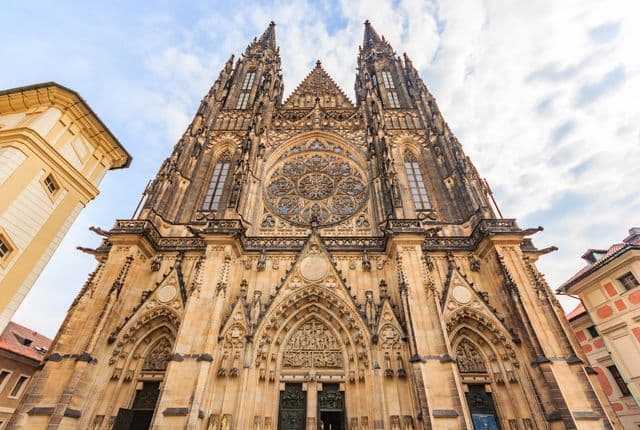
Knowing what things cost is half the equation — knowing where to spend is the other half. A private tour with a guide who actually lives here helps you skip the tourist traps and focus on the experiences that are worth every crown. Our Prague Castle and Lesser Town tour covers the castle grounds, St. Vitus Cathedral, Golden Lane, and the winding streets of Malá Strana — exclusively yours, with your own guide. For an evening worth budgeting for, the Medieval Dinner Show includes a multi-course feast, unlimited drinks, and live fire performances in a vaulted stone tavern. Browse all our private Prague tours to plan your trip.
Frequently Asked Questions
How much money do I need per day in Prague?
Budget travellers can manage on €40–60 per day including accommodation, food, and sightseeing. Mid-range visitors should plan for €80–150. Luxury travellers spending freely on fine dining, five-star hotels, and private tours will spend €200–350. Prague is significantly cheaper than Paris, London, or Amsterdam across all tiers.
Is Prague Expensive in 2026?
Prague is moderately priced for European tourist destinations in 2026. Daily costs range from 60 EUR (budget) to 200+ EUR (luxury), with mid-range travelers spending 80-150 EUR. It's significantly cheaper than Western European capitals like Paris or Amsterdam, but pricier than Eastern European destinations like Budapest or Krakow.
Is Prague cheap for food?
Yes, especially at lunch. The polední menu system means a two-course lunch at a proper restaurant costs 130–170 CZK (about €5–7). Dinner is pricier but still affordable — a main course at a good local restaurant runs €10–18. Fine dining exists but costs roughly half what you'd pay in Western European capitals.
What is the cheapest way to get from Prague airport to the city?
Trolleybus 59 to Nádraží Veleslavín plus Metro A (or bus 100 to Zličín plus Metro B) on a standard 90-minute ticket — about €2 total. The Airport Express (AE) to the main station costs around 200 CZK and needs its own ticket. A Bolt or Uber from the airport to Old Town costs €16–24. Avoid taxi touts in the arrivals hall.
Should I exchange money before arriving in Prague?
No. The Czech Republic uses the koruna (CZK), and the best rates come from ATM withdrawals or multi-currency cards like Wise or Revolut. Avoid exchange offices in the tourist centre — they advertise "0% commission" but use terrible rates with hidden markups of 10–15%.
Is tipping expected in Prague?
Tipping 10% on restaurant bills is standard for good service. In pubs and casual eateries, rounding up to the nearest convenient amount is common. Tell the waiter the total amount you want to pay when they bring the bill — do not leave cash on the table, as this can be mistaken for a forgotten item.
You May Also Like
Want to see Prague for yourself?
Take our flagship Prague tour-6-640x430.jpg&w=3840&q=75)