Prague Jewish Quarter — Why a Guide Changes Everything
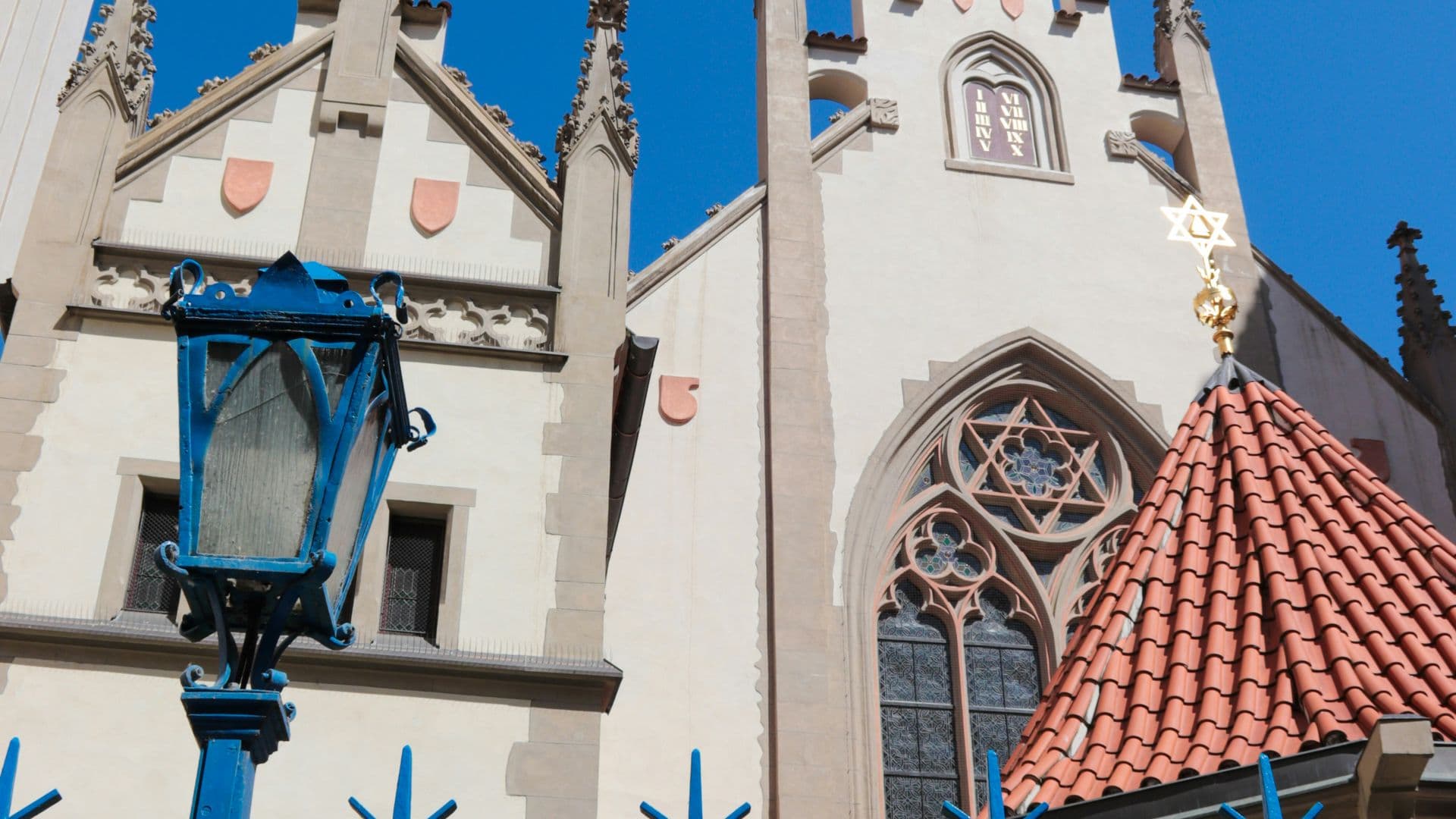
The Jewish Quarter is one place in Prague where a guide genuinely transforms the experience. Six synagogues, Europe's oldest Jewish cemetery, and 800 years of history — the buildings are beautiful, but the stories inside them are what matter. A museum ticket gets you in. A guide helps you understand what you're seeing.
Josefov is a compact district, walkable in twenty minutes from end to end. But the density of history packed into those few blocks is unlike anything else in Prague. You can buy a Jewish Museum ticket, walk through the synagogues, and still leave with the feeling that you missed the point. This is not because the museums are poorly done — they are excellent. It is because the most important things in Josefov are not on the information panels.
What the Jewish Museum Ticket Covers
The Jewish Museum in Prague operates four of the six historic synagogues plus the Old Jewish Cemetery and the Ceremonial Hall. One ticket covers all of them — and the Old-New Synagogue as well.
Included in the combined ticket (600 CZK for adults, 400 CZK for students under 26, 200 CZK for children 7–15, free under 7):
- Pinkas Synagogue (Holocaust memorial with names inscribed on the walls)
- Maisel Synagogue (history of Jews in Bohemia and Moravia)
- Spanish Synagogue (Moorish Revival interior, post-emancipation history)
- Klausen Synagogue (Jewish customs and traditions)
- Ceremonial Hall (burial society exhibition)
- Old Jewish Cemetery (12,000 visible headstones, burials up to twelve layers deep)
Also included: The Old-New Synagogue (Staronová synagoga) is covered by the same single ticket, even though it remains an active house of worship — services are held here regularly.
The full circuit takes two to three hours if you give each space proper attention. Most people underestimate this, especially at the Pinkas Synagogue and the cemetery.
What You Miss Without a Guide
The buildings speak for themselves up to a point. The Spanish Synagogue interior is stunning — gold and crimson Moorish patterns covering every surface. The cemetery is visually arresting. But Josefov is primarily a place of stories, and the most powerful ones are not written on any placard.
The names on the Pinkas walls. The interior walls of the Pinkas Synagogue are inscribed with the names of 77,297 Czech and Moravian Jews murdered during the Holocaust, arranged by their community of origin. Without context, visitors see a memorial and move on. A guide can explain that the names were painstakingly repainted after the Communist government "allowed" the plaster to deteriorate in the 1960s — erasing the memorial for two decades. The names were restored only after 1989. Knowing this changes what you see.
The Golem legend. Everyone has heard of the Golem, but most visitors get a simplified version — Rabbi Loew made a clay man, it protected the Jews. A knowledgeable guide explains the layers: the original Kabbalistic traditions, how the story was largely shaped by 19th-century writers, why the sealed attic of the Old-New Synagogue has never been opened to the public, and what the legend meant to a community under constant threat. The story is richer and darker than the tourist version.
Why the quarter survived. This is the question that catches most visitors off guard. Between 1893 and 1913, the city demolished nearly all of the medieval ghetto in an urban clearance project. The synagogues and cemetery were spared only because they had been declared historical monuments. Then during the German occupation, the Nazis preserved the collections and buildings — intending to create a "Museum of an Extinct Race." A guide walks you through this chain of events, and it reframes every building you enter afterward.
The cemetery symbolism. The Old Jewish Cemetery headstones carry carved symbols indicating the name or profession of the deceased — a pair of hands for a Cohen (priestly blessing), a pitcher for a Levite, grapes for fertility, a lion for the name Judah. Without someone pointing these out, the cemetery is moving but opaque. With a guide, each headstone becomes a small biography.
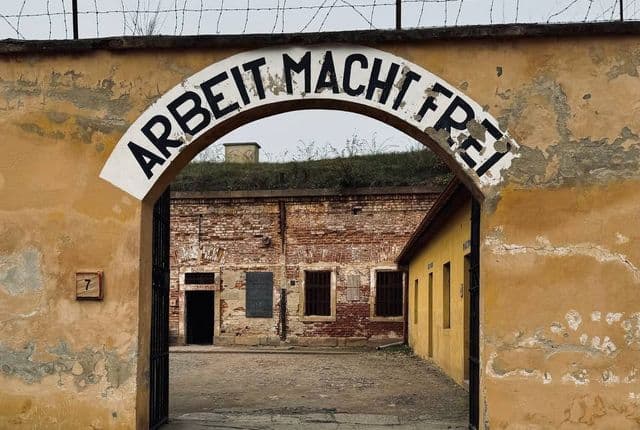
The children's drawings at Pinkas. Upstairs in the Pinkas Synagogue, an exhibition displays drawings by children imprisoned at the Terezín ghetto. They were hidden by a teacher named Friedl Dicker-Brandeis, who was later murdered at Auschwitz. Of the approximately 15,000 children who passed through Terezín, fewer than 1,500 survived. A guide helps visitors — especially those with children — process what they are seeing without rushing through.
The Spanish Synagogue's context. Visitors gasp at the Moorish interior — gold and crimson geometric patterns covering every surface — but few know why a Prague synagogue looks like the Alhambra. Built in 1868, it was commissioned by the Reformed Jewish community during a period of emancipation and cultural confidence. The architectural choice was deliberate: it referenced Sephardic heritage and signalled a break with the cramped ghetto past. A guide explains this moment in context, and the decoration shifts from "beautiful" to "meaningful."
Pařížská street. The luxury boulevard running from Old Town Square into Josefov was built during the massive demolition of the medieval ghetto between 1893 and 1913. Walking from a designer boutique to the Pinkas Synagogue takes less than two minutes. A guide frames this jarring contrast — explaining how the quarter's architecture tells a story of erasure and preservation side by side. Most visitors walk Pařížská without knowing what stood there before.
Guided Tour Options
There are several ways to see Josefov with a guide, and each works differently.
Private tour. A private guide takes you through the quarter at your own pace. You decide how long to spend at each synagogue, whether to linger in the cemetery, and whether you want the visit to be primarily historical, architectural, or personal. Our guests often tell us that a private tour of Josefov felt more like a conversation than a lecture — the guide responds to your questions in real time, and the experience shifts depending on what resonates with you. This is the approach we take on our Jewish Quarter tour.
Museum's own guided tours. The Jewish Museum offers guided tours with its own staff. These are well-informed and follow a set route through the circuit. They run at fixed times and have group size limits. Check the Jewish Museum website for current schedules.
Free walking tours. Several free walking tour companies include Josefov in their Old Town routes. These give you a surface-level overview — enough to orient yourself — but they move quickly through the quarter and typically do not enter every synagogue. They work well as a starting point but are not a substitute for the full museum visit.
Audio guides. Available for rent at the museum ticket office. They cover the main facts but lack the responsiveness of a live guide. If you are visiting on a tight budget and prefer not to join a group, the audio guide is a reasonable middle ground.
Our honest recommendation: if you visit only one part of Prague with a guide, make it Josefov. The other major sights — Charles Bridge, Old Town Square, Wenceslas Square — are visually rich enough to enjoy on your own. The Jewish Quarter is the place where context makes the biggest difference.
Practical Tips for Visiting
Tickets. Buy the combined Jewish Museum ticket online in advance or at the ticket offices on site. There is a ticket counter inside the Pinkas Synagogue entrance and another at the Information and Reservation Centre on Maiselova street. Lines are short on weekday mornings.
Head coverings. Men are required to wear a head covering inside the synagogues. Paper kippot are available free at every entrance. Women do not need head coverings.
Photography. Policies vary by building. The Pinkas Synagogue and Old Jewish Cemetery generally do not allow photography. Other synagogues may allow photography without flash. Check at each entrance.
How long to allow. The full museum circuit (four museum synagogues, cemetery, and Ceremonial Hall) takes two to three hours at a comfortable pace. Most people underestimate this. Add 30 minutes for the Old-New Synagogue if you go inside. Do not try to rush Josefov — the spaces deserve attention.
How to Combine with Old Town
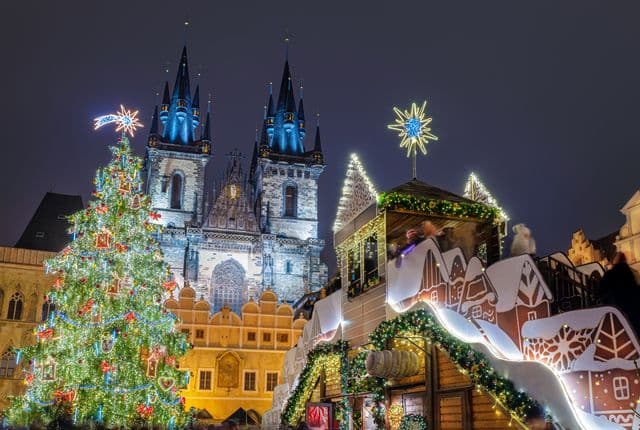
Josefov sits directly adjacent to Old Town Square, which makes it natural to combine both in a single walking tour. Our Charles Bridge & Old Town tour covers the Old Town side of Prague including the Astronomical Clock, Týn Church, and Charles Bridge, and can be extended to include the Jewish Quarter.
A practical half-day plan: start in the Jewish Quarter in the morning when it opens (the synagogues are less crowded before 10 AM), then walk to Old Town Square for the Astronomical Clock performance at noon, and continue to Charles Bridge in the early afternoon. With a private guide, this route flows naturally and covers two of Prague's most important areas.
If you are spending a full day on the east side of the river and want the most complete experience, our All Prague in One Day tour covers both river banks — Old Town, Jewish Quarter, Charles Bridge, and the Castle district — in a single guided walk.
For a lighter evening after a day of heavy history, the Medieval Dinner Show offers a complete change of pace — live swordfighting, period music, and a five-course meal in a vaulted cellar. Several of our guests have told us it was a welcome contrast after an emotionally intense day in Josefov.
Book a Private Tour
The Jewish Quarter rewards a guide more than any other part of Prague. A private tour means you set the pace, choose the focus, and spend time where it matters most to you. Book a private tour — exclusively yours.
Meet your Prague guide and learn how we approach Josefov.
Planning to visit the Jewish Quarter on your trip? A private Jewish Quarter tour takes you through all six monuments with a licensed guide who answers your questions as you walk.
Frequently Asked Questions
Do I need a guide for the Jewish Quarter in Prague?
You do not need one to enter the synagogues and cemetery — a museum ticket is all that is required. But the Jewish Quarter is the one place in Prague where a guide adds the most value. The buildings are compact and the information panels cover basics, but the layered history — the Holocaust memorial, the Golem legend, the demolition of the ghetto, the cemetery symbolism — is best understood through someone who can connect the pieces.
How long does a guided tour of the Jewish Quarter take?
A private guided tour of the full Jewish Museum circuit (four museum synagogues, cemetery, and Ceremonial Hall) plus the Old-New Synagogue typically takes two to three hours. If combined with Old Town, plan for a half-day of about four hours.
Is the Jewish Quarter appropriate for children?
The cemetery and most synagogues are suitable for older children and teenagers, especially with a guide who can explain the context. The Pinkas Synagogue walls of names and the Terezin children's drawings may be too intense for younger children. A private guide can adjust the depth of explanation to suit your family.
What is the best time to visit Josefov?
Early morning on weekdays is ideal — the synagogues open at 9 AM and the first hour is noticeably quieter. Saturday is Shabbat and the museum is closed. Sunday mornings tend to be busier. Avoid arriving between 10 AM and noon when organized tour groups are concentrated in the quarter.
You May Also Like
Want to see Prague for yourself?
Tour the Old Town and Jewish Quarter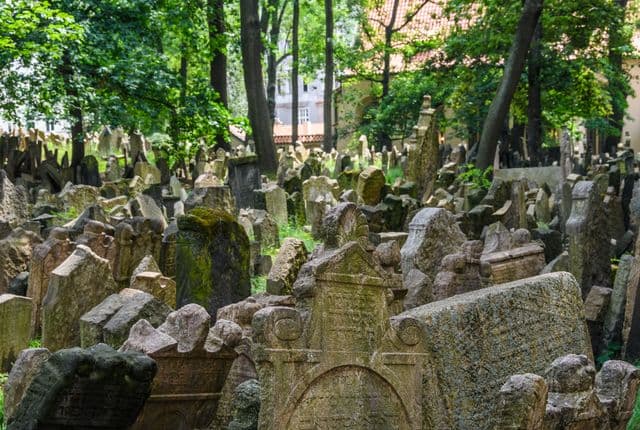
-6-640x430.jpg&w=3840&q=75)