Prague vs Amsterdam — Which City Fits Your Trip?
Quick verdict: Prague is the more affordable, architecturally rich, and historically layered city — a medieval centre that survived centuries intact, world-class beer, and a sense of discovery that keeps you looking up at every building. Amsterdam is the more open, progressive, and canal-defined city — world-class museums (Van Gogh, Rijksmuseum, Anne Frank House), a cycling culture that shapes daily life, and a liberal atmosphere that is unlike anywhere else in Europe. Prague gives you depth and value. Amsterdam gives you openness and art. Both are compact, walkable, and extraordinarily photogenic.
At a Glance
Category | Prague | Amsterdam
Setting | Hilltop castle, river valley, bridges | Concentric canals, flat terrain, houseboats
Architecture | Gothic, Renaissance, Baroque, Art Nouveau, Cubist — original fabric | 17th-century canal houses, gabled facades, narrow and tall
Cost | Very affordable — beer EUR 2-3, lunch EUR 6-8 | Expensive — beer EUR 5-6, lunch EUR 12-18, hotels from EUR 120
Museums | National Gallery, Jewish Museum, decorative arts | Van Gogh, Rijksmuseum, Anne Frank House, Stedelijk
Transport | Walking + trams | Cycling is king, plus trams and metro
Food & Drink | Czech pub food, beer culture | Indonesian rijsttafel, herring, stroopwafels, craft beer and jenever
Nightlife | Craft beer bars, jazz clubs, pub culture | Brown cafes, live music, club scene, liberal nightlife
Atmosphere | Medieval romance, intimate, layered | Open, progressive, canal-side charm
Architecture and Atmosphere
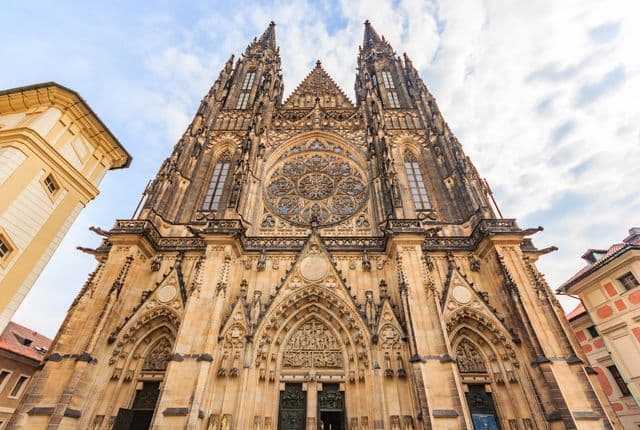
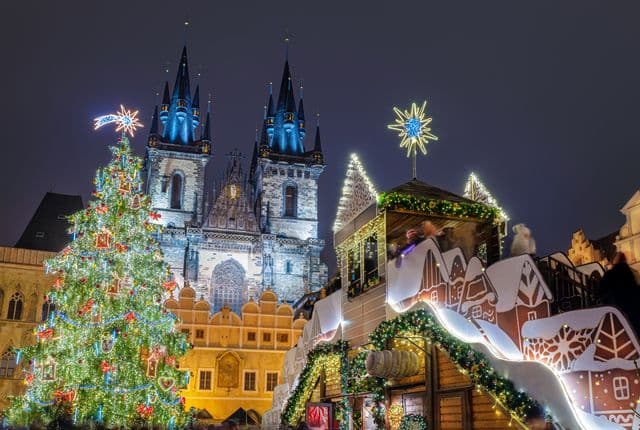
Prague's architecture tells the story of Central European history in stone. The city was never bombed and never subjected to major modern redevelopment in its centre, so buildings from the 13th through 20th centuries stand in their original form, layered on top of each other. Romanesque foundations in Old Town basements, Gothic tower silhouettes, Renaissance graffito on palace walls, Baroque church interiors that drip with gold, Art Nouveau facades with flowing organic forms, and the world's only examples of Cubist architecture — all within a 30-minute walk. Prague Castle, the largest ancient castle complex in the world, dominates the skyline from a ridge above the Vltava.
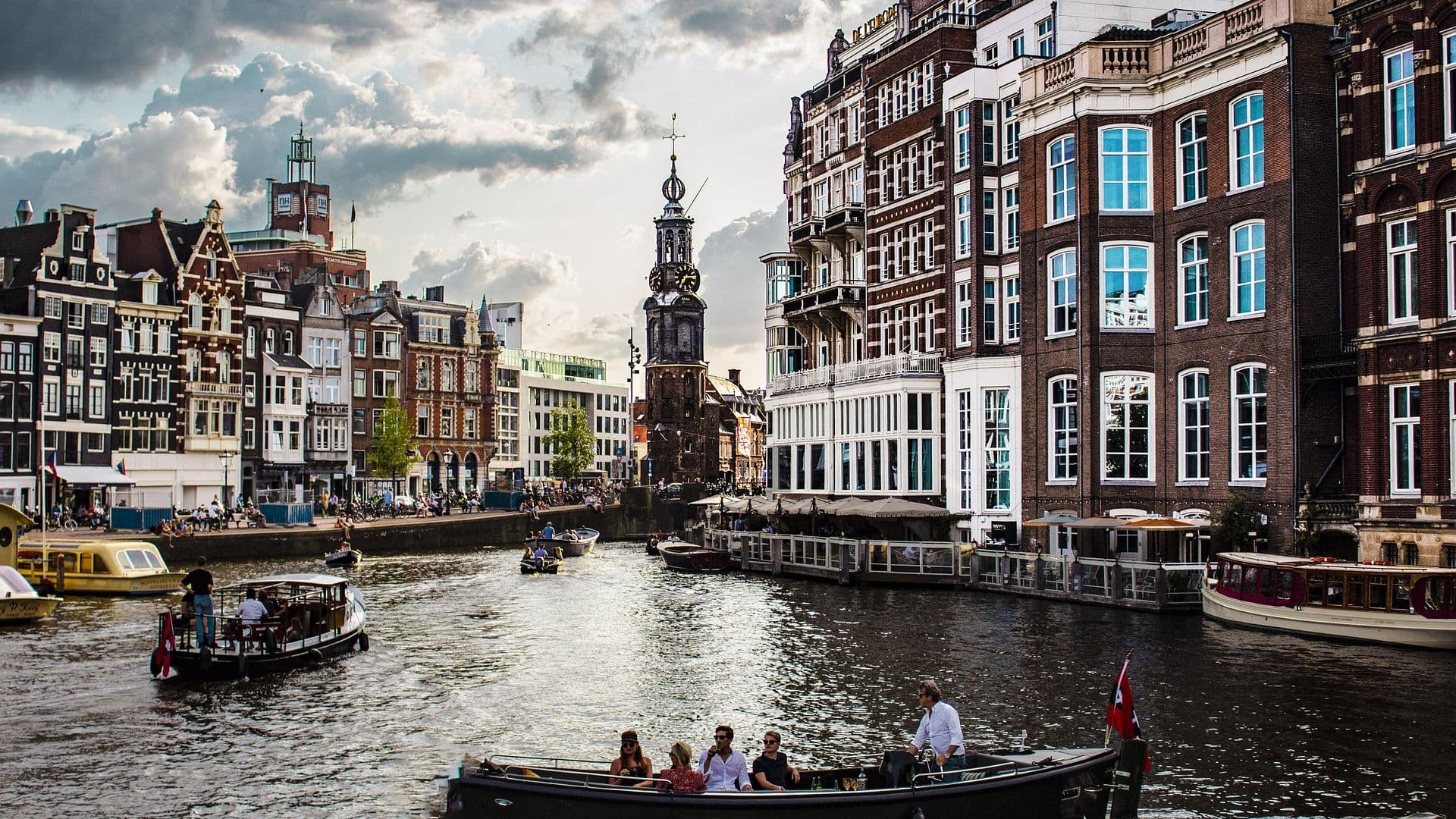
Amsterdam's architecture is defined by water. The concentric canal rings — Singel, Herengracht, Keizersgracht, Prinsengracht — were dug in the 17th century during the Dutch Golden Age, and the tall, narrow canal houses that line them have been standing for 350-400 years. The facades are gabled (the gable shape indicates the era and wealth of the original owner), slightly tilted forward (intentionally, to make it easier to hoist goods through upper windows), and often only one or two rooms wide. The effect is a city that feels both grand and intimate — elegant streets, human scale, water reflections everywhere.
Insider detail: Prague has three distinct numbering systems on its buildings — red numbers (sequential within the district, used for mail), blue numbers (sequential for the entire city, used officially), and occasionally a third historical number. If you are looking for a specific address, use the red number. Locals are often confused by this system too, which is strangely reassuring.
Museums and Culture
Amsterdam has one of the highest concentrations of world-class museums of any city in Europe. The Rijksmuseum — housing Rembrandt's "Night Watch," Vermeer's "Milkmaid," and 8,000 other works — is alone worth a trip. The Van Gogh Museum holds the world's largest collection of his paintings. The Anne Frank House preserves the secret annex where Anne Frank hid for two years during the Nazi occupation.
The Stedelijk Museum covers modern and contemporary art. These four museums, all within walking distance of each other, form an art-historical core that few cities can match.
Prague's museum landscape is different — more specialised and discovery-oriented. The National Gallery's collection of Czech Gothic panel paintings (particularly the works of Master Theodoric from Karlstejn Castle) is world-class in its niche. The Museum of Decorative Arts has outstanding Art Nouveau and Czech Cubist design. The Jewish Museum preserves one of Europe's most important collections of Judaica, including the Old Jewish Cemetery where headstones are stacked twelve layers deep over 400 years. The Lobkowicz Palace in Prague Castle holds a private collection that includes original Beethoven manuscripts with handwritten annotations — the audio guide, narrated by the family, is exceptional.
Insider detail: In Prague's Jewish Quarter, the interior walls of the Pinkas Synagogue are covered with the handwritten names of 77,297 Czech and Moravian Jews murdered in the Holocaust. The names are arranged by community, with birth and death dates. The sheer scale of the inscription — covering every wall surface from floor to ceiling — makes it one of the most powerful Holocaust memorials anywhere.
Food and Drink
Prague is a beer city. Czech lager is world-class — the Pilsner style was invented here in 1842, and the brewing tradition is deeper and older than almost anywhere else in Europe. A half-litre of excellent draught beer in a local pub costs about EUR 2-3. The food in traditional pubs — svickova (marinated beef with cream sauce and bread dumplings), vepro-knedlo-zelo (roast pork with sauerkraut and dumplings), koleno (roasted pork knee) — is hearty and satisfying. Prague's modern restaurant scene, particularly in Karlin and Holesovice, has grown into something genuinely exciting.
Amsterdam's food culture is more international than traditionally Dutch. The colonial connection to Indonesia gave the Netherlands rijsttafel — a ceremonial spread of 12-20 small dishes served with rice — which is one of the best meals you can have in Amsterdam. Herring (haring) is the quintessential Dutch street food — raw, with onions and pickles, served from stands across the city. Stroopwafels (thin waffle cookies with caramel syrup) are the snack you will become addicted to. Dutch craft beer and jenever (Dutch gin, the ancestor of English gin) add depth to the drinking scene, though beer prices in Amsterdam are roughly double Prague's.
Insider detail: In Prague, the brewery restaurant at Strahov Monastery (Klasterni pivovar) brews its own St. Norbert beers in a working 17th-century monastery overlooking the city. The amber lager and the IPA are both excellent, and the terrace views reach across rooftops to the Old Town. It is uphill from the usual tourist routes, which keeps the crowds manageable.
Cost Comparison
The price difference between Prague and Amsterdam is significant — among the largest between any two popular European destinations.
A half-litre of beer: EUR 2-3 in Prague, EUR 5-6 in Amsterdam. A good restaurant lunch: EUR 6-8 in Prague, EUR 12-18 in Amsterdam. A mid-range hotel in the centre: EUR 60-80 in Prague, EUR 120-180 in Amsterdam. Museum entry: EUR 5-10 in Prague, EUR 15-22 in Amsterdam (the Rijksmuseum alone is EUR 22.50).
The practical effect is dramatic. A four-day trip to Prague — with good hotels, restaurant meals, guided tours, and museum visits — costs roughly what a two-and-a-half-day trip to Amsterdam costs on the same level of comfort. For budget-conscious travellers, Prague offers one of the best value propositions of any major European city.
Getting Around
Both cities are compact, but they move differently.
Prague is a walking city. The entire historic centre — Old Town, Jewish Quarter, Charles Bridge, Mala Strana, Prague Castle — fits within a circle roughly 2 km across. You can walk between any two major landmarks in under 30 minutes. The tram system is excellent for longer distances, and the scenic line 22 from the centre up to Prague Castle is worth riding purely for the views.
Amsterdam is a cycling city. There are more bicycles than people in Amsterdam (roughly 880,000 bikes for 820,000 residents), and the infrastructure — dedicated bike lanes on almost every street, bike traffic lights, multi-storey bike parking — makes cycling the fastest and most natural way to move. As a visitor, you can rent a bike easily, but be warned: Amsterdam's cyclists are fast, assertive, and do not slow down for hesitant tourists. Walking works well for the central canal ring, and trams cover longer distances. The city is flat, which makes both walking and cycling effortless.
Nightlife and Evening Culture
Amsterdam's evening culture ranges from the cosy to the liberal. Brown cafes (bruine kroegen) — traditional Dutch pubs with dark wood interiors, dim lighting, and a beer-and-conversation atmosphere — are the heart of local social life. The Leidseplein and Rembrandtplein squares have concentrated nightlife areas. The club scene is solid, with Paradiso and Melkweg as longstanding live music and club venues. And Amsterdam's liberal reputation extends to its nightlife in ways that Prague does not match.
Prague's evenings are anchored by beer. The craft beer scene — BeerGeek, Zly Casy, Kulovy Blesk, and the brewery restaurants at Strahov and Brevnov monasteries — is among the best in Europe. Jazz clubs like AghaRTA and Reduta run serious programmes with Czech and international musicians. The pubs of Zizkov — the residential district east of the centre with reportedly the highest pub density per capita in Europe — offer authentic local atmosphere without a tourist in sight. Prague's nightlife is quieter than Amsterdam's but deeper for anyone who cares about beer.
Insider detail: Prague's Hemingway Bar on Kozi street serves absinthe properly — with ice-cold water dripped through a sugar cube on a perforated spoon, no flaming theatrics. The Czech Republic is one of the few countries where genuine absinthe production never stopped (it was banned in most of Europe from 1915 to the 1990s). The bar's collection runs to 20 varieties, several of them Czech-distilled.
Which Should You Choose?
Choose Prague if: You want affordable prices, medieval architecture, world-class beer, and a city that rewards slow, detailed exploration. Prague is the better choice for history lovers, architecture enthusiasts, beer devotees, couples, and budget-conscious travellers.
Choose Amsterdam if: You want world-class art museums, canal-side charm, cycling culture, and a progressive, open atmosphere. Amsterdam is the better choice for art lovers, museum enthusiasts, cyclists, and travellers who value a liberal urban environment.
Choose Prague if you are on a budget. The cost difference is substantial enough to affect the quality of your entire trip — you eat better, stay more centrally, and do more in Prague on the same money.
Choose Amsterdam if museums are your priority. The Rijksmuseum, Van Gogh, and Anne Frank House form a cultural trio that Prague cannot match at that level.
Choose Prague for a first European trip. It is more immediately striking, easier to navigate on foot, and the lower costs reduce travel stress.
Choose Amsterdam for a second European trip — if you have already experienced Prague or a similar Central European city and want something with a different cultural register.
Why Not Both?
Direct flights between Prague and Amsterdam take about 1 hour 45 minutes, with several daily services. Alternatively, the train takes about 10 hours (an overnight option exists), and FlixBus takes about 10-11 hours (often with an overnight service). The flight is the practical choice for most travellers.
A combined trip — 3 days in Prague, 3 in Amsterdam — gives you two genuinely different European experiences. Start in Prague for the lower costs and medieval atmosphere, then move to Amsterdam for the museums and canal life. Or reverse it — arrive in Amsterdam, absorb the art, then decompress in Prague where the pace and prices are gentler.
If you begin in Prague, our All Prague in One Day private tour covers Prague Castle, Charles Bridge, Old Town, and the Jewish Quarter with a licensed guide who knows every hidden courtyard and carved doorway. Exclusively yours.
And for an evening experience unique to Prague, try a medieval dinner at U Pavouka Tavern — roasted meats, unlimited mead, fire dancers, and a 15th-century cellar. Amsterdam has many things Prague lacks, but it has nothing like this.
See all our private tours in Prague.
Frequently Asked Questions
Is Prague or Amsterdam cheaper?
Prague is dramatically cheaper. Beer costs EUR 2-3 vs EUR 5-6 in Amsterdam, restaurant meals run EUR 6-8 vs EUR 12-18, and hotels cost roughly half as much. A four-day trip to Prague costs about the same as a two-and-a-half-day trip to Amsterdam at similar comfort levels.
How far is Prague from Amsterdam?
About 900 km. Direct flights take 1 hour 45 minutes, with several daily services. The train takes roughly 10 hours, and buses about 10-11 hours. Flying is the practical choice for most travellers.
Which city is more walkable?
Both are very walkable and compact. Prague's historic centre is slightly more concentrated, and everything is on foot. Amsterdam relies more heavily on cycling, though walking the canal ring is one of the city's great pleasures. Neither city requires a car.
Which city has better museums?
Amsterdam. The Rijksmuseum, Van Gogh Museum, and Anne Frank House are world-class institutions that rank among the best in Europe. Prague's museums are excellent but more specialised — the Jewish Museum and the medieval art collections at the National Gallery are standouts.
Is Amsterdam worth the higher cost compared to Prague?
If world-class art museums, canal architecture, and cycling culture are priorities for you — yes. If you value history, architectural variety, and beer more, Prague delivers as much or more for significantly less money. Both cities are worth visiting; the question is what you prioritise.
You May Also Like
Want to see Prague for yourself?
Take our flagship Prague tour-6-640x430.jpg&w=3840&q=75)