Prague vs Berlin — Two Very Different European Capitals
Quick verdict: These cities could hardly be more different. Prague is compact, medieval, architecturally preserved, and affordable — a city where 700 years of history unfold within a 30-minute walk. Berlin is sprawling, modern, edgy, and defined by the 20th century — the Wall, reunification, a creative energy that draws artists and startups from across the world. Prague is the better choice for architecture, history, and beer. Berlin is the better choice for contemporary culture, nightlife, and a city that feels like it is still becoming something. Comparing them is useful precisely because they are so different.
At a Glance
Category | Prague | Berlin
Size | Compact centre, walkable (pop. ~1.3 million) | Vast and sprawling (pop. ~3.8 million), needs public transport
Architecture | Gothic, Renaissance, Baroque, Art Nouveau — original, never bombed | Mix of reconstructed historic, Soviet-era, and contemporary
Era | Medieval and baroque — preserved since the 14th century | 20th and 21st century — defined by WWII, the Cold War, and reunification
Cost | Very affordable — beer EUR 2-3, lunch EUR 6-8 | Affordable for Western Europe — beer EUR 4-5, lunch EUR 8-12
Food | Czech pub cuisine, dumplings, roast pork | International street food capital, Turkish, Vietnamese, modern German
Nightlife | Craft beer bars, jazz clubs, traditional pubs | World-class club scene — Berghain, techno culture, 48-hour weekends
Atmosphere | Historic, intimate, visually beautiful | Creative, gritty, constantly evolving
Language | Czech (English in tourist areas) | German (English very widely spoken)
Architecture and Atmosphere
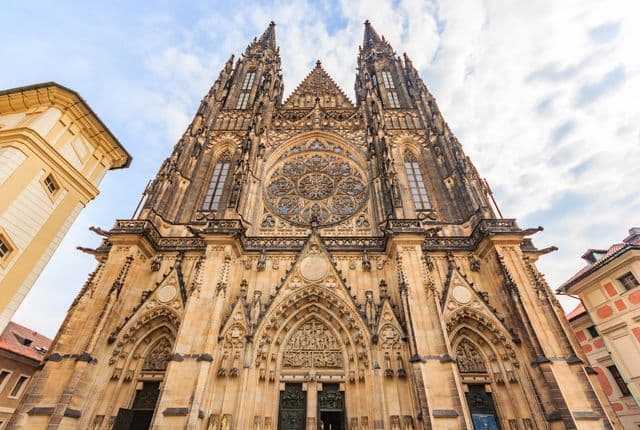
Prague is one of the best-preserved medieval cities in Europe. It was never bombed in World War II, never subjected to large-scale modern development in its centre, and the result is a city where buildings from the 13th through 20th centuries stand side by side in their original form. The density of architectural styles — Romanesque foundations visible in basement restaurants, Gothic church towers, Renaissance palace facades, Baroque church interiors, Art Nouveau shopfronts, and the world's only Cubist architecture — is unmatched in any city of comparable size.
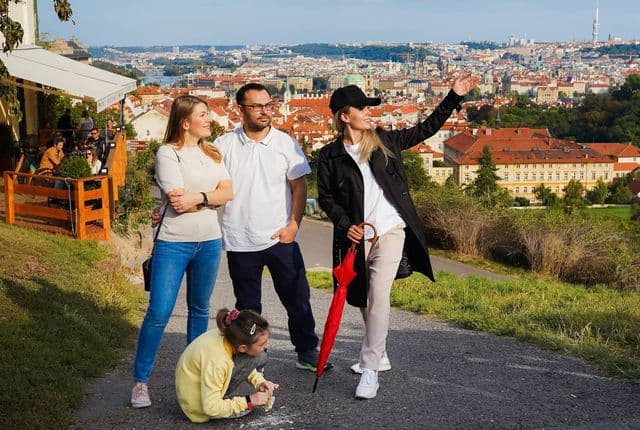
The atmosphere is intimate. The entire historic centre fits within a rough circle 2 km across. Streets are narrow, squares are human-scaled, and the Vltava River ties the two halves of the city together with Charles Bridge — one of the most recognisable structures in Europe. Prague feels finished in the best sense — a city that reached its architectural peak and held it.
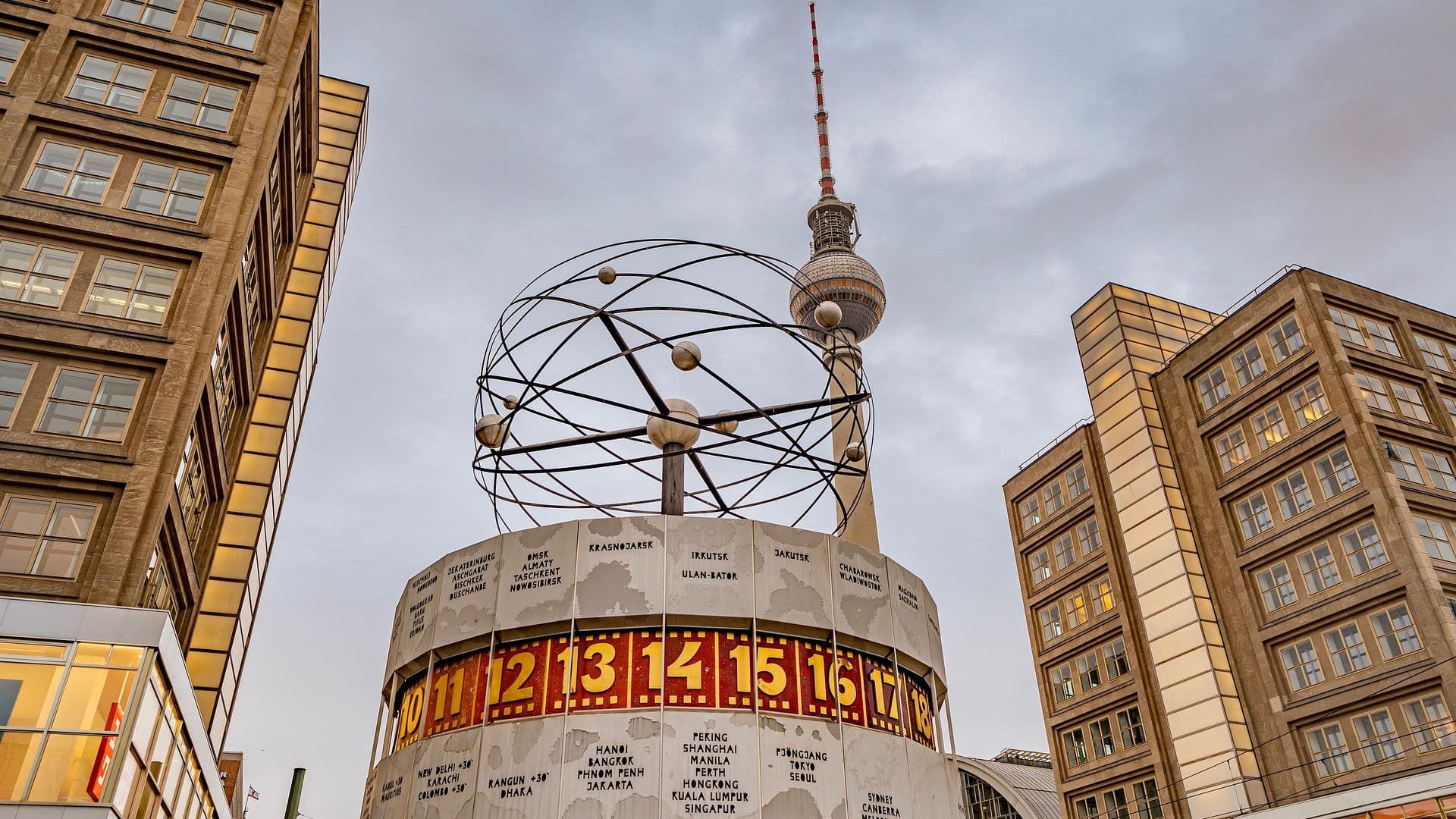
Berlin is architecturally fascinating for entirely different reasons. The city was devastated in 1945, divided by the Wall from 1961 to 1989, and has been rebuilding and reinventing itself ever since. The result is a patchwork — the reconstructed Reichstag with Norman Foster's glass dome, the brutalist Television Tower at Alexanderplatz, the sleek modern architecture of Potsdamer Platz, remnants of the Wall, and vast stretches of 19th-century residential blocks in neighbourhoods like Kreuzberg and Prenzlauer Berg. Berlin does not have Prague's visual harmony, but it has an energy that comes from being a city in permanent transition.
Insider detail: Prague's Cubist architecture exists nowhere else in the world. The House of the Black Madonna on Celetna street (designed by Josef Gocar in 1912), the apartment building below Vysehrad, and a Cubist lamppost near Ovocny trh are architectural curiosities that even many architecture enthusiasts miss. The style attempted to apply Cubist painting principles to three-dimensional buildings — angular, faceted surfaces that fragment and reassemble form.
Food and Drink
Prague is a beer city with a pub food tradition that has evolved significantly in the past decade. The baseline is excellent: Czech lager — the original Pilsner — is among the best beer in the world, and in a Prague pub a half-litre costs 50-70 CZK (about EUR 2-3). Traditional food — svickova (beef in cream sauce with dumplings), vepro-knedlo-zelo (roast pork, sauerkraut, dumplings), koleno (roasted pork knee) — is hearty, meat-heavy, and satisfying. The new generation of Prague restaurants in Karlin, Vinohrady, and Holesovice has added modern Czech cuisine, excellent wine bars, and international options.
Berlin's food culture is one of the most diverse in Europe. The city's large Turkish community created the doner kebab culture (the modern doner was arguably invented in Berlin in the 1970s), the Vietnamese community in the former East brought pho and banh mi, and the international influx since reunification has added everything from Israeli hummus bars to Korean BBQ. Currywurst — a Berlin invention involving sliced sausage with curry-spiced ketchup — is the iconic street food, available at stands across the city. Berlin's restaurant scene spans from Michelin-starred to market-hall casual, with the Markthalle Neun in Kreuzberg and the weekly Street Food Thursday as highlights.
Beer in Berlin is good but lacks Czech depth. German Pilsner is a fine tradition, but it does not match the range and quality of Czech brewing. Berlin does have an emerging craft beer scene and excellent wine bars, and cocktail culture is more developed here than in Prague.
Insider detail: In Prague, order "tmavy lezak" (dark lager) at any traditional pub. Czech dark lager is not a stout or porter — it is a smooth, caramel-accented lager brewed with darker malt, typically 4-5% alcohol, and far more drinkable than most dark beers. Kozel Cerny and U Fleku's house dark are two of the best. Most tourists order only pale lager and miss this entirely.
History
Both cities are historically significant, but the eras that define them are different.
Prague's history stretches to the 9th century. The city reached its peak under Emperor Charles IV in the 14th century, when it was the capital of the Holy Roman Empire and one of the largest cities in Europe. The Hussite Wars of the 15th century, the Defenestration of 1623 that triggered the Thirty Years' War, the national revival of the 19th century, the Nazi occupation, 40 years of Communism, and the Velvet Revolution of 1989 — Prague has been at the centre of European history for over a millennium. The physical city reflects this: the layers are visible and tangible.
Berlin's defining history is more recent. The Prussian capital, the seat of the Kaiser, the Weimar Republic, the Nazi regime, wartime destruction, the Cold War division, the Wall, reunification in 1990, and the extraordinary creative explosion that followed — Berlin's story is essentially a 20th and 21st-century narrative. The Holocaust Memorial, the Topography of Terror, Checkpoint Charlie, the East Side Gallery (the longest surviving section of the Wall), and the Jewish Museum are all essential visits. Berlin confronts its history more directly and publicly than almost any city in the world.
Insider detail: Prague's Lennon Wall in Mala Strana is famous, but few visitors know that the original graffiti appeared in the 1980s as a form of anti-Communist protest. Young Czechs wrote Beatles lyrics and political messages on the wall opposite the French Embassy. The secret police painted over it repeatedly, and it reappeared each time. The current wall is heavily touristed and mostly covered in selfie-related graffiti, but the story behind it is genuinely significant.
Nightlife
This is Berlin's strongest category. The city's club culture — built in the abandoned spaces of post-reunification East Berlin — is legendary. Berghain, housed in a former power station, is widely considered the best techno club in the world (and one of the most difficult to get into). The club scene operates on a different clock — Friday nights that end on Sunday afternoon, 24-hour opening times, a culture that treats dancing as something between art and endurance sport. Beyond techno, Berlin has live music venues, jazz bars, open-air clubs in summer, and a bar culture in neighbourhoods like Kreuzberg, Neukolln, and Friedrichshain that is creative and affordable.
Prague's nightlife is calmer but has its own depth. The craft beer scene is world-class — microbreweries and taprooms like Strahov Monastery Brewery, BeerGeek, and Zly Casy serve Czech-brewed beers that rival anything in Europe. Jazz clubs (AghaRTA, Reduta — where Bill Clinton famously played saxophone in 1994) are serious. The pub culture in residential Zizkov is authentically local. Prague is not trying to compete with Berlin's club scene and wisely does not — it offers a different kind of evening.
Cost Comparison
Prague is noticeably cheaper than Berlin.
A private guide makes all the difference when exploring this part of Prague.
A half-litre of beer costs EUR 2-3 in Prague versus EUR 4-5 in Berlin. A good pub lunch runs EUR 6-8 in Prague versus EUR 8-12 in Berlin. Mid-range hotels start at EUR 60-80 in Prague versus EUR 80-120 in Berlin. Museum entry is generally cheaper in Prague, and transport costs are lower (Prague's 24-hour transit pass is about EUR 5 versus Berlin's EUR 9.50).
Berlin is affordable by Western European standards, but Prague is affordable by any standard. The practical effect is that you eat better, drink more, and stay more centrally in Prague on the same budget.
Getting Around
Prague is one of Europe's most walkable cities. The entire historic centre — Old Town, Jewish Quarter, Charles Bridge, Mala Strana, Prague Castle — is within a 30-minute walk from end to end. The tram system supplements walking perfectly, and you may never need the metro unless you are heading to outer districts.
Berlin is vast. The city covers nearly 900 square kilometres — roughly nine times the area of Paris within the peripherique. You will use the U-Bahn and S-Bahn extensively, and distances between attractions can be significant — Museumsinsel to the East Side Gallery is 4 km, Brandenburg Gate to Charlottenburg Palace is 7 km.
Berlin rewards cycling (the infrastructure is excellent), but walking alone is not realistic for covering the city.
Which Should You Choose?
Choose Prague if: You want medieval architecture, walkability, affordable prices, world-class beer, and a city that feels like stepping into a beautifully preserved past. Prague is the better choice for first-time European travellers, couples, families, and anyone who values visual beauty and historical depth.
Choose Berlin if: You want world-class nightlife, contemporary art, diverse street food, 20th-century history, and a city that feels alive and unfinished. Berlin is the better choice for younger travellers, creatives, club culture enthusiasts, and anyone who wants to feel the pulse of a city that is still inventing itself.
Choose Prague if architecture is your priority. No contest — Prague's original medieval, Renaissance, and Baroque fabric is incomparable.
Choose Berlin if contemporary culture is your priority. The gallery scene, street art, music venues, and creative economy are Europe's most dynamic.
Choose Prague if you are on a budget. Everything from beer to hotels costs significantly less, and the compact size means you spend less on transport.
Choose Berlin if nightlife matters. Prague's bars are excellent; Berlin's club scene is a different magnitude entirely.
Why Not Both?
The direct bus (FlixBus) from Prague to Berlin takes about 4.5 hours and costs as little as EUR 15-20 when booked in advance. The train takes about 4.5 hours as well, with comfortable seating and scenic views through the Saxon countryside. You could spend 3 days in Prague and 3 in Berlin on a single trip and experience two fundamentally different versions of Central European culture.
If you start in Prague, let us show you the city properly. Our All Prague in One Day private tour covers Prague Castle, Charles Bridge, Old Town, and the Jewish Quarter in a single guided day — exclusively yours. You will see 700 years of architecture with a guide who knows every hidden courtyard and carved doorway.
Before heading to Berlin, end your Prague stay with something Berlin cannot offer: a medieval dinner at U Pavouka Tavern. Roasted meats, unlimited mead, fire dancers, and a 15th-century cellar. Berlin does edgy modern culture brilliantly — Prague does living medieval atmosphere.
See all our private tours in Prague.
Frequently Asked Questions
Is Prague or Berlin cheaper?
Prague is noticeably cheaper. Beer costs EUR 2-3 vs EUR 4-5 in Berlin, lunch runs EUR 6-8 vs EUR 8-12, and hotel rooms start about EUR 20-30 less per night. Prague is one of the most affordable capital cities in Europe; Berlin is affordable for Western Europe but still more expensive than Prague.
How far is Prague from Berlin?
About 350 km. The train and FlixBus both take approximately 4.5 hours. Prices start from EUR 15-20 for the bus and EUR 19-30 for the train when booked in advance.
Which city is more walkable?
Prague, decisively. The entire historic centre is within a 30-minute walk. Berlin is roughly nine times the physical size of central Paris and requires extensive use of public transport to get between attractions.
Which city has better nightlife?
Berlin. Its club scene — centred on techno and electronic music, with venues like Berghain — is widely considered the best in Europe. Prague has excellent craft beer bars and jazz clubs but does not compete with Berlin at the club level.
Can I do a day trip from Prague to Berlin (or vice versa)?
It is possible but not ideal. The 4.5-hour journey each way leaves limited time in either city. If you want to see both, plan at least 2-3 nights in each.
You May Also Like
Want to see Prague for yourself?
Take our flagship Prague tour-6-640x430.jpg&w=3840&q=75)