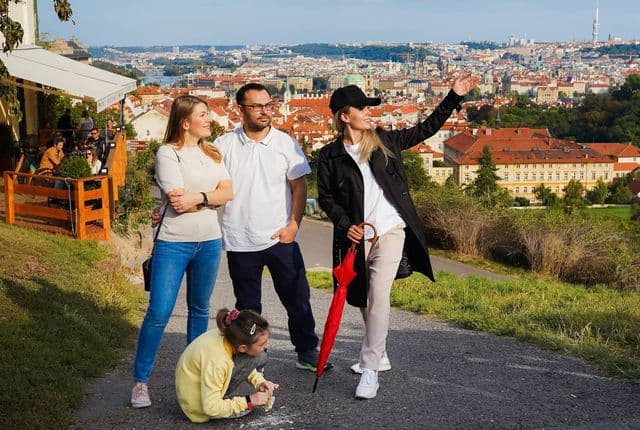
Prague vs Vienna — Which Should You Visit?
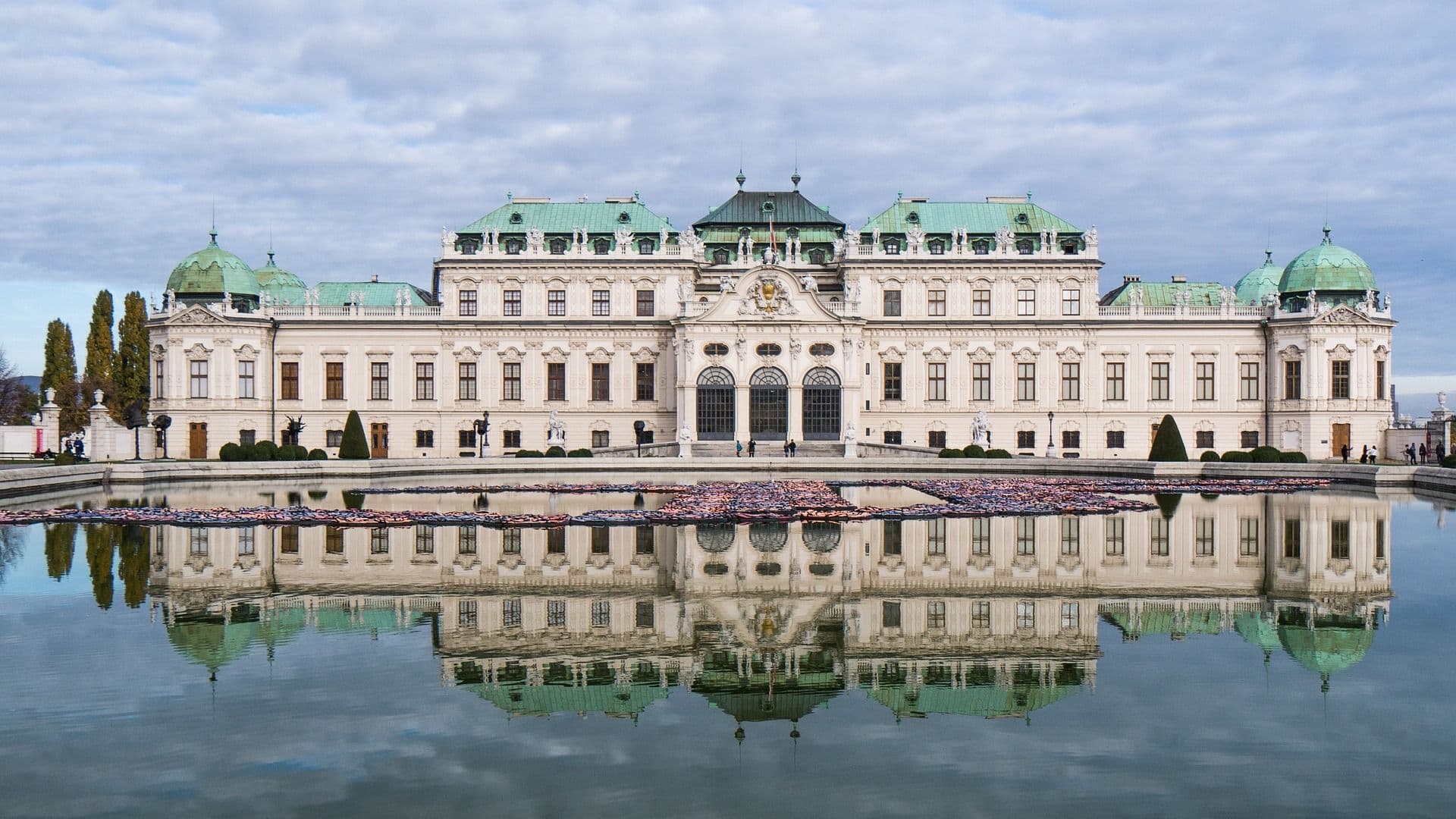
Quick verdict: Prague is the more affordable, intimate, and visually surprising city — a medieval core that escaped wartime destruction, world-class beer culture, and a sense of discovery around every corner. Vienna is the grander, more polished experience — imperial palaces, classical music at the highest level, and a coffee-house tradition that is practically a philosophy. If your budget matters, Prague wins decisively. If you want refined cultural institutions and Habsburg grandeur, Vienna has the edge.
Both cities are extraordinary. This is not a competition with a loser.
At a Glance
Category | Prague | Vienna
Architecture | Gothic, Renaissance, Baroque, Art Nouveau — all layered in one compact centre | Baroque and neoclassical imperial grandeur — the Ringstrasse is a masterclass
Cost | Significantly cheaper — beer €2-3, lunch €6-8, hotels from €60 | Western European pricing — coffee €5-6, lunch €12-18, hotels from €100
Food & Drink | Czech pub culture, craft beer revolution, hearty meat-and-dumpling cuisine | Coffee-house tradition, Wiener Schnitzel, Sachertorte, excellent wine from surrounding vineyards
Music | Jazz clubs, underground live music, Czech Philharmonic | The global capital of classical music — Vienna Philharmonic, State Opera, Musikverein
Walkability | Extremely compact — all major sights within 30-minute walk | Larger but well connected — Ringstrasse loop plus excellent U-Bahn
Crowds | Busy in Old Town but many quiet districts to escape to | Spread across more ground, crowds feel less concentrated
Language | Czech (English widely spoken in tourist areas) | German (English widely spoken everywhere)
Architecture and Atmosphere
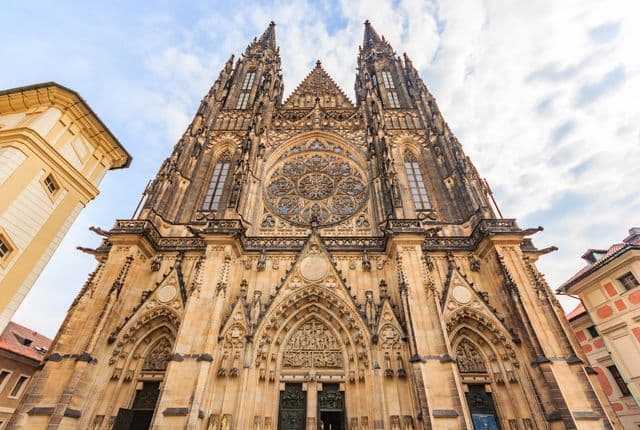
Prague's architectural power comes from density and variety. Within a 20-minute walk you cross through Romanesque foundations, Gothic church towers, Renaissance palace facades, Baroque church interiors, Art Nouveau shopfronts, and Cubist apartment buildings. The city was never bombed in World War II, so what you see is genuine — not reconstructed.
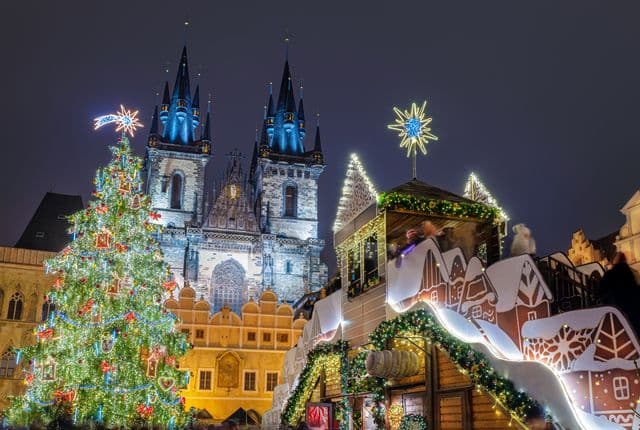
The Old Town, Malá Strana, and the Castle District each have a distinct character, and the transitions between them happen quickly. Walking from the Gothic bulk of the Týn Church to the Art Nouveau splendour of the Municipal House takes five minutes.
Vienna's architecture operates on a different scale. The Ringstrasse — the grand boulevard that replaced the old city walls in the 1860s — is lined with monumental buildings designed to project imperial power: the Opera House, Parliament, City Hall, the University, the Kunsthistorisches Museum. Each one could anchor a city on its own. Inside the Ring, the medieval lanes of the Innere Stadt centre on Stephansdom (St. Stephen's Cathedral), but the overall impression is of 18th and 19th-century grandeur rather than medieval intimacy.
Insider detail: Prague's astronomical clock on Old Town Square gets all the attention, but walk 50 metres south to the Church of Our Lady before Týn and look at the third pillar on the right — the tombstone of astronomer Tycho Brahe, who died in Prague in 1601 under circumstances that are still debated. Most visitors miss it entirely.
Food and Drink
This is where the two cities diverge most sharply.
Prague is a beer city. Czech lager is arguably the best in the world — the Pilsner style was invented here in 1842, and the brewing tradition runs deep. A half-litre of excellent draught beer in a local pub costs 50-70 CZK (€2-3).
The food in traditional pubs — svíčková (marinated beef with cream sauce and dumplings), vepřo-knedlo-zelo (roast pork with sauerkraut and dumplings), smažený sýr (fried cheese) — is filling, unpretentious, and cheap. Prague's restaurant scene has evolved dramatically in the past decade, with excellent modern Czech and international restaurants in districts like Karlín and Vinohrady.
Vienna's culinary identity centres on the coffee house. The Viennese Kaffeehaus is UNESCO-listed as an intangible cultural heritage — places like Café Central, Café Sperl, and Café Hawelka are institutions where you are expected to linger for hours over a Melange (similar to cappuccino) and a newspaper. The food traditions are equally refined: Wiener Schnitzel (pounded thin, breaded, pan-fried — never deep-fried in a proper kitchen), Tafelspitz (boiled beef, Emperor Franz Joseph's favourite), and Sachertorte at the Hotel Sacher.
Insider detail: In Prague, order "desítka" (ten-degree) beer instead of the standard "dvanáctka" (twelve-degree) at lunch. It is lighter, more sessionable, and what Czech workers traditionally drank during the day. Most tourists never learn the system — Czech beer is measured by degree Plato (sugar content before fermentation), not alcohol percentage.
Culture and Museums
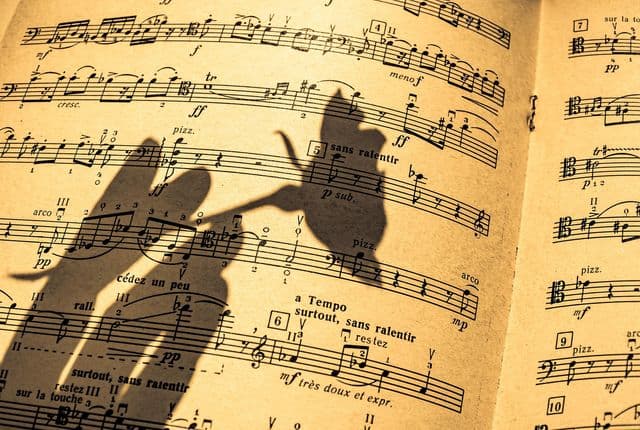
Vienna wins this category by sheer institutional weight. The Kunsthistorisches Museum houses one of the world's great art collections — Bruegel, Vermeer, Velázquez, Caravaggio. The Belvedere has Klimt's "The Kiss." The Albertina covers graphic art from Dürer to Picasso. And the music: the Vienna Philharmonic, the State Opera, the Musikverein (home of the New Year's Concert) — Vienna's classical music infrastructure has no equal.
Prague's cultural offerings are different rather than lesser. The National Gallery's collection of Czech medieval art is remarkable, particularly the Gothic panel paintings. The Museum of Decorative Arts has outstanding Art Nouveau and Cubist design collections.
The Jewish Museum preserves one of the most important collections of Judaica in Europe, including the haunting Old Jewish Cemetery where gravestones are stacked twelve layers deep. And Prague's live music scene — jazz clubs like AghaRTA and Reduta, plus a thriving underground rock and electronic scene — has a raw energy that Vienna's cultural establishment does not match.
Insider detail: The Lobkowicz Palace inside Prague Castle is privately owned and contains a collection that includes Beethoven's original manuscripts and annotations — handwritten notes in the margins of scores he was composing. The audio guide is narrated by the Lobkowicz family themselves and is one of the best museum experiences in either city.
Cost Comparison
Prague is substantially cheaper than Vienna. This matters for the quality of experience you can afford.
A good lunch in Prague runs €6-8 at a local restaurant, €12-15 at an upscale place. In Vienna, expect €12-18 for a standard meal, €25-40 at a respected restaurant. Beer in Prague is €2-3 for a half-litre of world-class lager; a comparable drink in Vienna costs €4-5.
Hotel rooms in Prague's centre start around €60-80 for a good mid-range property; in Vienna, €100-130 is the baseline.
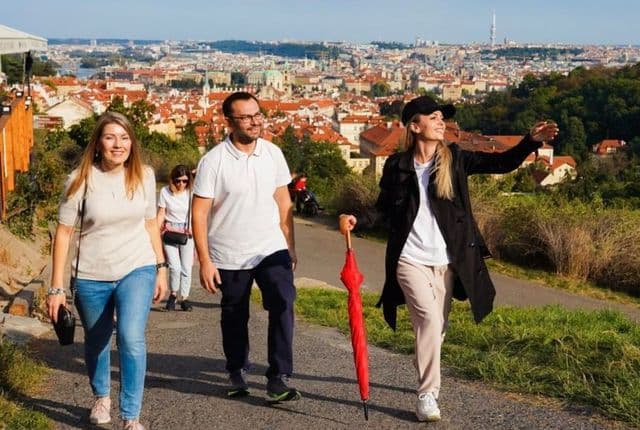
A private guide makes all the difference when exploring this part of Prague.
The practical effect is that your daily budget in Prague buys you a better experience. You eat at better restaurants, stay in more central hotels, and take more guided tours than you would on the same budget in Vienna. A four-day trip to Prague costs roughly what a three-day trip to Vienna costs — with more to show for it.
Getting Around
Prague is one of Europe's most walkable cities. The entire historic centre — Old Town, Jewish Quarter, Charles Bridge, Malá Strana, Prague Castle — fits within a rough circle about 2 km across. You can walk between any two major landmarks in under 30 minutes. The tram system (particularly the scenic line 22 up to the Castle) supplements walking perfectly, and a 24-hour transit pass costs about €5.
Vienna is larger and more spread out. The Innere Stadt (1st district) is walkable, but major attractions like Schönbrunn Palace and the Belvedere are outside the centre. The U-Bahn (metro) is excellent — modern, efficient, and covers the city well. A 24-hour transit pass costs €8. You will use public transport more in Vienna than in Prague, but the system makes it painless.
Nightlife and Evening Entertainment
Prague's nightlife has depth beyond the stag-party reputation that unfortunately dominates online search results. The craft beer scene is world-class — bars like BeerGeek, Strahov Monastery Brewery, and Letná Beer Garden serve Czech microbrews that rival anything in Belgium or Germany. Jazz clubs in the Old Town run serious programmes. And the cross-bar scene in Žižkov — where there are reportedly more pubs per capita than anywhere in Europe — is genuinely local and unpretentious.
Vienna's evening culture is more formal but no less rewarding. Opera, ballet, and classical concerts run nearly every night during season. The Naschmarkt area has excellent wine bars, and the "Bermuda Triangle" near Schwedenplatz has a concentrated bar scene. Heurigen — wine taverns on the city outskirts serving young local wine with cold buffets — are a distinctly Viennese experience with no Prague equivalent.
Which Should You Choose?
Choose Prague if: You value affordability, medieval atmosphere, walkability, and beer culture. If you want a city where you can eat and drink well without watching prices, where the architecture surprises you every few minutes, and where the history feels layered and accessible rather than curated.
Choose Vienna if: You love classical music, imperial grandeur, world-class art museums, and refined coffee-house culture. If you want polish, scale, and institutional excellence — and you are comfortable with Western European pricing.
Choose Prague if you are travelling on a budget. The cost difference is significant enough that you will have a noticeably better trip in Prague on a moderate budget than in Vienna on the same amount.
Choose Vienna if museums are your priority. The Kunsthistorisches Museum alone justifies the trip for art lovers.
Choose Prague if it is your first time in Central Europe. It is the more distinctive of the two — a city that does not look or feel like anywhere else. Vienna, while magnificent, shares DNA with other grand European capitals.
Why Not Both?
The train from Prague to Vienna takes about 4 hours on the direct RegioJet or ČD service, with comfortable seating and scenic views through the Moravian countryside. Tickets booked in advance cost €15-25 on RegioJet. You could easily spend 3 days in Prague and 2 in Vienna (or vice versa) on a single trip.
If you are starting in Prague, our recommendation is to spend your first days exploring the city with a guide who knows where to look. Our All Prague in One Day private tour covers the Castle, Charles Bridge, Old Town, and the Jewish Quarter in a single day — exclusively yours — and gives you the foundation to explore independently afterwards.
For a memorable Prague evening before heading to Vienna, try a medieval dinner at U Pavouka Tavern — roasted meats, unlimited mead, fire dancers, and a 15th-century cellar. Vienna has nothing like it.
See all our private tours in Prague.
Frequently Asked Questions
Is Prague or Vienna cheaper?
Prague is significantly cheaper. Beer costs €2-3 vs €4-5 in Vienna, a good lunch runs €6-8 vs €12-18, and mid-range hotels start at €60-80 vs €100-130. Your daily budget stretches roughly 40-50% further in Prague.
How far is Prague from Vienna?
About 330 km by road or rail. The direct train takes approximately 4 hours. RegioJet offers comfortable service with tickets from €15-25 when booked in advance.
Which city has better architecture?
Both are architecturally exceptional but in different ways. Prague has greater variety — Gothic, Renaissance, Baroque, Art Nouveau, and Cubist buildings all within walking distance. Vienna has greater scale — the Ringstrasse boulevard and imperial palace complexes are monumental. Prague was never bombed, so more of its architecture is original.
Is Vienna worth the higher cost compared to Prague?
If classical music, world-class art museums (Kunsthistorisches, Belvedere, Albertina), and refined coffee-house culture are priorities for you — absolutely. If those matter less, Prague delivers an equal or better experience for significantly less money.
Can I do a day trip from Prague to Vienna?
Technically yes, but we do not recommend it. Four hours each way leaves limited time in Vienna. If you want to see both cities, plan at least 2 nights in each.
You May Also Like
Want to see Prague for yourself?
Take our flagship Prague tour-6-640x430.jpg&w=3840&q=75)