Prague vs Budapest — How to Choose
Quick verdict: Prague is the more compact, walkable, and architecturally preserved city — a medieval centre that survived the 20th century intact, exceptional beer, and a sense of intimacy that larger cities cannot match. Budapest is the more dramatic, with the Danube splitting the city in two, world-famous thermal baths, a ruin-bar scene that has no equivalent anywhere, and a grittier energy that some travellers prefer. Both are affordable by European standards, though Prague edges ahead on price. The right choice comes down to what kind of city excites you.
At a Glance
Category | Prague | Budapest
Setting | Compact hilltop castle and river valley — everything close together | Two cities divided by the Danube — hilly Buda and flat Pest
Architecture | Gothic, Renaissance, Baroque, Art Nouveau, Cubist — all original, never bombed | Neo-Gothic Parliament, Art Nouveau baths, mix of preserved and reconstructed
Cost | Very affordable — beer €2-3, lunch €6-8 | Slightly cheaper still — beer €1.50-2.50, lunch €5-7
Baths & Spas | Limited spa options | World-class thermal baths — Szechenyi, Gellert, Rudas
Nightlife | Craft beer bars, jazz clubs, Žižkov pubs | Ruin bars, rooftop terraces, club scene in District VII
Food | Czech comfort food — dumplings, roast pork, fried cheese | Hungarian spice — goulash, paprikash, langos, chimney cake
Walkability | Extremely walkable — entire centre on foot | Larger — walking works in each half, trams and metro connect them
River | Vltava — scenic but the city faces away from it | Danube — the city's dramatic centrepiece, especially at night
Architecture and Atmosphere
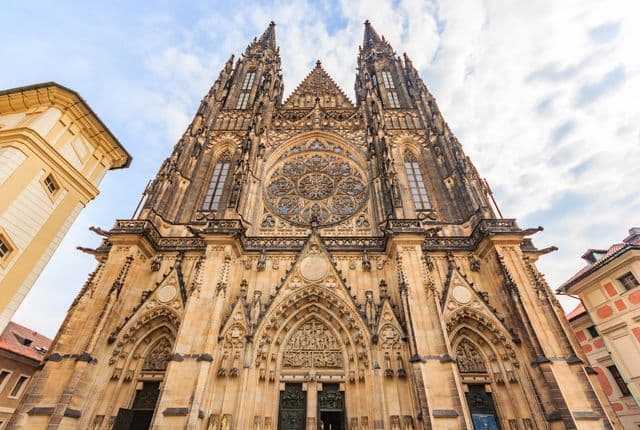
Prague's strength is preservation. The historic centre — Old Town, Malá Strana, Hradčany — was never significantly damaged in wartime, so what you see is original fabric from the 13th century onwards. The density is remarkable: within a single square kilometre you encounter Romanesque rotundas, Gothic towers, Renaissance graffito facades, Baroque church interiors, and Art Nouveau municipal buildings. The scale is human — narrow lanes, small squares, buildings that are three or four storeys high. It feels like a city built for people walking, because it was.
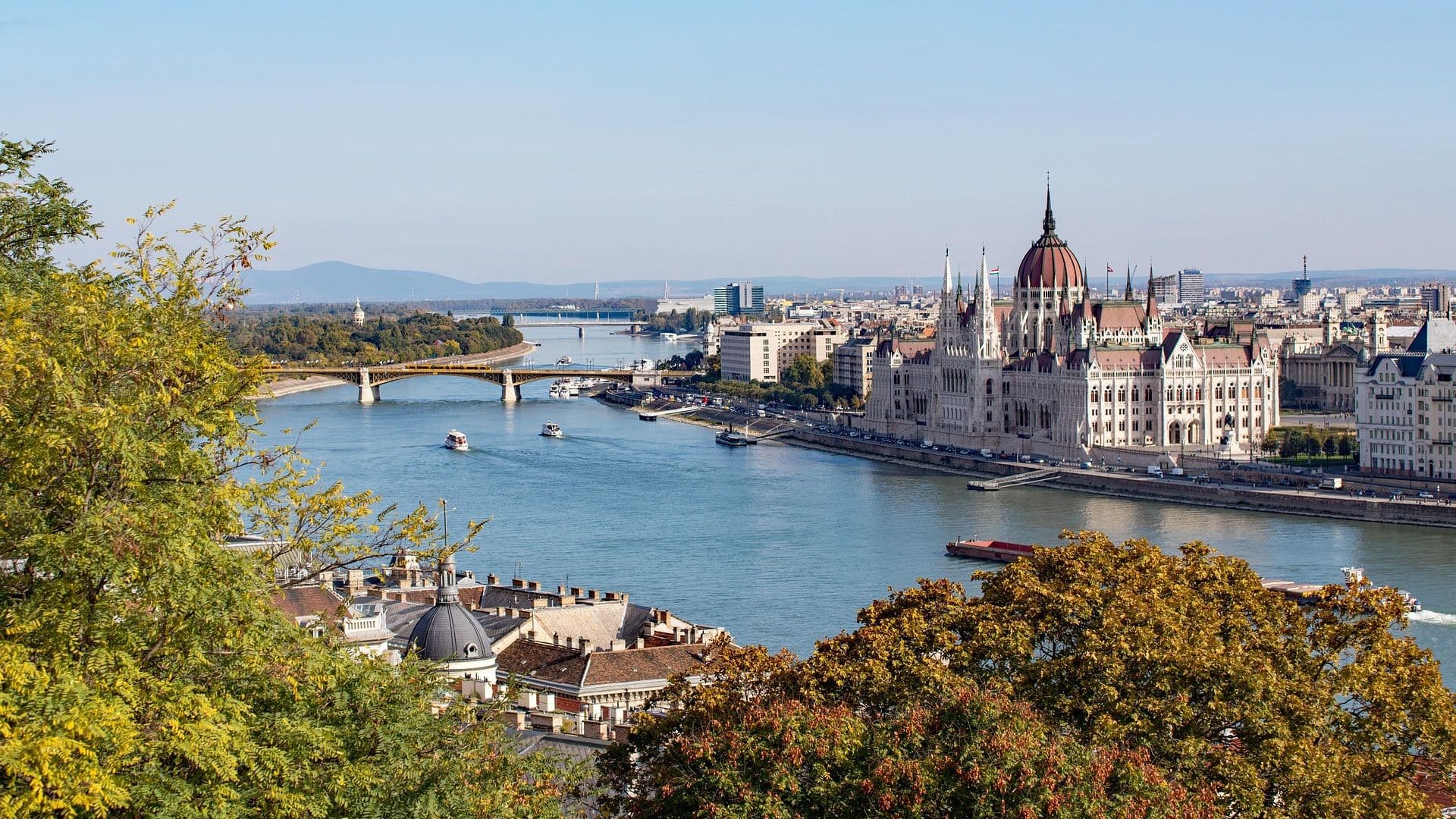
Budapest's architectural impact comes from scale and setting. The Hungarian Parliament building, stretching 268 metres along the Danube embankment, is one of the largest legislative buildings in the world and one of the most photographed structures in Europe. Buda Castle rises on the opposite bank, with the Fisherman's Bastion providing neo-Romanesque terraces with panoramic views. The city suffered heavily in World War II — the siege of Budapest in 1944-45 destroyed significant portions — so more of the architecture is reconstructed. But the reconstruction is well done, and the overall effect, particularly at night when the Parliament, Chain Bridge, and Castle are illuminated, is genuinely spectacular.
Insider detail: Prague's Cubist architecture is found nowhere else in the world. The House of the Black Madonna near Old Town Square, designed by Josef Gočár in 1912, applies Cubist geometry to an entire building facade. There is also a Cubist lamppost in the same neighbourhood — look for the angular, faceted column near the junction of Celetná and Ovocný trh.
Food and Drink
Czech cuisine is comfort food built on pork, dumplings, and beer. Svíčková (marinated beef sirloin with cream sauce and bread dumplings) is the national dish for a reason — when done well, it is deeply satisfying. Vepřo-knedlo-zelo (roast pork, sauerkraut, dumplings) is the pub staple. Czech beer is world-class — the Pilsner style was invented here, and a half-litre of excellent draught lager costs 50-70 CZK (€2-3) in a local pub.
Hungarian food is bolder and spicier. Paprika runs through everything — goulash (gulyás, a beef and paprika soup), chicken paprikash (paprikás csirke), and langos (deep-fried dough with sour cream and cheese) are the essentials. Budapest's Great Market Hall (Nagyvásárcsarnok) is both a tourist attraction and a functioning market where locals shop. Hungarian wine — Tokaji, Egri Bikavér (Bull's Blood) — is underrated and excellent. Hungarian craft beer is developing but does not yet match Prague's depth.
Insider detail: In Prague, the brewery restaurant at Strahov Monastery (Klášterní pivovar) brews its own St. Norbert beers on premises. The IPA and the amber lager are excellent, the setting in a working 17th-century monastery is unmatched, and tourists rarely find it because it is uphill from the usual routes. Pair it with the view from Petřín Hill on the way down.
Thermal Baths
This is Budapest's clearest advantage. The city sits on a network of thermal springs, and the bath culture dates back to the Roman and Ottoman periods. Széchenyi Baths (the largest medicinal bath complex in Europe, with outdoor pools steaming in winter), Gellért Baths (Art Nouveau interiors), and Rudas Baths (Ottoman-era architecture, rooftop pool with panoramic views) are world-class experiences with no Prague equivalent.
Prague has some spa facilities — notably the Beer Spa Prague and a few modern wellness centres — but nothing approaching Budapest's scale, history, or variety. If thermal baths are important to you, Budapest wins this category without contest.
Nightlife
Both cities have earned reputations for nightlife, but the character is different.
Budapest's ruin bars are the signature. Szimpla Kert — the original, opened in 2002 in an abandoned building in the Jewish Quarter (District VII) — set the template: mismatched furniture, art installations, multiple rooms and courtyards, cheap drinks, and an atmosphere that feels spontaneous even though it is now thoroughly established. The surrounding streets have dozens of bars, clubs, and late-night restaurants. Budapest's nightlife runs later and louder than Prague's.
Prague's bar scene is less showy but arguably deeper. The craft beer revolution is mature — bars like BeerGeek Bar, Zlý Časy, and Kulový Blesk serve Czech microbrews that rival anything in Belgium. The jazz scene (AghaRTA, Reduta) is serious. And Žižkov — the residential district east of the centre — has the highest concentration of pubs per capita in Prague and possibly in Europe, most of them local and unpretentious. Prague's nightlife is easier to find depth in; Budapest's is easier to have a wild night in.
Insider detail: Prague's Hemingway Bar on Kozí street is one of the best cocktail bars in Central Europe — the absinthe menu alone runs to 20 varieties, all served with proper Czech ritual (no flaming sugar cubes, which is a modern invention, not tradition). Reservations recommended for weekends.
Cost Comparison
Both cities are affordable by European standards, and the difference between them is smaller than between either and Western Europe. Budapest is slightly cheaper overall — a street-food lunch costs EUR 4-6 versus EUR 6-8 in Prague, and accommodation is marginally less expensive. Beer, however, is cheaper in Prague for comparable quality — a half-litre of excellent Czech lager runs EUR 2-3, while a similar pour in Budapest costs EUR 2-3 for Hungarian beer and EUR 3-4 for imports.
The practical takeaway: both cities are excellent value compared to Vienna, Amsterdam, or Paris. Neither will strain a moderate budget. Choose based on what you want to experience, not on cost.
A private guide makes all the difference when exploring this part of Prague.
Getting Around
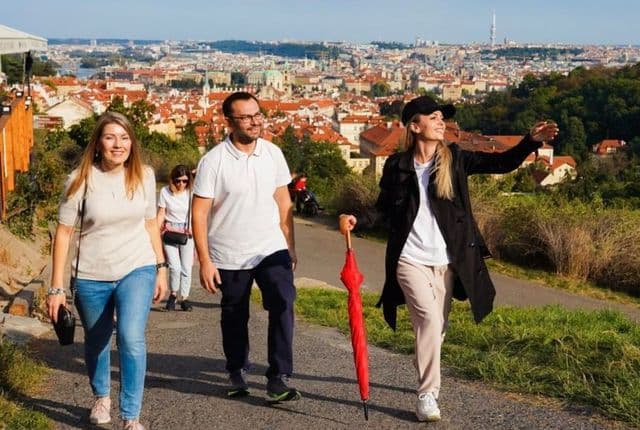
Prague is one of the most walkable cities in Europe. The entire historic centre fits within a circle roughly 2 km across, and you can walk between any two major landmarks in under 30 minutes. Trams supplement walking perfectly — line 22 from the centre up to Prague Castle is essentially a sightseeing route. A 24-hour transit pass costs about EUR 5.
Budapest is physically larger and split by the Danube. Walking works well within Pest (the flat eastern side where most restaurants, bars, and shops are) and within the Castle District on the Buda side, but you will need trams, the metro, or river crossings to move between them. The tram line running along the Pest embankment (lines 2 and 2M) offers some of the best views of the Castle and Parliament and is worth riding purely for the scenery. Budapest's metro Line 1, built in 1896, is the second-oldest metro line in continental Europe and runs beneath Andrássy Avenue — a UNESCO-listed boulevard.
Which Should You Choose?
Choose Prague if: You value walkability, architectural variety, world-class beer, and a city where everything is close together. Prague rewards slow, detailed exploration — the kind of city where you notice a carved doorway on your third day that you missed on your first.
Choose Budapest if: You want thermal baths, dramatic river views, a wilder nightlife scene, and a city with more edge and grit. Budapest is the better choice for anyone who likes a city that feels slightly rough around the edges rather than perfectly preserved.
Choose Prague if: This is your first Central European trip. It is more immediately navigable, safer-feeling for first-time visitors, and easier to explore without a plan.
Choose Budapest if: You have already been to Prague. Budapest offers a different enough experience that it does not feel like a repeat — the Danube, the baths, the ruin bars, and the Hungarian food culture are all distinct.
Choose Prague if you love beer. Czech beer culture is simply deeper, older, and better.
Choose Budapest if you love spas. There is no competition here — Budapest's thermal baths are a category of their own.
Why Not Both?
The direct train from Prague to Budapest takes about 7 hours via Brno and Bratislava, or you can fly in about 1 hour (budget airlines offer the route year-round). Many travellers combine the two cities on a single Central European trip — 3 days in Prague, 3 in Budapest, with a possible overnight stop in Bratislava between them.
If you start in Prague, spend your time well. Our All Prague in One Day private tour covers Prague Castle, Charles Bridge, Old Town, and the Jewish Quarter in a single guided day — exclusively yours, with your own guide. It gives you the context to explore independently for the rest of your stay.
Before you leave Prague, experience something Budapest cannot match: a medieval dinner at U Pavouka Tavern. Roasted meats, unlimited mead, fire dancers, and a 15th-century cellar. It is the kind of evening that stays with you.
See all our private tours in Prague.
More City Comparisons
Choosing between European capitals is one of the best problems to have. If you are weighing Prague against other popular destinations, these side-by-side guides compare costs, food, nightlife, and sightseeing so you can pick the right city -- or plan a multi-stop trip.
- Prague vs. Barcelona -- Gothic quarters, tapas vs. dumplings, and value for money
- Prague vs. Paris -- romance, architecture, and budget compared
- Prague vs. Rome -- history, food, and crowd levels head to head
Frequently Asked Questions
Is Prague or Budapest cheaper?
Both are affordable by European standards, but Budapest is slightly cheaper overall. Street food and basic meals cost a euro or two less in Budapest. Beer is cheaper in Prague for comparable quality. Accommodation prices are similar. The difference is small enough that it should not drive your decision.
How far is Prague from Budapest?
About 525 km. The direct train takes approximately 7 hours. Budget flights take about 1 hour, with Ryanair and Wizz Air operating the route. Many travellers combine both on a single trip with a possible stop in Bratislava.
Which city is better for nightlife?
Different rather than better. Budapest's ruin bars (Szimpla Kert and the surrounding District VII scene) are more visually striking and run later. Prague's craft beer scene is deeper and the pub culture more authentic. Budapest for wild nights, Prague for meaningful drinking.
Which city has better food?
Czech and Hungarian cuisines are both hearty Central European traditions. Hungarian food is bolder and spicier (paprika drives most dishes). Czech food is milder and more comfort-oriented (dumplings, roast pork, cream sauces). Neither is objectively better — it depends on your palate.
Can I visit Prague and Budapest in one trip?
Absolutely. Three days in each city is ideal. Travel between them by train (7 hours, scenic), flight (1 hour), or bus (6-7 hours). Consider a night in Bratislava as a midway stop if taking the overland route.
You May Also Like
Want to see Prague for yourself?
Take our flagship Prague tour-6-640x430.jpg&w=3840&q=75)