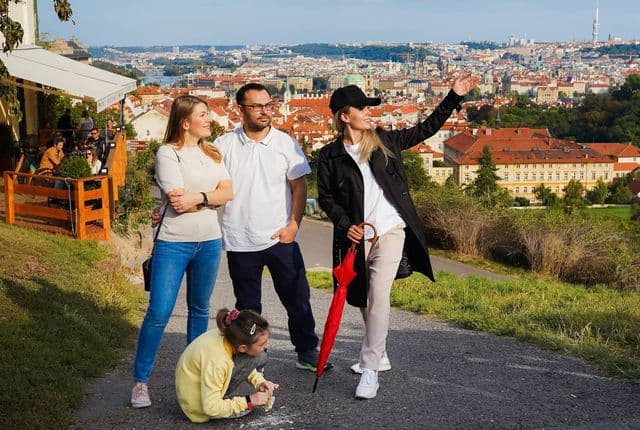
Prague vs Krakow — Which Central European City to Choose
Quick verdict: Prague is the more architecturally diverse and better-preserved city — a compact centre with Gothic, Renaissance, Baroque, Art Nouveau, and Cubist buildings layered on top of each other, world-class beer, and an atmosphere that rewards slow exploration. Krakow is slightly cheaper, more intimate, and carries deeper historical weight — the former royal capital of Poland, home to the largest medieval market square in Europe, and the nearest major city to Auschwitz-Birkenau. Both are excellent. The choice depends on whether you prioritise architectural variety and beer (Prague) or royal Polish history and Holocaust remembrance (Krakow).
At a Glance
Category | Prague | Krakow
Size | Larger city, compact historic centre (pop. ~1.3 million) | Smaller, very walkable old town (pop. ~800,000)
Architecture | Gothic, Renaissance, Baroque, Art Nouveau, Cubist — extraordinary variety | Gothic and Renaissance core, Baroque churches, well-preserved medieval plan
Cost | Affordable — beer EUR 2-3, lunch EUR 6-8 | Slightly cheaper — beer EUR 1.50-2.50, lunch EUR 4-6
Food & Drink | Czech comfort food, world-class beer culture | Pierogi, zurek, bigos, excellent vodka tradition
Key Attraction | Prague Castle — the largest ancient castle complex in the world | Wawel Castle — royal seat of Polish kings for five centuries
Day Trips | Cesky Krumlov, Karlovy Vary, Kutna Hora, castles | Auschwitz-Birkenau, Wieliczka Salt Mine, Zakopane mountains
Nightlife | Craft beer scene, jazz clubs, pub culture | Student energy, vodka bars, cellar clubs in the Old Town
Jewish Heritage | Old Jewish Cemetery, six synagogues, Kafka connections | Kazimierz — one of Europe's best-preserved Jewish quarters
Architecture and Atmosphere
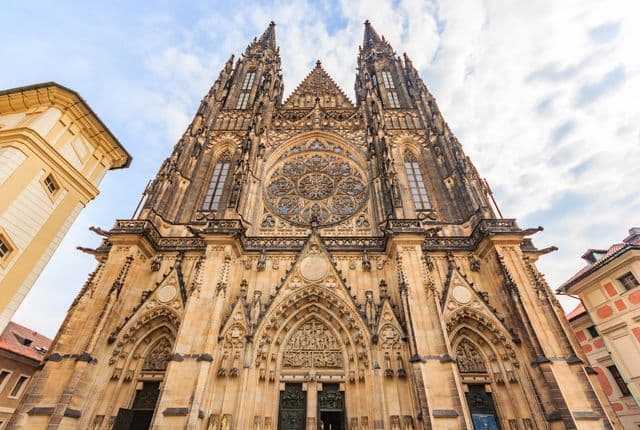
Prague's architectural wealth is almost absurd in its density. The city was spared wartime bombing, so the fabric is genuine — not reconstructed. Walking from the Gothic Powder Tower through the Art Nouveau Municipal House, past the Baroque facade of the Klementinum, across the medieval Charles Bridge, and up through the Renaissance courtyards to the Gothic cathedral of St. Vitus takes about 40 minutes and covers 700 years of architectural history without interruption. No other European city packs this range into such a small area.
The atmosphere is layered. Mala Strana (Lesser Town) feels aristocratic and quiet — embassy gardens, palace courtyards, the sound of fountain water. Old Town is busier and more vertical — tower views, church spires, the famous astronomical clock. The Castle District is monumental. Each neighbourhood has its own register, and the transitions between them are part of the experience.
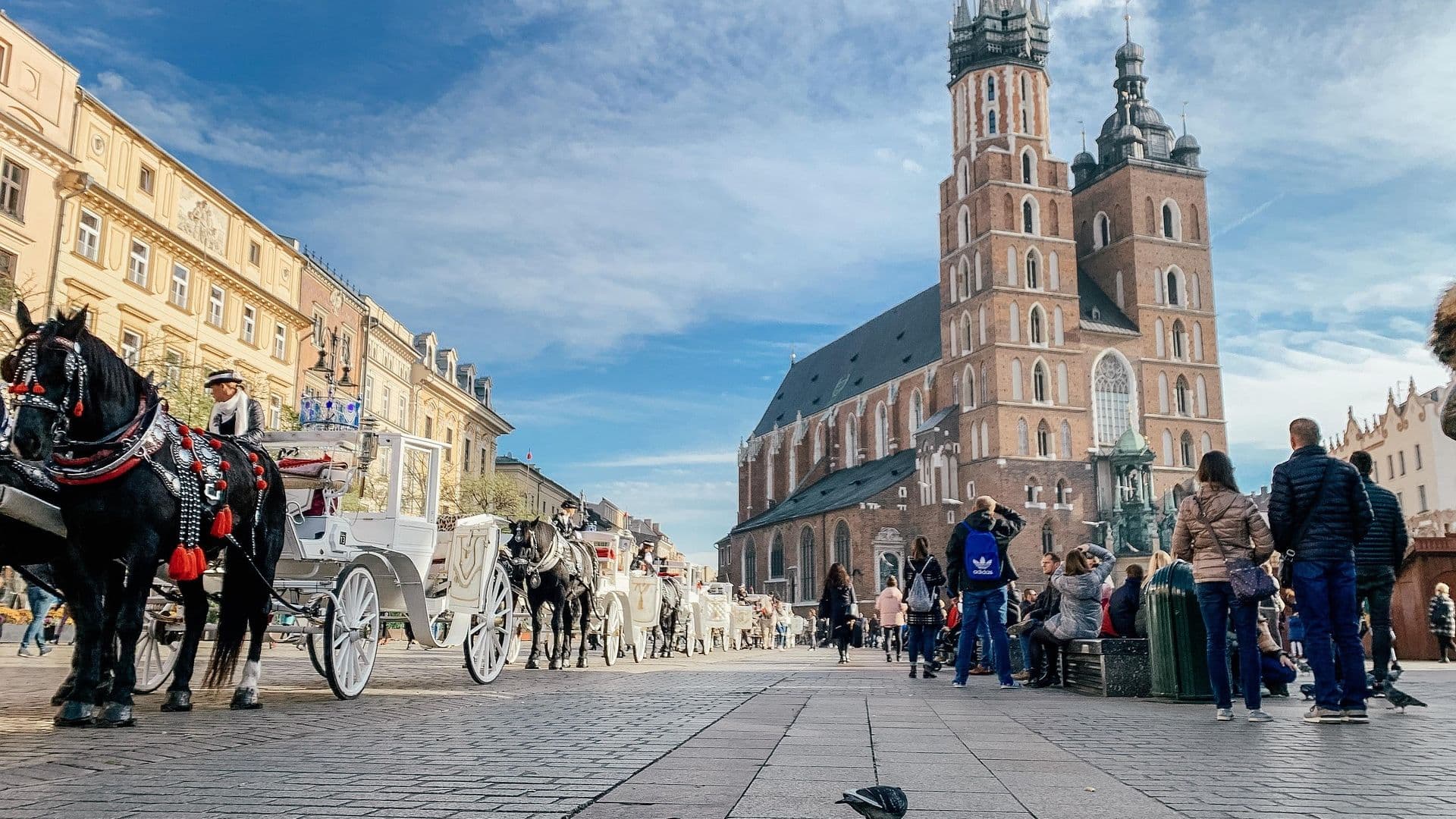
Krakow's old town is built around the Rynek Glowny — the largest medieval market square in Europe, 200 metres on each side. The Cloth Hall (Sukiennice) sits at its centre, a Renaissance trading hall that still houses market stalls on the ground floor and a gallery of 19th-century Polish painting upstairs. The trumpet call from St. Mary's Basilica — a melody that stops mid-note, commemorating a 13th-century watchman killed by a Mongol arrow — sounds every hour and connects you to a tradition that has continued for centuries.
Insider detail: Prague's house signs predate street numbering. Before the 18th century, buildings were identified by carved or painted signs — At the Two Suns, At the Golden Well, At the Stone Bell. Many survive, particularly on Celetna street and in Mala Strana. They are easy to miss unless you look above the first-floor windows.
Food and Drink
Czech and Polish cuisines share Central European DNA but branch in different directions.
Prague runs on beer. The Czech Republic has the highest per-capita beer consumption in the world (roughly 140 litres per person per year), and the quality justifies it. Czech Pilsner — invented in Plzen in 1842 — set the template for lager worldwide. In Prague's pubs, a half-litre of excellent draught lager costs 50-70 CZK (about EUR 2-3).
The food in traditional pubs — svickova (marinated beef with cream sauce), vepro-knedlo-zelo (roast pork with cabbage and dumplings), smazeny syr (fried cheese) — is filling and unpretentious. Prague's modern dining scene, particularly in Karlin and Vinohrady, has expanded dramatically.
Krakow's food culture centres on soups, dumplings, and hearty stews. Pierogi (filled dumplings — with meat, sauerkraut, cheese and potato, or berries) are the essential dish. Zurek (fermented rye soup with sausage and egg, often served in a bread bowl) is distinctive and excellent.
Bigos (hunter's stew with sauerkraut, various meats, and mushrooms) is the national stew. Polish vodka — Zubrowka (bison grass), Wyborowa, Belvedere — is a serious tradition, and Krakow's vodka bars serve it properly: chilled, in small glasses, with pickled herring or gherkins.
Insider detail: In Prague, ask for "cesnecka" (garlic soup) at traditional pubs — it is the Czech hangover cure and one of the most satisfying soups you will eat anywhere. Made with heavy garlic, broth, potatoes, and often a raw egg stirred in at the table. Most tourist restaurants do not list it, but neighbourhood pubs always have it.
History and Heritage
Both cities are historically significant, but the weight they carry is different.
Prague was the seat of the Holy Roman Empire under Charles IV in the 14th century, a centre of the Protestant Reformation (Jan Hus was burned at the stake in 1415 for ideas that anticipated Luther by a century), the site of the Defenestration that triggered the Thirty Years' War, and the capital of a Communist state from 1948 to 1989. The Velvet Revolution of November 1989 — when hundreds of thousands gathered in Wenceslas Square and the Communist regime fell without violence — is one of the defining moments of 20th-century European history.
Krakow was the royal capital of Poland for five centuries before Warsaw took over in 1596. Wawel Castle, sitting on a limestone hill above the Vistula River, is the symbolic heart of Polish identity — royal coronations, burials, and political ceremony all happened here. But Krakow's modern historical weight comes from the Holocaust. Auschwitz-Birkenau is 65 km west of the city — about an hour by road — and Oskar Schindler's factory (now a museum documenting the Nazi occupation of Krakow) is in the city itself. The former Jewish ghetto in Podgorze and the Kazimierz district together tell a story that is essential and devastating.
Insider detail: In Krakow's Kazimierz district, the old Jewish quarter, many of the synagogues and prayer houses survived because the Nazis used them as warehouses rather than destroying them. Seven synagogues remain — more than in most European cities. The Remuh Synagogue, dating from the 16th century, is still an active place of worship.
Day Trip Options
Both cities serve as excellent bases for day trips, but to different destinations.
From Prague: Cesky Krumlov (medieval UNESCO town), Karlovy Vary (spa town with hot springs), Kutna Hora (Bone Church and Gothic cathedral), Karlstejn Castle, Bohemian Switzerland National Park, Dresden (Germany). We cover all of these in our complete day trips guide.
A private guide makes all the difference when exploring this part of Prague.
From Krakow: Auschwitz-Birkenau (the most visited Holocaust memorial in the world), Wieliczka Salt Mine (underground chambers carved from salt over 700 years, UNESCO-listed), Zakopane (mountain resort town in the Tatra Mountains, excellent hiking), and the Ojcow National Park (limestone gorges and castle ruins north of the city).
Prague's day trips are more varied — castles, spa towns, natural parks, a neighbouring country. Krakow's day trips include two of the most significant heritage sites in Europe (Auschwitz and Wieliczka) and access to genuine mountains. Your priorities determine which set appeals more.
Nightlife
Both cities attract younger travellers with active bar scenes, but the atmosphere differs.
Prague's craft beer revolution has made it one of the best cities in Europe for beer. Beyond the big breweries, microbreweries and taprooms like Strahov Monastery Brewery, BeerGeek, and Zly Casy serve Czech-brewed IPAs, stouts, and sours alongside traditional lagers. Jazz clubs (AghaRTA, Reduta) are serious, and the residential pubs of Zizkov offer an authentically local drinking experience that the tourist centre cannot match.
Krakow's nightlife is younger, louder, and more vodka-fuelled. The cellars beneath the Old Town have been converted into clubs and bars — many of them reached by narrow stone staircases descending into vaulted medieval spaces. The student population (Krakow has one of Poland's largest universities) keeps the energy high and the prices low. Kazimierz has a more relaxed, bohemian bar scene.
Which Should You Choose?
Choose Prague if: You want the widest range of architecture in one walkable city, world-class beer, and a centre that feels like walking through a living museum. If architectural variety and preservation matter to you, Prague has no equal in Central Europe.
Choose Krakow if: You want a slightly cheaper trip, access to Auschwitz-Birkenau and the Wieliczka Salt Mine, a vibrant student city atmosphere, and Polish hospitality. If Holocaust remembrance is an important part of your trip, Krakow is the necessary base.
Choose Prague if you love beer. Czech beer culture is older, deeper, and more refined than Poland's, and Prague is its capital.
Choose Krakow if you love mountains. The Tatra Mountains are reachable as a day trip from Krakow — Prague has beautiful countryside but no mountains.
Choose Prague for a first Central European trip. It is the more immediately impressive city — the kind of place that makes you stop mid-step and look up.
Choose Krakow for a second Central European trip. If you have already visited Prague, Krakow offers a meaningfully different experience rather than a variation on the same theme.
Why Not Both?
The train from Prague to Krakow takes about 7-8 hours (with a change in Ostrava or Katowice), or you can fly in about 1 hour. Budget airlines — Ryanair and Wizz Air — serve the route. Many travellers pair Prague and Krakow on a single trip, often adding Bratislava or Vienna as a stop between them.
If you begin in Prague, make the most of your time. Our All Prague in One Day private tour covers Prague Castle, Charles Bridge, Old Town, and the Jewish Quarter in a single guided day — exclusively yours, with your own guide. It is the most efficient way to absorb the city's depth with context that guidebooks cannot provide.
For an evening you will not find in Krakow, try a medieval dinner at U Pavouka Tavern — roasted meats on wooden boards, unlimited mead, fire dancers, sword swallowers, and a 15th-century cellar setting that feels straight out of a Bohemian legend.
See all our private tours in Prague.
Frequently Asked Questions
Is Prague or Krakow cheaper?
Krakow is slightly cheaper overall — meals and accommodation cost about 10-20% less than Prague. However, Prague's beer is cheaper for comparable quality (Czech lager is both better and less expensive than most Polish beer). The difference is small; neither city will strain a moderate budget.
How far is Prague from Krakow?
About 535 km. The train takes 7-8 hours with a change. Budget flights take about 1 hour. A road trip through Moravia and Silesia takes roughly 6 hours and passes through interesting countryside.
Which city is more walkable?
Both are very walkable, but Prague's historic centre is more compact. You can see all of Prague's major landmarks on foot in a single day (though doing them justice takes longer). Krakow's old town is slightly smaller, but key attractions like Wawel Castle, Kazimierz, and the Schindler factory are more spread out.
Which city has better Jewish heritage sites?
Both are important. Prague's Jewish Quarter has the oldest functioning synagogue in Europe (Old-New Synagogue, 1270) and the haunting Old Jewish Cemetery. Krakow's Kazimierz is a larger, more intact former Jewish quarter with seven surviving synagogues, and proximity to Auschwitz-Birkenau adds a dimension Prague does not have.
Can I visit both Prague and Krakow in one week?
Yes — comfortably. Three days in each city with travel between them fits neatly into a week. Add a day trip from each city (Cesky Krumlov or Kutna Hora from Prague, Auschwitz from Krakow) for a complete Central European experience.
You May Also Like
Want to see Prague for yourself?
Take our flagship Prague tour-6-640x430.jpg&w=3840&q=75)