Prague to Vienna — Is It Really Possible in a Day?
Let's start with the honest answer: barely. Vienna is approximately 330 kilometres from Prague, and the fastest train takes about 4 hours each way. That's 8 hours of travel for a day trip. Even with an early departure and a late return, you're looking at 5-6 hours on the ground in a city that deserves at least three days. You'll see some things, but you'll experience them at a pace that borders on frantic.
We get asked about this trip regularly, and we always give the same advice: if you can add an overnight, do it. One night in Vienna turns an exhausting sprint into a genuinely satisfying experience. But if a day trip is truly your only option, here's how to make it work — and what you're signing up for.
The Numbers — What You're Actually Facing
By train: The fastest direct trains (RegioJet, Austrian Federal Railways ÖBB, or Czech Railways ČD) take approximately 4 hours from Praha hlavní nádraží to Wien Hauptbahnhof. Departures start around 6:00 AM, with the last reasonable return train leaving Vienna around 19:00-20:00. RegioJet is typically the cheapest option and offers comfortable seats, Wi-Fi, and a café car.
By car: The drive takes about 3 hours 45 minutes via the D1/E65 motorway south through Brno, then continuing into Austria on the A2/A4. Both countries are Schengen — no border stops. However, you'll need a Czech motorway vignette and an Austrian one (digital vignette available online). Driving saves maybe 15 minutes versus the train but adds the stress of navigating, parking, and city driving in an unfamiliar capital.
By bus: FlixBus operates the route in about 4 hours 15 minutes. Cheaper than the train, but less comfortable for such a long day.
Realistic day trip schedule:
- 6:00 AM: Depart Prague (train)
- 10:00 AM: Arrive Vienna
- 10:30 AM - 5:30 PM: 7 hours on the ground
- 6:00 PM: Depart Vienna
- 10:00 PM: Arrive back in Prague
That's a 16-hour day. Be honest with yourself about whether that sounds enjoyable or punishing.
If You're Doing It — What to Prioritise
Seven hours is enough to see Vienna's Innere Stadt (First District) and one or two major sights. It's not enough for Schönbrunn Palace, the Belvedere, and the city centre. Choose.
Option A: The Imperial Core (Best for First-Timers)
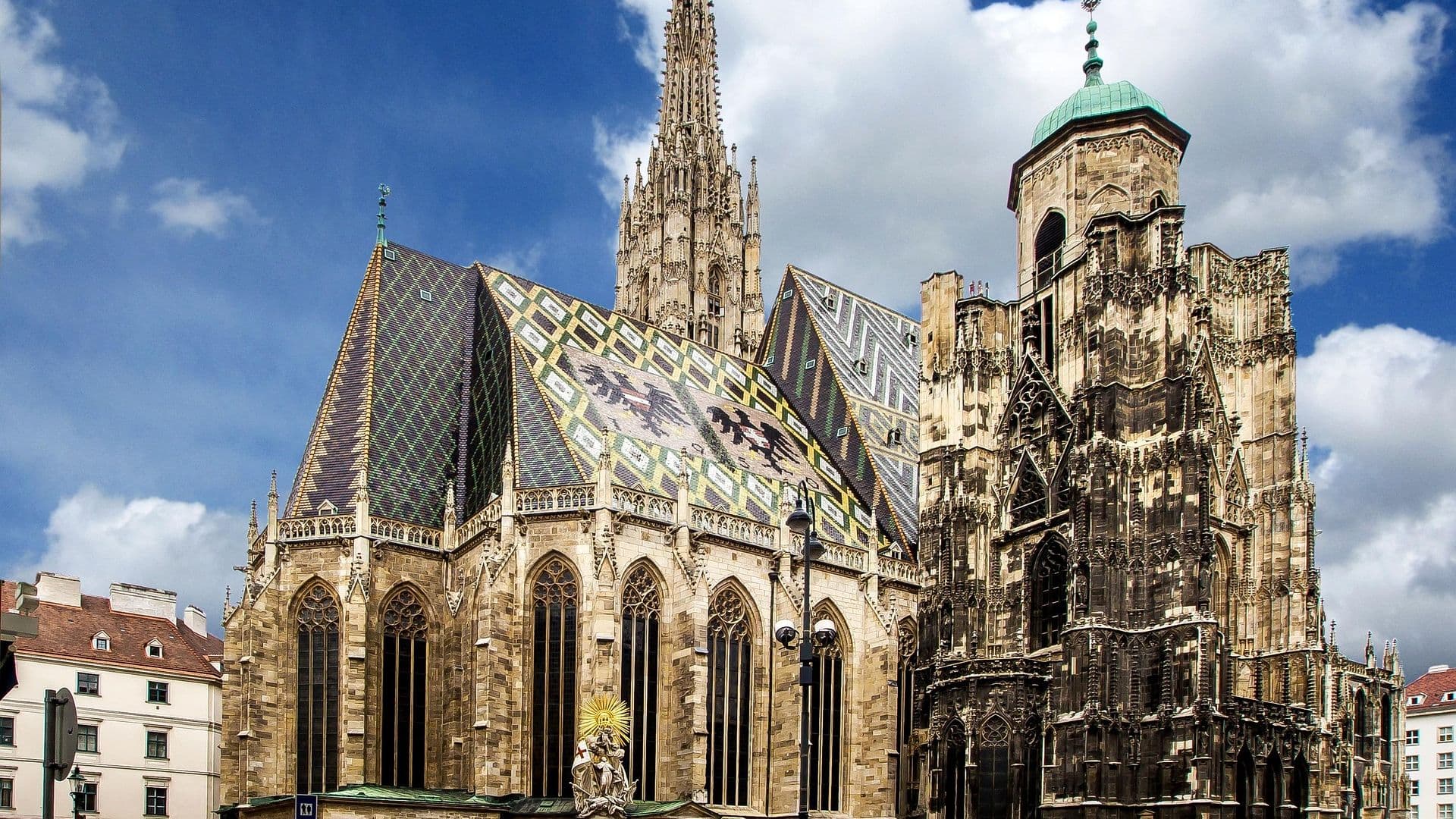
Start at the Stephansdom (St. Stephen's Cathedral), Vienna's Gothic centrepiece. The south tower is 136 metres tall and you can climb 343 steps for a view across the city — but on a tight schedule, save the 30 minutes and admire it from the ground. The interior is free and the medieval tiled roof is visible from the square.
Walk west along the Graben, Vienna's most elegant pedestrian street, past the Plague Column (Pestsäule), a Baroque monument erected after the devastating plague of 1679. Continue to the Hofburg, the imperial palace that served as the Habsburgs' winter residence for over 600 years.
The Hofburg complex is enormous, but with limited time, focus on the Imperial Apartments and Sisi Museum (about 90 minutes). The apartments show how Emperor Franz Joseph and Empress Elisabeth lived — the contrast between his Spartan military aesthetic and her obsessive fitness and beauty routines is fascinating. The Sisi Museum does a good job of separating the historical Elisabeth from the romanticised myth.
After the Hofburg, walk through the Heldenplatz to the Ringstrasse, the grand boulevard built in the 1860s on the site of the demolished city walls. You'll pass the Parliament, Rathaus (City Hall), Burgtheater, and the Opera House (Staatsoper) — all within a 20-minute walk along the Ring.
Option B: Art-Focused (For Museum Lovers)
Head directly to the Kunsthistorisches Museum (Museum of Art History), one of the world's great art museums. The collection includes Bruegel's Hunters in the Snow and Tower of Babel, Vermeer's Art of Painting, and major works by Raphael, Titian, Caravaggio, and Velázquez. The building itself — designed to house the Habsburg art collection — has interiors that rival the paintings. Plan 2-3 hours minimum.
From there, cross the MuseumsQuartier for a coffee in one of the courtyard cafés, then walk to Stephansdom and the Graben for the architectural highlights.
Option C: Schönbrunn Only
Schönbrunn Palace is Vienna's Versailles — the Habsburgs' summer residence, with 1,441 rooms, formal gardens, a maze, and a hilltop Gloriette with panoramic views. The Grand Tour takes about 50 minutes. The palace is outside the city centre (about 15 minutes by U-Bahn from the Hauptbahnhof), and with gardens, it demands 2.5-3 hours minimum.
Choosing Schönbrunn means sacrificing most of the Innere Stadt, which is a trade-off. The palace is exceptional, but you'll miss the cathedral, the Hofburg, and the streetscape that makes Vienna feel like Vienna.
What to Eat — Quickly, Because You Don't Have Much Time
Vienna's café culture is one of its defining features, but a proper Viennese café experience — lingering over a Melange with a newspaper — requires time you probably don't have. That said, skip the café and you'll miss something essential.
Our compromise: Stop at Café Central on Herrengasse (be prepared for a queue) or Café Sperl on Gumpendorfer Strasse (less crowded, more local) for a single coffee and a slice of cake. The Sachertorte (chocolate cake with apricot glaze) at Hotel Sacher is famous but the queue is often 30 minutes. Café Central serves their own version that's nearly as good with a fraction of the wait.
For a quick lunch, a Würstelstand (sausage stand) is the authentic Viennese fast food. The Bitzinger Würstelstand behind the Staatsoper serves Käsekrainer (cheese-filled sausage) and Bosna (spiced sausage in a roll) — proper Viennese street food, eaten standing, in under 10 minutes.
Insider detail: Vienna's coffee terminology is its own language. A "Melange" is roughly a cappuccino. A "Brauner" (großer or kleiner) is espresso with a side of cream. Ordering "a coffee" will get you a confused look. The waiter will wait for you to be specific — this is a city that takes its coffee vocabulary seriously.
What You'll Miss — Being Honest
A day trip to Vienna means missing:
The Belvedere — Upper and Lower palaces with the world's largest collection of Gustav Klimt paintings, including The Kiss. This alone needs 2 hours and is outside the walking radius of a tight city-centre day.
The Naschmarkt — Vienna's famous market, stretching for 1.5 kilometres with food stalls, restaurants, and a Saturday flea market. It's south of the Ringstrasse and worth a visit, but it adds 30-40 minutes of walking to an already packed schedule.
Concerts and opera — Vienna is one of the world's great music cities, and catching a performance at the Staatsoper, Musikverein, or Konzerthaus is an experience that transforms the trip. Evening performances start at 19:00 or 19:30, which means missing your return train.
This day trip is best with a guide who handles the logistics and storytelling. Meet our team.
The side streets — Vienna's Innere Stadt rewards wandering. Hidden courtyards, passage ways between buildings (Durchhäuser), small wine bars, and shops that have been in the same family for generations. You don't discover these at a march pace.
This is why we recommend an overnight. One night — arriving in the afternoon, with a full day, and departing the next afternoon — gives you the time to do Vienna at its own pace.
The Overnight Alternative — Seriously, Consider It
If you can spend one night in Vienna, the trip transforms:
Day 1 (afternoon): Arrive by 14:00. Walk the Innere Stadt — Stephansdom, Graben, Hofburg exterior. Evening: dinner at a traditional Beisl (Viennese pub) and a walk along the illuminated Ringstrasse.
Day 2 (full day): Morning at Schönbrunn or the Kunsthistorisches Museum. Lunch at the Naschmarkt. Afternoon at the Belvedere for Klimt. Depart by 17:00-18:00 and be back in Prague by 21:00-22:00.
This version covers everything the day trip misses and doesn't require waking up at 5:00 AM.
Insider detail: If you do the overnight, consider the sightseeing stops between Prague and Vienna. The route passes through or near several interesting places. Znojmo, about halfway, is a wine-producing town with a Romanesque rotunda and underground tunnels. Mikulov in South Moravia sits below a hilltop château surrounded by vineyards. We can arrange a private transfer that includes a stop in wine country — it turns the transit into part of the experience rather than dead travel time.
The Comparison — Prague vs. Vienna
Visitors often ask whether Prague and Vienna are similar. They share the Habsburg connection, Central European geography, and a certain grandeur of architecture. But the character is different.
Prague is more intimate, more Gothic, and more layered — you feel the medieval city underneath the Baroque overlay. The scale is human. The Vltava is modest compared to the Danube. The atmosphere is literary and slightly melancholy.
Vienna is more imperial, more classical, and more polished. The Ringstrasse was designed to impress on a metropolitan scale. The coffee houses are institutions. The musical tradition — Haydn, Mozart, Beethoven, Brahms, Mahler, Schoenberg — permeates the city's identity in a way that has no equivalent anywhere.
Both cities are extraordinary. The question isn't which is better — it's whether you have enough time to appreciate both properly.
Arrange Your Prague-to-Vienna Transfer
We don't run Vienna city tours — Vienna has its own excellent guides. What we can arrange is the transfer itself — a private car with driver from Prague to Vienna, with optional stops in the Moravian wine region along the way. This eliminates the 4-hour train ride and turns the journey into part of the trip.
Contact us to arrange a custom Prague-to-Vienna transfer with sightseeing stops. Exclusively yours, with your own guide.
While you're still in Prague, make the most of your time with our All Prague in One Day private tour — the full city in a single walk with a guide who knows every courtyard and back street.
And for your last evening in Prague, a medieval dinner at U Pavouka Tavern — fire dancers, sword fights, and a five-course feast eaten with your hands — is the kind of send-off you'll remember long after the trip.
Browse all our private tours from Prague.
Frequently Asked Questions
How long is the train from Prague to Vienna?
The fastest direct trains take approximately 4 hours. RegioJet, Austrian ÖBB, and Czech Railways CD operate the route, with departures from Praha hlavni nadrazi to Wien Hauptbahnhof. RegioJet is usually the cheapest option.
Is Vienna worth a day trip from Prague?
Honestly, it's a stretch. Four hours each way leaves you roughly 6-7 hours in Vienna, which is enough to see the Innere Stadt but not enough to appreciate the city properly. If you can add one overnight, the experience improves dramatically. See our day trips from Prague guide for easier alternatives.
Do I need euros in Vienna?
Yes — Austria uses the euro. ATMs are available at Wien Hauptbahnhof and throughout the city centre. Credit and debit cards are widely accepted at museums, restaurants, and shops.
What is the best thing to see in Vienna with limited time?
The Hofburg Imperial Apartments and Sisi Museum give you the strongest single-site experience in the city centre — 90 minutes for a window into 600 years of Habsburg rule. If art is your priority, the Kunsthistorisches Museum is world-class. You likely won't have time for both.
Is it better to take the train or drive from Prague to Vienna?
The train is more relaxing and avoids parking hassles in Vienna. The drive is slightly faster but requires motorway vignettes for both countries and navigating Vienna's city traffic. A private transfer with sightseeing stops along the way is the most comfortable option. See our Prague vs. Vienna comparison for more.
You May Also Like
Want to see Prague for yourself?
Experience Český Krumlov on our day trip