What to See in Prague in One Day — A Local Guide's Itinerary
One day in Prague is tight, but it's enough to see the city's best landmarks, cross Charles Bridge, walk through Old Town, and still have time for a proper dinner. This itinerary covers roughly 8 kilometres on foot, hits every major sight in the right order, and includes the specific times and routes we use when guiding guests who have exactly one day. Follow it step by step and you'll see more of Prague than most people manage in two.
The key to a successful one-day visit is starting early, moving west to east, and not backtracking. We begin at Prague Castle while it's still quiet, walk downhill through Malá Strana to Charles Bridge, cross into Old Town, and finish at the river in the evening. Every transition is downhill or flat — your legs will thank you by hour six.
Morning (8:00–12:00)
8:00 — Prague Castle (Pražský hrad)
Arrive at Prague Castle before 9 AM. The courtyards open at 6 AM, but most buildings open at 9. Being here early means you'll walk the first courtyard, the second courtyard, and the third courtyard with almost no one around. By 10 AM, the tour groups arrive and the space fills up fast.
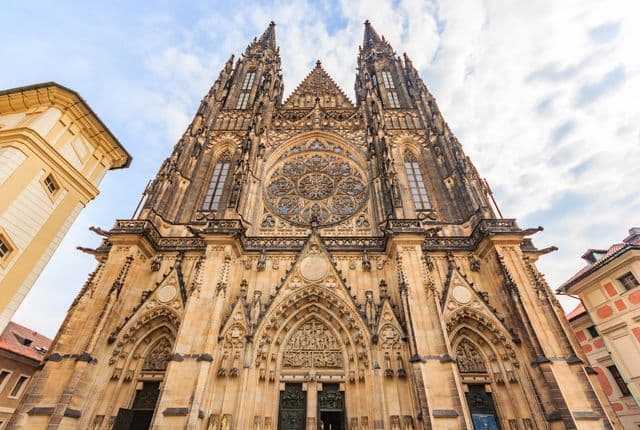
Start from the western entrance at Hradčanské náměstí — this is where the presidential guard stands. Walk through the first courtyard into the second, where you'll see the Chapel of the Holy Cross and the Prague Castle Gallery. Continue into the third courtyard to reach St. Vitus Cathedral.
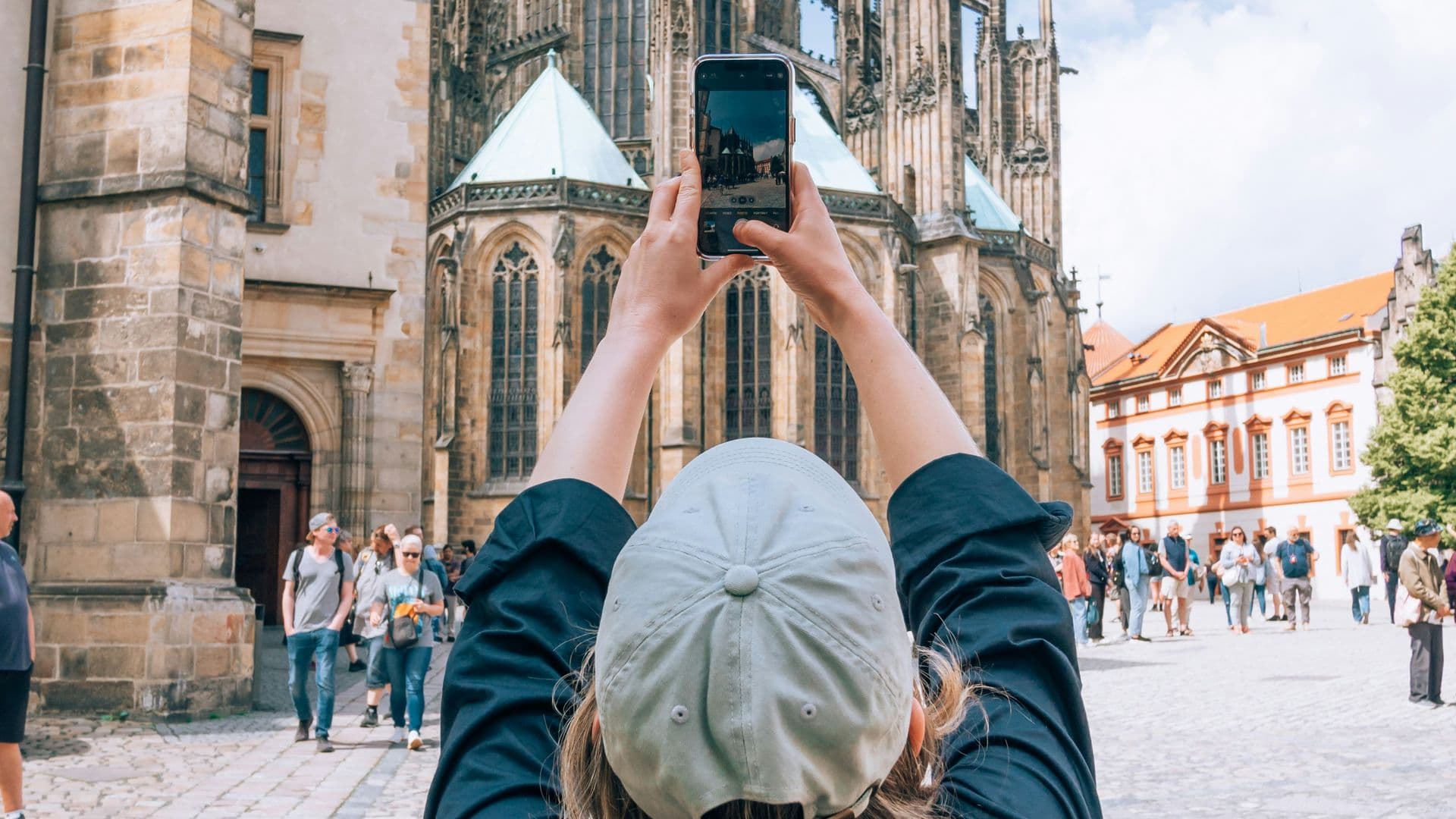
The cathedral is the single most important building on the castle grounds. Step inside and look for the Alfons Mucha stained glass window — it's on the left side as you enter, and the colours are unlike anything else in the cathedral. The light hits it best between 9 and 10 AM on clear days. The rest of the interior is Gothic and massive — the ceiling vaults rise 33 metres, and the atmosphere shifts completely once you're inside.
After the cathedral, walk to the Old Royal Palace. The Vladislav Hall on the upper floor was large enough for indoor jousting tournaments in the 15th century, and you can still see the wide riders' staircase built for horses carrying armoured knights. Most visitors rush through this room — spend a few minutes here and notice how the late-Gothic ribbed vault transitions into Renaissance window frames. It's two architectural eras in one room.
Continue to St. George's Basilica, the oldest surviving church building in the castle complex — Romanesque, austere, and a sharp contrast to the cathedral. The interior takes five minutes but makes the architectural timeline of the castle click.
Walk through Golden Lane (Zlatá ulička) — a narrow row of tiny, colourful houses built into the castle wall. Franz Kafka lived at number 22 for a period. The lane is small and gets congested quickly, so visiting before 10 AM is the right call. Skip the souvenir shops inside the houses — focus on the upstairs armour exhibition, which most visitors miss entirely.
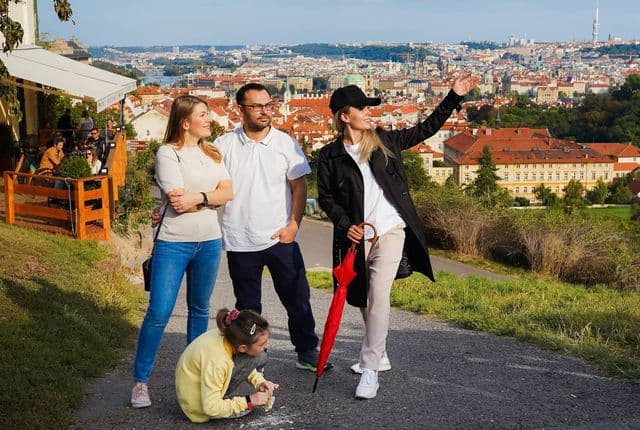
Insider tip: The southern ramparts of the castle offer a panoramic view down over Malá Strana, the river, and the red rooftops stretching toward Old Town. Most visitors exit the castle and head straight downhill without seeing this. Walk along the rampart path — it's only a five-minute detour and it's the best photo opportunity of the morning.
*Walking time to next stop: 15 minutes downhill via the Old Castle Steps (Staré zámecké schody).*
10:30 — Malá Strana (Lesser Town)
Walk down from the castle using the Old Castle Steps, a steep cobblestone stairway that drops you directly into the heart of Malá Strana. The steps are uneven in places — grip shoes help.
At the bottom, turn right toward Malostranské náměstí, the central square of the Lesser Town. The dominant building is the Church of St. Nicholas (Kostel sv. Mikuláše) — Prague's finest baroque interior. The ceiling fresco by Johann Lucas Kracker covers over 1,500 square metres, and the nave is so tall and ornate that first-time visitors usually just stop and stare for a full minute.
From the square, walk south along Karmelitská street past the Church of Our Lady Victorious, home to the Infant Jesus of Prague (Pražské Jezulátko) — a wax figurine venerated since 1628. Whether or not this interests you personally, the church interior is worth a quick look, and the collection of outfits donated for the figurine from around the world is genuinely unusual.
Continue along Karmelitská and turn left onto Harantova to reach the John Lennon Wall. It's been continuously painted and repainted since the 1980s, and it changes every few weeks. The small square in front of it, Velkopřevorské náměstí, has a waterwheel on the Čertovka canal — one of Prague's quieter photo spots.
Insider tip: From the Lennon Wall, walk through the gate into the garden of the Knights of Malta. It's not signed well, but it's open to the public. The garden is calm, usually empty, and gives you a view of the Church of Our Lady Under the Chain that you won't get from the street.
*Walking time to next stop: 8 minutes to Charles Bridge.*
11:15 — Charles Bridge (Karlův most)
Walk from the Lennon Wall area to Mostecká street, which leads directly to the Lesser Town Bridge Tower and onto Charles Bridge. The bridge is 516 metres long, lined with 30 baroque statues, and connects Malá Strana to Old Town across the Vltava.
Late morning is not the quietest time on the bridge, but walking it is non-negotiable in a one-day itinerary. Our approach: walk on the upstream side (right side heading toward Old Town) for better views of Prague Castle behind you and the Vltava islands ahead. Stop at the St. John of Nepomuk statue — it's the shiniest one because tourists touch the bronze relief for good luck. The actual story behind Nepomuk is darker and more interesting than the legend suggests — he was tortured and thrown from this bridge in 1393.
Halfway across, look to your left (downstream) — the view of the river, the National Theatre, and the modern architecture beyond is one of the few angles in Prague where medieval and 20th-century buildings share the frame.
Insider tip: The bridge was commissioned in 1357, and construction continued into the early 15th century. The first stone was laid at 5:31 AM on July 9, 1357 — a date chosen by court astrologers because the numbers 1-3-5-7-9-7-5-3-1 form a palindrome. Whether this is royal superstition or a good story added later, it's the kind of detail that makes the bridge more than a pedestrian crossing.
*Walking time to next stop: 5 minutes through the Old Town Bridge Tower into Křížovnické náměstí.*
Lunch (12:00–13:00)
Cross through the Old Town Bridge Tower and you're in Křížovnické náměstí, with the Church of St. Francis of Assisi on your right and the Clementinum complex on your left.
For lunch, walk into the side streets south of Karlova — Husova, Betlémská, or Bartolomějská. These parallel streets have local restaurants with daily lunch menus (polední menu) running from roughly 11 AM to 2 PM. Czech lunch specials are a genuine bargain — a soup plus a main course at a fraction of dinner prices.
Avoid restaurants on Karlova itself and on Old Town Square — they charge tourist prices and the food is indifferent. Even one block south, the quality improves noticeably and the prices drop.
If you want a fast, good meal, look for a place with a handwritten menu board outside in Czech. That's almost always a sign of a genuine lunch kitchen serving locals.
Afternoon (13:00–17:00)
13:00 — Old Town Square (Staroměstské náměstí)
Walk north from the lunch area along any of the connecting streets — you'll reach Old Town Square within five minutes. The square is the geographic and emotional centre of Prague's tourist zone, and seeing it for the first time is a genuine arrival moment.
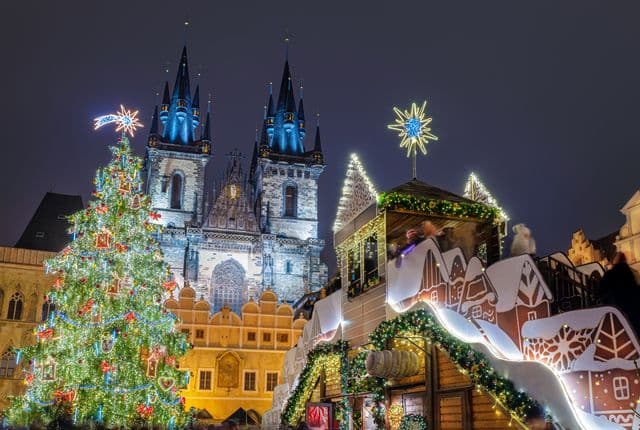
The dominant structures: Týn Church (Kostel Matky Boží před Týnem) with its twin Gothic spires, the Old Town Hall with the Astronomical Clock, the Church of St. Nicholas (the Old Town one — not the same as in Malá Strana), and a row of baroque and Renaissance facades along the perimeter.
The Astronomical Clock (Orloj) puts on an hourly show — the apostles parade through two small windows above the dial. The crowd gathers five minutes before each hour. The show itself lasts about 45 seconds and, honestly, the reactions of people seeing it for the first time are more entertaining than the mechanism. But the clock face itself is genuinely remarkable — it displays Bohemian time, Old Czech time, a zodiac ring, and astronomical data, and it's been running since 1410. Stand to the right side for a better view with less crowd.
Insider tip: Most visitors look at the Astronomical Clock and walk away. Walk around to the side of the Old Town Hall and look at the southern wall — there's a plaque marking the spot where 27 Czech Protestant leaders were executed on June 21, 1621, after the Battle of White Mountain. Crosses embedded in the pavement mark where each man stood. It's one of the most important events in Czech history, and most visitors walk right over it.
*Walking time to next stop: 3 minutes.*
13:45 — Jewish Quarter (Josefov)
From Old Town Square, walk north along Pařížská — Prague's most expensive shopping street, lined with luxury brands in Art Nouveau buildings. The contrast between the high-end shops and the historic Jewish Quarter they lead into is characteristically Prague. A guided walk through Josefov from here turns the demolition history into a story rather than a footnote.
Josefov contains six synagogues, the Old Jewish Cemetery, and the Jewish Town Hall. The most powerful experience is the Pinkas Synagogue, where the names of 77,297 Czech and Moravian Holocaust victims are hand-written on every wall — floor to ceiling, room after room. It's quiet, sobering, and unlike any other memorial in Europe.
The Old Jewish Cemetery (Starý židovský hřbitov) has an estimated 12,000 tombstones stacked and tilted across a small area. Burials took place here from the 15th to the 18th century, with bodies buried in layers up to twelve deep because the cemetery couldn't expand beyond the ghetto walls.
A combined ticket covers the main synagogues and cemetery. Allow 60-90 minutes for the key sites. The Maisel Synagogue has the best historical exhibition, while the Spanish Synagogue has an interior so ornate — Moorish Revival with gold and coloured stucco — that it catches people off guard.
Insider tip: The Old-New Synagogue (Staronová synagoga) has been in continuous use since 1270, making it the oldest active synagogue in Europe. The steep Gothic gable and the interior's five-ribbed vaulting are unique — there's a legend that the fifth rib was added to avoid the shape of a cross. It is included in the single Jewish Museum ticket, and the ten minutes inside are worth it.
A private guide makes all the difference when exploring this part of Prague.
*Walking time to next stop: 10 minutes.*
15:00 — Wenceslas Square and the New Town
Walk south from Josefov through Old Town, past the Estates Theatre (where Mozart premiered Don Giovanni in 1787), and continue to Wenceslas Square (Václavské náměstí). It's less a square and more a long, sloping boulevard — 750 metres from top to bottom — lined with hotels, shops, and some of Prague's most important 20th-century history.
At the top, the National Museum anchors the square with its neo-Renaissance facade. In front of it stands the St. Wenceslas statue — the gathering point for every major Czech political event from the declaration of independence in 1918 to the Velvet Revolution in 1989.
Walk the full length of the square and look up at the architecture — the buildings span Art Nouveau, functionalism, socialist realism, and modern glass. It's an accidental timeline of 120 years of Czech design. The Lucerna Passage on the left side (roughly halfway down) is an Art Deco arcade with David Černý's inverted horse sculpture — a deliberate parody of the Wenceslas statue outside.
*Walking time to next stop: 15 minutes back toward the river.*
16:00 — Riverside Walk
Head west from Wenceslas Square toward the Vltava river. Walk along the Smetanovo nábřeží (Smetana Embankment) heading south. The views across the river to Malá Strana and the castle are at their best in late afternoon light.
If you have energy, continue south along the embankment to Střelecký ostrov (Shooters' Island) — a small island in the river accessible by a footbridge. It has a beer garden in summer, a quiet park, and a direct view of the National Theatre.
This stretch of the afternoon is deliberately lighter. You've been walking since 8 AM and the evening ahead is worth saving energy for.
Evening (18:00 onwards)
Option A: Medieval Dinner Show
End your one day in Prague with something you won't find anywhere else. The medieval dinner show at U Pavouka Tavern is a two-and-a-half-hour evening of roasted meats, unlimited beer and mead, sword fights, fire dancers, and drummers — all in a 15th-century vaulted stone cellar on Celetná street, a two-minute walk from Old Town Square.
The evening show starts at 20:00. The atmosphere is immersive — no electricity, candles everywhere, tavern wenches serving platters — and the acoustics of the stone cellar make the drums feel physical. Guests who book this as their final Prague evening consistently say it was the highlight. Book in advance — both the afternoon and evening shows fill up.
Option B: Sunset and Drinks
If you prefer a quieter evening, walk back to the river around sunset. The view from Mánes Bridge (Mánesův most) looking south toward Charles Bridge and the castle, with the sun setting behind Petřín hill, is one of Prague's best sunset angles.
Afterwards, find a pub in the side streets between Old Town Square and the river. This area has plenty of options ranging from traditional Czech beer halls to modern cocktail bars.
Practical Tips for This Itinerary
Total walking distance: approximately 8 kilometres (5 miles), all on flat ground or downhill after the castle descent.
What to wear: comfortable walking shoes with good grip — cobblestones are uneven and smooth stone surfaces get slippery. Layers work well since the temperature drops noticeably inside churches and underground spaces.
When to start: 8 AM or earlier at Prague Castle. Every hour you delay pushes you into larger crowds at every subsequent stop.
What to skip if short on time: If you need to cut 90 minutes, shorten the Jewish Quarter to just the Pinkas Synagogue and Old Jewish Cemetery, and skip Wenceslas Square.
Water and caffeine: Prague's tap water is safe and good. Carry a refillable bottle. For coffee, duck into any side-street cafe — chains near the tourist spots are overpriced and mediocre.
Prague Card: If you plan to enter Prague Castle interiors, St. Vitus Cathedral exhibition, and the Jewish Museum, a combination of individual tickets is usually cheaper than the Prague Card for a one-day visit. Check current options at the castle ticket office.
Experience It With a Private Guide
This itinerary works well on your own, but a full day in Prague is where a private guide makes the biggest difference. There's too much to see, and without context, buildings like the Old Royal Palace or St. George's Basilica are just old rooms. With a guide, they become stories about power, rebellion, and the people who shaped this city.
Our All Prague in One Day private tour covers a similar route — castle, Malá Strana, Charles Bridge, Old Town — and adjusts based on your interests. It's exclusively yours, with your own guide. We set the pace, skip the queues where possible, and fill in the 600 years of context that makes every stop land differently.
For the morning, our Charles Bridge and Old Town walking tour focuses on the bridge, Old Town Square, and the Jewish Quarter with the depth these places deserve.
And if the medieval dinner appeals to you, book the evening show in advance — it's the single best way to end a day in Prague.
Browse all our private Prague tours and find the right fit for your visit.
Frequently Asked Questions
Can you really see Prague in one day?
You can see the major landmarks — Prague Castle, Charles Bridge, Old Town Square, and the Jewish Quarter — in one full day if you start early and follow a planned route. You won't have time for museums beyond quick walkthroughs, but you'll cover the essential Prague experience.
What time should I start sightseeing in Prague?
Start at Prague Castle by 8 AM. The courtyards are open and empty, and you'll be ahead of the tour groups that arrive around 10 AM. This early start cascades through the rest of the day — every stop is less crowded when you're 90 minutes ahead of the majority.
Is Prague walkable in one day?
Yes. The historic centre is compact, and this itinerary covers about 8 kilometres, mostly flat or downhill. The only significant climb is reaching Prague Castle, and this route starts there — so it's downhill from the first hour onward.
Where should I eat lunch during a one-day visit?
Head to the side streets south of Karlova — Husova, Betlémská, or Bartolomějská. Local restaurants offer daily lunch specials (polední menu) with soup and a main course at a fraction of tourist-area dinner prices. Avoid restaurants directly on Old Town Square or Karlova street.
Is one day enough for Prague?
One day covers the highlights, but Prague rewards a longer stay. Two or three days let you explore neighbourhoods like Vinohrady and Vyšehrad, visit museums properly, and experience the city at a slower pace. See our 2-day Prague itinerary for what to add with more time.
Want a guided walk through the Jewish Quarter with a licensed local guide? Book our private Jewish Quarter tour — exclusively yours, door-to-door from your hotel.
You May Also Like
- First Time in Prague — Essential Tips for Your Visit
- Prague Castle Guide — What to Know Before You Go
- Prague in 2 Days — The Perfect Itinerary
Planning your trip? See our Prague tour guide for details.
Planning your trip? See our private walking tours of Prague for details.
Want to see Prague for yourself?
Take our flagship Prague tour-6-640x430.jpg&w=3840&q=75)