Central Europe in 2 Weeks — The Ultimate Route Planner
Two weeks, four countries, six cities, and a handful of small towns that most tourists never reach. This itinerary takes you from Prague through the Czech countryside to Vienna, Bratislava, Budapest, and Kraków — entirely by train. No flights, no rental cars (unless you want them), and no backtracking. By the end, you'll have seen Gothic cathedrals, Habsburg palaces, communist-era monuments, thermal baths, and medieval town squares that rival anything in Western Europe — at half the cost.
We've helped thousands of guests plan their Central European trips, and this route is the one we recommend most. The train connections are reliable, the cities are distinct enough to keep things interesting, and the pacing gives you time to actually enjoy each place rather than rushing through a checklist.
The Route at a Glance
Days | City | Country | Highlights
1–4 | Prague | Czech Republic | Castle, Old Town, Charles Bridge, Jewish Quarter
5 | Český Krumlov | Czech Republic | UNESCO medieval town, castle, river
6–7 | Vienna | Austria | Schönbrunn, museums, coffee houses
8 | Bratislava | Slovakia | Compact Old Town, castle, Danube
9–11 | Budapest | Hungary | Thermal baths, Parliament, ruin bars
12–14 | Kraków | Poland | Wawel Castle, Jewish Quarter, Wieliczka Salt Mine
Total train time: approximately 20 hours across the two weeks. Longest single leg: Budapest to Kraków (5.5–7 hours, one change). All other legs: 1.5–4 hours direct.
Days 1–4: Prague
Prague is the ideal starting point. The city is compact enough to explore on foot, the Old Town is one of Europe's best-preserved medieval cores, and the food and beer prices ease you into Central European budgets before you've spent a cent more than necessary.
Day 1 — Old Town and Vltava River
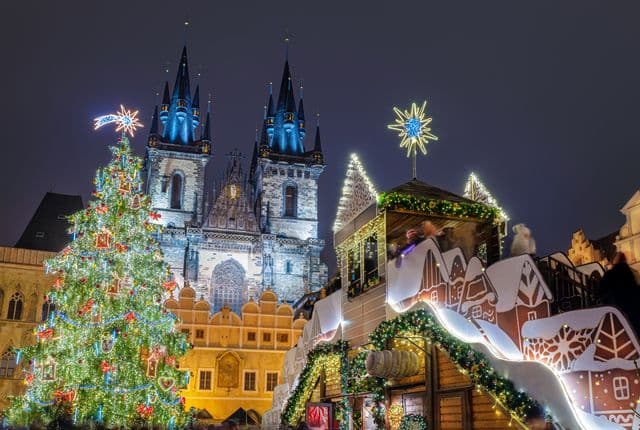
Arrive and check in. Walk to Old Town Square to orient yourself — the Astronomical Clock, Týn Church, and the pastel facades that frame the square set the tone for the entire trip. The clock's hourly show (every :00 from 9 AM to 11 PM) draws crowds, but the mechanism dates to 1410 and deserves a look.
Walk south along the riverbank toward the National Theatre. The Vltava River splits around several islands, and the views of Prague Castle from Střelecký Island are some of the finest in the city.
Evening: find a traditional Czech pub. Order svíčková (marinated beef, cream sauce, dumplings, cranberries) and a half-litre of Pilsner Urquell. Budget about €8–12 for a full meal with beer (as of 2026).
Day 2 — Prague Castle and Malá Strana
Start early. Cross Charles Bridge before 8 AM — the bridge has 30 Baroque statues, and morning light makes the stone glow. At that hour, you'll share it with a handful of joggers and early risers. By 10 AM, it's shoulder to shoulder.
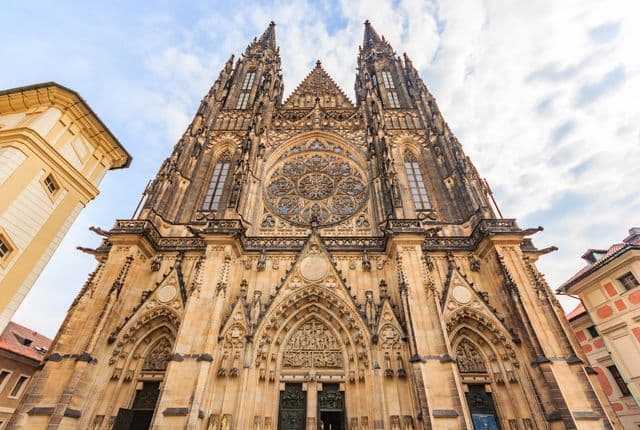
Walk uphill through Malá Strana to Prague Castle. The complex covers 70,000 square metres — the largest ancient castle in the world. St. Vitus Cathedral, the Old Royal Palace, and Golden Lane are the highlights. Allow 2–3 hours.
Descend through the castle gardens and spend the afternoon wandering Malá Strana's side streets. Wallenstein Garden (free, open April–October) has a grotto wall of artificial stalactites that surprises everyone.
Day 3 — Jewish Quarter and Hidden Prague
Morning: Josefov (Jewish Quarter). The Old Jewish Cemetery, with 12,000 tombstones layered over centuries because the community had no room to expand, is one of the most affecting historical sites in Europe. The Spanish Synagogue's Moorish interior rivals anything in Seville.
Afternoon: Underground Prague — medieval cellars, Romanesque chambers, and a hidden alchemist's laboratory rediscovered during the 2002 floods. This is the side of Prague that doesn't appear on postcards.
Evening: the Medieval Dinner Show at U Pavouka Tavern — fire dancers, sword swallowers, and a multi-course feast in a Gothic cellar. Our guests consistently call it the most memorable evening of their trip.
Day 4 — Kutná Hora Day Trip
Take the morning train to Kutná Hora (1 hour from Prague's main station). The Sedlec Ossuary — the "Bone Church" — contains the remains of 40,000 people arranged into decorations, including a chandelier made from every bone in the human body. It's macabre and mesmerising.
Walk through the town to St. Barbara's Cathedral, a Gothic masterpiece that took five centuries to build. The old town has excellent small restaurants where a full lunch costs €6–8.
Return to Prague by late afternoon. Pack for tomorrow's move south.
Day 5: Český Krumlov
Take the Student Agency/RegioJet bus from Prague to Český Krumlov (2.5–3 hours, about €8–12). This UNESCO-listed town wraps around a bend in the Vltava River below a massive castle — the second-largest in the Czech Republic after Prague Castle.
The castle's highlights include the Baroque theatre (one of only a few in Europe with original stage machinery still intact), the bear moat (live bears have inhabited it since the 16th century), and the Cloak Bridge, a covered corridor spanning a deep ravine.
Spend the morning exploring the castle and the afternoon wandering the medieval streets. The town is small enough to cover on foot in 4–5 hours. Grab lunch at a riverside restaurant — trout from the Vltava is the local speciality.
Take the late afternoon bus to České Budějovice (30 minutes), then the evening train to Vienna (4 hours via Linz). Alternatively, stay overnight in Český Krumlov and catch the morning connection. Either way, you'll arrive in Vienna ready for the next chapter.
Days 6–7: Vienna
Day 6 — Imperial Vienna
Vienna hits you with scale. The Ringstraße, the grand boulevard encircling the inner city, passes the State Opera, Parliament, City Hall, and the Hofburg Palace — all within a single tram ride. Take Tram 1 or 2 for a full loop.
Morning: Schönbrunn Palace. The summer residence of the Habsburgs is a Versailles-scale complex with 1,441 rooms, formal gardens, and the Gloriette hilltop viewpoint. Book tickets online — the "Grand Tour" covers 40 rooms and takes about 90 minutes.
Afternoon: Kunsthistorisches Museum. The art history museum holds the world's finest Bruegel collection, plus Vermeer, Raphael, and Caravaggio. Two hours minimum.
Evening: a Viennese coffee house. Café Central (where Freud, Trotsky, and Lenin all drank coffee — not together) serves proper Viennese Melange and Apfelstrudel in a vaulted hall with marble columns.
Day 7 — Museums and Markets
Morning: Belvedere Palace for Klimt's "The Kiss" and the Austrian art collection. The palace gardens offer a framed view of the city skyline.
Afternoon: Naschmarkt — Vienna's largest and oldest food market. Sample Turkish baklava, Austrian cheese, and Balkan grilled meats across 120+ stalls. Then walk through the adjacent flea market (Saturdays only).
Evening: attend a concert. Vienna's musical heritage is inescapable — the Musikverein (home of the Vienna Philharmonic) offers standing-room tickets from around €10. Church concerts are even cheaper.
Day 8: Bratislava
The Vienna–Bratislava train takes just one hour — the shortest capital-to-capital rail connection in Europe. You can also take a fast catamaran on the Danube (75 minutes, seasonal).
Bratislava is small and often underestimated. The compact Old Town centres on Hlavné námestie (Main Square) with its pastel-coloured buildings and sidewalk cafes. Bratislava Castle sits on a hill above the Danube with views into Austria and Hungary on clear days.
The city rewards a half-day of walking. Key stops: St. Martin's Cathedral (where 11 Hungarian kings were crowned), the quirky street sculptures (Čumil, the sewer worker peeping from a manhole, is the most photographed), and the UFO observation deck on the Nový Most bridge.
Bratislava is the cheapest capital on this route. A good lunch costs €5–8, a beer €1.50–2.50. Use the savings to splurge in Budapest.
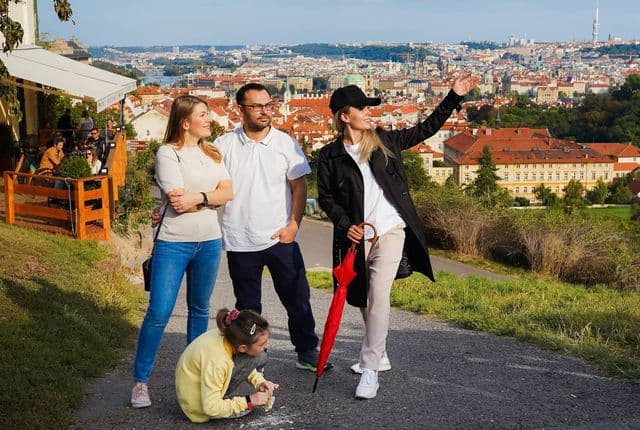
A private guide makes all the difference when exploring this part of Prague.
Take the late afternoon train to Budapest (2.5 hours, direct).
Days 9–11: Budapest
Day 9 — Pest Side
Budapest straddles the Danube more dramatically than any other European capital. The Pest side (flat, east bank) has the grand boulevards, the Jewish Quarter, and the ruin bar scene. The Buda side (hilly, west bank) has the Castle District and Fisherman's Bastion.
Morning: walk the Danube Promenade. The Hungarian Parliament — 268 metres of Gothic Revival grandeur — is the most impressive parliament building in Europe. Continue south past the Shoes on the Danube Bank memorial (a tribute to Holocaust victims shot into the river in 1944–45).
Afternoon: Budapest's Jewish Quarter. The Great Synagogue (Europe's largest), the ruin bar neighbourhood, and the quirky shops along Kazinczy utca make this one of the city's most energetic areas.
Evening: Szimpla Kert, the original ruin bar. Arrive before 9 PM for a seat. The atmosphere — mismatched furniture in a derelict building, garden courtyards, live music — is unique to Budapest.
Day 10 — Buda Castle and Thermal Baths
Morning: cross the Chain Bridge to Buda. Walk up to Matthias Church (the colourful tiled roof is unmistakable) and Fisherman's Bastion (seven stone turrets framing a perfect Danube panorama). The Castle District rewards slow walking — every side street has a different view.
Afternoon: thermal baths. Széchenyi Baths in City Park are the most famous — outdoor pools steaming in open air, a neo-Baroque building, and chess-playing locals soaking up to their chests. Entry about 7,000 HUF (around €18). Go on a weekday afternoon to avoid the weekend rush.
Evening: dinner in the Castle District or a rooftop bar in Pest. Hungarian goulash in Budapest is different from anywhere else — it's a soup, not a stew, and the paprika is serious.
Day 11 — Gellért Hill and Free Time
Morning: climb Gellért Hill for the best panorama of both sides of the city. The Citadella at the top gives a 360-degree view — Parliament to the left, Castle District to the right, the Danube curving through the middle.
Spend the rest of the day on whatever you missed — the Hungarian National Gallery, the Central Market Hall (lángos, salami, paprika), or simply sitting in a café on Andrássy Avenue watching the city move.
Days 12–14: Kraków
Take the morning train from Budapest Keleti to Kraków Główny (5.5–7 hours depending on route, one change in Katowice or Košice). Alternatively, FlixBus runs direct overnight services. Book ahead for the best fares.
Day 12 — Old Town and Wawel
Kraków's Rynek Główny (Main Market Square) is the largest medieval square in Europe — 200 metres on each side, with the Cloth Hall running down the centre and St. Mary's Basilica in the corner. Every hour, a trumpeter plays the Hejnał from the church tower, stopping mid-note to commemorate a 13th-century watchman shot through the throat by a Mongol arrow.
Walk south to Wawel Castle — Poland's answer to Prague Castle. The cathedral, the royal chambers, and the dragon's den cave beneath the hill are all worth visiting. A fire-breathing dragon sculpture sits at the cave entrance; it actually breathes fire every few minutes.
Day 13 — Kazimierz and Wieliczka
Morning: Kazimierz, Kraków's Jewish Quarter and the setting for much of "Schindler's List." The Old Synagogue, Remuh Cemetery, and Oskar Schindler's Enamel Factory museum tell the neighbourhood's complex history.
Afternoon: take the bus or train to Wieliczka Salt Mine (30 minutes from the center). The mine goes 327 metres deep and includes chapels, lakes, and sculptures carved entirely from salt. The Chapel of St. Kinga — a full-size cathedral underground — is extraordinary.
Day 14 — Final Day and Departure
Morning: walk the Planty — the green ring encircling the Old Town where the medieval walls once stood. Visit the Barbican and Floriańska Gate, the best-preserved sections of the old fortifications.
If time allows, explore Nowa Huta — a planned socialist-realist district built in the 1950s as an "ideal workers' city." The architecture is a stark contrast to the Old Town and a fascinating piece of Cold War urban planning.
Depart from Kraków. The airport (KRK) has direct flights to most European cities, or continue by train to Warsaw (2.5 hours) or back to Prague (7 hours via Ostrava).
Practical Tips
Budget: Central Europe is one of the best-value regions in the EU. Budget travelers can manage on €60–80/day (hostel, local food, public transport). Mid-range comfort runs €120–180/day (3-star hotels, restaurant meals, museum entries).
Trains: book on cd.cz (Czech), oebb.at (Austrian), zssk.sk (Slovak), mavcsoport.hu (Hungarian), and intercity.pl (Polish) — or use regiojet.com and flixbus.com for budget options. Booking 2–4 weeks ahead saves 30–50%.
Currency: Czech Republic (CZK), Austria (EUR), Slovakia (EUR), Hungary (HUF), Poland (PLN). Cards work nearly everywhere, but carry some cash for small vendors and rural stops.
Schengen: all five countries are in the Schengen Area. No passport checks between them.
Packing: the weather varies significantly by season. April–June and September–October are ideal for this route. Bring layers — mornings in Prague and Kraków can be cool even in summer.
Experience Prague With a Private Guide
Start your Central European adventure in Prague with a licensed local guide. Our All Prague in One Day private tour covers the castle, Charles Bridge, Old Town, and the Jewish Quarter — at your pace, with insider stories. Exclusively yours, with your own guide.
See all our private tours of Prague and Czech Republic.
Frequently Asked Questions
Is 2 weeks enough for Central Europe?
Yes — comfortably. This itinerary gives 3–4 days per major city and a day each for Český Krumlov and Bratislava. You'll see the highlights without feeling rushed.
What's the best time of year for this route?
Late April to June and September to mid-October. You'll get mild weather, manageable crowds, and lower hotel prices than July–August. December is magical for Christmas markets in Prague, Vienna, and Kraków.
Do I need to book trains in advance?
For the best prices, yes — 2–4 weeks ahead. But all legs can also be booked at the station on the day. Advance booking is most important for Budapest–Kraków, which has fewer daily services.
Is this route safe for solo travelers?
Very safe. All five countries have low crime rates, and the train stations are well-lit and well-staffed. Prague and Kraków in particular are popular with solo travelers. Common-sense precautions (watch belongings on crowded transit) are enough.
Can I do this route in reverse?
Absolutely. Kraków → Budapest → Bratislava → Vienna → Český Krumlov → Prague works just as well. Some travelers prefer ending in Prague because the beer is the best farewell gift Central Europe offers.
You May Also Like
Want to see Prague for yourself?
Take our flagship Prague tour-6-640x430.jpg&w=3840&q=75)