Český Krumlov or Karlovy Vary? Choosing Your Day Trip
Quick verdict: Both are worth a full day, but they deliver completely different experiences. Český Krumlov is medieval architecture, a castle towering over a river bend, and a town that looks frozen in the 16th century. Karlovy Vary is 19th-century spa grandeur, hot springs you can drink from, and colonnades built for European aristocracy. The right choice depends on what pulls you more — old stone and river views, or elegant promenades and thermal water.
At a Glance
Category | Český Krumlov | Karlovy Vary
Architecture | Medieval and Renaissance — painted facades, narrow lanes, Gothic castle | 19th-century Neo-Baroque and Art Nouveau — pastel colonnades, ornate villas
Landscape | Vltava River horseshoe bend, forested hills | Teplá River valley, wooded hillsides
Food & Drink | Czech pub classics, river-terrace dining | Spa wafers (oplatky), Becherovka herbal liqueur, colonnade cafes
Walking Required | Moderate — cobblestones and hills, castle climb | Mostly flat along the river, with optional hill paths
Travel Time from Prague | 2.5–3 hours south | About 2 hours west
Best Season | Spring through autumn (summer has crowds) | Year-round (spa culture works in any weather)
Architecture and Atmosphere
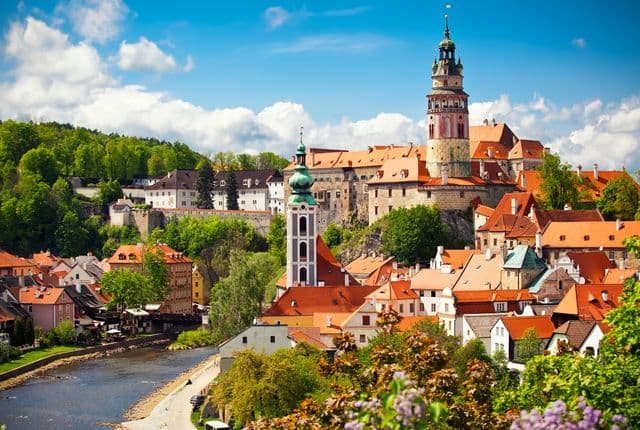
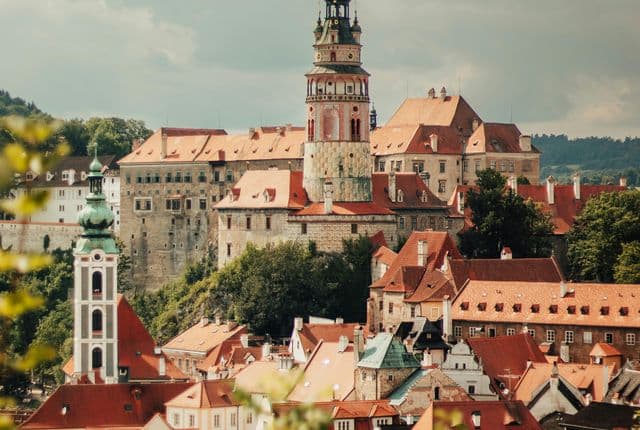
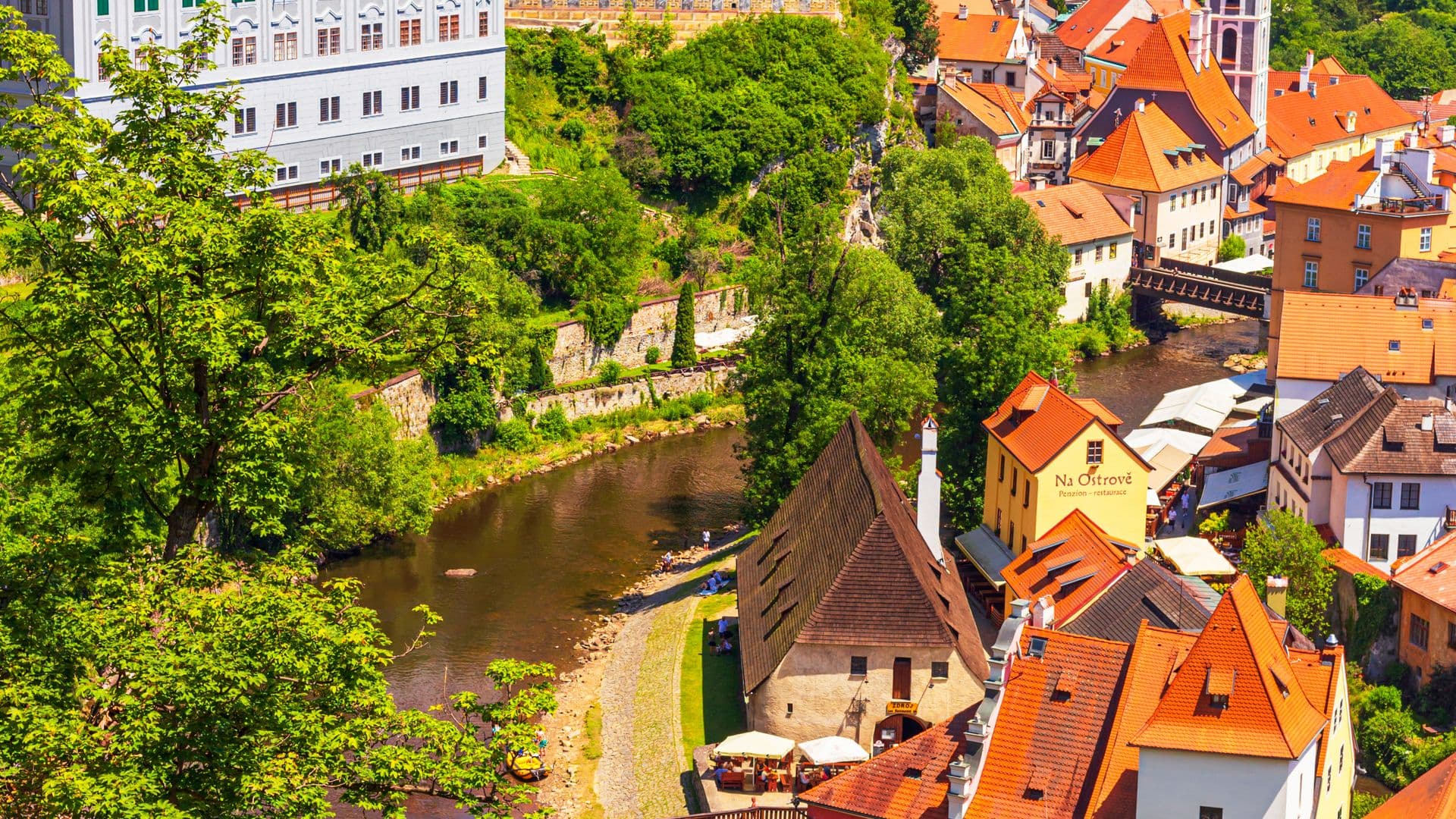
Český Krumlov feels like stepping into a painting you'd find in a provincial museum — one where the colours are slightly too vivid to believe. The town's core hasn't changed much since the Rosenberg family ruled here in the 16th century. The castle complex, second in size only to Prague Castle in the Czech Republic, rises on a rocky spur above the Vltava. Below it, the old town wraps around a tight river bend, with orange and ochre facades lining streets barely wide enough for two people to pass.
The atmosphere is intimate. You hear the river from most parts of town, and the scale is human — no grand boulevards, no monumental squares. It earned its UNESCO World Heritage status in 1992, and the preservation is genuine, not cosmetic.
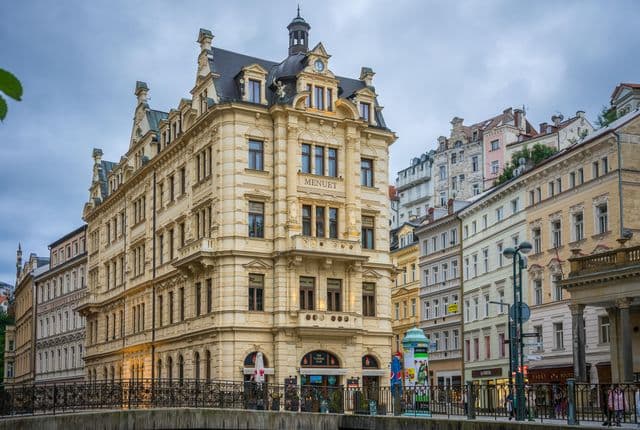
Karlovy Vary operates on a different register entirely. The town was built for European royalty and the 19th-century bourgeoisie who came to "take the waters." The architecture reflects that ambition — sweeping colonnades with cast-iron filigree, the Mill Colonnade with its five hot springs under a row of Corinthian columns, the neo-Renaissance Hotel Pupp (which you might recognise from the James Bond film *Casino Royale*). The buildings are pastel — cream, pale green, powder blue — and they line the Teplá River valley like a stage set.
Where Český Krumlov feels organic and grown, Karlovy Vary feels designed. Both are beautiful. The difference is in the register — medieval versus imperial.
What You'll Actually Do There
A Day in Český Krumlov
The castle is the anchor. The climb up through the courtyards reveals painted Renaissance facades, a baroque theatre that still has its original 18th-century machinery, and a view from the upper terrace that takes in the entire town and river loop below. We usually start here early — by mid-morning the courtyards fill quickly, and the quiet of the first hour makes a real difference.
After the castle, the old town is small enough to explore on foot in a couple of hours. Latran, the street leading from the castle to the main square, has small galleries and craft shops that haven't been entirely taken over by souvenir chains. The main square, Náměstí Svornosti, is modest but well-proportioned, with a Marian plague column at its centre.
In warmer months, river rafting on the Vltava is popular. The stretch through town is gentle — more scenic float than white-water adventure. And the riverside cafes below the castle walls are one of the best lunch spots in Bohemia, with the castle literally looming overhead.
A Day in Karlovy Vary
The rhythm here is different — slower, more deliberate. The traditional routine is the spa promenade: walking the colonnades, stopping at each hot spring to fill a porcelain drinking cup (you can buy one at any kiosk), and sipping the mineral water, which ranges from warm to genuinely hot and from mildly mineral to aggressively sulphurous. The Vřídlo geyser, the most powerful spring, shoots water 12 metres into the air inside a modernist glass pavilion.
Between springs, there are the spa wafers (oplatky) — thin, round waffle-like biscuits filled with cream or chocolate, sold warm from bakeries along the colonnade. They've been made here since the 19th century. Pair them with a cup of coffee at one of the old-school cafes and the morning is sorted.
The Moser Glass factory, on the edge of town, offers tours of the glassworks where you can watch artisans hand-blow and engrave crystal. It's one of the few luxury glass brands still manufactured entirely by hand. And Becherovka, the herbal digestif that the Czechs consider a national remedy for everything, has its museum and tasting room right in the town centre.
For a different perspective, take the Diana funicular up to the forest above town. The lookout tower at the top gives you the full valley panorama — colonnades, villas, churches, and the river threading through the middle.
The Drive from Prague
The route to Český Krumlov heads south on the D3 motorway, then onto smaller roads through the South Bohemian countryside. The drive is about 2.5 to 3 hours, depending on traffic leaving Prague. The last stretch, through rolling farmland with occasional castle silhouettes on hilltops, is worth staying alert for. Our guests are often surprised at how quickly the landscape turns rural — within 40 minutes of leaving Prague, you're in open countryside.
The road to Karlovy Vary goes west on the D6 towards the German border. It's a slightly shorter drive — roughly 2 hours — and passes through the hop-growing region around Žatec (where most Czech beer hops come from). The terrain is flatter initially, then dips into the forested river valley as you approach the spa town. On clear days, the approach through the valley is particularly good — the pastel buildings appear gradually as the road descends.
This day trip is best with a guide who handles the logistics and storytelling. Meet our team.
Neither drive is difficult. Both are motorway for the first hour, then scenic two-lane roads. We handle all the driving on our private day trips, so you can focus on the scenery rather than the navigation.
Which One If You Only Have One Day?
If you love history and medieval architecture: Český Krumlov. The castle, the old town, and the river setting combine into one of the most photogenic places in Central Europe. You'll walk more, climb more, and the sensory experience is more intense — the narrow streets, the river sound, the painted walls.
If you prefer a relaxed, elegant atmosphere: Karlovy Vary. The spa promenade is inherently unhurried. Tasting hot springs, sampling wafers, browsing the Moser showroom — it's a day that doesn't demand much physical effort but delivers constant visual pleasure. It's also an excellent choice for anyone with mobility concerns, since the colonnade walk is mostly flat.
If you're travelling with children: Český Krumlov tends to win. The castle bears, the river, the tower climb, and the narrow passages all appeal to young explorers. Karlovy Vary's pleasures are more adult-paced — sipping mineral water and admiring Art Nouveau facades doesn't compete with castle turrets for most kids.
If the weather is uncertain: Karlovy Vary has more indoor options — the Moser factory, the Becherovka museum, the colonnade shelters. Český Krumlov is at its best in fair weather, when you can see the river views and enjoy the outdoor spaces.
Why Not Both?
Absolutely — but on separate days. Trying to combine Český Krumlov and Karlovy Vary in a single day doesn't work. They're in opposite directions from Prague (south versus west), and each deserves at least five to six hours on the ground. Rushing either one means missing the point entirely.
If your itinerary allows two day trips, we'd suggest spacing them out. Do one early in your stay and save the other for later — it gives you variety and breaks up multiple days in Prague itself. Many of our guests pair the Český Krumlov trip with a city walking tour on the day before, and the Karlovy Vary & Loket day excursion with a more relaxed Prague evening after.
Experience It With a Private Guide
The difference between visiting these towns independently and going with a guide isn't just logistics — it's context. At Český Krumlov, we walk you through parts of the castle complex that most visitors breeze past, explain the Rosenberg family saga that shaped the town, and know exactly which viewpoint gives you the castle and river together in one frame. At Karlovy Vary, we know which springs are worth tasting and which ones taste like a chemistry experiment, where to find the best oplatky, and how to pace the day so you're not exhausted by noon.
Both our Český Krumlov private day trip and our Karlovy Vary private day trip include hotel pickup, comfortable transport, and a full day with a licensed guide who knows the history, the shortcuts, and the spots the bus tours skip. Exclusively yours, with your own guide.
Back in Prague, cap off your trip with a medieval dinner at U Pavouka Tavern — roasted meats, unlimited mead, fire dancers, and a 15th-century cellar. It's the kind of evening that makes a trip memorable.
See all our private tours in Prague and beyond.
For the spa-town story told properly, our private Karlovy Vary & Loket tour covers Karlsbad plus the castle that played Casino Royale — all in one day from Prague.
Frequently Asked Questions
Is Český Krumlov or Karlovy Vary better for a day trip from Prague?
It depends on your interests. Český Krumlov offers a medieval town with a massive castle and river setting — ideal for history and architecture. Karlovy Vary is a 19th-century spa town with hot springs, colonnades, and a more relaxed pace. Both are excellent, just very different.
Can you visit Český Krumlov and Karlovy Vary in one day?
No — not comfortably. They're in opposite directions from Prague, each about 2–3 hours away. Each town needs at least five hours to explore properly. Plan them as separate day trips.
How long does it take to drive from Prague to Český Krumlov?
About 2.5 to 3 hours by car, heading south on the D3 motorway and then smaller roads through the South Bohemian countryside.
Is Karlovy Vary worth visiting if I'm not interested in spas?
Yes. Beyond the hot springs, there's the Moser Glass factory, the Becherovka museum, beautiful 19th-century architecture, forest walks, and a funicular with panoramic views. The town's visual appeal stands on its own.
What is the best time of year to visit Český Krumlov?
Late spring (May–June) and early autumn (September) offer the best balance of good weather and manageable crowds. July and August are peak season — the town gets busy, particularly around midday.
You May Also Like
- Český Krumlov Day Trip from Prague — The Complete Guide
- Karlovy Vary Day Trip from Prague — What to See and Do
- Best Day Trips from Prague
Planning your trip? See our day trips from Prague for details.
Planning your trip? See our Prague tour guide for details.
Want to see Prague for yourself?
Experience Český Krumlov on our day trip