Cold War Museum Prague — Inside the Nuclear Bunker
Beneath the Hotel Jalta on Wenceslas Square, twenty metres underground, there is a nuclear bunker that most Prague visitors have no idea exists. Built between 1954 and 1958 at the height of Cold War paranoia, this three-storey fallout shelter was designed to keep 150 Communist officials alive for up to two months in the event of nuclear war. Today it operates as the Cold War Museum Prague — one of the most unusual and unsettling places you can visit in the city.
The museum is small, intensely focused, and nothing like a standard exhibition hall. You walk through the actual bunker rooms — the operator station, the surveillance centre, the border guard quarters — surrounded by original equipment that was classified until 1989. There are no crowds, no gift shop pushing magnets, and no attempt to soften what this place was. It is a raw, claustrophobic look at what the Czechoslovak regime built while the rest of Prague went about daily life overhead.
Inside the Nuclear Bunker
The nuclear bunker Prague experience begins in the reception of the Hotel Jalta, where your guide meets you and takes you downstairs. The descent is immediate and disorienting — within seconds you leave a luxury hotel lobby and enter a concrete corridor lit by bare bulbs.
The bunker is divided into functional rooms. The Operator Room contains a massive military telephone exchange that was used not for emergencies but for everyday espionage — the StB (Czechoslovak secret police) tapped the phone calls of every guest staying in the hotel above. Foreign diplomats, journalists, and businessmen were all monitored. The exchange could record conversations onto reel-to-reel tape, and visitors can see the original recording equipment still in place.
The Border Guard Room recreates the atmosphere of a Czechoslovak frontier checkpoint. Uniforms, documents, and equipment from the 1960s through 1980s line the walls. The Spying Room displays surveillance technology — listening devices, hidden cameras, and the Morse code equipment that bunker staff trained on.
Insider tip: the tours are guided and the groups are small, often just a handful of visitors. This means you can ask questions freely, and the guides are knowledgeable about the details that standard museum labels skip — like how the hotel's architect incorporated the bunker into the building's foundations so that construction workers did not know what they were building.
The bunker was operational throughout the entire Communist period. It was decommissioned after the Velvet Revolution in 1989 and sat unused for years before being converted into the museum. The original blast doors, ventilation system, and decontamination chamber remain intact.
What to Expect on the Tour
The Cold War Museum operates by guided tour only — you cannot wander independently. Tours run daily, with time slots typically at 11:00 AM and other scheduled intervals. Advance booking is recommended, as the bunker's size limits capacity to small groups.
A tour lasts approximately 45 to 60 minutes. The guide walks you through each room, explains the bunker's purpose and history, and demonstrates some of the surveillance equipment. The language is usually English or Czech, though the museum can arrange tours in other languages with notice.
The bunker is not wheelchair accessible — there are narrow staircases and tight corridors. The temperature underground is noticeably cooler than the surface, so a light layer is practical even in summer. Claustrophobic visitors should be aware that some corridors are narrow and ceilings are low.
Insider tip: ask your guide about the hotel's original guest list. The Jalta was one of Prague's prestige hotels during the Communist era, specifically chosen by the regime because it attracted Western visitors. The irony — luxury above, surveillance below — is the museum's most powerful detail.
For the broader story of Czechoslovakia under Communist rule, see our guide to Prague's Communist history.
Cold War Museum vs Museum of Communism — What's the Difference?
These are two completely different museums, and visitors frequently confuse them. Understanding the distinction will help you decide which one — or both — to visit.
The Cold War Museum (Muzeum studené války) is located beneath the Hotel Jalta on Wenceslas Square. It focuses on one specific site — the nuclear bunker and its role in Cold War espionage. The experience is intimate, guided, and physical. You are standing in the actual rooms where surveillance took place. The scope is narrow but deep.
The Museum of Communism (Muzeum komunismu) is a traditional exhibition museum located nearby on Na Příkopě street. It covers the entire Communist period in Czechoslovakia from 1948 to 1989 through artefacts, photographs, reconstructed rooms (a schoolroom, a shop with empty shelves, an interrogation cell), and detailed information panels. The scope is broad, and a thorough visit takes 60 to 90 minutes.
If you have time for only one, the Museum of Communism provides more historical context and a wider overview. If you want something you cannot get anywhere else — standing in a real bunker where real surveillance happened — the Cold War Museum delivers an experience that no amount of display panels can replicate.
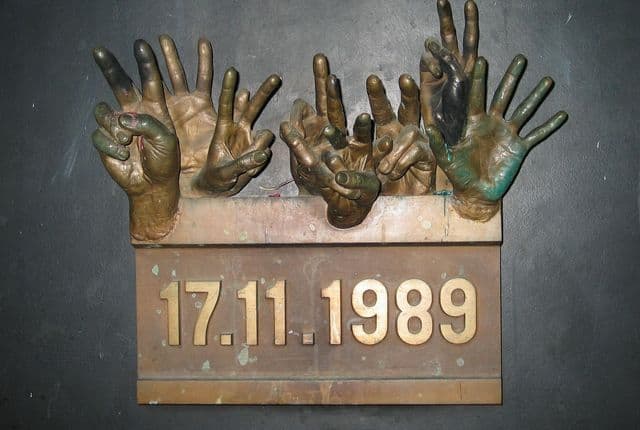
If Czechoslovakia's 20th-century history interests you, our article on the Velvet Revolution of 1989 covers the events that ended the regime and led to the bunker's decommissioning.
The Hotel Jalta — History Above Ground
The Hotel Jalta itself is part of the story. Built in the early 1950s during the first wave of Communist-era construction, it was designed as a showcase — a modern, prestigious hotel on Prague's most important boulevard. The architectural style is Socialist Realist, though the exterior was later updated. The hotel was not randomly selected for the bunker; it was purpose-built with the shelter integrated into its foundations from the start.
Today the Jalta operates as a boutique hotel. The contrast between its current elegance and the grim functionality three floors below is jarring, and that dissonance is part of what makes the museum visit memorable.
Wenceslas Square itself has witnessed pivotal moments in Czech history — from the declaration of Czechoslovak independence in 1918 to the Soviet invasion protests of 1968 to the Velvet Revolution rallies of 1989. The bunker beneath the Jalta was operating through all of it. For the full history of this boulevard, see our history of Prague.
Insider tip: after visiting the bunker, walk to the upper end of Wenceslas Square. The memorial to Jan Palach and Jan Zajíc — the students who set themselves on fire in protest of the 1968 Soviet invasion — is at the base of the National Museum steps. The proximity to the bunker adds weight to both sites.
Practical Information
Address: Hotel Jalta, Václavské náměstí 818/45, Prague 1 (Nové Město)
Getting there: the hotel is on Wenceslas Square, accessible from metro stations Muzeum (lines A and C) or Můstek (lines A and B). Both are within a five-minute walk.
Tours: guided only, advance booking recommended. Check the museum's official website or book through the hotel reception. Tours run daily, typically starting at 11:00 AM.
Duration: 45-60 minutes.
Accessibility: not suitable for wheelchair users or visitors with significant mobility issues. Narrow staircases and corridors.
Photography: generally permitted inside the bunker — confirm with your guide at the start of the tour.
Experience It With a Private Guide
If Prague's 20th-century history fascinates you, our private tours cover the Communist era firsthand — including places, stories, and details you would walk right past on your own. Our All Prague in One Day tour traces the city's history from medieval kings through the Habsburg Empire and both World Wars to the Velvet Revolution. Exclusively yours, and a guide who lived through the transition and remembers what these buildings meant before 1989.
For a completely different kind of historical immersion, our Medieval Dinner in Prague takes you back several more centuries — to a candlelit tavern with period food, live entertainment, and an atmosphere that feels as far from a Cold War bunker as you can get. After an afternoon underground, the contrast is striking.
FAQ
Is the Cold War Museum the same as the Museum of Communism?
No. They are two separate museums in different locations. The Cold War Museum is a nuclear bunker beneath the Hotel Jalta on Wenceslas Square, focused on espionage and Cold War-era surveillance. The Museum of Communism is a traditional exhibition on Na Prikope street covering the full Communist period from 1948 to 1989.
Do I need to book the Cold War Museum in advance?
Advance booking is strongly recommended. The bunker is small and tours are limited to small groups, so walk-in availability is not guaranteed. Book through the museum's website or contact the Hotel Jalta reception.
How long does the Cold War Museum tour take?
A guided tour typically lasts 45 to 60 minutes. There is no self-guided option — all visits are conducted with a guide who walks you through the bunker rooms and explains the equipment and history.
Is the Cold War Museum suitable for children?
The museum is appropriate for older children and teenagers interested in history. The bunker corridors are narrow and the subject matter is serious. Very young children may find the underground environment uncomfortable. There are no interactive exhibits designed for small children.
Can I visit the nuclear bunker without staying at Hotel Jalta?
Yes. The museum is open to all visitors, not only hotel guests. You meet your guide in the hotel reception and descend to the bunker from there. Hotel guests may receive complimentary access — check with the hotel when booking.
You May Also Like
Want to see Prague for yourself?
Discover Prague's underground tour