Czech Spa Towns — Karlovy Vary, Mariánské Lázně, and Františkovy Lázně
The Czech Republic has one of Europe's oldest and richest spa traditions. For centuries, the mineral springs of western Bohemia have drawn visitors seeking treatment for everything from digestive ailments to joint pain — and more recently, for the pure pleasure of wandering colonnaded promenades, drinking warm mineral water from porcelain cups, and soaking in thermal baths surrounded by 19th-century architecture.
Three towns form the core of this spa triangle: Karlovy Vary (the grandest), Mariánské Lázně (the most elegant), and Františkovy Lázně (the smallest and most peaceful). Together, they were inscribed as a UNESCO World Heritage Site in 2021 as part of the "Great Spa Towns of Europe." We take guests to Karlovy Vary regularly, and the combination of thermal springs, architecture, and genuine relaxation makes it one of the most popular day trips from Prague.
Karlovy Vary — The Grand Dame
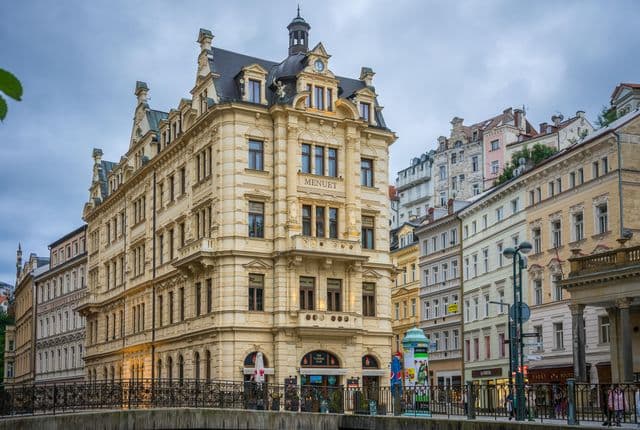
Karlovy Vary (Carlsbad in German) is the Czech Republic's most famous spa town, set in a dramatic valley where the Teplá River meets 12 natural hot springs. The town stretches along the valley floor with Baroque, Art Nouveau, and Belle Époque buildings lining both riverbanks. It's theatrical, opulent, and utterly unlike anywhere else in the country.
The hot springs: Karlovy Vary has 12 main springs, ranging from 30°C to 73°C. The most dramatic is the Vřídlo (Geyser), which erupts 12 metres into the air inside the modern Vřídelní Colonnade. You can drink from any of the springs using a traditional spa cup (lázeňský pohárek) — ceramic cups with a built-in drinking spout. Buy one from vendors around the colonnades for about 100–200 CZK.
The water tastes... medicinal. Each spring has a slightly different mineral profile and temperature. We always warn our guests to sip, not gulp — and the 73°C Vřídlo will scald if you try to drink it straight.
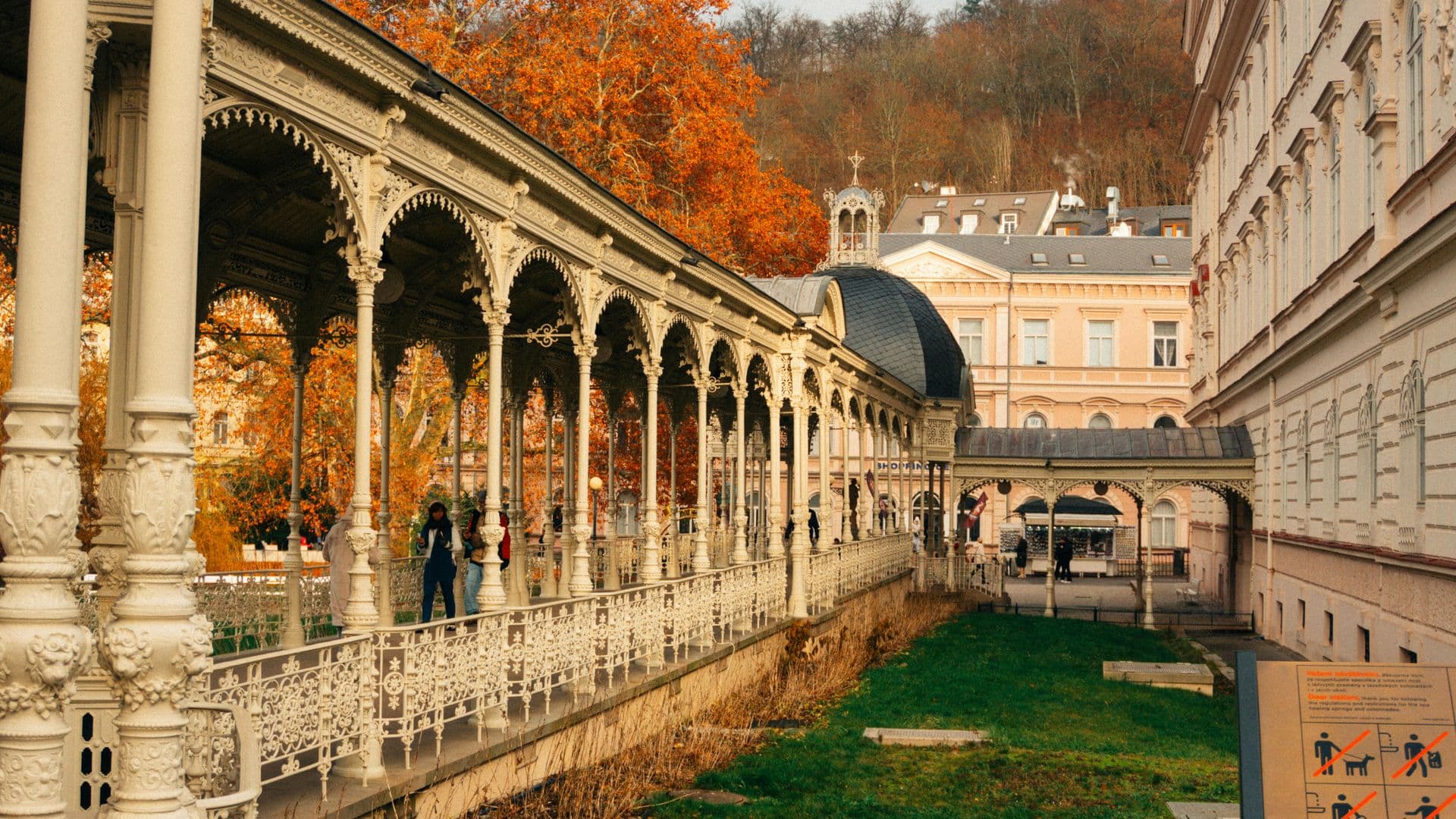
The colonnades: walking the colonnades is the heart of the Karlovy Vary experience. The Mill Colonnade (Mlýnská kolonáda) is the most photogenic — a neo-Renaissance structure with five springs, supported by 124 Corinthian columns. The Market Colonnade is a white wooden Swiss-style structure. Walking from one colonnade to the next, sipping from different springs, is how visitors have spent their days here since the 18th century.
The architecture: the town's buildings reflect centuries of wealthy visitors. The Grandhotel Pupp (where James Bond stayed in "Casino Royale") anchors the south end of the promenade. The Thermal Hotel — a brutalist concrete slab from the 1970s — houses the swimming pool with the best views in town. The Orthodox Church of Saints Peter and Paul adds a golden dome to the skyline.
Local specialties: Karlovy Vary oplatky (spa wafers) — thin, crispy wafers filled with chocolate, hazelnut, or vanilla — have been made here since the 19th century. Becherovka, the herbal liqueur considered the "13th spring" of Karlovy Vary, was invented here in 1807.
Getting there from Prague: about 130 km west, 2 hours by car or bus. Our Karlovy Vary private day tour includes transport, a guided walk through the colonnades and springs, and time to explore at your pace.
Mariánské Lázně — The Elegant Alternative
Mariánské Lázně (Marienbad) sits 50 km south of Karlovy Vary in a wide valley surrounded by forested hills. It's smaller, quieter, and arguably more elegant than its famous neighbour. Where Karlovy Vary is theatrical, Mariánské Lázně is refined — tree-lined parks, a Belle Époque colonnade, and a pace that feels genuinely relaxing rather than touristic.
The springs: Mariánské Lázně has about 40 springs, though most visitors encounter 5–6 along the main colonnade. The water is cold (unlike Karlovy Vary's hot springs) and comes in a variety of mineral compositions. The Cross Spring (Křížový pramen) and Forest Spring (Lesní pramen) are the most popular.
The Singing Fountain: in front of the colonnade, a musical fountain performs every odd hour (from 7 AM to 9 PM in summer), synchronising water jets to classical music — often Dvořák, Chopin, or Strauss. It's kitschy and wonderful.
Famous visitors: Goethe visited 13 times (he fell in love with a local woman — at age 73). Chopin, Wagner, Kafka, Edison, and King Edward VII all took the waters here. The town's guestbook reads like a 19th-century who's who.
Getting there: about 170 km from Prague (2–2.5 hours by car). RegioJet buses run from Prague. Often combined with Karlovy Vary in a longer day trip or overnight.
Františkovy Lázně — The Peaceful Third
Františkovy Lázně (Franzensbad) is the smallest and most peaceful of the trio, located 180 km from Prague near the German border. Named after Emperor Franz I, the town was purpose-built as a spa resort in the late 18th century, with a grid of neoclassical buildings painted in pastel yellows and greens.
The atmosphere: Františkovy Lázně feels like a town where time has slowed. Elderly visitors walk the parks, couples sit in pavilions reading, and the pace is contemplative. It's not a day-trip destination so much as a weekend retreat.
The springs: 24 springs, mostly cold and carbonated. The mineral composition is particularly effective for gynaecological treatments — the town has been a fertility spa destination for centuries. A small statue of a boy with a fish (Františeček) is touched for good luck by visitors hoping to conceive.
Getting there: about 190 km from Prague (2.5 hours by car). Best combined with Karlovy Vary and/or Mariánské Lázně as part of a spa region tour.
What Is a Czech Spa Treatment?
Czech spa treatments go beyond Western hotel spas. The tradition is medical — doctors prescribe specific water treatments, mud wraps, CO2 baths, and mineral soaks based on the patient's condition. Czech health insurance even covers multi-week spa stays for certain diagnoses.
This day trip is best with a guide who handles the logistics and storytelling. Meet our team.
For visitors, you can book individual treatments at most spa hotels without being a guest. A typical menu includes:
- Mineral bath: soaking in natural mineral water (about 500–800 CZK for 20–30 minutes)
- CO2 bath: immersion in naturally carbonated water — the bubbles feel strange and the effect is genuinely relaxing
- Peat wrap: warm peat mud applied to the body, wrapped, and left to work for 20 minutes
- Drinking cure: the simplest treatment — walking the colonnades and drinking from different springs at prescribed intervals
Spa hotels like the Grandhotel Pupp, Hotel Imperial, and Bristol Palace in Karlovy Vary offer individual treatments and half-day packages.
Planning Your Spa Trip
Day trip from Prague: Karlovy Vary is the easiest day trip — 2 hours each way with 4–5 hours in town. Our Karlovy Vary private tour handles transport and guiding.
Overnight: staying one night lets you experience the town after the day-trippers leave. Evening walks along the colonnade, dinner at a spa hotel, and morning treatments create a more complete experience.
Two-day spa circuit: day one in Karlovy Vary, drive south to Mariánské Lázně for an overnight, then return to Prague. Františkovy Lázně adds a third day for the most thorough tour.
Experience Czech Spa Culture
The spa towns of western Bohemia offer something Prague itself can't — genuine relaxation in a setting that hasn't fundamentally changed in two centuries. Our Karlovy Vary & Loket Castle private day tour from Prague covers the springs, colonnades, and local specialties with a guide who knows the history behind every building.
Back in Prague, our All Prague in One Day tour covers the city's highlights. Exclusively yours, with your own guide. And the Medieval Dinner Show at U Pavouka — fire dancers in a Gothic cellar — offers a very different kind of Czech tradition.
Browse all our private tours of Prague and Czech Republic.
Want to see Karlovy Vary properly? Our private Karlovy Vary & Loket day trip pairs the spa town with the medieval castle on the Eger River, door-to-door from your hotel in around 10 hours. Pay by card online or cash on the day. Free cancellation up to 24 hours before the tour.
Frequently Asked Questions
Which Czech spa town is best?
Karlovy Vary for grandeur and ease of access from Prague. Marianske Lazne for elegance and quieter atmosphere. Frantiskovy Lazne for total peace. Most visitors start with Karlovy Vary.
Can you visit Czech spa towns as a day trip from Prague?
Yes. Karlovy Vary is the most practical day trip (2 hours each way). Marianske Lazne and Frantiskovy Lazne are better as overnights.
Do you need a prescription for Czech spa treatments?
Not for individual treatments. Walk-in visitors can book mineral baths, CO2 baths, and wraps at most spa hotels. Multi-week treatment programmes may involve a doctor's consultation.
Are the Czech spa towns a UNESCO World Heritage Site?
Yes. Karlovy Vary, Marianske Lazne, and Frantiskovy Lazne were inscribed in 2021 as part of the "Great Spa Towns of Europe" alongside towns in Austria, Belgium, France, Germany, Italy, and the UK.
You May Also Like
Want to see Prague for yourself?
Experience Český Krumlov on our day trip