How to Avoid Tourist Traps in Prague — A Local's Checklist
Prague is a magnificent city, but it has a tourist-trap problem — and we don't mean scams. This isn't about pickpockets or fake petitions (we cover those in our Prague scams guide). This is about overpriced, mediocre places that survive entirely on foot traffic from visitors who don't know better. The restaurant with the worst food on the square also has the biggest terrace. The souvenir shop selling Russian nesting dolls labels them "Czech handcraft." The exchange office gives you a rate that would make a loan shark blush.
We walk past these places with guests every week, and the pattern is predictable. Tourist traps in Prague cluster in the same zones, use the same tactics, and are easy to avoid once you know what to look for. Here's the checklist.
Old Town Square Restaurants — Beautiful Views, Terrible Value
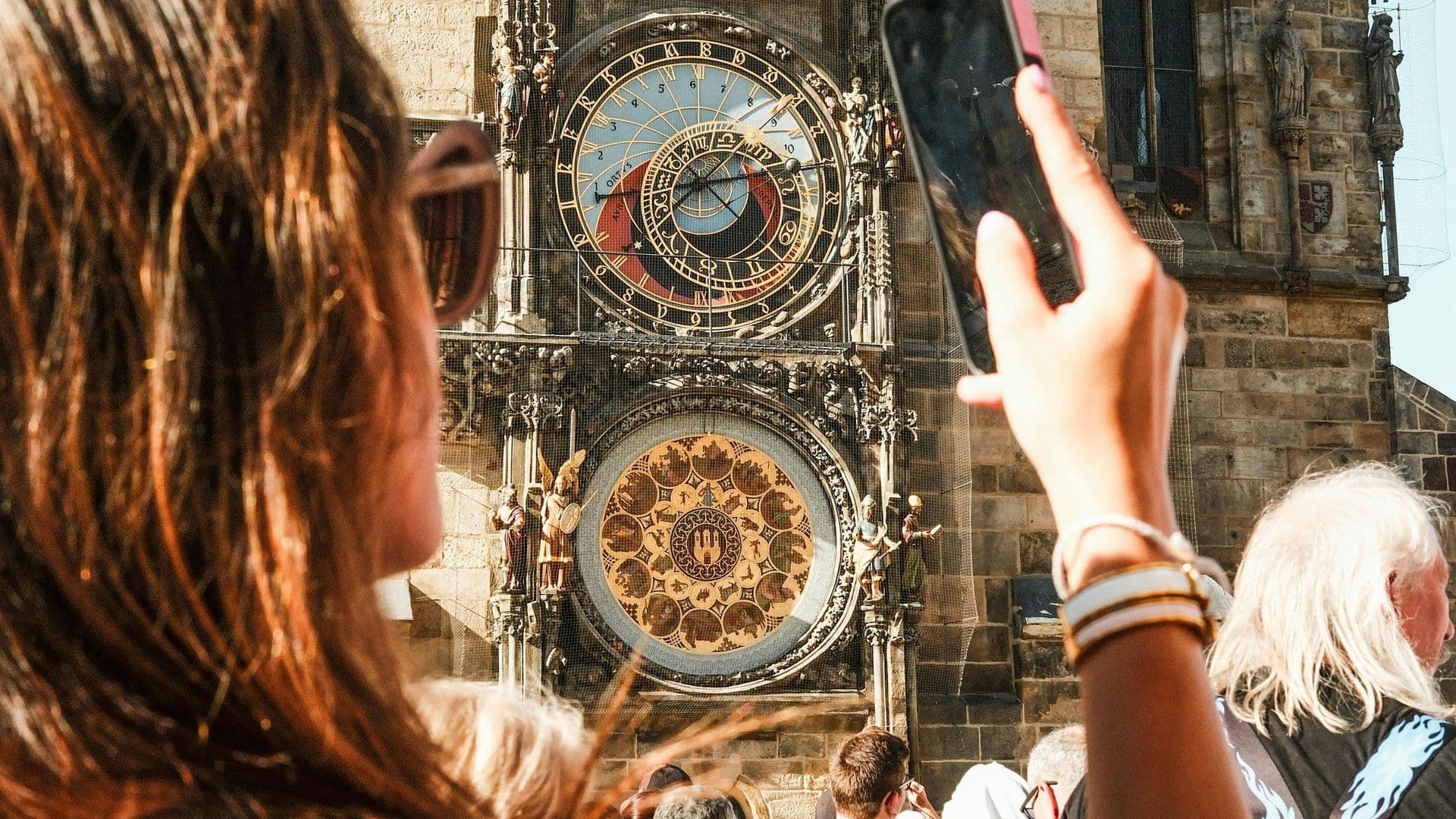
The restaurants ringing Staroměstské náměstí (Old Town Square) charge premium prices for food that ranges from forgettable to actively bad. A plate of goulash that costs 180 CZK at a neighbourhood pub two streets away will cost 380-450 CZK at a square-facing terrace — and it won't taste as good. The markup isn't for quality; it's for the view of the Astronomical Clock.
The warning signs are consistent. Aggressive touts standing outside, waving laminated menus at passersby. Multilingual photo menus propped on easels. Staff who switch to your language before you've said a word and steer you toward the most expensive items.
The food is usually pre-prepared in bulk and reheated. Svíčková (beef in cream sauce) from one of these places bears only a passing resemblance to the real dish — thin gravy, tough meat, dumplings with the texture of rubber. You can eat far better for half the price by walking literally 200 metres in any direction away from the square.
What to do instead: Walk to Lokál Dlouhááá on Dlouhá street, a 5-minute walk from Old Town Square. Tank beer, proper Czech classics, honest prices. Or head to the streets around Náměstí Republiky — the concentration of decent restaurants increases dramatically as soon as you leave the immediate tourist core.
The Trdelník Myth
Let's settle this: trdelník is not a traditional Czech pastry. It's a Hungarian-origin chimney cake that appeared in Prague's tourist zones around 2010 and spread like wildfire because it photographs well, smells appealing while baking, and can be sold at a high margin from a small cart. The shops wrapping it in "Old Bohemian" and "Traditional Czech" branding are engaged in creative marketing.
Is trdelník terrible? No — it's warm dough with sugar and cinnamon, which is hard to make genuinely unpleasant. But at 120-180 CZK for a hollow tube of pastry (or 200+ CZK when they fill it with ice cream and Nutella), you're paying a steep price for something with zero connection to Czech culinary tradition.
What's actually Czech: koláče (round pastries filled with tvaroh, poppy seed, or plum jam), medovník (layered honey cake), or větrník (a choux pastry with caramel cream). You'll find these at bakeries like Erhart in Vinohrady or Praktika in the city centre — and they cost a fraction of a tourist-zone trdelník.
Tourist-Trap Pubs With Inflated Prices
Some pubs near the tourist corridor operate on a simple model: low-quality beer, inflated prices, and the assumption that visitors won't know the difference. A half-litre of Pilsner Urquell costs 55-65 CZK at a normal Prague pub. At a tourist-trap pub on a side street off Old Town Square, the same beer — or worse, a lesser brand poured from the same tap — can cost 110-140 CZK.
The giveaway is a combination of signs: English-only menus, no Czech customers, a television showing football to create "atmosphere," and beer that tastes flat because the kegs don't turn over fast enough. Real Prague pubs have Czech regulars. If you walk in and everyone is speaking English and wearing backpacks, the beer is probably overpriced and poorly kept.
Insider tip: The quality of draft beer in Prague depends heavily on how well the pub maintains its tap system and how fast the kegs rotate. A busy local pub serves fresher beer than a tourist pub that sells a fraction of the volume. This is why the same brand can taste completely different in two locations 100 metres apart. Czechs call a well-maintained draft system "čepované" — and they take it seriously.
Souvenir Shops Selling Non-Czech Goods
Prague's tourist zones are lined with souvenir shops selling Russian matryoshka dolls, mass-produced "Czech crystal" from China, and magnets stamped with clip-art versions of the Charles Bridge. Many of these shops are owned by the same handful of operators and stock identical inventory.
Real Czech crafts exist and they're worth buying — Bohemian garnet (granát) jewellery, hand-blown glass, wooden marionettes made by actual puppet-makers, or Karlovy Vary spa wafers. But you won't find them in the shops clustered on Karlova street between Old Town Square and Charles Bridge.
Where to buy genuine Czech goods: For Bohemian garnet, go to the Granát Turnov official shop on Dlouhá street — they've been cutting garnets since 1953 and their certificates are real. For glass, Moser has a showroom on Na Příkopě. For marionettes, Truhlář Marionety on Nerudova street in Malá Strana sells handcrafted puppets made in their workshop, not factory-produced imports.
One detail most visitors miss: Genuine Bohemian garnet stones are small — typically 2-4mm. If you see a "Czech garnet" necklace with large stones at a street-level tourist shop, it's almost certainly Indian garnet, which is cheaper and visually different. The real thing has a distinctive deep red with a slight orange undertone, and it's always set in smaller stones clustered together.
Exchange Offices on Wenceslas Square
We cover the mechanics of the exchange rate scam in our separate scams article, but it's worth flagging here as a tourist trap in its own right. The exchange offices on Václavské náměstí (Wenceslas Square) and the streets around Old Town Square aren't committing fraud — technically. They display rates, they complete transactions, and the terms are somewhere on the wall. But the effective rate you receive can be 12-18% worse than a bank ATM, which on a €300 exchange means losing €35-55 for no reason.
The trap is the location. These offices pay premium rent because they catch tourists who want to exchange cash immediately upon arriving in the centre. The worse the location is for the customer, the better it is for the exchange operator.
The simple rule: Use bank ATMs from Česká spořitelna, ČSOB, or Komerční banka. Decline the ATM's offer to convert to your home currency (this triggers a worse rate called dynamic currency conversion). If you must exchange cash, walk to a reputable exchange on a side street — away from the pedestrian core.
Segway Tours — Banned and Overpriced
Prague's city centre banned Segway use in pedestrian zones in 2016, but operators still offer tours that skirt the restricted areas. These cost €60-90 per person for 90 minutes of riding through parks and wider streets — and you'd see more on foot, because you wouldn't be focused on not hitting a bollard.
More importantly, you miss everything. You can't stop to look at a facade, step into a courtyard, or ask a question without disrupting the group.
Better alternative: Walk. Prague's centre is compact — you can cross from the Powder Tower to Prague Castle in about 40 minutes on foot. If mobility is a concern, trams are excellent and cost 30 CZK per ride.
Boat Cruises — Quality Varies Wildly
River cruises on the Vltava are not inherently a trap, but the quality variation is extreme. The cheapest operators — the ones with aggressive touts at the Čech Bridge or near the National Theatre — run boats with tinny audio guides, lukewarm buffets, and routes that barely leave the city centre. At €15-20 per person, it sounds cheap until you're on the water and realize the "lunch cruise" is a plate of cold cuts and the commentary is a recorded loop from 2008.
Better operators like Prague Boats and Prague Venice run smaller boats with live guides and routes that include the Čertovka channel (the narrow canal through Kampa Island). If you want to be on the water, choose a company that runs smaller boats with live narration. Avoid anyone who approaches you on the street — the best operators sell through their websites, not through touts.
A private guide makes all the difference when exploring this part of Prague.
How to Spot the Pattern
Tourist traps share common features, and recognizing the pattern is more useful than memorizing individual places.
Location is the biggest tell. If a business sits directly on Old Town Square, Karlova street, or the Charles Bridge approach and caters exclusively to tourists, assume the price-to-quality ratio is poor. The rent on these locations is extraordinary, and that cost gets passed to you.
Touts outside the door are a reliable warning sign. Good restaurants in Prague don't need someone standing on the pavement begging for customers. If a person is waving a menu at you, walk past.
No Czech customers is the clearest signal of all. If a restaurant at lunch hour is full of tourists and empty of locals, the locals know something you don't.
Photo menus with numbered items are a red flag. Czech pubs use handwritten chalkboards or simple printed menus. A laminated menu with photos of every dish exists to remove the language barrier — which also removes the need for quality.
Insider Details Worth Knowing
The bread basket test. If a basket of bread appears at your table without being ordered, check before you eat — it will probably appear on your bill at 50-80 CZK. At a good Czech restaurant, bread comes with certain dishes and isn't charged separately.
Wenceslas Square is not a great place to spend money. The square is architecturally interesting, but the businesses lining its length are overwhelmingly fast food, exchange offices, and tourist shops. Walk through, appreciate the architecture, and spend your money elsewhere.
The "Czech Museum of Beer" and similar attractions are commercial entertainment venues, not museums. They charge 300-400 CZK for displays you could learn from in 10 minutes online, followed by two small glasses of average lager. Real beer culture in Prague happens at actual pubs.
Where to Eat, Drink, and Shop Instead
For Czech food: Lokál Dlouhááá (Dlouhá 33), Café Savoy for a proper brunch, or Kantýna for steak tartare and draft Pilsner. For beer: U Zlatého Tygra (The Golden Tiger) on Husova is a proper Prague pub with Pilsner Urquell on tank — shared tables, no English menu, excellent beer. For souvenirs: Manufaktura has multiple locations and sells genuinely Czech products — wooden toys, herbal cosmetics, beer spa products.
Explore Prague With a Local Guide
The simplest way to avoid tourist traps is to have someone with you who knows the city. Our Charles Bridge and Old Town private tour walks you through the historic centre with context, recommendations, and the kind of local knowledge that keeps you out of overpriced restaurants and into places you'd never find on your own. Exclusively yours, with your own guide.
If you want to see everything in a single day, our All Prague in One Day tour covers the full city — and includes practical tips on where to eat and shop long after the tour ends.
For an evening that's the opposite of a tourist trap — genuinely fun, historically themed, and impossible to replicate on your own — try a medieval dinner show at U Pavouka Tavern. Fire dancers, sword fights, and a five-course feast eaten with your hands.
Browse all our private tours in Prague.
Frequently Asked Questions
What are the biggest tourist traps in Prague?
Overpriced restaurants on Old Town Square, souvenir shops on Karlova street selling non-Czech goods, exchange offices near Wenceslas Square with hidden poor rates, and Segway tours in the pedestrian centre. The common thread is that they rely on tourist foot traffic rather than quality to stay in business.
Is trdelnik a traditional Czech food?
No. Trdelnik is a chimney cake of Hungarian origin that became widespread in Prague's tourist zones around 2010. It's not terrible, but shops labelling it "Old Bohemian" or "Traditional Czech" are misleading. Real Czech pastries include kolace, medovnik, and vetrnik.
Where should I eat in Prague to avoid tourist traps?
Walk at least 200 metres from Old Town Square or Wenceslas Square. Look for restaurants with Czech-language menus, local customers, and no touts outside. Lokal Dlouhaa on Dlouha street and Kantyna near Narodni are reliable starting points. See our Prague local food guide for more recommendations.
Are Prague boat cruises worth it?
It depends entirely on the operator. Cheap cruises with aggressive street touts tend to offer poor food and recorded commentary. Smaller boats with live guides and routes through the Certovka channel are worth the price. Book directly through the company's website rather than buying from street sellers.
How do I avoid bad exchange rates in Prague?
Use bank ATMs from major Czech banks (Ceska sporitelna, CSOB, Komercni banka). Always decline the ATM's offer to convert to your home currency — this triggers dynamic currency conversion, which gives a worse rate. Avoid exchange offices in the main tourist zones entirely.
You May Also Like
Want to see Prague for yourself?
Take our flagship Prague tour-6-640x430.jpg&w=3840&q=75)