Is Prague Safe? What Every Visitor Should Know
Yes, Prague is one of the safest capitals in Europe. Violent crime against tourists is extremely rare, the centre is well-lit and walkable at night, and the crime rate is lower than Paris, London, Rome, or Barcelona. The real risks are petty pickpocketing in a few tourist hotspots and scams that are easy to avoid once you know about them.
That is the quick answer. Below is everything you need to know in more detail — crime statistics, where pickpockets operate, the scams worth knowing about, solo travel safety, nightlife, and emergency numbers.
Violent Crime — The Numbers
Prague's violent crime rate is among the lowest of any European capital. The Czech Republic consistently ranks in the top ten safest countries in the Global Peace Index. Muggings, armed robberies, and assaults against tourists are statistically negligible.
Prague has roughly 1.3 million residents and receives over 8 million overnight visitors per year. Walking through the city centre at 11 PM carries about the same risk as central Vienna or Copenhagen. Common sense still applies, but the baseline safety level is genuinely high.
Pickpockets — Where and When
Pickpocketing is the one crime category where Prague has a legitimate, if modest, problem. It is concentrated in a handful of specific locations and situations:
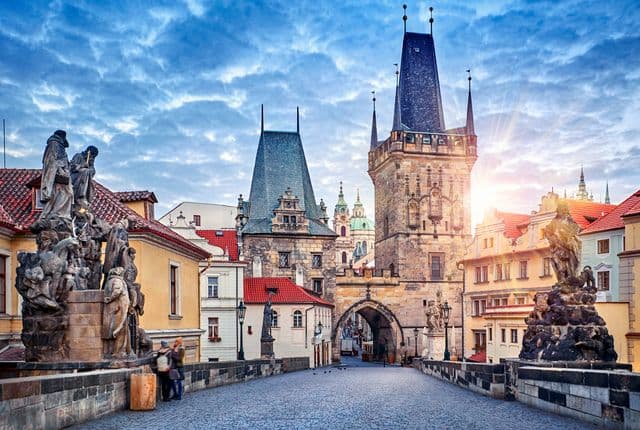
Charles Bridge — the single most common spot. The bridge is narrow, the crowds are dense (especially in summer between 10 AM and 6 PM), and the combination of people stopping to photograph statues while being pressed from both sides creates ideal conditions. Keep valuables in front pockets or a zipped crossbody bag.
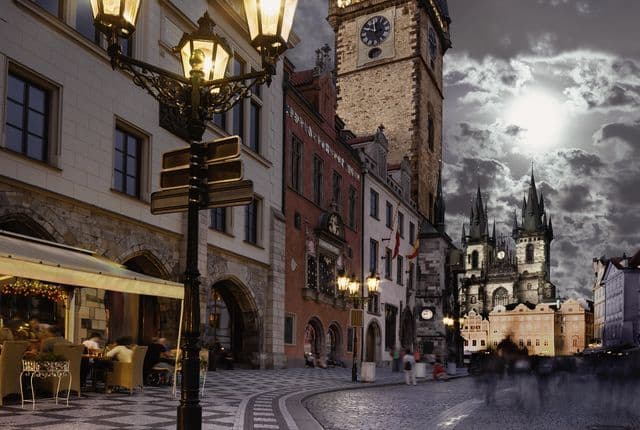
Old Town Square — particularly during the Christmas markets and peak summer months. The crowd density at the Astronomical Clock when it strikes the hour is another pinch point.
Tram lines 22 and 9 — these routes run through the main tourist areas and are frequently crowded. The doors of a crowded tram during boarding and alighting are the moments of highest risk.
Prague metro — less of an issue than the trams, but busy stations like Můstek, Muzeum, and Staroměstská during rush hours deserve awareness.
Insider detail: The pickpocketing in Prague is almost entirely non-confrontational. You will not be threatened or grabbed. The technique is distraction and deft hands in a crowd. A zipped bag worn across the front of your body eliminates roughly 95% of the risk. Prague pickpocketing is a nuisance, not a danger — annoying if it happens, but nothing that should make you nervous about visiting.
Scams to Watch For
Prague has a few well-documented scams that have persisted for years. None of them are dangerous — they cost you money, not safety — but knowing about them in advance saves frustration.
Currency exchange booths — the single biggest financial trap for tourists. Booths in the tourist centre advertise "0% commission" in large letters, then bury terrible exchange rates in the fine print. Some quote rates that give you 30-40% less than the bank rate. Always use a bank ATM (Česká spořitelna, ČSOB, Komerční banka) and choose to be charged in CZK, not your home currency. Decline the "guaranteed conversion" — it is always worse.
Restaurant overcharging — a small number of restaurants in the immediate Old Town tourist zone add items to the bill that were not ordered, or charge inflated cover charges. Always check the bill, and avoid restaurants with staff standing outside aggressively recruiting diners. If someone is pulling you inside, the food is not good enough to attract customers on its own.
Taxi overcharging — Prague taxis have improved enormously, but unlicensed drivers at tourist spots (especially outside the main train station and at the airport) still occasionally run rigged meters or take longer routes. Use Bolt or Uber — both operate legally in Prague and are metered by GPS. If you take a street taxi, insist on the meter and confirm the route on your phone.
For a more detailed breakdown, see our upcoming guide to Prague scams and how to avoid them.
Solo Female Safety
Prague is widely considered one of the safest European cities for women travelling alone. The city centre is well-lit, public transport runs until midnight (and night trams run all night on specific routes), and the general culture is reserved rather than aggressive — catcalling and street harassment are uncommon compared to many Southern or Western European cities.
Practical notes for solo female travellers:
- Walking alone at night in the city centre, Vinohrady, Malá Strana, Karlín, and Letná is generally safe. The same common-sense rules apply as anywhere: stick to lit streets, stay aware of your surroundings
- Night trams (numbered 91-99) run every 30 minutes through the night and are used heavily by locals, including women alone. They are a safe way to get home
- The bar and club areas around Dlouhá street in Old Town can get rowdy on weekend nights — not dangerous, but loud and alcohol-fuelled. This is Prague's main party strip and attracts stag groups from the UK and elsewhere
- Uber and Bolt provide GPS-tracked rides with driver identification, which many solo travellers prefer to street taxis at night
Insider detail: Czech culture tends toward politeness and reserve in public. Unsolicited approaches from strangers on the street are rare outside the tourist zone. If someone does approach you aggressively — whether selling something, asking for money, or being overly friendly — it is almost certainly a tourist-zone hustle, not a threat. A firm "ne, děkuji" (no, thank you) and walking away is sufficient.
Nightlife Safety
Prague has a reputation as a party destination, particularly among British and German stag groups. The nightlife is concentrated along Dlouhá street and in a handful of clubs in Old Town and around Wenceslas Square.
The party areas are noisy and occasionally messy on Friday and Saturday nights, but they are not dangerous in the way that nightlife districts in some larger cities can be. Bar fights are uncommon. Drug-related crime in clubs is minimal by European standards.
Practical advice:
- Avoid unlicensed clubs that recruit customers on the street — some operate aggressive billing practices (inflated drink prices, "mandatory" bottle service) that are technically legal but exploitative
- Wenceslas Square after midnight can feel seedy but is more unpleasant than unsafe. The area has improved significantly over the past decade
- Drink spiking exists everywhere in Europe. Standard precautions apply: watch your drink, do not accept drinks from strangers, stay with people you trust
- If you are going out in the Dlouhá street area, Bolt or Uber home is the simplest safe option at the end of the night
Emergency Numbers
Keep these numbers accessible — they work from any phone, including mobiles without a Czech SIM card:
Number | Service
112 | European emergency number (police, fire, ambulance — multilingual operators)
158 | Czech police (Policie ČR)
Planning your visit? A private guide takes the logistics off your plate.
155 | Ambulance (Záchranná služba)
150 | Fire brigade (Hasiči)
156 | Municipal police (Městská policie) — useful for non-emergency situations
112 is the number to remember. Operators speak English and will route your call to the appropriate service. Czech police officers in the tourist centre generally speak basic English. For non-emergency police matters, the municipal police (156) at local stations in Old Town and Malá Strana are accustomed to dealing with tourists.
Insider detail: If you are a victim of pickpocketing and need a police report for insurance, go directly to the nearest municipal police station rather than calling 158. The Old Town station on Jilská street handles tourist reports regularly and the process is straightforward. Expect it to take 30-60 minutes. The report will be in Czech, but they will explain the contents.
Health and Medical Safety
Czech healthcare is modern and accessible. EU citizens with a European Health Insurance Card (EHIC/GHIC) can access public healthcare. Non-EU visitors should have travel insurance — hospital treatment can be expensive without coverage.
Pharmacies (lékárna) are widely available. The pharmacy at Palackého 5 in central Prague is open 24 hours. Tap water is safe to drink throughout the city.
Neighbourhoods — Safety Overview
Prague does not have "no-go zones." The areas most visitors spend time in — Old Town, Malá Strana, Hradčany, Vinohrady, Karlín, Letná — are all safe at all hours. What changes after dark is atmosphere, not risk.
Insider detail: The one area visitors sometimes mention feeling uncomfortable is Wenceslas Square between Můstek and Muzeum late at night, around the fast-food joints and adult entertainment venues. This is seediness rather than danger — busy, well-lit, and policed.
Exploring Prague Safely With a Private Guide
A local guide eliminates the situations where tourists are most vulnerable — no wrong turns into tourist-trap restaurants, no fumbling with maps on a crowded tram while your bag is unattended.
On our All Prague in One Day private tour, we walk you through Old Town, Charles Bridge, Malá Strana, and Prague Castle at a pace that lets you absorb the city. Exclusively yours, with your own guide.
For a memorable evening, our medieval dinner at U Pavouka Tavern offers a night out in a candlelit 15th-century vault — with food, mead, and entertainment already arranged. No need to navigate the nightlife scene on your own.
Browse all our private tours in Prague and see our first-time visitor tips for more practical advice.
Practical Safety and Info
Once you know Prague is safe, the follow-up questions come quickly: Will locals understand me? What time zone am I in? What should I pack? These short guides cover the everyday practicalities that make the difference between a smooth trip and a stressful one.
- Do people speak English in Prague? What to expect as a visitor
- Prague time zone -- CET, daylight saving, and planning around jet lag
- Prague packing list -- what to bring for every season
Frequently Asked Questions
Is Prague safe for solo female travellers?
Yes. Prague is widely considered one of the safest European capitals for women travelling alone. The city centre is well-lit, public transport runs all night (night trams 91-99), and street harassment is uncommon. Standard precautions apply for nightlife, but daytime and evening walking is safe throughout the central neighbourhoods.
Is Prague safe at night?
Yes. The city centre, Vinohrady, Malá Strana, Karlín, and Letná are all safe to walk at night. The lower end of Wenceslas Square can feel seedy after midnight, but it is unpleasant rather than dangerous. Night trams and ride-hailing apps (Bolt, Uber) provide safe transport options.
What is the emergency number in Prague?
112 is the European emergency number and works for police, fire, and ambulance. Operators speak English. For police specifically, call 158. For ambulance, call 155. All numbers work from any phone, including mobiles without a Czech SIM card.
Are taxis safe in Prague?
Ride-hailing apps (Bolt, Uber) are the safest and most reliable option — GPS-tracked, metered by the app, and widely available. Street taxis are generally fine if you insist on the meter, but unlicensed drivers at the train station and airport have been known to overcharge. Avoid any taxi that does not start the meter.
Is pickpocketing a big problem in Prague?
Pickpocketing exists but is concentrated in a few specific spots: Charles Bridge, Old Town Square (especially during Christmas markets), and crowded trams (lines 22 and 9). It is non-confrontational — you will not be threatened. A zipped crossbody bag worn in front eliminates most of the risk. Prague's pickpocketing rate is lower than Barcelona, Rome, or Paris.
You May Also Like
Want to see Prague for yourself?
Take our flagship Prague tour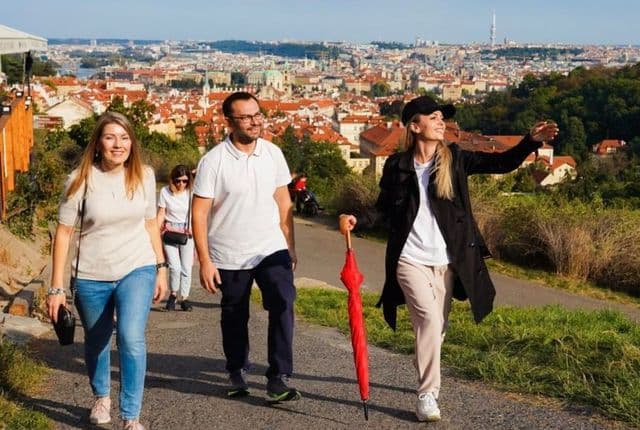
-6-640x430.jpg&w=3840&q=75)