Konopiště Castle — The Archduke's Hunting Lodge That Changed History
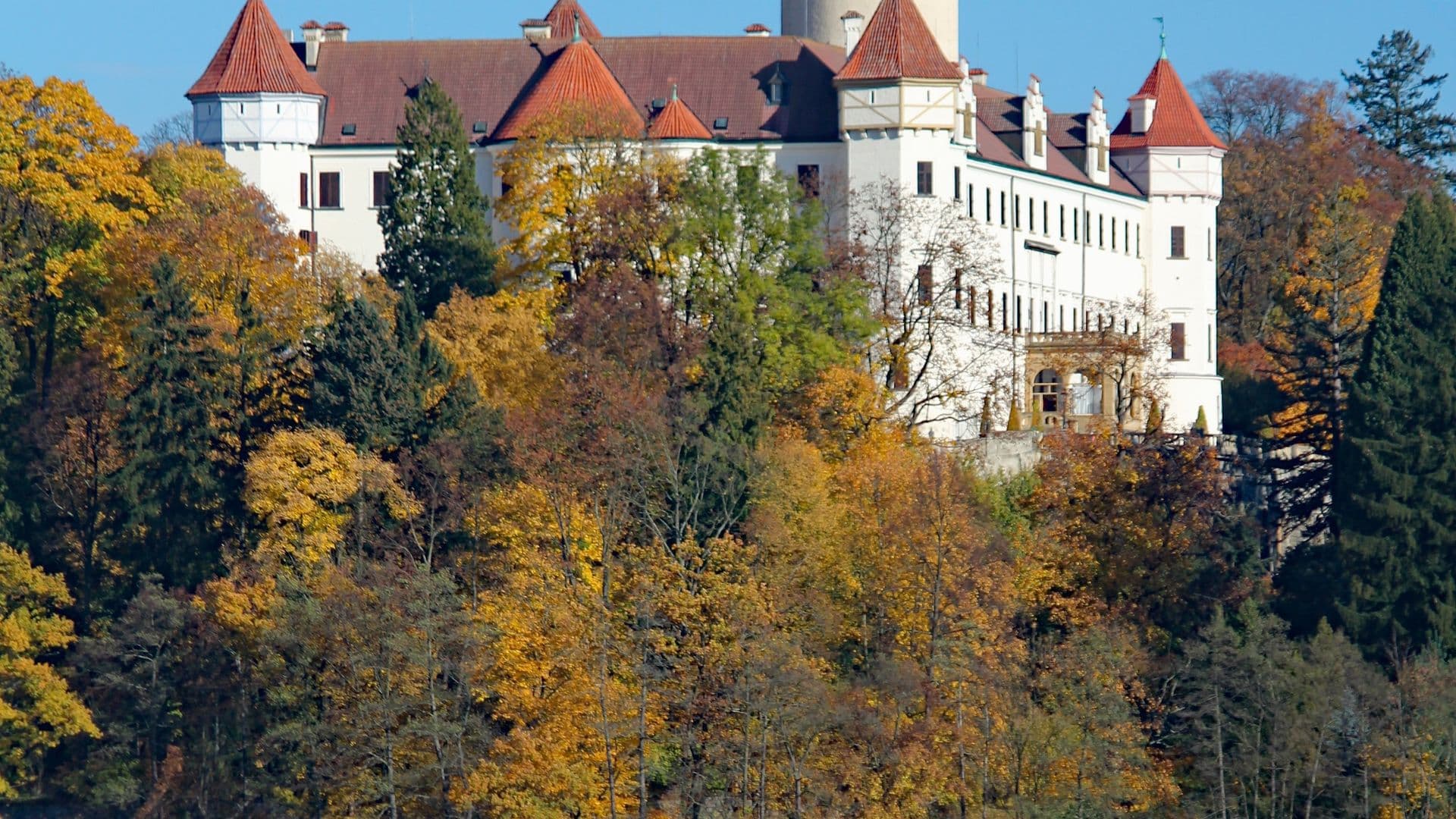
On 28 June 1914, a bullet fired in Sarajevo killed Archduke Franz Ferdinand and set off a chain of events that reshaped the world. But before that day, Franz Ferdinand spent his happiest years at a castle 50 kilometres south of Prague — surrounded by dead animals, rose gardens, and the wife his family despised. Konopiště is where you go to understand the man behind the assassination, and the obsessions that defined him.
We bring guests here because the story is so layered. This is a castle where Gothic walls hold Baroque salons, where corridors are lined with thousands of hunting trophies, and where the private apartments reveal a side of the archduke that the history books tend to skip. The drive from Prague takes under an hour, and the landscape shifts quickly from highway to quiet Bohemian countryside around Benešov.
The Franz Ferdinand Connection
The castle's history stretches back to the 1290s, when it was built as a Gothic fortress by the Benešov family. Over the following centuries it passed through multiple noble hands — the Šternberks, the Hodějovskýs, the Lobkowicz family — each leaving their mark. But the estate's defining chapter began in 1887, when Franz Ferdinand acquired Konopiště at the age of 24.
He spent the next 27 years transforming it from a decaying aristocratic estate into his personal refuge — a place where he could live with Countess Sophie Chotek, the woman he married against the wishes of the Habsburg court. Their marriage was morganatic, meaning Sophie was denied the rank and protocol that came with being an archduke's wife. At Konopiště, none of that mattered. The private apartments show the two of them as a family — photographs, personal objects, children's rooms.
What strikes most visitors is the contrast between the public and private Franz Ferdinand. In the political halls of Vienna, he was known as rigid, suspicious, and short-tempered. At Konopiště, he built rose gardens, redesigned the park in the English landscape style, and spent hours cataloguing his collections. The man was a compulsive collector — not just of hunting trophies, but of art, weapons, and religious artifacts.
The castle became a meeting place for European politics in the years before the war. In June 1914, Kaiser Wilhelm II visited Konopiště just two weeks before the assassination. What they discussed in the rose garden is still debated by historians. Two weeks later, both Franz Ferdinand and Sophie were dead in Sarajevo. The castle was seized by the Czechoslovak state, and neither of them ever returned.
What You'll See Inside
Konopiště offers three separate tour circuits, each covering different parts of the castle. You can visit one, two, or all three — the full experience takes about three hours.
Circuit 1 focuses on the southern wing and showcases the extensive weapons collection — over 4,600 pieces spanning several centuries. Medieval crossbows, ornate pistols, suits of armour arranged in corridors. The armoury halls are among the largest private weapons collections in Europe, and the way they're displayed — floor to ceiling, covering every surface — gives a visceral sense of the archduke's accumulation instinct. The lighting inside is dim, and your eyes need a moment to adjust, but once they do, the detail on some of the engraved blades and inlaid pistol grips is remarkable.
Circuit 2 is the hunting collection, and this is where Konopiště becomes unlike any other castle in the Czech Republic. Franz Ferdinand was an almost pathological hunter. His personal records document over 300,000 kills during his lifetime — one of the highest tallied counts in European history. The trophy rooms hold thousands of mounted heads, antlers, and taxidermied animals arranged in dense rows across walls and ceilings. Guests who love natural history find it fascinating. Others find it unsettling. Both reactions are valid — the sheer scale forces you to reckon with what obsession looks like when backed by unlimited resources.
Circuit 3 opens the private family apartments — the most intimate part of the castle. Here you see the rooms where Franz Ferdinand and Sophie actually lived. The furniture, the personal photographs, the children's quarters. The contrast with the hunting halls is striking. These rooms feel warm and domestic, almost modest compared to the grandeur of other Habsburg residences. We always recommend this circuit to guests who want to understand the human story, not just the historical one.
One detail our guests consistently notice: the St. George collection. Franz Ferdinand amassed roughly 3,750 depictions of St. George — paintings, sculptures, miniatures, medals — scattered throughout the castle. It's an oddly specific obsession, and guides at the castle will tell you he identified with the dragon-slayer narrative. Whether that says something about his worldview or just his collector's mentality is a good question to sit with.
The Gardens
The castle grounds alone justify the trip, especially between May and September. Franz Ferdinand redesigned the park in the English landscape style — rolling lawns, mature trees, a lake with swans. The formal rose garden near the southern terrace holds hundreds of varieties and peaks in June and early July. On a warm morning, with the castle behind you and the rose beds in full colour, it's one of the most photogenic spots in Central Bohemia.
The park covers roughly 225 hectares, and visitors often underestimate how much walking there is. A comfortable loop around the grounds takes about 45 minutes. The paths are well-maintained but not paved everywhere, so decent shoes help. There's a bear enclosure near the castle moat — a tradition dating back to the Lobkowicz family, who owned the estate before Franz Ferdinand. The bears are a curiosity, though the conditions are basic by modern standards.
We usually suggest arriving early enough to walk the grounds before the castle interiors open. The morning light through the old-growth trees is excellent, and you'll have the paths largely to yourself before the midday groups arrive. If you visit in late spring, listen for the cuckoos — the woods around Konopiště are full of them, and the sound carries across the water in a way that feels like a different century entirely.
There's also a small outdoor shooting range near the main path where visitors can try crossbow shooting for a small fee. It's a lighthearted nod to the castle's hunting heritage, and children tend to enjoy it.
Getting There from Prague
Konopiště sits just outside Benešov, about 50 kilometres south of Prague. The drive takes approximately 45 minutes via the D1 motorway — the same road that goes to Brno, so the first stretch is well-signposted and fast. You exit at Benešov and follow local roads for the last few kilometres to the castle parking area.
By train, there are regular connections from Praha hlavní nádraží to Benešov u Prahy. The journey takes roughly an hour. From Benešov station, the castle is about a 2-kilometre walk through the town and then along a tree-lined path — pleasant in good weather, though uphill in places.
This day trip is best with a guide who handles the logistics and storytelling. Meet our team.
For most of our guests, a private transfer works best. The logistics are simpler, and having a driver means you can adjust the timing based on which circuits you want to visit and how long you want to spend in the gardens. The return drive also passes through pleasant countryside — we sometimes stop in Benešov itself for a late lunch, where the restaurants serve proper Czech food at prices well below Prague levels.
There's a parking area close to the castle with a small food kiosk and souvenir shop, but the walk from the car park to the castle entrance is about 10 minutes through the woods — uphill, on a gravel path. It's easy enough, but worth knowing if you have mobility concerns or small children in tow.
Experience It With a Private Guide
Konopiště rewards context. The hunting trophies are impressive on their own, but understanding Franz Ferdinand's psychology — why he collected compulsively, why this castle was his escape from court life, what happened in the rose garden two weeks before Sarajevo — turns a castle visit into something that stays with you.
Our private Konopiště castle tour from Prague handles transport, the three-circuit interior visit, and the Habsburg-history context — a full day, hotel pickup, exclusively yours, with your own guide. We can pair Konopiště with Karlštejn for a two-castle day if you have the appetite.
If you're spending more time in Prague, our All Prague in One Day private tour covers the city's major landmarks in a single walk. And for something completely different in the evening, a medieval dinner show at U Pavouka Tavern — fire dancers, swords, and a multi-course feast eaten with your hands — is the kind of Prague evening that people talk about for years.
Browse all our private tours from Prague.
Frequently Asked Questions
How far is Konopiště from Prague?
About 50 kilometres south, near the town of Benešov. The drive takes roughly 45 minutes via the D1 motorway. By train from Prague's main station, the journey to Benešov takes about an hour, followed by a 2-kilometre walk to the castle.
Is Konopiště Castle worth visiting?
If you're interested in the story behind the start of World War I, or if the idea of 300,000 hunting trophies in one castle fascinates you, absolutely. The private apartments offer an unusually intimate look at Habsburg family life, and the rose garden is one of the finest in the Czech Republic.
How long do you need at Konopiště?
Plan at least two to three hours. Each interior tour circuit takes about 45 to 55 minutes, and the park and gardens deserve at least 30 to 45 minutes of walking. If you visit all three circuits, a half-day is realistic.
When is Konopiště Castle open?
The castle is open from April through October. May through September offers the fullest schedule, with all three circuits typically available. Shoulder months may have reduced hours or limited circuit options. The gardens are accessible during daylight hours throughout the open season.
Can you combine Konopiště with other day trips?
Yes — Konopiště pairs well with Karlštejn Castle, which is northwest of Prague. Visiting both in a single day requires a car and an early start, but the contrast between the two — royal treasury fortress versus aristocratic hunting lodge — makes for a full and varied day.
You May Also Like
Want to see Prague for yourself?
Visit Prague Castle on our tour