Prague Christmas Markets 2026: Dates, Hours & Local Guide
Quick Answer
Prague Christmas Markets 2026 dates: The main markets at Old Town Square and Wenceslas Square run from November 28, 2026 to January 6, 2027, daily from 10:00 AM to 10:00 PM. The Christmas tree lighting ceremony takes place on opening day at 4:30 PM. All markets are free to enter — you only pay for food, drinks, and purchases.
Note for 2026: There is no Christmas market at Prague Castle this year — the castle market hasn't been held since 2022. See also our private Charles Bridge and Old Town walking tour.
Table of Contents
- Prague Christmas Markets 2026: Complete Schedule
- The Five Best Prague Christmas Markets (2026 Edition)
- What to Eat at the Prague Christmas Markets
- What to Drink at the Prague Christmas Markets
- What to Buy: Real Czech Crafts vs. Tourist Tat
- Mikuláš (St. Nicholas Day) on December 5
- Tourist Scams to Avoid
- Practical Tips for Prague Christmas Markets 2026
- Prague in December: What Else to Do
- Frequently Asked Questions
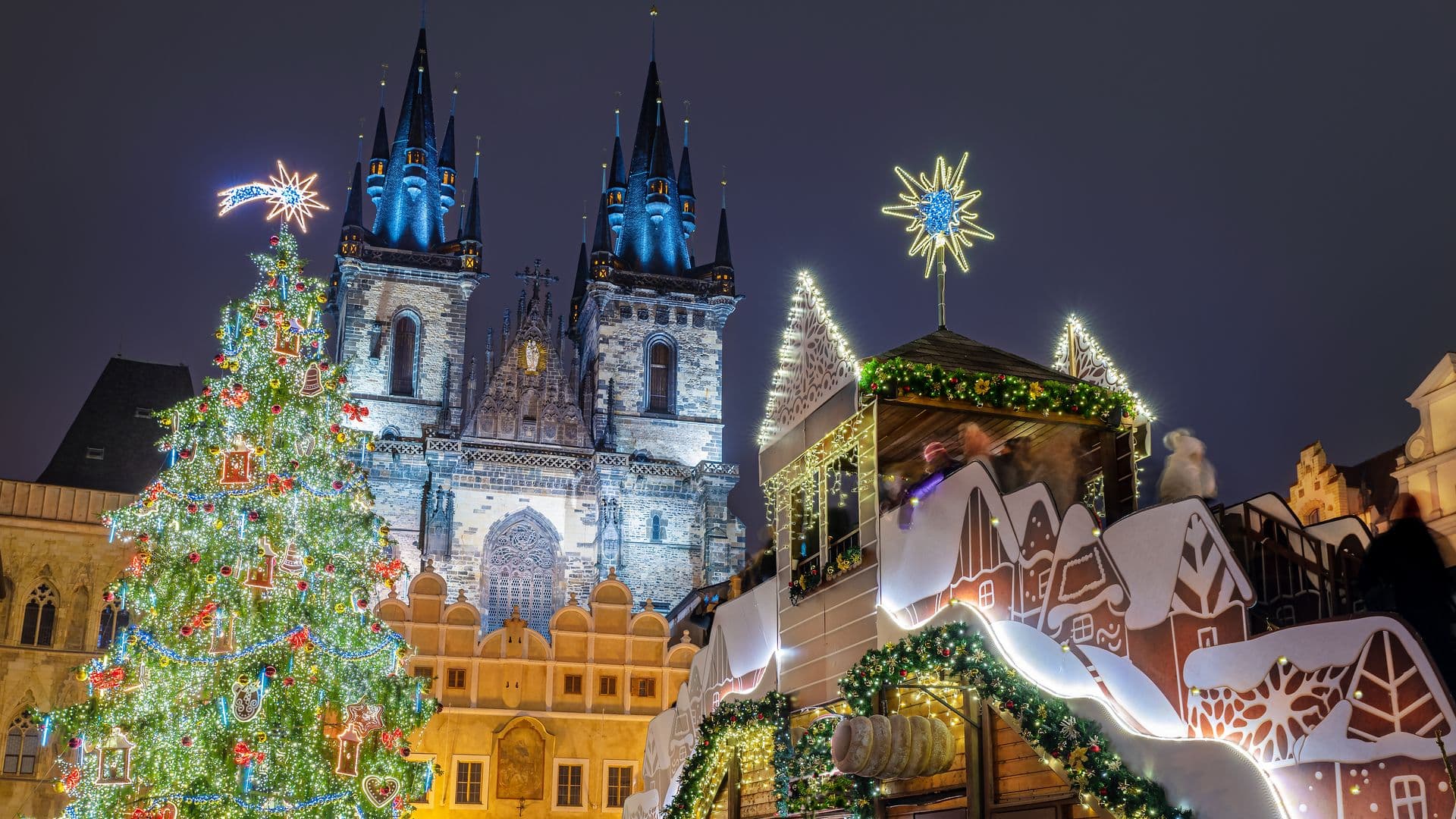
Prague transforms in late November. Wooden stalls appear in the squares overnight. The smell of mulled wine and grilled sausage drifts through Old Town. A 26-meter Christmas tree goes up under the Astronomical Clock. For roughly six weeks, the city becomes one of Europe's most atmospheric Christmas destinations — and one of the most photographed.
After 17 years guiding visitors through Prague, I've seen what makes a Christmas market visit magical and what frustrates first-timers. This guide covers the practical things our guests ask: exact dates, hours, where to actually go, what to eat, what scams to avoid, and what makes Prague Christmas different from Vienna or Berlin.
Prague Christmas Markets 2026: Complete Schedule
Market | Location | Dates 2026 | Daily Hours |
|---|---|---|---|
Old Town Square | Staroměstské náměstí | Nov 28 – Jan 6, 2027 | 10:00 – 22:00 |
Wenceslas Square | Václavské náměstí | Nov 28 – Jan 6, 2027 | 10:00 – 22:00 |
Republic Square | Náměstí Republiky | Nov 25 – Dec 24, 2026 | 10:00 – 20:00 |
Peace Square | Náměstí Míru (Vinohrady) | Nov 20 – Dec 24, 2026 | 10:00 – 20:00 |
Tyl Square | Tylovo náměstí | Nov 26 – Dec 24, 2026 | 10:00 – 20:00 |
Jiřího z Poděbrad | Vinohrady | Nov 29 – Dec 23, 2026 | 8:00 – 18:00 |
Special Holiday Hours (Old Town & Wenceslas Squares)
- December 24 (Christmas Eve): 10:00 – 14:00
- December 25–26 (Christmas Day & St. Stephen's Day): 12:00 – 22:00
- December 31 (New Year's Eve): 10:00 – 15:00
- January 1: 12:00 – 22:00
Christmas Tree Lighting Ceremony
The 26-meter Christmas tree on Old Town Square — traditionally an 80-year-old spruce selected from a different region of the Czech Republic each year — is officially lit on opening day, November 28, 2026, at 4:30 PM.
The synchronized light and music show runs every evening throughout the season at:
- 17:30
- 18:30
- 19:30
- 20:30
Each show lasts about 5 minutes. The crowd density peaks in the 10 minutes leading up to each show — arrive 15 minutes early for a clear view.
Important note about Prague Castle: The Christmas market at Prague Castle has not been held since 2022. The castle guards still decorate a tree behind St. Vitus Cathedral, but there are no market stalls in the courtyards. Many older guides still incorrectly list a castle market — verify before planning.
The Six Best Prague Christmas Markets (2026 Edition)
Prague has more than a dozen Christmas markets if you count every neighborhood. Five are genuinely worth the visit. The others are smaller versions of the same idea — fine if you're nearby, not destinations.
1. Old Town Square (Staroměstské náměstí)
The market in every postcard. The 26-meter tree stands in front of the Astronomical Clock and the Týn Church, surrounded by a horseshoe of wooden stalls. A stage hosts school choirs and brass bands daily, typically 16:00 to 19:00.
Why come: Most beautiful market in the city. The architectural backdrop is the postcard of Prague Christmas.
What to expect: Crowds. This is the busiest market by a wide margin. Food prices are the highest in the city — that's the cost of the location.
Insider tip: Stand on the left side of the tree facing Týn Church for the evening light show. You get unobstructed views without getting trapped in food stall queues.
Best photo spot: Climb the Old Town Hall Tower (separate ticket required) for an aerial view of the market and tree from above. December weekday mornings have almost no queue for the tower.
Best time to visit: Weekday late afternoon, between 16:00 and 18:00. The deep blue winter sky meets the lights coming on. After 19:00 on weekends gets genuinely packed.
Old Town Square draws an estimated 15,000–20,000 visitors on a typical Saturday afternoon — the busiest period of the entire week, which is why the weekday late-afternoon window suggested above rewards visitors with a noticeably calmer atmosphere.
2. Wenceslas Square (Václavské náměstí)
A wider, longer market that runs along the boulevard from Můstek metro station toward the National Museum. Less iconic than Old Town but easier to walk through. More food stalls, slightly lower prices, and a public ice skating rink in the middle of the square.
Why come: When Old Town is impassable, Wenceslas gives you the same Christmas market experience with breathing room. The ice rink is family-friendly and free if you bring your own skates (rentals available).
What to expect: Wider stalls, a more spread-out atmosphere, fewer iconic photo opportunities.
Important note for 2026: During the 2025/2026 season, only the lower section of Wenceslas Square hosted the market due to revitalization work in the upper section. Confirm with current sources whether this restriction continues into 2026/2027.
3. Náměstí Republiky (Republic Square)
In front of the Municipal House and the Powder Tower. Medium-sized market with the strongest food selection of any Prague market. Locals stop here on the way home from work.
Why come: Best food selection at locals-not-tourists prices. Conveniently located 5 minutes' walk from Old Town Square.
Note: This market closes earlier than the main two — December 24 is its last day, and daily hours end at 20:00 instead of 22:00.
4. Náměstí Míru (Peace Square in Vinohrady)
A residential neighborhood market in front of the neo-Gothic Saint Ludmila Church. Almost entirely Czech families, no tour groups. Smaller, quieter, and prices match what locals actually pay.
Why come: This is the market to see if you want to understand how Czechs themselves do Christmas. It's consistently recommended by Prague-based travel YouTubers as the most authentic option.
How to get there: 5 minutes by metro Line A (green) to Náměstí Míru station. The church is directly above the metro exit. Or take Tram 22 for a scenic ride.
Note: This market opens earliest in the season (November 20, 2026) but closes on December 24 — visit early in the season if it's a priority.
5. Jiřího z Poděbrad
A neighborhood market in Vinohrady famous for design and artisan crafts. The market sits in front of the modernist Church of the Most Sacred Heart. Less food-focused than other markets, more about quality gifts.
Why come: Best for actual Christmas shopping (handmade goods, locally designed jewelry, crafts) versus the food-and-drink focus of the central markets. Sundays feature a curated design and crafts market alongside the main Advent stalls.
How to get there: Metro Line A to Jiřího z Poděbrad station — exit directly onto the square.
6. Kampa Island
Tucked on Kampa Island in the shadow of Charles Bridge, this smaller market trades the bustle of Old Town for an intimate, almost storybook atmosphere. Wooden stalls cluster around the riverside square, with the Vltava on one side and historic facades on the other. It runs a shorter season than the major squares, on a more relaxed schedule — check the current dates before planning a dedicated visit.
Why come: This is the market for visitors who have already seen Old Town and Wenceslas and want something different. The pace is slower, the scale is intimate, and the riverside setting at dusk — when the lights come on and the Castle glows above — is genuinely striking. Locals who avoid the heavy tourist traffic of the larger squares often end up here.
How to get there: Walking from Old Town Square, cross Charles Bridge and descend the stairs on the left side just before reaching the Lesser Town (Malá Strana) end of the bridge — about a 5-minute walk total. Alternatively, take metro line A to Malostranská, then walk south for 7 minutes through Lesser Town. The market is small enough to see fully in 30 minutes, making it an easy add-on to a Charles Bridge or Castle visit.
What to Eat at the Prague Christmas Markets
Czech Christmas market food is heavy, smoky, and meant to be eaten standing up with a hot drink in your other hand. Here's what's worth your stomach space and what to skip.
Genuinely Czech, worth trying
Klobása (grilled sausage) — Served in a slice of dark bread with mustard and horseradish. The most authentic Christmas market food in Prague. Look for stalls with a long line of locals; that's where the best ones are. Price: 90–150 CZK.
Bramboráky (potato pancakes) — Crispy pancakes mixed with garlic and herbs, fried until golden. Cheap, filling, properly Czech. Eat them fresh off the griddle — the lukewarm ones aren't worth it. Price: 70–100 CZK.
Pražská šunka (Prague Ham) — Smoke-roasted ham carved straight off the bone. A genuine Prague specialty. ⚠️ See pricing warning below.
Goulash in a bread bowl — Traditional Czech beef goulash ladled into hollowed-out bread loaves. Hearty and excellent on a cold night. Price: 150–200 CZK.
Pečené kaštany (roasted chestnuts) — Sold from glowing braziers. Get them when your hands are cold; the warmth through the paper bag matters as much as the eating. Price: 80–100 CZK per bag.
Smažený sýr (fried cheese) — An entire breaded slab of fried cheese. Czech comfort food at its most direct. Price: 100–130 CZK.
Perník (Czech gingerbread) — Heart-shaped, decorated with colorful icing. Traditionally given as gifts. Price: 50–200 CZK depending on size.
What to know about trdelník
Trdelník — the spit-roasted, sugar-coated pastry sold at every Christmas stall in Prague — is not actually traditional Czech. Its origins are Hungarian/Slovak (where it's called kürtőskalács), and it became popular in Prague mainly because it's photogenic and easy to sell to tourists. Price: 80–120 CZK.
This doesn't mean don't try it — it's tasty, especially the version filled with ice cream or Nutella. Just know that the "traditional Czech pastry" marketing is wrong. If you're skipping it for that reason, you're not missing a national treasure.
For authentic Czech baked goods, look beyond the markets to neighborhood bakeries like Praktika and Antonínovo Pekařství — both well regarded among locals for traditional Czech baking done properly.
⚠️ Tourist Trap Warning: Pay-By-Weight Pricing
This is the single most common scam at Prague Christmas markets. Stalls selling Prague ham, gnocchi, or grilled meats display prices like "190 CZK" in large numbers. What's not obvious to tourists: this is the price per 100 grams, not per portion.
A typical portion is 300–400 grams, which means your "190 CZK" snack actually costs 570–760 CZK.
How to order safely: Don't ask for "a portion." Ask by weight:
- 100g = small snack
- 200g = light lunch
- 300g = filling meal
Vendors will typically weigh slightly more than you ask — that's expected. But specifying the weight upfront prevents the 700 CZK surprise.
This warning applies to: Prague ham, gnocchi (špikované knedlíky), grilled cheese, and any meat sold from a large pot or carved off the bone.
What to Drink at the Prague Christmas Markets
Svařák (svařené víno) — Czech mulled wine. The drink of Prague Christmas markets. Red wine heated with cinnamon, cloves, and orange peel. Served in souvenir mugs (you can keep them or return for refund). Price: 80–120 CZK for 0.2L.
Medovina (hot honey wine) — Sweeter and stronger than svařák. Czech specialty rarely served abroad. Worth trying once. Price: 100–140 CZK.
Punč (hot punch) — Hot fruit punch, sometimes with rum. Order "s rumem" if you want it spiked, "bez rumu" without. Price: 80–110 CZK.
Czech hot chocolate — Closer to melted chocolate pudding than a drink. Thick enough to coat a spoon. Often served with whipped cream. Price: 90–130 CZK.
Pilsner Urquell (Czech beer) — Yes, you can get beer at Christmas markets. Price: ~80 CZK for 0.4L. Czech beer is excellent and cheaper than mulled wine; many locals drink it at the markets even in winter.
Where to drink cheaper: The same mug of svařák that costs 100 CZK at Old Town Square costs 60–80 CZK at Náměstí Míru in Vinohrady. The drink is identical. You're paying for the location.
A private guide makes all the difference when exploring this part of Prague.
Cup deposit: Some stalls charge a small deposit (50 CZK) on the souvenir mug. Return the mug to get the deposit back, or keep the mug as a souvenir.
What to Buy: Real Czech Crafts vs. Tourist Tat
Czech crystal and glass ornaments — Bohemia has produced world-class glass for 400 years. Hand-blown ornaments, crystal stars, painted baubles. Look for stalls naming a specific glassworks (Jablonec, Železný Brod, Harrachov). Avoid stalls selling generic "Bohemian crystal" without provenance — that's often imported. Price: 80–800 CZK each.
Wooden toys and nutcrackers — The good ones are hand-painted in detail; cheap ones are factory-finished. Quality wooden nutcrackers: 500–2000 CZK.
Beeswax candles and Czech honey — Czech honey is excellent. Many stalls sell raw honey (200–400 CZK per jar) and rolled beeswax candles in twisted shapes (100–500 CZK).
Czech marionettes — Czech puppet-making is a UNESCO-protected tradition. Real handmade marionettes start around 1500 CZK for a small one. Anything claiming to be a "traditional Czech marionette" for 300 CZK is mass-produced.
Christmas decorations and ornaments — Hand-painted glass baubles (80–150 CZK each), straw stars (slámové ozdoby), and embroidered fabric decorations. Look for "ručně malované" (hand-painted) labels.
Skip: Generic souvenirs, "I love Prague" t-shirts, plastic snow globes, mass-produced ornaments without origin labels.
Mikuláš (St. Nicholas Day) on December 5
If you're in Prague on December 5, you'll witness one of the most charming Czech Christmas traditions — and one most foreign visitors miss entirely.
On the evening of December 5 (the eve of St. Nicholas Day), three figures walk through the streets and Christmas markets:
- Saint Nicholas (Mikuláš) — dressed as a bishop with a staff and white beard
- An angel (anděl) — dressed in white
- A devil (čert) — dressed in black with chains
They approach children and ask if they've been good during the year. Children sing a song or recite a poem to prove their goodness. Good children receive a small gift (sweets, fruit, a chocolate Santa). Naughty children get a lump of coal or a potato — and according to tradition, the devil might threaten to put them in his sack.
This is Czech "Santa visit" tradition — gifts come on December 5/6, not December 24/25 like in many other countries. (December 24 is for the Czech Baby Jesus, Ježíšek, who delivers presents under the tree.)
Where to see Mikuláš in Prague: The figures appear at Old Town Square and Wenceslas Square Christmas markets from approximately 4:00 PM on December 5. They also walk through the streets of central Prague. Children of all nationalities can participate — even if your child doesn't speak Czech, just smiling and standing politely is enough to get a small gift.
This is the most photogenic Czech Christmas tradition. If you can plan your visit around December 5, you'll witness something most Christmas market guides skip entirely.
Tourist Scams to Avoid
LED light balloons — People walking around the markets and city center selling glowing LED balloons. They claim the proceeds go to charity. They don't. This is a well-documented Prague scam. Skip.
Currency exchange near markets — Old Town and Wenceslas Square have several exchange offices with attractive-looking rates posted in large numbers. The fine print reveals 15–25% fees. Use ATMs from major Czech banks (ČSOB, Komerční banka, Česká spořitelna) instead.
Pickpockets — Standard tourist precautions apply. Old Town Square evenings and metro stations during rush hour are highest-risk. Keep wallets and phones in front pockets.
Tipped change scam — Some food vendors "forget" to give correct change when you pay with large notes (1000 CZK or 2000 CZK). Always count your change before walking away.
The "free tour" scam — People in Christmas markets handing out flyers for "free" walking tours. Most aren't free — they expect significant tips at the end and often deliver poor-quality tours. Booking with a verified licensed Prague guide is the safer way to learn about the city.
Practical Tips for Prague Christmas Markets 2026
Weather: Prague winter temperatures during market season range from -5°C to +5°C. Layers are essential. Wind on Old Town Square cuts hard. Pack: warm coat, hat, gloves, scarf, waterproof boots that handle wet cobblestones.
Cash and card: Bigger market stalls accept cards. Smaller food and drink vendors often don't. Carry 500–1000 CZK in cash for a market evening. ATMs are widely available; use bank-branded ones.
Public transport: Metro, trams, and buses run normally during the markets, including December 24, 25, and 26 on reduced schedules. Useful lines:
- Metro Line A (green): direct to Náměstí Míru and Jiřího z Poděbrad markets
- Tram 22: scenic route past Prague Castle to Vinohrady markets
- Bus 194: best option for Old Town Square (stop: Staroměstské náměstí)
Sunset times: December sunrise is around 7:45 AM and sunset around 4:00 PM. Markets are most magical in the dark — plan late-afternoon and evening visits.
Hotels book early: December weekends sell out at most central Prague hotels by September. Book accommodation 4+ months ahead for market-season visits.
Markets get quieter after Christmas Day: Between December 27 and January 6, the markets operate with about a third of the usual crowd. The best window for those who prefer fewer people.
Food and drink combinations: Most stalls sell food OR drink, not both. Tip: Get a hot drink first, then queue for food while keeping warm.
Restrooms: Public restrooms are rare at the markets. Use facilities at McDonald's, KFC, or hotel lobbies. The Astronomical Clock area has a paid public restroom (15–20 CZK).
Prague in December: What Else to Do
The Christmas markets are an evening activity. Days during Christmas season offer some of the best sightseeing of the year — fewer tourists, dramatic winter light, occasional snow.
Worth combining with market visits:
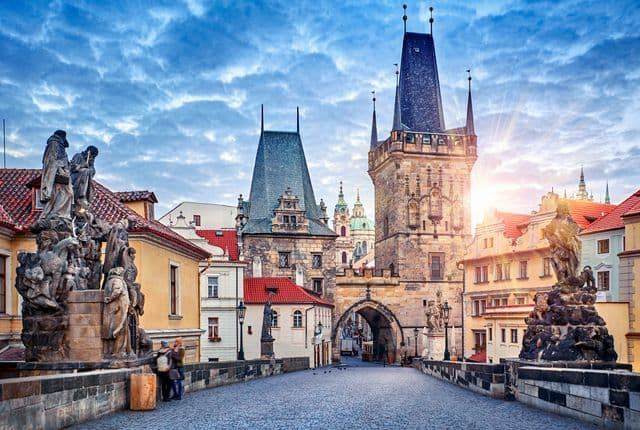
- Charles Bridge at sunrise — empty in winter, magical with frost on the statues
- Prague Castle interior — significantly less crowded than summer, the cathedral is breathtaking in winter light
- Climb the Old Town Hall Tower — best aerial view of the lit-up market and Christmas tree
- Klementinum library tour — at its best in winter when summer queues vanish
- Day trip to Český Krumlov — the medieval town with snow on its rooftops is one of the most photogenic places in Europe
If you want context for what you're seeing — why the Astronomical Clock matters, what Charles Bridge has actually been through, the stories behind the saints on the buildings — that's where a private guided tour earns its keep. The markets are atmospheric on their own; the architecture is more interesting with someone explaining what you're looking at.
If you have time for a day trip, several Czech towns host their own Christmas markets in atmospheric medieval squares — see our guide to Christmas markets outside Prague for the best options.
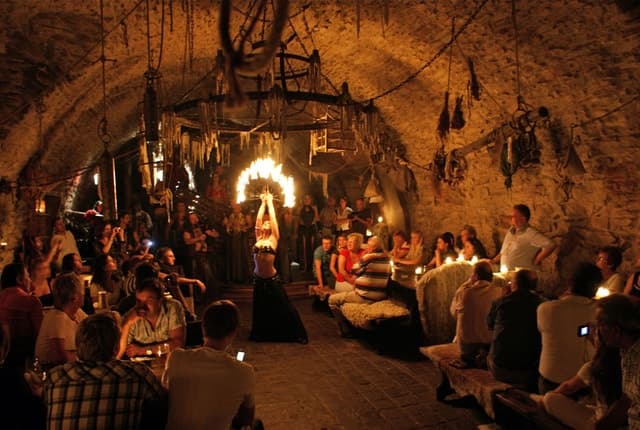
For a quintessentially Prague winter evening, a medieval dinner at U Pavouka Tavern pairs perfectly with a market visit — candlelit stone vaults, mead, and fire shows feel entirely right when it is freezing outside. The combination of a daytime market walk and an evening in a 15th-century tavern is the kind of December Prague experience that stays with you.
Frequently Asked Questions
When do the Prague Christmas Markets open in 2026?
The main Prague Christmas Markets at Old Town Square and Wenceslas Square open on November 28, 2026 and run daily through January 6, 2027, from 10:00 AM to 10:00 PM. Smaller neighborhood markets like Náměstí Míru open earlier (November 20, 2026) but close on December 24.
Are the Prague Christmas Markets free to enter?
Yes, all Prague Christmas Markets are free to enter. You only pay for what you eat, drink, or buy.
What is the best Prague Christmas Market?
Old Town Square is the most photographed and atmospheric, but also the most crowded and expensive. For best food, try Náměstí Republiky. For the most local experience, Náměstí Míru in Vinohrady. For the best shopping, Jiřího z Poděbrad. Most visitors should see Old Town Square plus one neighborhood market.
How many days do I need for the Prague Christmas Markets?
Two evenings is enough to see the three major markets (Old Town, Wenceslas, Republic Square). Three to four days gives you time to also explore the city's main sights during the day and visit smaller neighborhood markets.
Is Prague worth visiting in December?
Yes — December is one of the best months to visit Prague if you don't mind cold weather. The atmosphere is unmatched, major sights are far less crowded than summer, the Christmas markets add real magic, and average daily temperatures hover just below 0°C with occasional snowfall.
Are the Prague Christmas Markets open on Christmas Day?
Yes. The markets remain open on December 25 (Christmas Day) and December 26 (St. Stephen's Day) from 12:00 to 22:00. Hours close earlier on December 24 (10:00–14:00) and December 31 (10:00–15:00).
What time is the Christmas tree lighting at Old Town Square?
The Christmas tree on Old Town Square is officially lit on opening day, November 28, 2026, at 4:30 PM. The synchronized light and music show then repeats every evening at 17:30, 18:30, 19:30, and 20:30 throughout the market season.
Is there a Christmas market at Prague Castle?
No. The Prague Castle Christmas market has not been held since 2022 and is unlikely to return. The castle guards still decorate a tree behind St. Vitus Cathedral, but there are no market stalls in the castle courtyards. Many older travel guides still incorrectly list a castle market — this is outdated information.
What is Mikuláš (St. Nicholas Day) in Prague?
Mikuláš falls on December 5 (the eve of St. Nicholas Day) and is one of the most charming Czech Christmas traditions. On this evening, three figures — Saint Nicholas, an angel, and a devil — walk through Prague's streets and Christmas markets, asking children if they've been good. Children who recite a poem or sing a song receive sweets; "naughty" children get coal or a potato. You can see Mikuláš at Old Town Square and Wenceslas Square markets from approximately 4:00 PM on December 5.
Is there an ice skating rink at the Prague Christmas Markets?
Yes — there's a public ice skating rink in the middle of Wenceslas Square during the Christmas market season. It's free to use if you bring your own skates; rentals are available on-site for a small fee.
How much does food and drink cost at the Prague Christmas Markets?
Approximate 2025–2026 prices: mulled wine (svařák) 80–120 CZK, trdelník 80–120 CZK, sausage 90–150 CZK, hot chocolate 90–130 CZK, Pilsner beer 80 CZK, mead 100–140 CZK. Important: Meat and ham stalls display prices per 100 grams, not per portion — a typical portion costs 300–400% of the displayed price.
What's the difference between Czech mulled wine and German Glühwein?
Czech svařák and German Glühwein use similar spices (cinnamon, cloves, orange) but svařák is typically lighter and less sweet, often using Moravian local wines. Many Czechs prefer it less sweet than the German version.
Can children enjoy the Prague Christmas Markets?
Yes — most major markets have small carousels, the food (sausages, hot chocolate, sweets) is child-friendly, and children can meet Mikuláš figures on December 5. Old Town Square gets very crowded though; smaller markets like Náměstí Míru are easier with young children.
Is there vegetarian food at Prague Christmas Markets?
Yes. Vegetarian options include bramboráky (potato pancakes), smažený sýr (fried cheese), trdelník (pastry), roasted chestnuts, hot drinks, and warm corn on the cob. Vegan options are limited — most stalls focus on traditional meat-and-cheese fare.
*About the Author: Uliana Formina is a licensed Prague guide with 17 years of experience leading private tours through the historic center. She has guided over 10,000 guests and specializes in Christmas-season private tours combining the markets with Prague's main sights.*
*Last fact-checked: April 2026. Dates verified against the official Prague tourism authority and confirmed Christmas market schedules. Prices are based on 2024–2025 averages and may vary 5–15% year over year due to inflation.*
Is trdelník really a traditional Czech pastry?
Not exactly. Trdelník belongs to a family of Central European spit cakes (Hungarian kürtőskalács, Slovak Skalický trdelník) with roots in 18th-century Hungarian, Transylvanian, and northern-Hungarian/Slovak baking traditions — the first known written recipe dates to 1784. It spread into Moravian Czech lands in the 19th century, but only became a Prague street-food staple in the early 2000s. Genuine Czech baked traditions include koláče (filled pastries), vánočka (Christmas braided bread), and perník (gingerbread). Trdelník is enjoyable as a sweet street snack — just don't believe the "ancient Bohemian recipe" signage.
What food should I actually try at Prague's Christmas markets?
The genuinely Czech options worth seeking out: klobása (smoked sausage with mustard), bramboráky (potato pancakes), goulash served in a bread bowl, smažený sýr (fried cheese), and roasted chestnuts. For drinks, try svařák (Czech mulled wine) and medovina (honey wine). Skip the trdelník hype unless you're curious — it's tasty but isn't traditional. For sweets, perník (Czech gingerbread) is the authentic choice.
How cold does Prague get in December?
Prague hovers around freezing in December — typical daily highs are 3-4°C (37-39°F), with overnight lows of -3 to -1°C (27-30°F). Cold snaps below -5°C (23°F) happen occasionally, but the deep cold (below -10°C) is more common in January. Light snow is possible but not guaranteed. Wind chill along the Vltava and on Charles Bridge can make it feel significantly colder than the air temperature suggests. Dress in layers, bring waterproof boots if rain or wet snow is forecast, and don't underestimate how cold standing still at a market becomes after 20 minutes — the svařák stands exist for a reason.
Want to see Prague for yourself?
Take our flagship Prague tour-6-640x430.jpg&w=3840&q=75)