Easter in Prague — Markets, Pomlázka, and Czech Traditions
Easter in the Czech Republic is less about chocolate eggs and more about a thousand-year-old fertility ritual involving decorated willow whips. The tradition is called pomlázka, and it's exactly as strange and wonderful as it sounds. Prague celebrates Easter with markets on Old Town Square, painted eggs, folk music, and food that ranges from lamb-shaped cakes to grilled sausages washed down with Easter beer. If you visit Prague during Easter week, you'll experience a holiday that still carries genuinely Czech customs beneath the tourist-friendly surface.
We walk guests through Prague's Easter celebrations every year, and what surprises most visitors is how alive the traditions feel. This isn't a museum recreation — Czech families still follow Easter customs that have been passed down for centuries, and Prague's Easter markets are where those traditions meet the modern city.
Prague Easter Markets
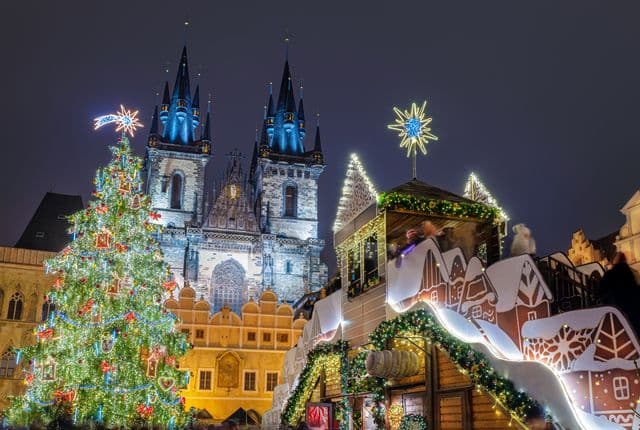
The main Easter market sets up on Old Town Square (Staroměstské náměstí), typically opening two to three weeks before Easter Sunday and running through the week after. A second market appears on Wenceslas Square (Václavské náměstí), slightly more commercial but equally lively.
The markets feature wooden stalls selling painted Easter eggs (kraslice), willow whips decorated with ribbons (pomlázky), handmade ceramics, wooden toys, and Czech glass ornaments. Food stalls serve trdelník (chimney cake), grilled klobásy (sausages), ham roasted on a spit (pražská šunka), and hot medovina (honey wine).
Insider timing: the markets are quietest on weekday mornings before 10 AM. On Easter Saturday and Sunday, Old Town Square gets very busy — if you want to browse comfortably, go early or visit on Thursday or Friday morning. We often bring our guests through at opening time, when the vendors are setting up and the square smells of fresh pastry and wood smoke.
The market on Náměstí Republiky (Republic Square) near Palladium mall is smaller and draws more locals than tourists. If you want to see Czech families doing their Easter shopping rather than souvenir browsing, this is the one.
Pomlázka — The Whipping Tradition
This is the tradition that makes visitors raise an eyebrow. On Easter Monday, Czech men (and boys) visit the homes of women and girls and gently whip them on the legs with a braided willow switch called a pomlázka. The whipping is supposed to transfer the vitality and freshness of the spring willow to the woman. In return, the woman gives the man a painted egg or a glass of slivovice (plum brandy).
The tradition is ancient — likely pre-Christian in origin — and is still widely practised in rural Bohemia and Moravia. In Prague, it's more subdued. You'll see pomlázky for sale at every Easter market stall, and some families still follow the custom, but the full door-to-door ritual is more of a countryside tradition now.
Our guests are always fascinated by the pomlázka. The willow switches are beautiful objects — some are intricately braided with four, eight, or even twelve willow branches, decorated with ribbons in bright colours. They make excellent souvenirs and are light enough to pack in a suitcase.
Kraslice — Czech Easter Eggs
Czech Easter eggs (kraslice) are hand-decorated using wax-resist dyeing, etching, or painting techniques that vary by region. The finest kraslice come from Moravia and South Bohemia, where the patterns are intricate enough to qualify as folk art.
At Prague's Easter markets, you can watch artisans decorating eggs in real time. The wax-resist technique involves drawing patterns on a white egg with molten beeswax, then dipping the egg in dye — the waxed areas stay white, creating geometric designs. Some eggs have patterns so fine they take an hour each.
Prices range from about 50 CZK for a simple painted egg to 300+ CZK for a hand-etched masterpiece. These make far better souvenirs than the mass-produced items elsewhere on the market.
Easter Food Traditions
Czech Easter food centres on a few key dishes:
Mazanec — a sweet Easter bread spiced with nutmeg and lemon zest, with a cross scored on top. It's somewhere between brioche and challah, and bakeries across Prague sell fresh loaves during Easter week.
Beránek (Easter lamb) — a cake baked in a lamb-shaped mould, dusted with powdered sugar. Every Czech grandmother has a lamb mould, and the cakes appear in bakery windows citywide.
Nádivka — a savoury bread stuffing with nettles and eggs, served alongside roasted meat. This is Easter lunch at most Czech households.
Jidáše — twisted pastries shaped like a rope or noose, eaten on Good Friday. The name refers to Judas, and the shape represents the rope used in his betrayal. They're simple dough brushed with honey, and surprisingly good.
At the markets, the food is more street-food oriented — grilled sausages, ham on the spit, and trdelník remain the bestsellers. Wash everything down with Easter beer — several Czech breweries release special seasonal brews, and you'll find them at market stalls and local pubs.
A private guide makes all the difference when exploring this part of Prague.
Easter Church Services
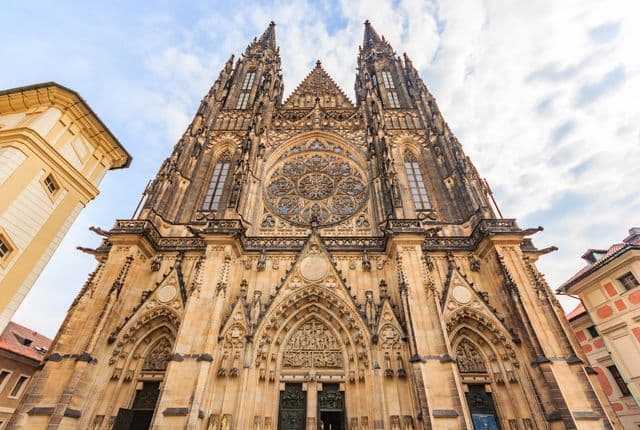
For visitors interested in religious observance, Prague's churches hold services throughout Holy Week. St. Vitus Cathedral at Prague Castle has the most significant services, including the Archbishop's Easter Mass on Sunday morning. The cathedral fills quickly — arrive at least 45 minutes early.
The Church of Our Lady before Týn on Old Town Square and St. Nicholas Church in Malá Strana both hold Easter services that are less crowded but equally atmospheric. Services are in Czech, but the music — organ, choral, and sometimes orchestral — transcends language.
Good Friday is not a public holiday in the Czech Republic (unlike many European countries), which means shops and restaurants stay open. Easter Monday is the public holiday when most things close.
What's Open and Closed on Easter
- Good Friday: normal business hours. Some smaller shops close, but restaurants and attractions are open.
- Easter Saturday: normal hours, though some shops close early.
- Easter Sunday: most shops closed by law, but restaurants, cafes, and major attractions (Prague Castle, museums) remain open. Markets are open and busy.
- Easter Monday: public holiday. Most shops closed. Restaurants and tourist attractions open. Markets open — this is the busiest day.
Weather at Easter
Easter falls between late March and mid-April depending on the year. Expect temperatures of 8–16°C — cool mornings warming to pleasant afternoons. Rain is possible, so bring a light waterproof jacket. Spring is unpredictable in Prague — we've seen Easter weekends with 20°C sunshine and others with 5°C drizzle. Layers are essential.
Cherry blossoms and magnolias typically bloom around Easter, particularly on Petřín Hill and in the gardens below Prague Castle. The timing varies by a week or two, but if you're lucky, the city wears pink and white alongside the Easter decorations.
Experience Easter Prague With a Private Guide
Easter is one of the most atmospheric times to explore Prague. Our All Prague in One Day private tour takes you through the castle, across Charles Bridge, and through Old Town — with stops at the Easter markets woven into the route. Your guide can explain the pomlázka, help you pick out genuine kraslice, and point out the spring details that make Prague different during this season. Exclusively yours.
For an evening after the markets, the Medieval Dinner Show at U Pavouka runs year-round — fire dancers and a 15th-century cellar feast add to the atmosphere.
Browse all our private tours of Prague and Czech Republic.
Frequently Asked Questions
When do Prague Easter markets open?
The main markets on Old Town Square and Wenceslas Square typically open 2–3 weeks before Easter Sunday and run through the week after. Exact dates are announced each year by the city. Hours are generally 10 AM to 10 PM.
Is Easter a good time to visit Prague?
Excellent. The weather is spring-like, the markets add colour and atmosphere, and crowds are smaller than summer. Hotel prices are moderate compared to peak season. It's one of our favourite times to guide.
Do Czech people still do the pomlázka whipping tradition?
In rural areas, yes — it's still widely practised as a family tradition on Easter Monday. In Prague, it's more of a symbolic and commercial tradition — you'll see the whips for sale everywhere, and some families follow the custom, but the full door-to-door ritual is less common in the city.
Are Prague shops open on Easter?
Good Friday and Easter Saturday are mostly normal. Easter Sunday and Easter Monday see most shops closed (by law on Sunday, by holiday on Monday). Restaurants, cafes, and tourist attractions remain open throughout.
You May Also Like
Want to see Prague for yourself?
Take our flagship Prague tour-6-640x430.jpg&w=3840&q=75)