Prague for Digital Nomads — Coworking, Cost and Connectivity

Prague lands in a sweet spot that few European cities match. It has the infrastructure of a Western European capital — fast internet, reliable public transport, international airport, excellent coffee — at Central European prices. A month in Prague costs roughly half what you'd spend in Amsterdam, London or Paris, without sacrificing quality of life.
The city has attracted remote workers since well before the term "digital nomad" went mainstream. The expat community is mature, coworking spaces are well-established, and the visa situation is more flexible than most EU countries for non-EU freelancers. Here is what you need to know.
Cost of Living vs Other EU Cities
The numbers tell the story. A single person living comfortably in Prague — private apartment in a central neighbourhood, eating out regularly, coworking membership, transport and leisure — spends roughly €1,200 to €1,600 per month (as of 2026). That includes:
- Rent: €600 to €900 for a furnished one-bedroom in Vinohrady, Žižkov, Karlín or Holešovice. Old Town and Malá Strana cost more (€900 to €1,300) and are noisier.
- Coworking: €150 to €250 per month for a hot desk with 24/7 access.
- Food: €200 to €350 eating a mix of home cooking and restaurants. A lunch menu (polední menu) at a Czech restaurant costs 150 to 200 CZK — roughly €6 to €8.
- Transport: CZK 550 (about €22) for a monthly pass covering all trams, metro and buses.
- Coffee: 60 to 90 CZK (€2.50 to €3.50) for a flat white at a specialty café.
For comparison, similar quality of life in Berlin runs €1,800 to €2,400, in Amsterdam €2,200 to €3,000, and in London €2,500+.
Insider detail: The polední menu (lunch menu) system is uniquely Czech. From 11 AM to 2 PM, most restaurants offer a two-course lunch (soup + main) for 150 to 220 CZK. The same restaurant charges 300+ CZK for dinner. Locals eat their main meal at lunch. Learning this one trick cuts your food budget significantly.
Coworking Spaces
Prague's coworking scene is mature and competitive, which keeps quality high and prices reasonable.
Impact Hub Prague on Drtinova in Smíchov is the flagship — a large, well-designed space in a converted factory with meeting rooms, event space, a café, and a strong community programme. Monthly hot desk starts around 5,000 CZK (€200). The community leans toward startups and social enterprise.
Locus Workspace operates locations in Karlín and Dejvice. Karlín is Prague's tech-startup neighbourhood — Facebook, Microsoft and several Czech tech companies have offices nearby. Locus is quieter than Impact Hub, with a more corporate feel. Good for focused deep work.
WorkLounge on Wenceslas Square is centrally located and popular with short-term visitors. Day passes available (around 400 CZK). The space is modern, Wi-Fi is fast, and the location means you can step out for lunch in any direction.
Insider detail: Many Prague cafés tolerate laptop workers, but few actively encourage it. Café Jedna at the National Gallery Trade Fair Palace in Holešovice is a quiet exception — large tables, power outlets, good coffee and a "work here as long as you like" attitude. Free to enter the café without a gallery ticket.
For a more casual setup, Paralelní Polis in Holešovice is a crypto-focused café and coworking space that only accepts cryptocurrency. Even if you don't use Bitcoin daily, the space attracts an interesting crowd of developers and tech thinkers.
Internet and Connectivity
Prague's internet infrastructure is strong. Most apartments come with fibre or cable connections offering 100 to 500 Mbps. Coworking spaces typically provide 200+ Mbps with redundant connections.
Mobile data is affordable. T-Mobile, O2 and Vodafone all offer tourist SIM cards with generous data. Our Prague SIM card and eSIM guide covers the best options in detail.
For longer stays, a Czech prepaid SIM with monthly data packages runs 500 to 700 CZK (€20 to €28) for 10 to 20 GB. eSIM options like Holafly and Airalo work well for the first weeks while you sort out a local SIM.
Free Wi-Fi is available at most cafés, many public spaces and throughout the metro system. Quality varies — café Wi-Fi is usually adequate for video calls but not reliable for uploads. For consistent connectivity, a coworking membership or apartment fibre is essential.
Visa and the Živnostenský List
EU, EEA and Swiss citizens can live and work in Prague without a visa. Register at the foreign police office (Cizinecká policie) after 30 days if staying longer than 90.
Non-EU citizens face a more complex landscape. Tourist visas (Schengen) allow 90 days in any 180-day period. For longer stays, the most common route for digital nomads is the Živnostenský list (trade licence) — essentially self-employment registration that, combined with a long-term visa, allows you to live and work legally.
The process involves registering a trade (typically "consulting" or "IT services"), obtaining a business visa at a Czech embassy, then applying for a long-term residence permit. The paperwork is bureaucratic — Czech administration moves at its own pace — but the system is well-documented and immigration lawyers in Prague handle these cases routinely. Budget 2 to 4 months and €500 to €1,500 in legal fees.
A private guide makes all the difference when exploring this part of Prague.
Insider detail: The Czech Republic introduced a Digital Nomad Visa programme that allows non-EU remote workers to stay for up to one year. Eligibility requires proof of remote employment with a non-Czech company and minimum income thresholds. Check the Czech Ministry of Foreign Affairs website for current requirements — the programme was new and details may have evolved.
Neighbourhoods for Digital Nomads
Karlín is Prague's tech-friendly neighbourhood — a former industrial area now filled with modern offices, co-working spaces, specialty coffee shops and excellent restaurants (Eska, SaSaZu). Flat terrain, riverside paths for running, and Metro Line B access. It's quiet at night, which suits people who work from home.
Vinohrady offers the best overall quality of life — beautiful architecture, top restaurants and wine bars, Riegrovy sady park for weekends, and a community feel despite being central. Metro Line A at náměstí Míru. Slightly pricier than Karlín but more liveable long-term.
Žižkov is cheaper and grittier. The Žižkov TV Tower (with David Černý's crawling baby sculptures) dominates the skyline. The neighbourhood has dive bars, cheap Vietnamese restaurants, and a young creative community. Good for budget-conscious stays.
Holešovice combines industrial-chic spaces (DOX Centre for Contemporary Art, Vnitroblock market hall) with riverside parks. The neighbourhood is still developing, which means lower rents and a feeling of discovery.
What to Do When You're Not Working
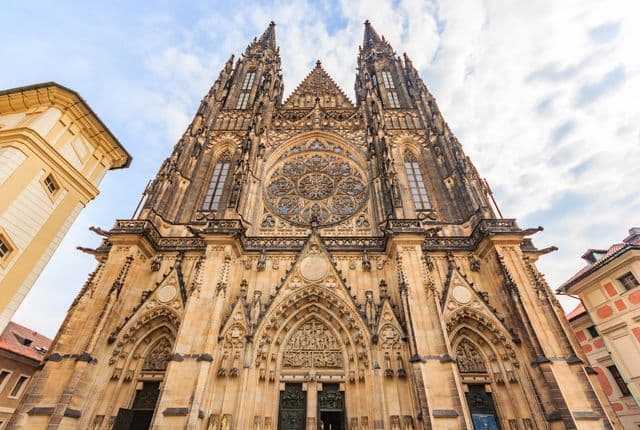
Prague's compact size means you can work until 5 PM and be standing in front of a Gothic cathedral, drinking a beer in a 15th-century cellar, or watching sunset from Letná Park within 20 minutes.
The cultural density per square kilometre is hard to match. Our guide to free things to do covers the highlights, and the Medieval Dinner Show at U Pavouka — a 15th-century tavern with fire dancers, swords and unlimited mead — is a memorable way to spend an evening.
For weekend escapes, Prague's central position in Europe makes it a launchpad. Český Krumlov is three hours south. Vienna is four hours by train. Berlin is four and a half. Budget airlines from Prague airport reach most European capitals for €30 to €80.
See all our private tours when you want a day off from the laptop. Exclusively yours, with your own guide.
Frequently Asked Questions
Is Prague a good base for digital nomads?
One of the best in Europe. Fast internet, affordable cost of living, mature coworking scene, central European location, excellent public transport, and a high quality of life. The main drawback is winter darkness — December days are short and grey.
How much does it cost to live in Prague as a digital nomad?
Budget €1,200 to €1,600 per month for a comfortable life including rent, coworking, food and transport. That's roughly half the cost of Amsterdam or London for comparable quality.
Do I need a visa to work remotely from Prague?
EU citizens can live and work freely. Non-EU citizens can stay 90 days on a Schengen tourist visa. For longer stays, the Zivnostensky list (trade licence) or the Digital Nomad Visa programme are the main routes.
What is the internet speed like in Prague?
Excellent. Most apartments have fibre with 100 to 500 Mbps. Coworking spaces provide 200+ Mbps. Mobile data is affordable and 4G/5G coverage in central Prague is strong.
You May Also Like
Want to see Prague for yourself?
Take our flagship Prague tour-6-640x430.jpg&w=3840&q=75)