One Week in Prague — The Ultimate Itinerary
A full week in Prague lets you do what short-stay visitors can't — slow down. Seven days covers every major landmark, two day trips into the Czech countryside, and the residential neighbourhoods that show you how the city actually works. This itinerary spans roughly 50 kilometres of walking across the week, with two car-based day trips breaking up the city days. By the end, you'll know Prague well enough that it stops feeling like a place you visited and starts feeling like a place you lived.
We've structured the week around three phases: three days in the historic core, two day trips outside Prague, and two days exploring the quieter neighbourhoods and cultural spaces that most visitors never reach. The intensity rises and falls — big sightseeing days alternate with slower neighbourhood walks, and the day trips provide a complete change of scenery.
Day 1: Old Town and the Jewish Quarter
Morning (8:30–12:00)
8:30 — Old Town Square (Staroměstské náměstí)
Start at the centre. Old Town Square is quietest before 9 AM — the vendors are setting up, the cafes are still putting out chairs, and the square has an early-morning calm that vanishes by 10.
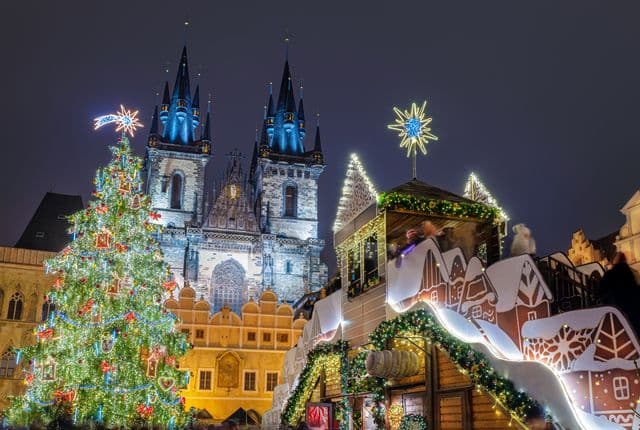
The landmarks around the square: Týn Church with its asymmetric Gothic spires, the Old Town Hall with the Astronomical Clock, the Church of St. Nicholas, and five centuries of architecture lining the perimeter. Study the Astronomical Clock (Orloj) face before the hourly parade draws a crowd — it displays standard time, Old Czech time, a zodiac ring, and astronomical positions, all running since 1410.
Insider tip: The south wall of the Old Town Hall has 27 crosses embedded in the pavement. They mark where 27 Czech Protestant leaders were executed on June 21, 1621, after the Battle of White Mountain. It's one of the most important events in Czech history, and most visitors walk right over it.
*Walking time to next stop: 5 minutes north.*
9:15 — Jewish Quarter (Josefov)
Walk north along Pařížská into Josefov. Visit the Pinkas Synagogue first — 77,297 Holocaust victim names written on the walls, best experienced before school groups arrive at 10 AM.
The Old Jewish Cemetery has roughly 12,000 tombstones packed into a small area, with bodies in layers up to twelve deep. The Spanish Synagogue has a Moorish Revival interior that surprises everyone. The Old-New Synagogue (Staronová synagoga), active since 1270, is the oldest functioning synagogue in Europe.
With a week in Prague, you have the luxury of spending a full two hours here rather than rushing. Take it.
*Walking time to next stop: 8 minutes south.*
11:00 — Clementinum
Visit the Baroque Library Hall and Astronomical Tower on a guided tour. The library ceiling fresco is extraordinary, and the 360-degree tower view shows you the layout of Old Town from its geographic centre.
Lunch (12:00–13:00)
Side streets south of Karlova — Husova, Betlémská, or Bartolomějská. Daily specials (polední menu) with soup and main course at local prices. Skip anything facing the square or on Karlova.
Afternoon (13:00–17:00)
13:00 — Deeper Old Town
With a full week ahead, use this afternoon for the parts of Old Town that day-trippers skip.
The Bethlehem Chapel (Betlémská kaple) — where Jan Hus preached in the early 1400s, a full century before Martin Luther. The chapel is a reconstruction, but the history it represents — the Czech Reformation that preceded the Protestant Reformation — is genuine and underappreciated.
Walk east to the Estates Theatre (Stavovské divadlo) — where Mozart premiered Don Giovanni on October 29, 1787. Check if performances are running during your week — seeing anything in this theatre connects you to its history more than looking at the facade.
Continue to the Powder Gate (Prašná brána) and the Municipal House (Obecní dům). The Kavárna inside is pure Art Nouveau — every surface designed as part of the whole. Have a coffee and study the ceiling.
15:00 — Wenceslas Square (Václavské náměstí)
Walk the full 750-metre boulevard. The Lucerna Passage has David Černý's inverted horse. The architecture along both sides spans Art Nouveau, functionalism, socialist realism, and contemporary glass — an unintentional timeline of 120 years. At the top, the National Museum anchors everything.
16:30 — Covered Passages and Arcades
Prague's Art Deco and Art Nouveau passages connect buildings and streets underground. Starting from the Lucerna Passage, navigate through to Vodičkova and Národní třída — you can cross large sections of the New Town without going outside. These passages have cinemas, cafes, small shops, and architectural details worth a slow walk.
Evening
The medieval dinner show at U Pavouka Tavern is the best first-evening experience in Prague — roasted meats, unlimited mead, fire dancers, sword fights in a 15th-century stone cellar on Celetná street. The 20:00 show runs about two and a half hours. Book ahead.
Day 2: Prague Castle and Malá Strana
Morning (8:00–12:00)
8:00 — Prague Castle (Pražský hrad)
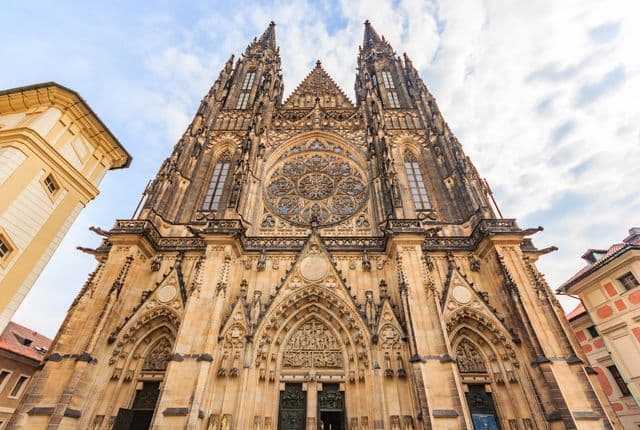
Arrive before the 9 AM building openings. Walk the courtyards early, then enter St. Vitus Cathedral — the Mucha stained glass window catches its best light between 9 and 10 AM. Continue through the Old Royal Palace (Vladislav Hall with its jousting-scale dimensions), St. George's Basilica (Romanesque austerity), and Golden Lane (Kafka's number 22, plus the upstairs armour exhibition).
Insider tip: Walk the southern ramparts before leaving. The panoramic view over Malá Strana's rooftops and the river is the best angle from the castle grounds, and most visitors exit without seeing it.
*Walking time to next stop: 15 minutes downhill.*
10:30 — Hradčany (Castle Quarter)
Before descending into Malá Strana, spend 45 minutes in Hradčany — the neighbourhood immediately surrounding the castle. Hradčanské náměstí has the Archbishop's Palace, the Sternberg Palace (National Gallery — European old masters), and views back toward the castle that most visitors miss because they're rushing to get inside.
Walk to the Loreto (Loreta) — a baroque pilgrimage complex with an ornate church, a cloister, and a treasury containing a diamond monstrance studded with 6,222 diamonds. The Loreto carillon plays every hour, and the courtyard has a peace that feels far from the castle crowds.
The Strahov Monastery is a short walk from here — if you want to see the library halls (Theological and Philosophical) without the Day 3 Petřín itinerary, do it now. The monastery brewery serves sv. Norbert beer on the terrace.
For the complete castle story, see our Prague Castle guide.
Lunch (12:00–13:00)
Eat in Malá Strana around Malostranské náměstí or along the river near Kampa. Better quality and calmer than Old Town.
Afternoon (13:00–17:30)
13:00 — Malá Strana in Depth
Malá Strana deserves a full afternoon when you have a week. Start with the Church of St. Nicholas — Prague's greatest baroque interior, ceiling fresco covering 1,500+ square metres.
Walk south to the John Lennon Wall, then through the gate into the Knights of Malta garden — public, usually empty, with a view of the Church of Our Lady Under the Chain. Continue to the Church of Our Lady Victorious and the Infant Jesus of Prague.
Explore Nerudova street uphill — historic house signs (two suns, a golden key, three violins) from before street numbers. Then Vlašská and Tržiště — embassies in baroque palaces, small galleries, and a residential quiet.
Insider tip: Malá Strana's courtyards are often open and rarely visited. Look for open archways between buildings on Prokopská and Saská streets — inside you'll find quiet gardens, baroque statuary, and the kind of hidden spaces that make Prague feel layered.
15:30 — Kampa Island and Čertovka
Walk to Kampa Island — separated from Malá Strana by the Čertovka canal (Devil's Channel). The canal has a waterwheel, painted buildings over the water, and a village feel. The park at the island's southern end has river views and the David Černý baby sculptures.
16:30 — Charles Bridge at Golden Hour
Cross Charles Bridge from west to east in late-afternoon light. The sun illuminates the Old Town Bridge Tower and casts long shadows from the 30 baroque statues. The bridge was commissioned in 1357 and construction continued into the early 15th century — this is your first full crossing, and the golden-hour light makes it the best one.
Evening
Free evening. Walk the embankment south of Charles Bridge, find a pub in the side streets off Národní třída, or return to any spot from Day 1 that you want to see after dark.
Day 3: Petřín, Vyšehrad, and the Riverside
Morning (9:00–12:00)
9:00 — Petřín Hill (Petřínské sady)
Take the Petřín funicular from Újezd (once reopened — check dpp.cz) or walk up through the orchards (20 minutes). At the top, climb the Petřín Lookout Tower — 63.5 metres, 299 steps, panoramic view that puts three days of sightseeing into geographic context.
Walk the southern path through Petřín's orchards — in spring the fruit trees bloom white and pink, but the path is quietly beautiful in every season.
Insider tip: The rose garden near the observatory on Petřín is overlooked by almost everyone heading to the tower. In summer it's one of the most peaceful spots in central Prague.
*Walking time to next stop: 30 minutes by public transport to Vyšehrad.*
10:30 — Vyšehrad
Metro to Vyšehrad station (red line C), five-minute walk to the fortress gate. Vyšehrad is Prague's ancient hilltop fortress — older than Prague Castle in legend, quieter in reality.
Visit the Basilica of St. Peter and St. Paul — Art Nouveau frescoes inside a neo-Gothic shell. Walk through the Slavín Cemetery where Dvořák, Smetana, Mucha, and Čapek are buried. Explore the casemates and the Gorlice Hall — original Charles Bridge baroque statues stored underground, viewable at eye level.
Walk the rampart circuit for views of the city from the south — a completely different perspective from the castle or Petřín.
Insider tip: The Rotunda of St. Martin near the casemate circuit dates to the 11th century — one of the oldest standing structures in Prague. It's small and unsigned, and most visitors walk past it.
Lunch (12:30–13:30)
Walk northeast from Vyšehrad into the streets around the Náplavka embankment — a riverside stretch south of the centre with weekend farmers' markets (Saturday mornings), food stalls, and a young local crowd. On non-market days, the restaurants along the embankment are still good.
Afternoon (13:30–17:00)
13:30 — Náplavka and the Riverside
Walk north along the east bank of the Vltava from Náplavka toward the centre. This stretch of embankment — from Výtoň to Jiráskův most — is where Prague residents jog, cycle, and socialise. In summer, moored boats function as bars and cafes.
Continue north past the National Theatre (Národní divadlo) — the neo-Renaissance building that's been the centre of Czech cultural identity since 1883. The roof and facade details are worth admiring from the embankment even if you don't attend a performance.
Walk to Střelecký ostrov (Shooters' Island) via the footbridge. The island has a quiet park, a summer beer garden, and direct views of the National Theatre and the river.
15:30 — Nové Město (New Town) — Deeper Exploration
Return to the east bank and walk through the New Town (Nové Město) — founded in 1348 by Charles IV, making "new" a relative term. Karlovo náměstí (Charles Square) is the largest medieval square in Europe. The Church of St. Ignatius on the square's east side has a baroque interior worth entering.
Walk to the Emmaus Monastery (Emauzský klášter) — a 14th-century complex rebuilt with striking modernist spires after bombing in 1945. The concrete-and-gold spires are visible from across the river and divide opinion sharply.
Evening
Pick a neighbourhood you haven't eaten in yet. The streets around Karlovo náměstí and Náplavka have good options away from tourist pricing.
Day 4: Day Trip — Český Krumlov
Leave Prague early. Český Krumlov is 170 km south — about 2.5 hours by car or bus. It's a UNESCO World Heritage town with a castle perched above a river bend, a medieval old town, and an atmosphere that feels frozen in a particularly good century.
What to See
The Český Krumlov Castle is the second largest in the Czech Republic. The painted tower, the baroque theatre, and the castle gardens are all worth your time. The views from the castle down to the river and the red rooftops are among the best in central Europe.
Walk through the old town along the Vltava. The streets are narrow, the buildings are painted in pastels, and the river curves around the town in an almost complete loop. Have lunch in one of the restaurants overlooking the water.
In summer, the river is popular for kayaking and canoeing — you can rent a boat and paddle beneath the castle. Even watching from the banks is entertaining.
Insider tip: Visit the castle's baroque theatre if it's open. Built in 1682, it's one of the best-preserved historical theatres in Europe — the original stage machinery, sets, and costumes are still intact. They don't allow performances anymore to protect the equipment, but guided tours run regularly.
If you'd prefer a guided experience, our Český Krumlov day trip handles the driving and covers the castle, the old town, and the parts most visitors miss.
Evening
Return to Prague by early evening. Have a quiet dinner in a neighbourhood you've discovered over the previous three days.
Day 5: Day Trip — Karlovy Vary (Karlsbad)
Your second day trip heads west. Karlovy Vary is 130 km from Prague — about two hours by car, slightly longer by bus. It's a spa town built along a river valley, with colonnades, hot springs, and 19th-century grandeur.
What to See
Walk the colonnades and taste the thermal water from the public springs — each spring has a different temperature and mineral composition. The water tastes strongly of minerals and is an acquired taste, but drinking it from traditional porcelain cups is a genuine Karlovy Vary ritual.
The Hot Spring Colonnade (Vřídelní kolonáda) has a geyser that erupts 12 metres into the air — the hottest spring in the Czech Republic at 72°C. The Mill Colonnade and Market Colonnade are architectural highlights from different eras.
Walk uphill to the Diana Lookout Tower (by funicular or on foot) for a view of the whole valley. The town from above reveals how it's squeezed into the narrow river gorge — colourful facades packed together along the water.
Insider tip: Buy a box of oplatky (thin spa wafers) from one of the street vendors near the colonnades — they're baked fresh, filled with chocolate or vanilla, and warm when you buy them. They're the signature snack of Karlovy Vary and taste completely different from the packaged versions sold in Prague shops.
For a guided day, our Karlovy Vary & Loket day trip from Prague covers the colonnades, the springs, and the town's history, with transport included.
Evening
Return to Prague. Consider the medieval dinner show tonight if you haven't done it yet — after four days of refined sightseeing, the tavern's mead-and-swordfight energy is a welcome change of pace.
Day 6: Holešovice and Letná — Prague's Modern Side
Day 6 crosses into territory that short-stay visitors never see. Holešovice is a former industrial district north of the river, now home to Prague's best contemporary art, a converted food market, and a growing gallery and studio scene.
Morning (9:30–12:30)
9:30 — Veletržní palác (Trade Fair Palace)
The National Gallery's modern art collection at Veletržní palác is the best art museum in Prague. The building itself — a 1920s functionalist landmark, seven floors of open galleries — is as impressive as the collection. The František Kupka paintings are the highlight, but the Czech and international modern art spans the 19th century through today.
Most visitors to Prague never come here because it's outside the tourist centre. That's exactly why the galleries are uncrowded and the experience feels like it belongs to you.
Allow 90 minutes to two hours.
11:30 — Holešovice Streets
Walk through Holešovice's streets. The neighbourhood is in transition — converted warehouses next to traditional pubs, street art on industrial walls, design studios in former factories. DOX Centre for Contemporary Art is worth a visit if your schedule allows — the architecture of the building, including a rooftop wooden airship, is as interesting as the exhibitions inside.
Insider tip: The streets between Veletržní palác and DOX — particularly around Komunardů and Dělnická — have some of Prague's best street art. It changes frequently and nobody maps it. Just walk and look at the walls.
Lunch (12:30–13:30)
Holešovice has a modern food scene. The area around the former market hall has several good options. Or walk south toward Letná and eat along the way — this neighbourhood rewards wandering.
Afternoon (13:30–17:30)
13:30 — Letná Park (Letenské sady)
Walk south from Holešovice into Letná Park — a long, elevated park on the bluff above the river. The Letná beer garden (Letenský zámeček) has one of the best views in Prague — Charles Bridge, Old Town, the castle, and the river, all from a single bench with a beer in hand. Locals come here for sunset.
Walk east through the park to the Metronome — a giant kinetic sculpture on the concrete pedestal where a massive Stalin statue once stood. The pedestal itself is the real landmark — it's the largest Stalin monument ever built, erected in 1955 and demolished in 1962, and the empty space where it stood says more about Czech 20th-century history than most museums.
Insider tip: Below the Metronome, a staircase drops down to the Čechův most (Čech Bridge). But before descending, look at the skatepark built into the Stalin pedestal's base. It's been a skateboard and graffiti space for decades, and it's one of the most photographed spots in Prague that has nothing to do with the medieval city.
15:30 — Smíchov and Anděl
Take the tram south to Smíchov — a mixed neighbourhood west of the river undergoing rapid transformation. The area around Anděl (the main crossroads) has modern shopping alongside old-school Czech pubs.
Walk south along Plzeňská toward the Staropramen brewery — you can see the brewery buildings (one of Prague's largest) from the street. The neighbourhood around the brewery — industrial, gritty, honest — is the antithesis of Old Town and a useful reminder that Prague is a working city, not just a museum.
Continue to the riverside. The embankment south of Smíchov is quieter and more residential than the centre-city stretches. On warm evenings, locals gather on the riverbanks.
Evening
Dinner in Holešovice or Letná. These neighbourhoods have some of Prague's best restaurants — contemporary Czech cooking, wine bars, and a dining scene that caters to residents rather than tourists. Or return to Vinohrady or Žižkov for a familiar neighbourhood with new options to try.
Day 7: Vinohrady, Žižkov, and a Slow Farewell
Your last day. No monuments, no checklists — just the residential Prague that makes people move here.
Morning (9:30–12:00)
9:30 — Vinohrady
Start with coffee near Náměstí Míru — the heart of Vinohrady. The Church of St. Ludmila (Kostel sv. Ludmily) anchors the square. Walk the surrounding streets — Mánesova, Slezská, Korunní — for Art Nouveau facades, independent shops, and a neighbourhood pace that feels nothing like Old Town.
Riegrovy sady park has a western slope with a direct view of Prague Castle across the city. In summer, the beer garden here is the city's living room. Even on a morning walk, the view alone is worth the detour.
Insider tip: The side streets between Mánesova and Moravská have some of Prague's best-preserved Art Nouveau facades. Look up above the first floor — ceramic tile decorations, sculptural faces, wrought-iron balconies. This neighbourhood was built during Prague's architectural peak and it shows on every block.
11:00 — Žižkov
Walk east into Žižkov. The Žižkov Television Tower — 216 metres, brutalist, David Černý baby sculptures crawling up the pillars — is visible from everywhere. The viewing platform at 93 metres shows you the entire city and surrounding countryside.
The New Jewish Cemetery (Nový židovský hřbitov) adjacent to Olšany Cemetery contains Franz Kafka's grave — modest, clearly marked, and visited by readers from around the world. The cemetery itself is peaceful and overgrown enough to feel forgotten.
Lunch (12:00–13:30)
Eat in Žižkov or Vinohrady. The restaurants here are where Prague eats — no tourist markups, no English-only menus, just good food at honest prices.
Afternoon (13:30–17:00)
13:30 — Karlín
Take the tram to Karlín — Prague's fastest-changing neighbourhood, rebuilt after the 2002 flood from a post-industrial district into the city's most contemporary area. The streets around Křižíkova and Sokolovská have converted factory buildings, modern restaurants, design shops, and a young professional energy.
Walk through Karlín's residential streets — the architecture here mixes 19th-century tenements with glass-and-steel new builds. The Invalidovna (a large baroque complex originally built as a veterans' hospital) is worth seeing from outside — one of Prague's most ambitious 18th-century buildings, currently undergoing restoration.
Insider tip: The small park along the Vítkov hill slope at the northern edge of Karlín gives you a view of the neighbourhood from above. At the top of the hill, the National Monument on Vítkov — a massive functionalist building from the 1930s with the third-largest equestrian statue in the world (Jan Žižka on horseback) — is an extraordinary and undervisited piece of Czech 20th-century architecture. The interior has been reopened as a museum and the roof terrace has a panoramic view.
15:30 — One Last Walk
Return to whichever part of Prague you've fallen for. Maybe it's Charles Bridge at sunset one more time. Maybe it's a bench in Riegrovy sady. Maybe it's a pub in Žižkov where a half-litre costs less than a coffee in Old Town. A week gives you the luxury of returning.
Evening
Your final Prague evening. Options:
Dinner at your favourite discovery — after a week, you have one. Go back.
Charles Bridge after dark — after 22:00, the bridge is nearly empty. The castle is illuminated above, the river reflects the city lights, and the statues cast shadows from the lamp posts. It's the best goodbye.
Medieval dinner show — if you saved the U Pavouka evening show for your last night, it's a high-energy, unforgettable finale to the week.
Practical Tips for This Itinerary
Total walking distance: approximately 50 kilometres across seven days — about 7-8 km on city days, less on day-trip days.
Day trip transport: Both Český Krumlov and Karlovy Vary are reachable by bus or car. Buses depart from Prague's Florenc and Na Knížecí stations. A private car gives you more flexibility, especially if you want to stop at sights along the way. Our day trips include transport.
Pacing: This itinerary alternates intensive sightseeing days (Days 1-3) with day trips (Days 4-5) and neighbourhood exploration (Days 6-7). If your energy flags, swap any afternoon for a long lunch and a park bench.
Accommodation: For a week, consider staying in Vinohrady or Karlín. Both are 10-15 minutes from the centre by tram, have better restaurants and calmer streets, and cost less than Old Town. After seven days, you'll appreciate having a neighbourhood of your own.
Weather flexibility: With a week, you can shuffle days. If rain is forecast, move a day trip to a sunny day and use the rainy day for museums (Veletržní palác, Jewish Museum, National Museum) or covered passages.
Transit passes: Prague has no weekly pass — the longest short-term ticket is 72 hours, so chain 72-hour passes for a full week. They cover all trams, metro and buses, and the Petřín funicular once it reopens. A pass pays for itself quickly.
Experience It With a Private Guide
A full week is where private guiding becomes transformative. We can structure tours across multiple days — the All Prague in One Day tour as an orientation on Day 1, followed by deeper dives into the castle, Malá Strana, and the Jewish Quarter on subsequent days.
For day trips, our Český Krumlov excursion and Karlovy Vary day trip include transport and a guide who knows both the towns and the routes between them. No navigating bus schedules, no missing the return — just the experience.
Every tour is private — exclusively yours, with your own guide. Over a week, we get to know your interests and adjust each day accordingly. That's the difference between seeing Prague and understanding it.
See all our private tours and day trips and let us help plan your week.
Want a Karlovy Vary day without the bus-tour crowd? Book our private Karlovy Vary & Loket day trip — exclusively yours, with your own licensed guide, hotel pickup included from Prague.
Vyšehrad rewards an unhurried morning, and a guide makes the difference between empty ramparts and the layered story behind them. See our private Vyšehrad Fortress tour for a deeper visit.
Frequently Asked Questions
Is one week too long for Prague?
No. Prague has enough depth for a full week without repetition. Three days cover the historic core, two day trips add variety, and two days in residential neighbourhoods show you the city beyond tourism. Most guests who spend a week say they could have stayed longer.
What day trips from Prague are worth it?
Cesky Krumlov (medieval town, UNESCO-listed), Karlovy Vary (spa town, colonnades), and Kutna Hora (Bone Church, Gothic cathedral) are the top three. Karlstejn Castle is the closest option for a half-day trip. See our complete day trips guide for all options.
What neighbourhoods should I explore beyond the centre?
Vinohrady for Art Nouveau streets and the best restaurant scene. Zizkov for neighbourhood pubs and the TV Tower. Holesovice for modern art and the Trade Fair Palace. Karlin for contemporary architecture and converted industrial spaces. Smichov for the working-city side of Prague.
How much does a week in Prague cost?
Budget 50-80 EUR per person per day for mid-range accommodation, meals, transit, and attractions. Day trips add roughly 30-80 EUR depending on transport and entrance fees. A week in Prague costs significantly less than a week in Paris, London, or Vienna.
Should I rent a car for a week in Prague?
Not for the city days — Prague is walkable and well-served by public transport, and parking is expensive. For day trips, a rental car gives flexibility, but organised tours or buses work well too. If you rent, do it only for the day-trip days.
You May Also Like
Want to see Prague for yourself?
Take our flagship Prague tour-6-640x430.jpg&w=3840&q=75)