Prague Legends and Myths — Golems, Ghosts and Cursed Bridges
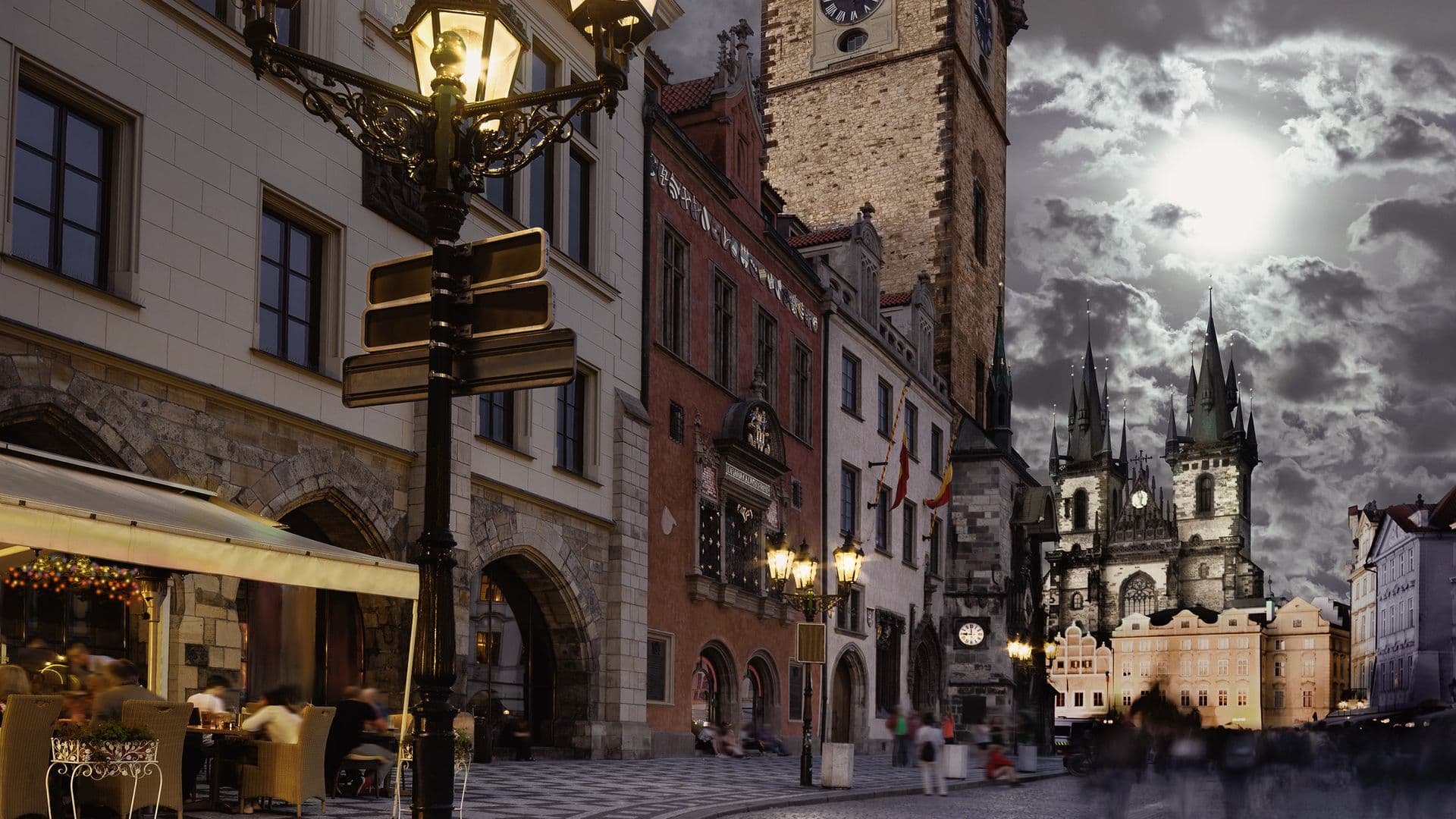
Prague collects stories the way other cities collect buildings. Walk any street in the old centre after dark, and you're passing through layers of legend — rabbis who brought clay to life, knights waiting under mountains, devils who lost bets, and ghosts who've been walking the same cobblestones for five hundred years.
We tell these stories on our tours, and the effect is immediate: the city shifts. A doorway becomes a portal, a church column becomes evidence, a bridge becomes a pact. These aren't fairy tales invented for tourists. They're stories that Praguers have told for centuries, rooted in real places, real people, and the particular atmosphere of a city that has always felt slightly more than natural.
The Golem of Prague — Rabbi Loew's Creation
The most famous legend in Prague belongs to Rabbi Jehuda Loew ben Bezalel (known as the Maharal), the chief rabbi of Prague in the late 16th century. According to the story, Rabbi Loew shaped a figure from clay taken from the banks of the Vltava, inscribed the Hebrew word *emet* (truth) on its forehead, and brought it to life through kabbalistic ritual. Our Jewish Quarter tour visits the Old-New Synagogue where Rabbi Loew is said to have placed the Golem in the attic.
The Golem was created to protect the Jewish community from pogroms — specifically from the blood libel accusations that periodically threatened Prague's ghetto. The clay giant patrolled the streets at night, invisible to gentiles, guarding the gates and defending the community against attack.
The legend says the Golem grew increasingly difficult to control. It became violent, or simply too powerful to manage. Rabbi Loew deactivated it by erasing the first letter from *emet*, leaving *met* — death. The lifeless clay figure was carried to the attic of the Old-New Synagogue (*Staronová synagoga*) in the Jewish Quarter, where — according to tradition — it remains to this day.
The attic of the Old-New Synagogue is not open to the public. The staircase leading up has been sealed. Whether there's anything up there is a question Prague has been declining to answer for over four hundred years. What we do know is that the Old-New Synagogue — built around 1270 — is the oldest active synagogue in Europe, and the atmosphere inside is extraordinary. The low Gothic vaults, the iron grille around the bimah, the dim light — this is a space where the Golem story feels not like fantasy but like a reasonable precaution.
Charles Bridge — The Egg Legend
Every bridge has a foundation myth, and Karlův most (Charles Bridge) has one of the best. The story goes that Emperor Charles IV ordered the bridge's mortar to be strengthened with eggs — and that villages across Bohemia were commanded to send their eggs to Prague for the construction.
The town of Velvary, the legend says, misunderstood the instructions and sent their eggs hard-boiled. The story has been told for centuries as a joke about rural simplicity, but there's a grain of chemistry in it. Medieval builders did sometimes add organic materials — egg whites, milk, even blood — to morite to improve binding. Whether this actually happened at Charles Bridge is debatable, but the bridge has stood since 1357, so whatever went into the mortar worked.
There's another layer to the foundation story. Charles IV was deeply interested in astrology and numerology, and the bridge's foundation stone was laid at a precise astrological moment: 5:31 AM on 9 July 1357. Written as a palindrome in the dating system of the time — 1-3-5-7-9-7-5-3-1 — the sequence ascends and descends symmetrically. Whether Charles actually chose this moment or the story was attached later, it captures something true about the city: Prague has always taken its numbers and its stars seriously.
On our Charles Bridge and Old Town tour, we tell these stories on the bridge itself — standing above the Vltava, looking at the same stonework that's carried traffic and legends for nearly seven centuries.
The Iron Man of Platnéřská Street
On Platnéřská street, near the Clementinum, there's a building with a small niche in the facade containing an iron figure — a knight, roughly rendered, embedded in the wall. This is the Iron Man (*Železný muž*), and his story is one of the darker legends in Prague.
According to the tale, a young knight fell in love with a woman who rejected him. In despair — or in rage, depending on the version — he killed her and was condemned to stand in the wall for eternity, turning to iron as penance. He's allowed to move once every hundred years, and if a virgin speaks to him during that brief window, he's freed. If not, he returns to iron for another century.
The figure is easy to miss — it's small, darkened with age, set into the wall at roughly eye level. Most tourists walk past without noticing. But it's been in that spot for centuries, and the story has been told in Prague for at least as long. The neighbourhood — Platnéřská means "armourers' street" — was historically associated with metalwork, which may have inspired the legend. Or the legend may have inspired the street. Prague doesn't always clarify the sequence.
The Headless Templar
Near the Church of St. James (*Kostel sv. Jakuba*) in the Old Town, the legend persists of a headless Templar knight who wanders the streets on certain nights. The Templars had a commandery in this part of Prague before their order was dissolved in 1312, and the story says that a knight who betrayed his vows was beheaded and condemned to walk the Old Town eternally, carrying his head under his arm.
The headless knight is one of several ghost legends attached to the streets between the Old Town Square and the Ungelt courtyard. The area has been continuously inhabited for over a thousand years, and the density of history — medieval churches, Romanesque cellars, Gothic passages — creates an atmosphere that generates stories naturally.
Whether you believe in ghosts or not, walking these streets after midnight — when the tourist crowds are gone and the stone walls hold the day's warmth — is one of the most atmospheric experiences in Prague. The gas lamps on some of the narrower streets are still lit by hand, and the shadows they throw haven't changed in a century.
The Devil's Column on Vyšehrad
On the grounds of Vyšehrad — the ancient fortress on the cliff above the Vltava — there are three pieces of a broken stone column lying in the grass near the Church of St. Peter and St. Paul. This is the Devil's Column (*Čertův sloup*), and its story involves a bet between a priest and the Devil.
The legend says a priest at Vyšehrad made a wager with the Devil: if the Devil could carry a column from St. Peter's Basilica in Rome to Prague before the priest finished saying Mass, the priest would forfeit his soul. The Devil accepted and flew to Rome, seized a column, and raced back across Europe.
But St. Peter himself intervened, casting the Devil into the sea three times during the flight. Each time, the Devil struggled back into the air with the column. By the time he reached Prague, the Mass was over. The priest had won. The Devil, furious, hurled the column down onto Vyšehrad, where it broke into three pieces. The fragments lie where they fell.
The column pieces are real — you can walk up to them and touch the stone. Scientific analysis suggests the rock is indeed consistent with Mediterranean sources, though how a chunk of foreign stone ended up on a Czech hilltop without supernatural assistance is a question geologists have been less eager to answer than storytellers.
Faust House — The Alchemist's Bargain
At the southern end of Karlovo náměstí (Charles Square) stands a pink-and-white Baroque mansion known as the Faust House (*Faustův dům*). The building has a long association with alchemy, natural science, and rumours of diabolical dealings.
Several of its historical occupants practiced alchemy or natural philosophy: the English adventurer Edward Kelley (who worked with John Dee at the court of Rudolf II) allegedly lived here, as did the Czech alchemist Mladota z Solopysk. By the 18th century, the building's reputation was firmly established — it was the Prague address where a man could sell his soul to the Devil in exchange for knowledge.
The legend attached to the house follows the Faust template: a scholar makes a pact, gains extraordinary knowledge, and is eventually dragged to Hell through the ceiling. The "hole" in the ceiling through which the Devil reportedly extracted his victim was shown to visitors for years — though it was likely structural damage from a much less dramatic cause.
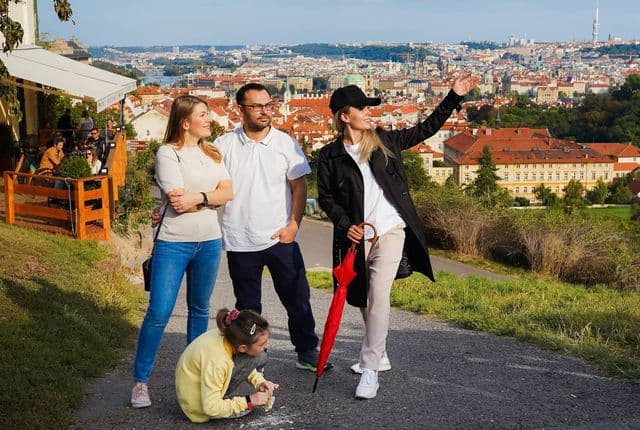
A private guide makes all the difference when exploring this part of Prague.
The building is now part of a hospital complex and is not generally open to visitors, but the exterior on Charles Square is accessible, and the atmosphere of the square itself — vast, quiet, lined with mature trees — makes it easy to understand why Prague's storytellers placed their darkest bargain here.
The Mummified Forearm of St. James
The Church of St. James the Greater (*Kostel sv. Jakuba Většího*) on Malá Štupartská street near the Ungelt is one of Prague's most beautiful Baroque interiors — 21 altars, a painted ceiling, extraordinary acoustics. But the object that draws the most attention hangs just inside the entrance: a mummified human forearm, dark and shrivelled, suspended from a chain near the door.
The story goes that a thief crept into the church at night to steal a jewelled necklace from the statue of the Virgin Mary on the main altar. As he grasped the necklace, the statue's hand seized his arm and held him until morning. No amount of pulling could free him. When the monks arrived at dawn, they found the thief trapped. The only way to release him was to cut off his arm.
The forearm has hung by the entrance for over 400 years as a warning to other would-be thieves. Whether the story is true — or whether the forearm is simply a medieval-era relic with an attached legend — it's undeniably there, undeniably human, and undeniably effective as a deterrent. The church's acoustics, incidentally, are so good that organ concerts here are among the finest in Prague. The forearm sways gently in the draft from the door, and nobody steals from St. James.
Why Prague Collects Legends
There's a reason Prague has more legends per square metre than almost any city in Europe. The city was never comprehensively destroyed — no great fire, no wartime levelling — which means structures from the 10th century stand alongside buildings from the 20th. When a city keeps its old buildings, it keeps its old stories.
Emperor Rudolf II's court (1583-1612) attracted alchemists, astrologers, and natural philosophers from across Europe, giving Prague a reputation for the occult that it has never entirely shaken. The Jewish Quarter preserved its own deep tradition of mysticism and Kabbalistic scholarship. And the Czech national character — with its love of irony, its distrust of authority, and its dark humour — provided the perfect medium for stories that blur the line between history and legend.
The result is a city where you can stand in one spot and touch three centuries of stories. The Golem's attic, the thief's forearm, the Devil's column — these aren't decorations. They're the way Prague remembers itself.
Hear the Stories Where They Happened
Prague's legends are best told in the streets where they're set — under Gothic arches, beside river walls, in the half-light of gas-lit lanes. A private guide who knows the stories and the buildings can connect the two in ways that no book or audio tour can match.
On our Hidden Prague tour, we go beneath the surface — underground passages, alchemical connections, and the legends that live in Prague's oldest spaces. On the Charles Bridge and Old Town tour, we pass the Iron Man, St. James, and the bridge itself, with every legend told in its original setting. Exclusively yours, with your own guide.
For an evening that feels like stepping into a legend of its own, a medieval dinner at U Pavouka puts you in candlelit vaulted cellars with fire dancers and swordsmen — the kind of atmosphere Prague's storytellers have been building for centuries.
Browse all our private tours in Prague.
More Stories and Traditions
Prague's legends are rooted in centuries of real history and living tradition. If the tales of the Golem and the Infant Jesus of Prague sparked your curiosity, these guides dig deeper -- into Czech customs you can experience today and guided ghost walks that bring the old stories to life after dark.
- Czech traditions and culture -- customs, holidays, and etiquette visitors should know
- Prague ghost tour guide -- the best evening walks through the city's haunted streets
For Prague without the Charles Bridge crowds, our private Vyšehrad Fortress tour walks the ridge where the city began — Smetana and Dvořák's resting place, a Romanesque rotunda, and views most tourists never find.
Frequently Asked Questions
Is the Golem still in the Old-New Synagogue attic?
According to tradition, yes — the deactivated clay figure lies in the sealed attic of the Old-New Synagogue. The attic is not open to visitors, and the synagogue has never confirmed or denied its presence. The synagogue itself, dating from around 1270, is open and well worth visiting.
Can you see the mummified forearm at St. James Church?
Yes — it hangs just inside the main entrance of the Church of St. James the Greater on Malá Stupartská street. The church is open to visitors daily and entry is free. The forearm has been displayed for over 400 years.
Where is the Devil's Column on Vyšehrad?
In the grounds of the Vyšehrad fortress, near the Church of St. Peter and St. Paul. The three column fragments lie in the grass and are freely accessible. Vyšehrad is a short metro ride from the centre (line C, Vyšehrad station).
Are Prague ghost tours worth it?
Group ghost tours vary widely in quality. For the most atmospheric and historically grounded experience, a private tour lets the guide adjust the route and stories to what interests you — and avoids the large-group dynamic that tends to turn legends into entertainment.
The Jewish Quarter is one of Prague's most layered neighborhoods, and a knowledgeable guide makes the difference. See our private Jewish Quarter tour for details.
You May Also Like
Want to see Prague for yourself?
Discover Prague's hidden underground-6-640x430.jpg&w=3840&q=75)