What to Pack for Prague — Seasonal Packing List and Local Tips
Prague's weather changes between seasons more dramatically than most visitors expect. Summer can hit 35 degrees Celsius. Winter drops to minus 10. Spring and autumn oscillate between warm sunshine and cold rain within the same week. What you pack depends entirely on when you visit — and on one physical reality that affects every season: the cobblestones.
This guide covers what to bring for each season, what to leave at home, and the practical items most packing lists forget.
Shoes — Cobblestones Are Serious
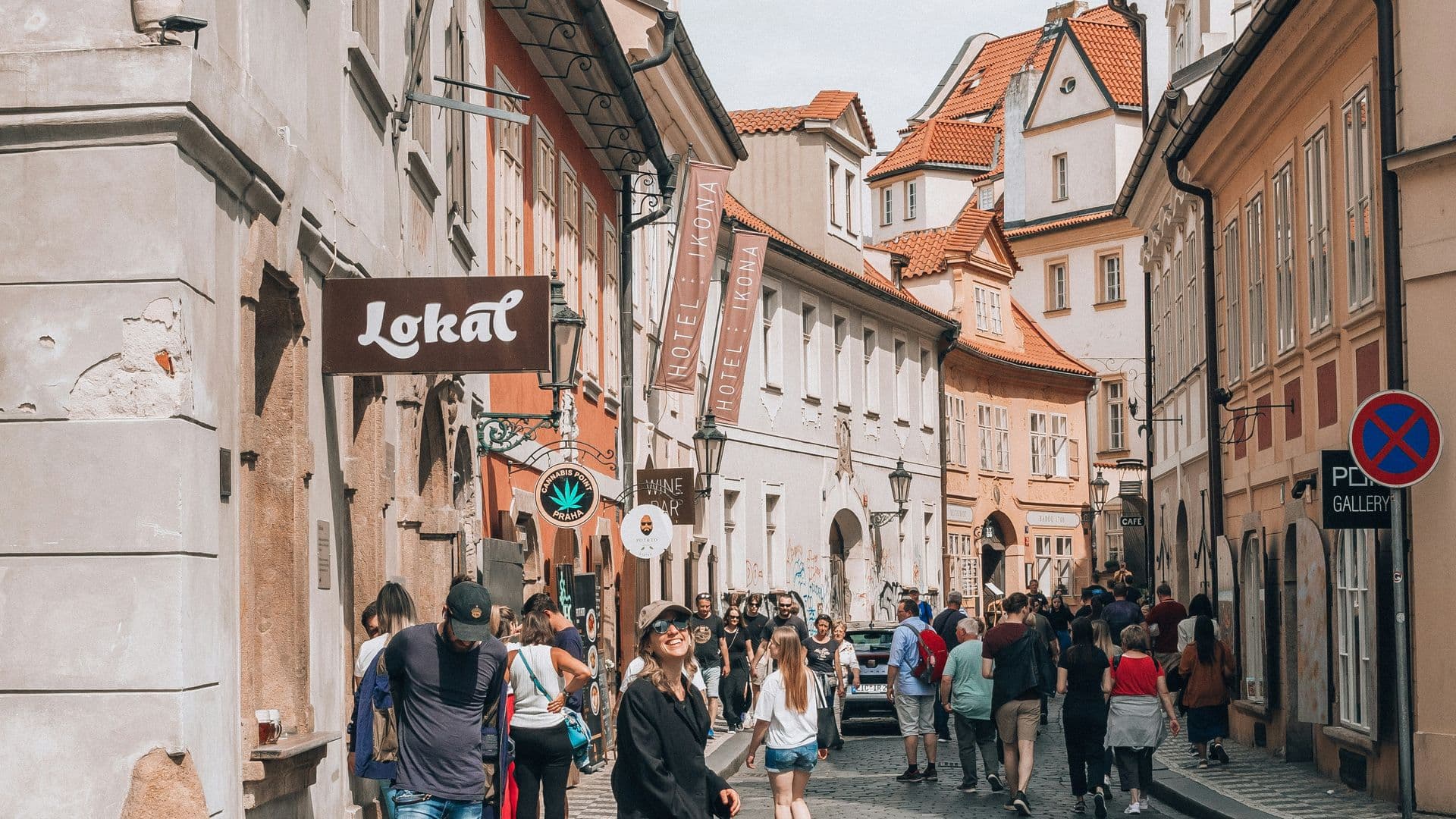
This gets its own section because it matters more than anything else you'll pack. Prague's historic centre is paved with cobblestones — small, uneven stone setts that are picturesque in photos and punishing on feet. You will walk on these surfaces for hours every day. Heels catch between the stones. Thin soles transmit every bump. Flip-flops are an injury waiting to happen.
What works: Comfortable walking shoes with rubber soles, cushioned footbed and ankle support. Trail runners, supportive sneakers or flat leather boots all perform well. Break them in before the trip — new shoes and cobblestones is a painful combination.
What doesn't work: Stilettos, thin-soled dress shoes, ballet flats without cushioning, sandals with no heel strap. These are fine for a taxi-to-restaurant evening, but not for a day of walking.
Insider detail: Czech women who walk Prague daily typically wear flat ankle boots in autumn and winter, and low-profile leather shoes in summer. Nobody who actually walks the city wears heels during the day. If you want one pair of nicer shoes for evening restaurants, pack them separately — but your primary shoes should be built for stone surfaces.
Spring (March to May)
Spring in Prague is unpredictable. March can feel like late winter — grey, damp, below 10 degrees. May can feel like summer — 25 degrees, sunshine, tree blossoms on Petrin Hill. April splits the difference with rain.
Pack:
- Layering system: light base layer + sweater or fleece + waterproof jacket
- Waterproof outer layer (not just water-resistant — Prague spring rain is steady)
- Umbrella (compact, sturdy — cheap ones break in wind)
- Walking shoes with waterproof treatment or Gore-Tex lining
- One warmer layer (down jacket or heavy sweater) for March and early April
- Sunglasses for May
Insider detail: The temperature difference between morning and afternoon in April can be 15 degrees. Start the day at 5 degrees, end it at 20. Layers that you can peel off and stuff into a daypack solve this — a single heavy coat does not.
Summer (June to August)
Prague summers are warm to hot. July averages 25 degrees but regularly hits 30 to 35. Humidity is moderate. Thunderstorms are common in late afternoon — dramatic, brief and heavy.
Pack:
- Lightweight, breathable clothing (cotton or linen)
- Comfortable walking shoes (ventilated if possible — feet swell in heat on cobblestones)
- Sun protection: hat, sunscreen, sunglasses
- Light rain jacket or packable umbrella (for afternoon thunderstorms)
- One light sweater for air-conditioned museums and cool evenings
- Refillable water bottle (Prague tap water is safe and excellent)
Insider detail: Prague's churches and castles are genuinely cool inside — thick stone walls act as natural air conditioning. On the hottest days, a tour of St. Vitus Cathedral or the Old Royal Palace offers 10 degrees of relief. But bring that light sweater if you chill easily in sudden temperature drops.
Autumn (September to November)
Autumn is arguably Prague's most beautiful season — golden light, fewer crowds, the trees in Letna Park and along the Vltava turning amber. But the weather tightens as the season progresses.
Pack:
- Layering system: base + medium warmth + waterproof shell
- Warmer jacket for October and November (temperatures drop to single digits by late October)
- Scarf (useful from mid-October onward)
- Waterproof walking shoes — rain frequency increases and fallen leaves on cobblestones are slippery
- Warm hat and gloves for November
September feels like late summer. November feels like early winter. Pack for the transition.
Winter (December to February)
Prague winters are cold, grey and atmospheric. Snow on the red rooftops of Mala Strana looks like it was designed for photographs. Temperatures sit between minus 5 and plus 3 most days, occasionally dropping further.
Pack:
Planning your visit? A private guide takes the logistics off your plate.
- Heavy winter coat (down or insulated, wind-resistant)
- Warm hat, scarf and gloves (non-negotiable)
- Thermal base layers for extended outdoor time
- Waterproof insulated boots with grip (ice and snow on cobblestones is genuinely dangerous)
- Hand warmers (pocket warmers) for long walks
- Lip balm and moisturiser (indoor heating dries everything)
Insider detail: The Christmas markets run from late November through early January. If you're visiting for the markets, you'll stand outdoors for extended periods drinking mulled wine and eating trdelnik. Dress warmer than you think you need — standing in a market is colder than walking.
Power Adapter
The Czech Republic uses Type E electrical outlets (round pins with grounding pin, 230V). If you're travelling from the US, UK, or Australia, you need an adapter.
A universal travel adapter covers all situations. If buying a Czech-specific adapter, look for Type E/F compatibility — they're interchangeable for most devices.
What NOT to Bring
Too many clothes. Prague has excellent, affordable laundry services and most hotels offer laundry. Pack for 5 days and wash.
Formal evening wear. Prague's best restaurants have a smart-casual dress code at most. A blazer or nice sweater over dark jeans works everywhere. No restaurant requires a suit or cocktail dress.
Excessive cash. Prague is largely cashless — most restaurants, shops and trams accept credit cards and contactless payment. Carry some Czech koruna for small purchases, market stalls and tipping, but don't bring hundreds of euros in cash.
Checked luggage full of "just in case" items. Prague's pharmacies (lekarna) stock everything from sunscreen to cold medicine. Supermarkets (Albert, Billa) sell toiletries at Czech prices, which are lower than Western Europe.
Universal Essentials
Regardless of season, always pack:
- Daypack or crossbody bag (hands-free for cobblestone walking, pickpocket-resistant for trams)
- Phone charger and power bank (Mapy.cz and Litacka app drain batteries)
- Rain protection (Prague rains in every season)
- Comfortable walking shoes (mentioned three times because it's that important)
- Travel insurance documentation
- Copy of passport (separate from the original)
For the best way to experience Prague on foot, our All Prague in One Day tour covers the city with a private guide who adjusts the route to weather conditions. And the Medieval Dinner Show is an indoor experience where the only dress code is willingness to eat with your hands.
Browse all our tours. Exclusively yours, with your own guide.
Frequently Asked Questions
What shoes should I wear in Prague?
Comfortable walking shoes with rubber soles and good cushioning. The city centre is cobblestones — flat, supportive shoes are essential. Break them in before the trip. Avoid heels, thin-soled dress shoes and flip-flops for daytime walking.
Do I need a power adapter for Prague?
Yes, if travelling from outside continental Europe. The Czech Republic uses Type E outlets (round pins, 230V). A universal travel adapter is the simplest solution.
Is Prague tap water safe to drink?
Yes, Prague tap water is safe, clean and tastes good. Bring a refillable bottle and fill it at your hotel or any public water fountain. Bottled water is available everywhere but unnecessary.
What should I wear to restaurants in Prague?
Smart casual works at every Prague restaurant, including Michelin-starred ones. Dark jeans, a nice top or sweater, and clean shoes. No restaurant requires formal wear.
You May Also Like
Want to see Prague for yourself?
Take our flagship Prague tour

-6-640x430.jpg&w=3840&q=75)