Prague to Budapest — Train, Bus and the Best Way to Travel
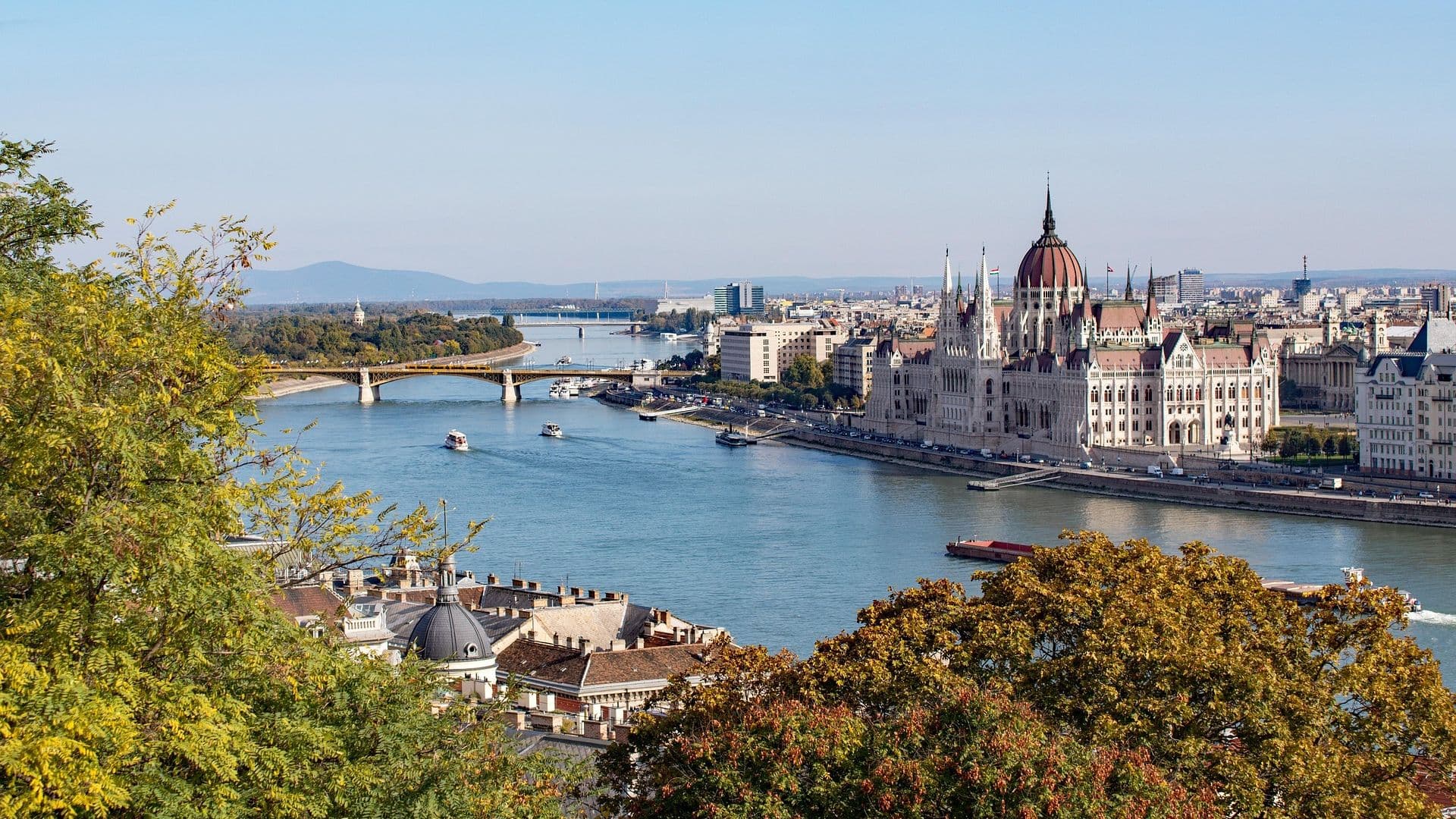
Prague and Budapest sit about 525 km apart, connected by trains, buses, and a handful of budget flights. Both cities are Central European classics, and many travelers want to see both in a single trip. The question isn't whether to go — it's how.
The short answer: the train is the most comfortable, the bus is the cheapest, and flying only makes sense if you find a fare under 30 EUR and don't mind the airport hassle. Here's the full breakdown.
Direct Train — The Classic Choice
A direct train runs between Praha hlavní nádraží (Prague main station) and Budapest-Keleti (Budapest's main terminus) operated by a combination of Czech Railways (ČD), Hungarian Railways (MÁV), and sometimes ÖBB carriages.
The journey takes approximately 6 hours 30 minutes to 7 hours, depending on the service. Most trains follow the route through Brno, Bratislava, and into Hungary via Győr before reaching Budapest.
Departures: there are typically 3-5 direct trains per day. The earliest departs Prague around 6:00 AM, arriving Budapest in the early afternoon. An afternoon departure around 14:00-15:00 gets you to Budapest by late evening. Schedules shift seasonally, so check the timetable for your travel date.
Prices depend on how far in advance you book and which operator runs the service. Early booking tickets (available on ÖBB and ČD websites) start from around 19-25 EUR for standard class. Standard advance fares run 40-60 EUR. Full-price day-of-travel tickets can reach 70-90 EUR (as of 2026).
Booking: The easiest platform is oebb.at (ÖBB), which sells tickets for the full Prague-Budapest route regardless of which railroad operates the train. Mobile tickets are accepted — no printing needed. You can also book at cd.cz (Czech Railways) or mavcsoport.hu (Hungarian Railways), though the Hungarian site is less user-friendly in English.
On board: the trains are standard European intercity coaches. Second class is comfortable with power outlets and decent legroom. First class offers wider seats and quieter carriages. Some services include a restaurant car; others have only a snack trolley. We recommend bringing your own food and water for a 7-hour journey — a sandwich from a Prague bakery tastes better than anything from the trolley.
A detail that experienced train travelers know: the stretch through Slovakia is brief but relevant. The train passes through Bratislava — sometimes stopping for 5-10 minutes at Bratislava hlavná stanica. If you've never been to Bratislava, you'll catch a glimpse of the castle on the hill above the Danube from the train window. It's not enough to constitute a visit, but it's a pleasant surprise.
RegioJet Bus — The Cheapest and Often Fastest
RegioJet operates a direct bus service from Prague (Florenc bus station or ÚAN Florenc) to Budapest (Nepliget bus station). The journey takes approximately 6 hours 30 minutes — roughly the same as the train, sometimes faster depending on traffic.
Prices are RegioJet's main advantage. Tickets start from as low as 10-15 EUR when booked in advance. Even last-minute fares rarely exceed 30 EUR. This makes the bus consistently the cheapest option on this route.
What you get: RegioJet buses are not bare-bones coaches. They're modern, air-conditioned, and come with free Wi-Fi, power outlets, entertainment screens, and a free hot drink. The seats recline to a reasonable degree, and there's a toilet on board. For a 6-7 hour budget journey, it's surprisingly comfortable.
The honest downside: a bus is still a bus. You're sitting in traffic on the motorway, the ride is less smooth than a train, and the legroom — while decent — doesn't match rail. If you get motion-sick on long road trips, take the train.
Book at regiojet.com. The English site is clean and mobile tickets work on the driver's scanner. Departures are typically 2-3 per day.
FlixBus — Another Bus Option
FlixBus also runs Prague to Budapest, with similar journey times (6.5-7.5 hours) and slightly lower prices than RegioJet on some departures. The catch: FlixBus comfort is a tier below RegioJet. The seats are narrower, the legroom tighter, and the free amenities fewer.
FlixBus is worth checking if RegioJet is sold out or if you find a significantly cheaper fare. Otherwise, RegioJet is the better bus experience. Book at flixbus.com.
Flying — When It Does and Doesn't Make Sense
Several budget airlines (Ryanair, Wizz Air) operate Prague-Budapest flights. The flight itself takes about 1 hour 15 minutes. Sounds great — until you add up the real time.
The realistic math:
- Getting to Prague Airport: 45-60 minutes from Old Town
- Check-in and security: arrive 90 minutes early for budget airlines
- Flight: 1 hour 15 minutes
- Deplaning and baggage: 30 minutes
- Budapest Airport to city center: 35-50 minutes
Total door-to-door: approximately 5-6 hours. That's barely faster than the train, and the train takes you city center to city center with no security lines, no luggage restrictions, and no middle seat at 35,000 feet.
Flying makes sense only if you find a fare under 25-30 EUR with hand luggage only AND you're staying near Budapest Airport rather than in the city center. For everyone else, the train or bus wins.
Overnight Options — Sleep on the Way
For travelers who want to save a night's accommodation, there are occasional night trains on the Prague-Budapest route. These typically depart Prague in the late evening (around 21:00-23:00) and arrive in Budapest early morning (around 5:00-7:00 AM).
Sleeping options on night trains include reclining seats (cheapest, least comfortable), couchettes (6-person compartments with basic berths), and sleeper cabins (1-3 person compartments with proper beds). A sleeper cabin for two costs roughly 80-120 EUR total — expensive, but you're combining transport and accommodation.
Night train availability on this route varies by season and operator. Check oebb.at for the Euronight services. When available, they're a genuinely fun way to travel — you fall asleep in one capital and wake up in another. The romance of night trains is real, even if the sleep quality isn't always five-star.
A practical warning: night trains sell out weeks in advance during summer and around holidays. If this option appeals to you, book as early as possible.
What to See Along the Way
The Prague-Budapest route crosses three countries, and the scenery tells a quiet story of Central Europe's diversity.
The Czech stretch (Prague to Brno, about 2 hours) passes through the Bohemian-Moravian Highlands — rolling green hills, scattered farms, and small towns with church spires. It's gentle, pastoral landscape. Brno itself is a quick stop — if you're interested, the Špilberk fortress is visible from the train on the hillside above the station.
South Moravia to Bratislava is the most scenic section. The train crosses through wine country — vineyards stretch across hillsides near Břeclav and into Slovakia. Bratislava appears briefly, with the castle perched above the Danube and the UFO-shaped observation tower on the Nový Most bridge visible from the right side of the train.
The Hungarian plain (Győr to Budapest) is flat and agricultural — wide fields of wheat and sunflowers in summer, bare and atmospheric in winter. The approach to Budapest is urban and industrial, but the arrival at Budapest-Keleti is grand. The station was built in 1884, and its facade is one of the finest railway station frontages in Europe.
Planning your visit? A private guide takes the logistics off your plate.
Seat tip: sit on the left side (facing forward) for the best views of Bratislava Castle and the Danube crossing. On the right side, you'll catch more of the South Moravian vineyards.
Practical Booking Tips
Book early for the best fares. OBB releases tickets up to 6 months in advance. The cheapest fares sell first — if your dates are firm, book the moment tickets become available.
Weekday trains are cheaper and emptier than Friday and Sunday services. If your schedule is flexible, traveling on Tuesday or Wednesday saves money and guarantees a quiet carriage.
Bring food and water. Restaurant cars are hit-or-miss on this route — some services have them, others don't. A 7-hour journey requires sustenance, and a sandwich from a Prague bakery is both cheaper and better than anything from a trolley.
Charge your devices before boarding. Most trains have power outlets, but some older carriages have intermittent sockets. A full battery guarantees navigation, entertainment, and the ability to book your Budapest hotel en route.
Budapest-Keleti is well-connected to the city. Metro line M2 (red) stops directly underneath the station and takes you to the center (Deak Ferenc ter, the main interchange) in 4 stops. A single Budapest public transport ticket costs about 450 HUF (roughly 1.20 EUR).
Which Option Should You Choose?
Here's how we break it down for guests:
Option | Time | Price Range | Best For
Direct train | 6.5-7h | 19-90 EUR | Comfort, scenery, flexibility
RegioJet bus | 6.5h | 10-30 EUR | Budget, young travelers
FlixBus | 6.5-7.5h | 8-25 EUR | Lowest price when RegioJet sold out
Flight | 5-6h (door to door) | 30-100 EUR | Only if very cheap fare + hand luggage
Night train | overnight | 40-120 EUR | Saving accommodation, adventure
Our recommendation: the daytime train for most travelers. The extra cost over the bus buys you genuine comfort — more space, a smoother ride, the ability to walk to a restaurant car, and views of three countries sliding past your window. The bus is the right choice if you're on a tight budget and don't mind 6.5 hours on the motorway.
Before You Leave Prague
Budapest is spectacular, but so is the city you're leaving behind. If you haven't yet explored Prague with a guide who knows its secrets — the hidden courtyards behind the Old Town facades, the alchemists' lane above the castle, the underground passages beneath the modern streets — you're missing the layers that make Prague extraordinary.
Our All Prague in One Day private tour covers Prague Castle, Charles Bridge, Old Town, and the Jewish Quarter in a single walk. Exclusively yours, with your own guide, and a pace that fits how you travel.
For a memorable last evening in Prague before your Budapest train, the Medieval Dinner Show at U Pavouka delivers fire dancers, sword swallowers, and a five-course feast in a candlelit cellar. It's the kind of send-off that sets a high bar for Budapest's ruin bars.
Still deciding between the two cities? Read our Prague vs Budapest comparison for an honest side-by-side.
Browse all our private tours in Prague and Czech Republic.
Frequently Asked Questions
How long is the train from Prague to Budapest?
The direct train takes approximately 6 hours 30 minutes to 7 hours. The route passes through Brno and Bratislava. There are typically 3-5 direct departures per day.
Is there a direct bus from Prague to Budapest?
Yes. RegioJet and FlixBus both run direct buses taking about 6.5-7.5 hours. RegioJet departs from Florenc bus station and is the more comfortable option. Prices start from around 10 EUR.
Should I fly or take the train from Prague to Budapest?
The train is usually better. Door-to-door, flying takes 5-6 hours once you add airport transfers, security, and boarding. The train takes 6.5-7 hours but goes city center to city center with no hassle. Flying only wins if you find a fare under 30 EUR.
Is there a night train from Prague to Budapest?
Night trains run on this route seasonally, typically departing Prague around 21:00-23:00 and arriving Budapest by 5:00-7:00 AM. Options include reclining seats, couchettes, and sleeper cabins. Book early — they sell out fast in summer.
Do I need a visa to travel from Prague to Budapest?
No. Both Czech Republic and Hungary are in the EU and the Schengen Area. There are no border checks or passport controls on the train or bus. Bring your passport or EU ID card for identification purposes.
You May Also Like
Want to see Prague for yourself?
Take our flagship Prague tour
-6-640x430.jpg&w=3840&q=75)