Best Museums in Prague — A Guide Beyond the Obvious
Prague has over 60 museums and galleries, and most visitors see two or three at most. The National Museum gets the foot traffic, the Jewish Museum gets the recommendations, and everything else tends to blur into "maybe if we have time." That's a mistake. Prague's museum scene ranges from world-class art collections to eccentric specialty museums, and some of the best ones sit in buildings that are themselves worth the visit. A guided Jewish Museum visit lets you understand which of the five synagogues holds what.
We guide visitors through Prague's cultural institutions regularly, and these are the museums we recommend most — not just the famous ones, but the ones that leave the strongest impression.
National Museum (Národní Muzeum)
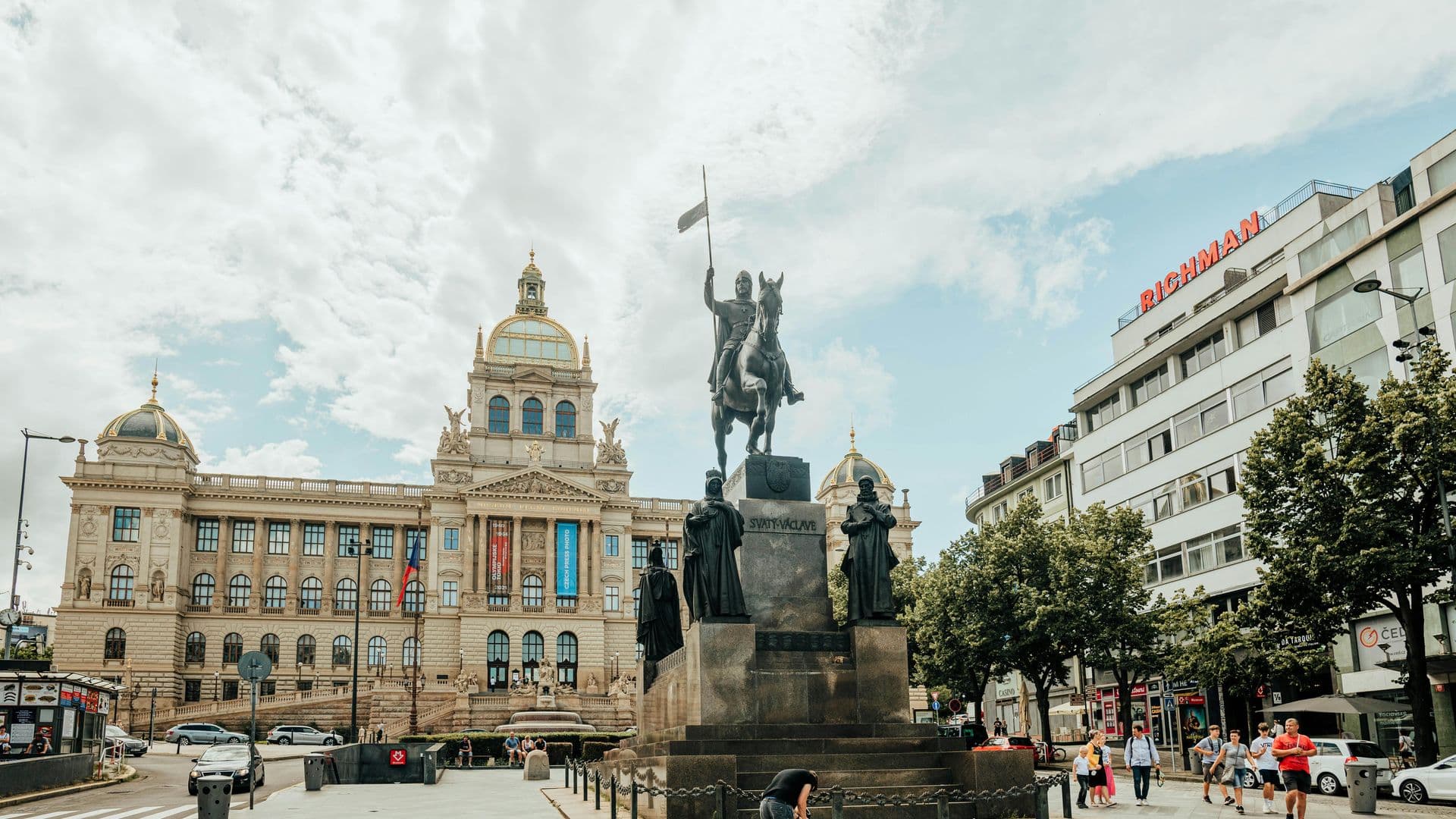
The grand neo-Renaissance building dominating the top of Wenceslas Square reopened after a massive renovation and is now one of Prague's finest museum experiences. The main building houses natural history, Czech history, and cultural exhibitions across four floors.
The building itself is the first exhibit — the entrance hall, the monumental staircase, and the restored ceiling paintings are spectacular. The history exhibitions covering Czechoslovak independence, the communist era, and the Velvet Revolution are excellent and well-presented with English labels.
Practical details: the combined ticket for the old and new buildings costs about 300 CZK. Open Tuesday–Sunday. Allow 2–3 hours for the main building alone.
Insider tip: the top-floor terrace has one of the best views down Wenceslas Square — and almost nobody goes up there.
National Gallery — Czech Art Across the Centuries
Prague's National Gallery is split across multiple buildings, each housing a different era:
Veletržní palác (Trade Fair Palace) — Holešovice's functionalist masterpiece holds the modern and contemporary collections. Czech Cubism, Surrealism, and 20th-century European art in a building designed by Josef Fuchs and Oldřich Tyl in the 1920s. This is one of Europe's most underrated modern art museums. In January, you can have entire floors to yourself.
Schwarzenberský palác (Schwarzenberg Palace) — on Hradčanské náměstí near Prague Castle, this Renaissance palace houses Baroque art. The combination of 17th-century architecture and period art creates a cohesive experience.
Šternberský palác (Sternberg Palace) — European Old Masters, including works by Dürer, Cranach, and El Greco. Small but focused collection near Prague Castle.
Salm Palace — 19th-century Czech art.
A combined ticket covers all National Gallery locations for about 500 CZK, valid for multiple days. Start at Veletržní palác if you're choosing one.
Jewish Museum in Prague
The Jewish Museum operates six sites in Josefov (the Jewish Quarter), including four historic synagogues, the Old Jewish Cemetery, and the Robert Guttmann Gallery. Together, they tell the story of Jewish life in Prague from the 13th century through the Holocaust and beyond.
The Old Jewish Cemetery — with 12,000 tombstones layered on top of each other because the community had no space to expand — is one of the most powerful historical sites in Europe. The Pinkas Synagogue has the names of 77,297 Czech and Moravian Holocaust victims hand-painted on its walls. The Spanish Synagogue has a Moorish interior that rivals anything in Seville.
Practical details: combined ticket about 600 CZK. Allow 2–3 hours. Some sites close on Saturdays and Jewish holidays.
Museum of Decorative Arts (UPM)
Overlooking the Rudolfinum concert hall, UPM houses one of Central Europe's finest collections of applied arts — Bohemian glass, Czech Cubist furniture, textiles, fashion, and graphic design. The glass collection is particularly remarkable, tracing Czech glass production from medieval times to contemporary art glass.
The building is a neo-Renaissance gem with beautifully restored interiors. Exhibitions rotate frequently, and the permanent collection is well-curated with English labels.
Practical details: about 250 CZK. Open Tuesday–Sunday. Allow 1.5–2 hours.
DOX Centre for Contemporary Art
In Holešovice, DOX occupies a converted factory and hosts rotating exhibitions of contemporary art, architecture, and design. The exhibitions are provocative, thought-provoking, and well-produced. The rooftop Gulliver airship — a 42-metre zeppelin structure housing a reading room — is an installation in itself.
DOX represents a different Prague from the castles and churches — a city with a thriving contemporary cultural scene that most tourists never encounter.
Practical details: about 250 CZK. Open Thursday–Monday. Allow 1.5–2 hours.
Mucha Museum
Dedicated to Alfons Mucha, the Czech Art Nouveau master whose posters, paintings, and decorative designs defined the style at the turn of the 20th century. The museum is small but focused, covering Mucha's career from his Parisian poster years through the monumental Slav Epic cycle.
The museum sits on Panská street near Wenceslas Square. For Mucha's most ambitious work — the 20-canvas Slav Epic cycle — visit the National Gallery's Veletržní palác where it's currently displayed.
Practical details: about 350 CZK. Open daily. Allow 1 hour.
National Technical Museum
One of Prague's hidden strengths. The Technical Museum in Holešovice has outstanding collections of vintage cars, motorcycles, trains, aircraft, and industrial machinery. The transportation hall alone — with dozens of historic vehicles and a full-size steam locomotive — is worth the visit.
The astronomy and photography sections are excellent, and the museum's position in Holešovice puts it near Letná Park for a combined half-day outing.
Practical details: about 250 CZK. Open Tuesday–Sunday. Allow 2–3 hours (especially with children).
A private guide makes all the difference when exploring this part of Prague.
Kampa Museum
On Kampa Island, this museum of modern Central European art occupies a converted watermill. The permanent collection includes works by Czech sculptor Otto Gutfreund, painter František Kupka, and Slovak artist Jiří Kolář. The museum's riverside setting and sculpture garden are atmospheric, and the view from the cafe terrace looks directly across at Charles Bridge.
Practical details: about 300 CZK. Open daily. Allow 1–1.5 hours.
Oskar Schindler's Factory Museum Alternative: The City Gallery Prague
Prague's City Gallery (GHMP) operates several venues including the House of Photography (Dům fotografie), Stone Bell House on Old Town Square, and Colloredo-Mansfeld Palace. They host some of Prague's most interesting temporary exhibitions — photography, installation art, and experimental projects.
Stone Bell House is particularly worth checking — the Gothic facade on Old Town Square hides a medieval interior used for exhibitions and concerts.
Kafka Museum
On the Malá Strana riverbank, the Franz Kafka Museum covers the life and work of Prague's most famous literary figure through manuscripts, photographs, first editions, and multimedia installations. The approach is atmospheric rather than academic — dimly lit rooms, ambient sound, and projection create an immersive experience.
The David Černý sculpture in the courtyard — two figures urinating onto a map of the Czech Republic, a political commentary — is worth seeing regardless of the museum.
Practical details: about 260 CZK. Open daily. Allow 1–1.5 hours.
Museum Day — Combining Visits
If you're planning a museum-focused day, here's a route our guests find effective:
Morning: Jewish Museum (2–3 hours) → Lunch in Josefov → Afternoon: National Museum (2 hours) or National Gallery at Veletržní palác (2 hours).
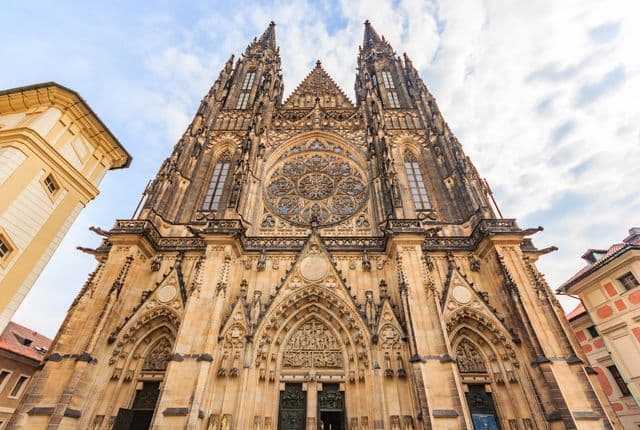
Alternatively: Morning: Prague Castle and St. Vitus Cathedral → Lunch in Malá Strana → Afternoon: Kampa Museum + Kafka Museum (both riverside, walking distance).
Explore Prague's Culture With a Guide
Our guides know which museums match your interests and how to build them into a day that flows. Our All Prague in One Day private tour passes through the Jewish Quarter, Old Town, and the castle area — with museum recommendations woven into the route. Exclusively yours, with your own guide.
For an evening of culture in a different form, the Medieval Dinner Show at U Pavouka — fire dancers, sword swallowers, and a Gothic cellar — offers Prague's most theatrical evening.
Browse all our private tours of Prague and Czech Republic.
More Culture and Arts in Prague
Prague's cultural scene extends well beyond its flagship museums. The city is home to world-class galleries, a rich literary heritage, and dozens of locations immortalised on film. These guides explore the artistic and creative side of the Czech capital.
- Best art galleries in Prague -- from national collections to independent spaces
- Prague literary guide -- Kafka, Kundera, and the city's bookish soul
- Prague film locations -- where your favourite movies were shot
- Prague culture mile -- a walking route through the city's top cultural venues
- Books and movies set in Prague -- what to read and watch before you visit
Frequently Asked Questions
What is the best museum in Prague?
It depends on your interests. For history: the National Museum. For art: the National Gallery at Veletrzni palac. For emotional impact: the Jewish Museum. For contemporary art: DOX Centre.
How much do Prague museums cost?
Most range from 200-500 CZK (8-20 EUR). The Jewish Museum combined ticket and National Gallery multi-site pass offer the best value for multiple visits.
Is the Prague Museum Pass worth it?
Prague does not have a single comprehensive museum pass like some cities. Individual tickets or the National Gallery multi-site pass are the best options.
Are Prague museums open on Mondays?
Many museums close on Mondays. The National Museum, Jewish Museum, and Mucha Museum are open daily. DOX closes on Tuesdays and Wednesdays. Always check individual museum websites.
Are museums in Prague in English?
Most major museums have English labels and audio guides. The Jewish Museum, National Museum, and DOX all have excellent English-language materials.
Want to learn more on the ground? Our private Jewish Quarter tour covers the synagogues, the cemetery, and the stories behind Josefov.
You May Also Like
Want to see Prague for yourself?
Take our flagship Prague tour-6-640x430.jpg&w=3840&q=75)