Karlstejn Castle — The Fortress That Guarded Crown Jewels
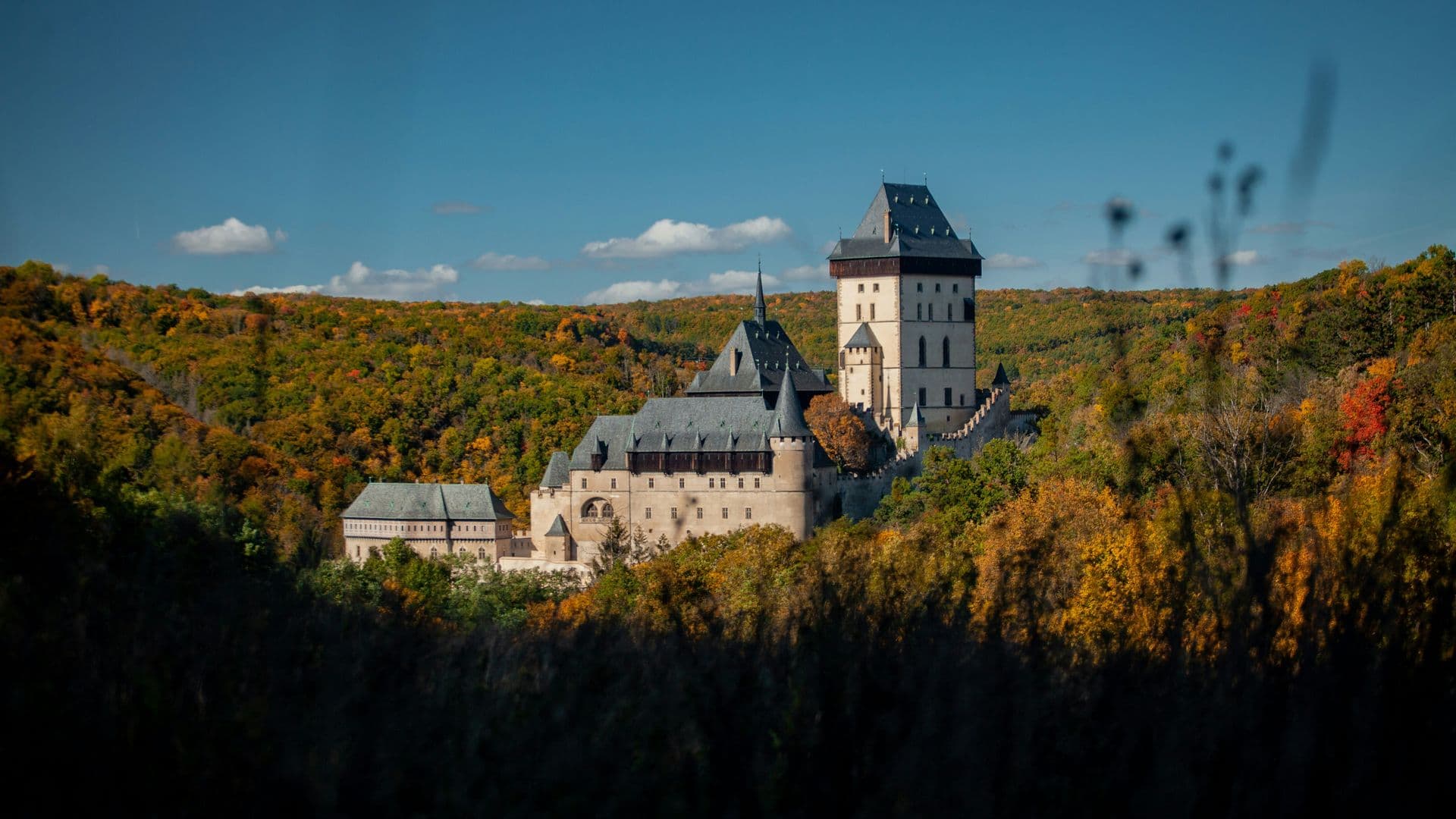
In 1348, Emperor Charles IV ordered the construction of a castle with a single, extraordinary purpose — to protect the crown jewels of the Holy Roman Empire and the most sacred relics of medieval Christendom. He chose a limestone ridge above the Berounka River valley, 30 kilometres southwest of Prague, and built upward. The result was Karlštejn, a fortress designed around one idea: nothing reaches the top unless Charles wanted it to.
We take guests to Karlštejn more than almost any other day trip from Prague, and the reason is simple. The castle tells a story that connects directly to the city itself — the same emperor who built Charles Bridge, founded the university, and made Prague the capital of the Holy Roman Empire also built this fortress in the hills to keep his most important possessions safe. Understanding Karlštejn helps you understand Prague.
Why Charles IV Built It Here
Charles didn't choose this site for its views, though the valley below is striking. He chose it for defence. The castle sits on a steep rocky spur with natural protection on three sides. The layout follows a vertical hierarchy — each level higher than the last, with the most sacred spaces at the very top. The lower courtyards held administrative buildings and the garrison. The middle tier contained the imperial palace and the Church of Our Lady. The highest tower, the Great Tower, held the Chapel of the Holy Cross, where the crown jewels and relics were stored behind walls six metres thick.
The construction took about 17 years, from 1348 to roughly 1365. Charles personally oversaw the design, and the theological programme of the interior decoration — especially the chapel paintings by Master Theodoric — reflects his belief that the castle was not just a treasury but a spiritual fortress. The 129 panel paintings in the Chapel of the Holy Cross, each depicting a saint or church father, are among the finest examples of Gothic panel painting in Europe.
One detail that surprises visitors: women were originally forbidden from entering the upper levels of the castle. Charles's rules governing access were strict — the fortress functioned almost like a fortified monastery, with specific protocols for who could approach the relics and under what circumstances.
What Happened Over the Centuries
The castle withstood a seven-month Hussite siege in 1422 — the radical Hussite forces surrounded it but could not break through. That episode cemented its reputation.
By the time the Habsburgs took control, the castle had lost its original purpose. The jewels were in Prague, and Karlštejn gradually fell into disrepair. The transformation you see today came in the late 19th century, when architect Josef Mocker led a major Neo-Gothic reconstruction between 1887 and 1899. Mocker's restoration was thorough — some would say too thorough. He imposed a unified Gothic vision that erased centuries of later additions. Architectural historians debate whether the result is faithful reconstruction or romantic reinvention. Either way, the exterior you photograph today is largely Mocker's work, built on Charles IV's bones.
The Two Tour Circuits
Visiting Karlštejn means choosing between two interior tour circuits, each covering different parts of the castle.
Circuit 1 is the standard route and the one most visitors take. It covers the imperial palace, the Great Hall, the royal bedchamber, and the Church of Our Lady. The interiors include period furnishings, Gothic wall paintings, and a treasury exhibition. The tour takes about 50 minutes and runs in Czech and English. This circuit is available throughout the open season and doesn't require advance booking on most days, though summer weekends fill up.
Circuit 2 is the one that draws art historians and anyone with a serious interest in medieval culture. It includes the Chapel of the Holy Cross in the Great Tower — the room Charles IV built to house the crown jewels. The walls are inlaid with over 2,000 semi-precious stones, the ceiling is gilded, and Master Theodoric's 129 panel paintings surround you on every side. The effect is dense, almost overwhelming — this was designed to feel like stepping into a jewel box. Circuit 2 runs only from May through November, requires advance reservation, and has limited daily capacity. If this is important to you, book early. We arrange reservations for our guests as part of the tour planning.
A practical note: photography is not allowed inside the Chapel of the Holy Cross. The lighting is controlled to protect the paintings, and the guides enforce the rule firmly.
The Walk from the Village
Getting to Karlštejn from Prague is straightforward — about 40 minutes by car, or 40 minutes by train from Praha hlavní nádraží to the village of Karlštejn station. But the castle isn't at the station. From the village, you walk approximately 1.5 kilometres uphill to the castle entrance. The path follows the main village street, lined with souvenir shops, small restaurants, and ice cream stands, before it narrows and climbs through the woods to the castle gate.
The walk takes most people 20 to 30 minutes. The gradient is steady but not extreme — families with children manage it regularly. Wear comfortable shoes, especially if the ground is wet. There is no vehicle access to the castle itself, so everyone walks this stretch regardless of how they arrive.
We always tell guests to treat the walk as part of the experience rather than an obstacle. The village has a pleasant, unhurried character, and the moment the castle comes into full view above the trees is worth the climb. In summer, the path can be busy with day-trippers by midday, so an earlier arrival means a quieter walk and shorter queues at the ticket office.
For guests with mobility limitations, this uphill walk is the main accessibility challenge. There is no shuttle service. If the climb is a concern, let us know when planning — we can discuss alternatives or adjust expectations.
Lunch in the Village
The village of Karlštejn sits along the Berounka River and has a handful of restaurants that serve honest Czech food. Our recommendation is to eat in the village after visiting the castle, when the walk back downhill has worked up an appetite.
Restaurace Pod Draci Skalou sits right along the river and serves solid Czech classics — svíčková (beef in cream sauce), roast duck with cabbage and dumplings. Portions are generous and prices are well below Prague restaurant levels. On warm days, the terrace tables overlooking the water are the best seats.
Several smaller spots along the main street offer grilled sausages, trdelník, and beer. The local Berounský pivovar (Beroun brewery) produces a clean lager that pairs well with the heavy food. If you're visiting on a weekday outside peak season, check which restaurants are open — some close on Mondays or reduce hours in shoulder months.
Insider Details Worth Knowing
The well is 80 metres deep. In the lower courtyard, the castle well was cut through solid limestone — an engineering feat for the 14th century. Guides sometimes demonstrate the depth by dropping a pebble and counting the seconds before the splash. The sound carries up the shaft in a way that makes the scale real.
Charles IV's private oratory connects the imperial bedchamber to the Church of Our Lady via a small window. He could observe mass without leaving his private quarters — a privilege of rank that also reflects his genuine piety. The window is easy to miss if the guide doesn't point it out.
This day trip is best with a guide who handles the logistics and storytelling. Meet our team.
The village has a nativity scene museum. The Muzeum Betlémů, tucked along the main street, houses a collection of hand-carved wooden nativity scenes — a Czech folk tradition. It takes 15 minutes to visit and is a quiet counterpoint to the castle's grandeur.
The Berounka valley is cycling country. A well-maintained bike path follows the river from Beroun through Karlštejn village and beyond. If you have a full day and decent weather, combining a castle visit with a short ride along the river is one of the better outdoor options near Prague.
The castle closes earlier than you'd think. Last entry for Circuit 1 is typically 16:00 or 16:30 in summer, earlier in shoulder season. Arriving at 15:00 and expecting a leisurely visit is a common mistake — plan to be at the ticket office by early afternoon at the latest.
Getting There from Prague
By car, take the D5 motorway toward Plzeň and exit at Loděnice or Beroun. The drive takes about 40 minutes depending on traffic. Parking is available in the village below, a short walk from where the uphill path begins.
By train, the route from Praha hlavní nádraží runs through the Berounka valley — the scenery along this stretch is some of the prettiest rail travel near Prague. Trains depart roughly every hour, and the ride takes about 40 minutes. The station is in the village, and you walk from there.
For most of our guests, a private transfer is the simplest option. We handle the logistics, the driver waits in the village while you visit, and you don't have to think about timetables or parking. The flexibility also means we can combine Karlštejn with a stop in Beroun or another nearby site on the return to Prague.
Visit Karlštejn With Us
Karlštejn is the kind of place that rewards having someone who knows the story. The architecture, the symbolism of the chapel programme, the complicated history of siege and reconstruction — a knowledgeable guide turns a castle visit into a narrative that connects back to everything you see in Prague.
Our private Karlštejn Castle tour includes hotel pickup, transport, and a guide who walks you through the full history — from Charles IV's original vision to Mocker's 19th-century reconstruction. Exclusively yours, with your own guide.
If you're spending more time in Prague, our All Prague in One Day private tour covers the city's major landmarks in a single walk. And for a completely different kind of evening, a medieval dinner show at U Pavouka Tavern — fire dancers, swords, and a multi-course feast eaten with your hands — is the kind of Prague night people remember.
Browse all our private tours from Prague.
Frequently Asked Questions
How far is Karlštejn from Prague?
About 30 kilometres southwest, roughly 40 minutes by car or train. The train from Praha hlavni nadrazi runs through the Berounka valley with departures roughly every hour. From the village station, it's a 1.5-kilometre uphill walk to the castle entrance.
Is Karlštejn Castle worth visiting?
If you have any interest in medieval history or the story of Charles IV — the emperor who built Prague as we know it — then yes, without question. The Chapel of the Holy Cross alone, with its 129 Gothic panel paintings and jewel-encrusted walls, is one of the most extraordinary interiors in Central Europe.
How long do you need at Karlštejn?
Plan about three hours total: 20-30 minutes for the uphill walk, 50 minutes for the tour circuit, time to explore the courtyards, and the walk back down. If you visit both circuits and have lunch in the village, a half-day is realistic.
When is Karlštejn Castle open?
The castle is open from March through November, with the fullest schedule from May through September. Circuit 2 (Chapel of the Holy Cross) operates May through November only and requires advance reservation. Shoulder months have reduced hours. The castle is closed Mondays except in July and August.
Can you combine Karlštejn with other day trips?
Yes — Karlštejn pairs well with Cesky Sternberk Castle, which is southeast of Prague. With an early start and a car, you can visit both in a day. The contrast between the two — imperial treasury fortress versus family-owned aristocratic seat — makes for a rich comparison.
You May Also Like
Want to see Prague for yourself?
Visit Karlštejn Castle on our tour