50 Surprising Facts About Prague You Probably Didn't Know
Prague is one of those cities where every street corner has a story, and most of them are stranger than fiction. After guiding thousands of visitors through the city, we've collected facts, trivia, and historical oddities that don't make it into most guidebooks. Some are genuinely surprising. A few are hard to believe. All of them are true — or at least as true as seven centuries of overlapping legends and records allow.
History and Foundations
1. Prague Castle is the largest ancient castle complex in the world, covering approximately 70,000 square metres — roughly the size of seven football fields.
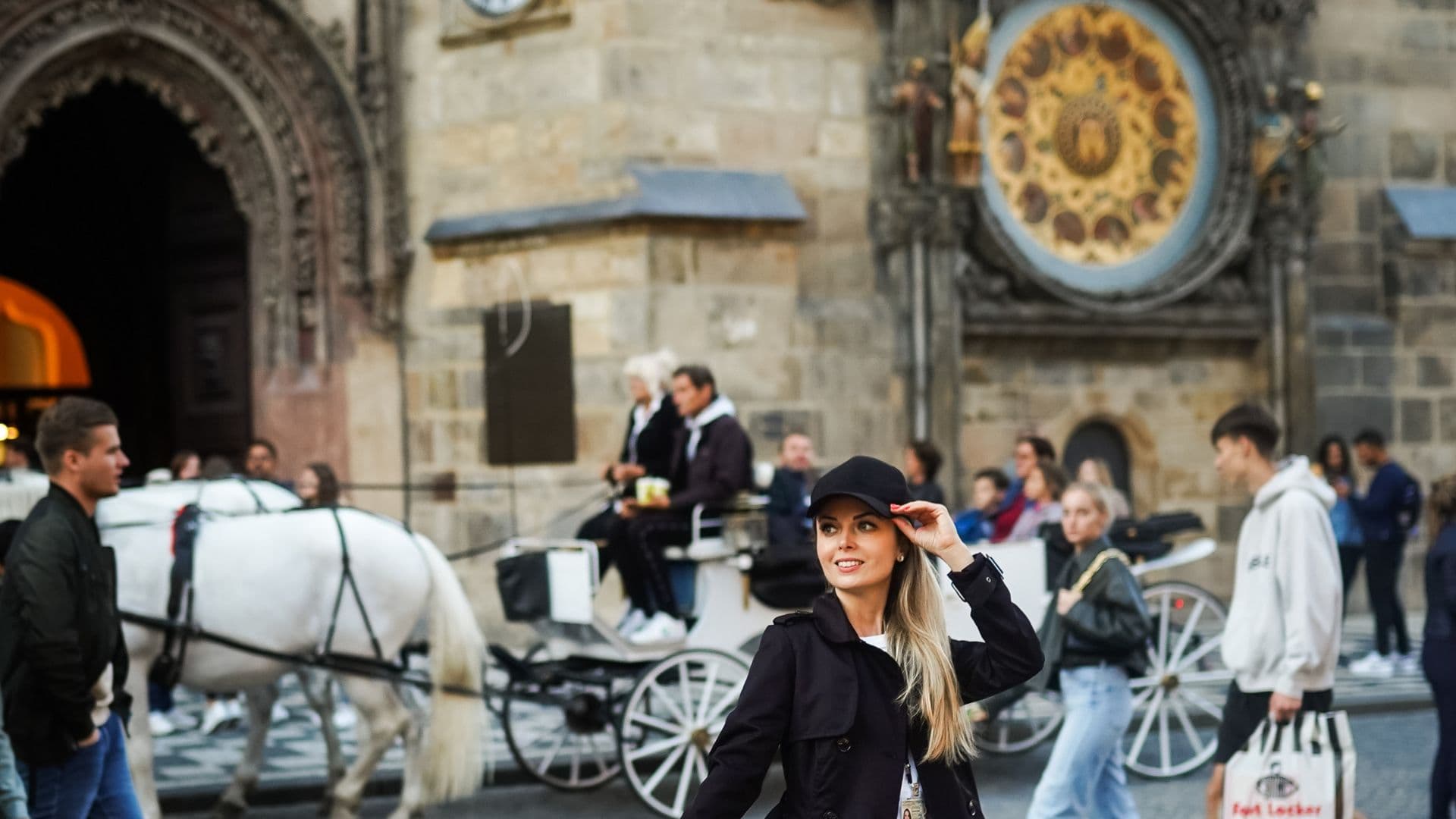
2. The Astronomical Clock on Old Town Hall has been running since 1410, making it the third-oldest astronomical clock in the world and the oldest still in operation.
3. Charles Bridge was commissioned in 1357 and took over 50 years to complete. King Charles IV didn't live to see it finished — he died in 1378.
4. The bridge's foundation stone was supposedly laid at 5:31 AM on July 9, 1357. In the calendar system of the time, that's 1-3-5-7-9-7-5-3-1 — a palindrome that Charles IV believed would give the bridge magical strength.
5. Prague was never seriously bombed during World War II. The city's historic center survived almost entirely intact, which is why it has one of the most complete medieval cityscapes in Europe.
6. The Czech word "robot" was invented in Prague. Playwright Karel Čapek coined it in his 1920 play "R.U.R." (Rossum's Universal Robots). The word comes from the Czech "robota," meaning forced labour.
7. Prague has been the capital of the Holy Roman Empire twice — under Charles IV (1346–1378) and briefly under Rudolf II (1583–1612).
8. The oldest continuously operating university in Central Europe is Charles University in Prague, founded in 1348.
Architecture and Buildings
9. There are over 500 towers in Prague, earning it the nickname "City of a Hundred Spires" — though the actual count is far higher than a hundred.
10. The Žižkov Television Tower is 216 metres tall — the tallest structure in Prague. It has ten giant crawling baby sculptures by David Černý attached to its exterior.
11. The Dancing House (Tančící dům), designed by Frank Gehry and Vlado Milunić, was originally nicknamed "Fred and Ginger" after Fred Astaire and Ginger Rogers.
12. Prague's Jewish Town Hall has a clock with Hebrew numerals that runs counterclockwise — because Hebrew is read right to left.
13. The Clementinum in Old Town is the largest complex of buildings in Prague after Prague Castle. It was originally a Jesuit college and now houses the National Library.
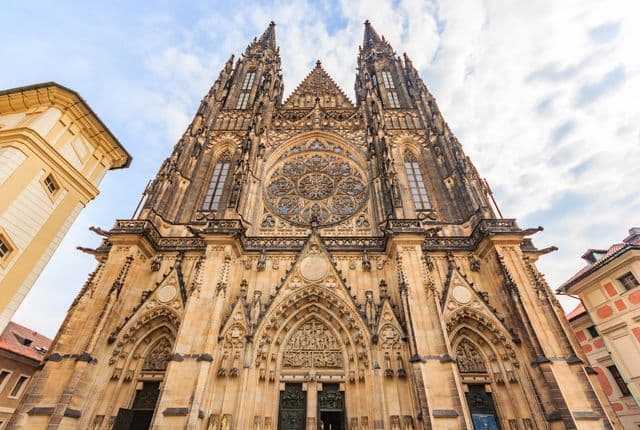
14. St. Vitus Cathedral took 585 years to complete — construction began in 1344 and the final parts were finished in 1929.
15. The Old-New Synagogue (Staronová synagoga) in Josefov has been in continuous use since approximately 1270, making it the oldest active synagogue in Europe.
Beer and Food
16. The Czech Republic has the highest beer consumption per capita in the world — roughly 140 litres per person per year.
17. Pilsner-style lager was invented in Plzeň (Pilsen), 90 km from Prague, in 1842. Before that, most Czech beer was dark and top-fermented.
18. The oldest brewery in Prague, U Fleků, has been brewing continuously since 1499. They produce only one beer — a dark lager called Flekovský tmavý ležák.
19. Czech beer is protected by EU geographical indication. "České pivo" (Czech beer) has the same legal status as Champagne or Parmigiano Reggiano.
20. Trdelník — the spiral chimney cake sold on every tourist street — is actually a Slovak and Hungarian tradition, not Czech. Locals rarely eat it. It was introduced to Prague's tourist areas in the 2000s.
21. Becherovka, the herbal liqueur often called "the 13th spring of Karlovy Vary," has been produced in Karlovy Vary since 1807. The recipe uses over 20 herbs and spices and remains a closely guarded secret.
Culture and People
22. Franz Kafka was born in Prague in 1883 and spent most of his life here. His birthplace near Old Town Square is now a small museum.
23. Alfons Mucha, the Art Nouveau master, was Czech — born in Ivančice, Moravia. His most ambitious work, the Slav Epic (20 monumental canvases depicting Slavic history), is displayed in Prague.
24. Václav Havel, the first president of the Czech Republic after communism, was a playwright before becoming a politician. He wrote his most famous plays at the Theatre on the Balustrade (Divadlo Na zábradlí) in Prague.
25. Dvořák's "New World Symphony" was written while he lived in New York, but its melodies are deeply Bohemian. He is buried at Vyšehrad Cemetery in Prague.
26. The Czech Republic is one of the most atheist countries in the world. Only about 30% of the population identifies with any religion.
27. Czechs consume more mushrooms per capita than almost any nation. Mushroom foraging (houbaření) is a national pastime — entire families head to the forests on autumn weekends.
Legends and Oddities
28. According to legend, the Golem — a clay figure brought to life to protect Prague's Jewish community — was created by Rabbi Judah Loew ben Bezalel in the 16th century. His remains supposedly lie in the attic of the Old-New Synagogue, though access is forbidden.
29. The mummified forearm hanging in St. James's Basilica (Kostel sv. Jakuba) allegedly belonged to a thief who tried to steal jewels from the Virgin Mary statue. When the statue grabbed his arm and wouldn't let go, it was amputated. It has hung on the wall for over 400 years.
30. Emperor Rudolf II (1552–1612) turned Prague Castle into a laboratory for alchemists, astrologers, and occultists. He employed Tycho Brahe, Johannes Kepler, and dozens of charlatans in his quest for the Philosopher's Stone.
31. The Defenestrations of Prague — throwing political opponents out of windows — happened not once but three times (1419, 1483, and 1618). The third defenestration triggered the Thirty Years' War.
32. John Lennon Wall in Malá Strana started as a spontaneous memorial after Lennon's assassination in 1980. Communist authorities painted over it repeatedly, but it kept reappearing. It has been continuously painted by visitors ever since.
A private guide makes all the difference when exploring this part of Prague.
Numbers and Records
33. Charles Bridge has exactly 30 sculptures and statuary groups along its balustrades. The bridge is approximately 516 metres long and 10 metres wide.
34. The Old Jewish Cemetery in Josefov contains approximately 12,000 tombstones, but an estimated 100,000 people are buried there — layered up to 12 deep because the community had no space to expand.
35. Prague's metro system has three lines (A, B, C) and 61 stations. It carries over 500 million passengers per year.
36. The Vltava River flows through Prague for about 31 km and is crossed by 18 bridges.
37. Prague is home to approximately 1.3 million residents, making it the largest city in the Czech Republic by a wide margin (Brno, the second-largest, has about 380,000).
Hidden Details
38. The Powder Tower (Prašná brána) near Republic Square was originally a gunpowder storage facility in the 15th century. Its elaborate Gothic decoration was added during 19th-century renovation.
39. There's a vineyard within Prague city limits — at Grébovka (Havlíčkovy Sady) in Vinohrady. It produces wine sold at the annual autumn harvest festival.
40. Speculum Alchemiae, a hidden underground laboratory beneath a building in Old Town, was rediscovered during the 2002 floods when water broke through a sealed wall. The tunnels allegedly connect to Prague Castle.
41. Prague's narrowest street — Vinárna Čertovka — is so narrow (about 50 cm wide) that it has its own pedestrian traffic light to prevent people from getting stuck.
42. The National Theatre was funded entirely by public donations in the 19th century. When it burned down just weeks after opening in 1881, Czechs raised the money to rebuild it within 47 days.
43. A statue of a urinating man by David Černý stands in front of the Franz Kafka Museum. The sculptures are mechanical — they spell out messages in the water with their streams.
Modern Prague
44. Prague has more than 800 pubs within its city limits. The highest density is in the Žižkov neighbourhood, which has more pubs per square kilometre than any other area in Europe.
45. The Czech Republic was ranked the 7th safest country in the world by the Global Peace Index. Prague has one of the lowest crime rates of any European capital.
46. Prague's public transport system — trams, metro, and buses — is considered one of the best in Europe. The tram network alone covers over 140 km.
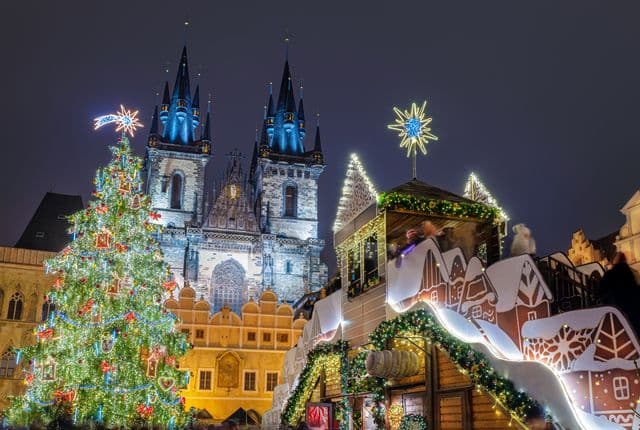
47. The city's annual Christmas markets attract approximately 750,000 visitors over the six-week period.
48. Prague has hosted filming for numerous international productions, including "Mission: Impossible — Ghost Protocol," "Casino Royale," and "Amadeus" (which was filmed partly in Prague standing in for Vienna).
49. The Strahov Library's Theological and Philosophical Halls are so photogenic that they're among the most-reproduced library images in the world — but you can only view them from the doorway.
50. Every hour, a trumpeter plays from the Old Town Hall tower after the Astronomical Clock's performance — continuing a tradition that, in various forms, has been maintained for centuries.
Discover These Facts in Person
Most of these facts come alive when you see them in context. Our All Prague in One Day private tour covers the castle, Charles Bridge, Old Town, and the Jewish Quarter — with stories and details that turn a walk through Prague into a conversation about seven centuries of history. Exclusively yours, with your own guide.
For an evening you'll tell stories about for years, the Medieval Dinner Show at U Pavouka — fire dancers, sword swallowers, and a Gothic cellar feast — adds its own unforgettable facts to your Prague experience.
Our Underground Prague tour explores the medieval cellars and hidden spaces beneath the streets — including some of the locations mentioned in these facts.
Browse all our private tours of Prague and Czech Republic.
Frequently Asked Questions
How old is Prague?
Prague was founded in the 9th century, with Prague Castle established around 880 AD. The city has been continuously inhabited for over 1,100 years.
Why is Prague called the City of a Hundred Spires?
The nickname dates to the 19th century, when a count estimated roughly 100 spires in the skyline. The actual number exceeds 500 towers and spires today.
Is the Golem real?
The Golem is a legend — a clay figure supposedly created by Rabbi Loew in the 16th century to protect Prague's Jewish community. The story has inspired countless books, films, and artworks.
What film was shot in Prague standing in for Vienna?
Miloš Forman's "Amadeus" (1984) was filmed partly in Prague's Estates Theatre and Kroměříž Archbishop's Palace, standing in for 18th-century Vienna.
You May Also Like
Want to see Prague for yourself?
Take our flagship Prague tour-6-640x430.jpg&w=3840&q=75)