Prague Tour for Repeat Visitors — Hidden Gems Beyond Old Town
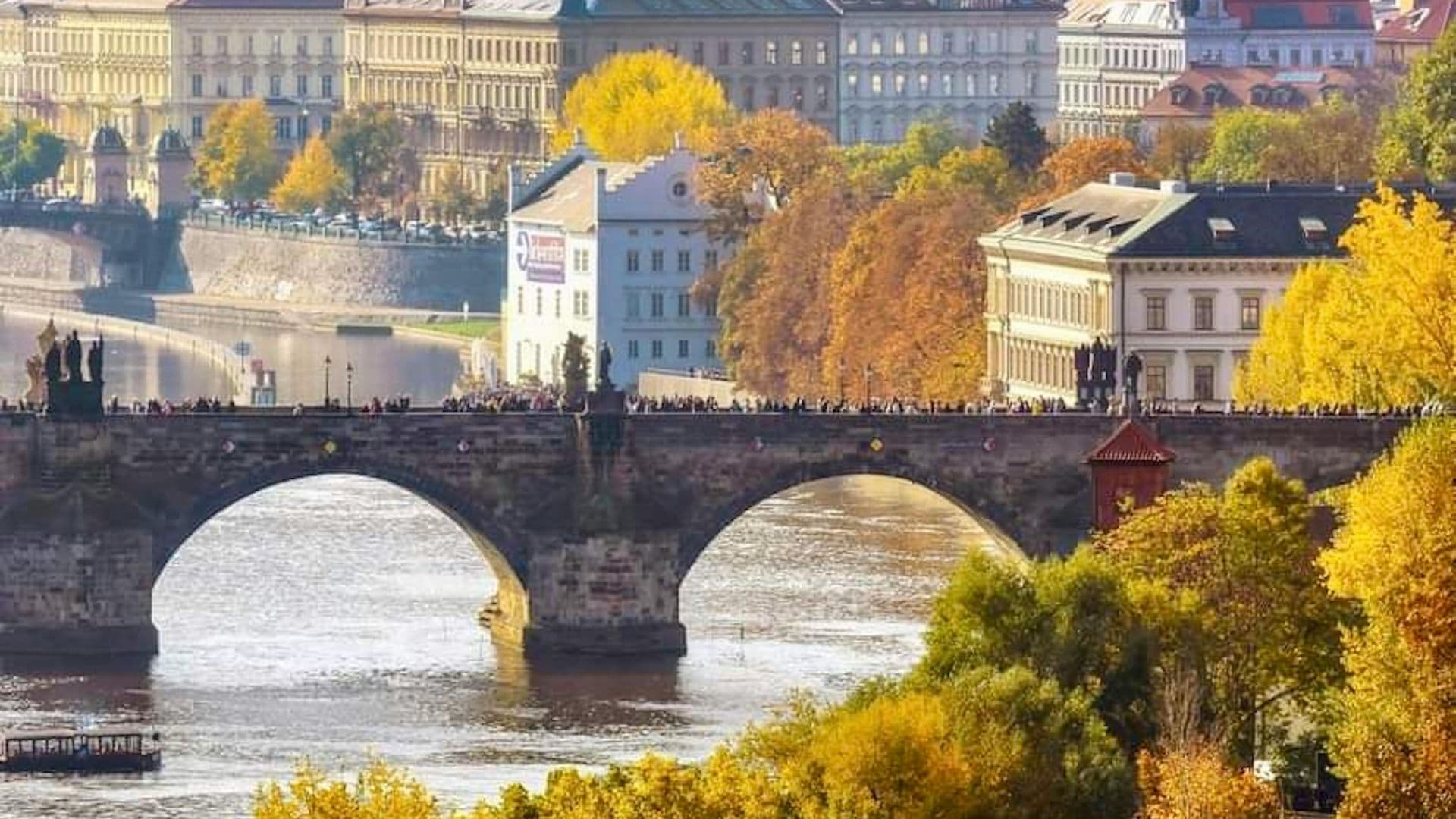
You have already crossed Charles Bridge, looked up at the Astronomical Clock, and walked through Prague Castle. You know the Old Town Square, the Jewish Quarter, and probably a handful of restaurants near Wenceslas Square. Coming back to Prague is easy — the city is compact, well-connected, and endlessly interesting. The harder question is what to do differently this time.
A second or third visit to Prague is a different trip entirely. The landmarks are familiar. The orientation is done. What opens up is everything you walked past the first time — the neighbourhoods where locals actually live, the history that does not fit on a two-hour walking tour, and the day trips that most first-timers skip because they ran out of days.
This article is for people who know Prague's surface and want to go deeper. Not a list of "alternative things to do" — a guide to what tours and experiences make a return visit genuinely different from the first one.
What You Have Already Seen — and What You Missed
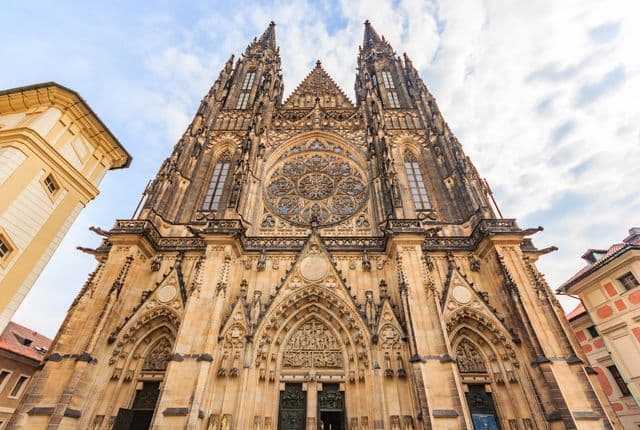
Most first-time visitors to Prague follow a remarkably similar itinerary. Old Town Square and the Astronomical Clock. Charles Bridge, usually walked west to east. Prague Castle — the main courtyard, St. Vitus Cathedral, maybe the Golden Lane. The Jewish Quarter if there was time. A river cruise or a beer hall in the evening.
That covers roughly 15% of what Prague has to offer. Here is what typically gets skipped.
Vyšehrad — the original fortress of Czech rulers, sitting on a cliff above the Vltava south of the centre. It predates Prague Castle and holds the national cemetery where Dvořák, Smetana, Mucha, and Kafka are buried. The views of the river from the ramparts rival anything at the castle, without the crowds. Most first-timers never make it here because it is a 20-minute walk from the nearest tourist zone. Our private Vyšehrad walk from Prague covers the cemetery and the ramparts with the full context.
Vinohrady and Žižkov — residential neighbourhoods east of the centre where Prague's creative and dining scenes are concentrated. Vinohrady has Art Nouveau apartment buildings, tree-lined streets, and the best concentration of restaurants in the city. Žižkov is rougher around the edges, with the second-largest television tower in the Czech Republic (complete with crawling baby sculptures by David Černý) and pubs where a half-litre of Czech lager costs under 50 CZK.
Letná and Holešovice — across the river north of Old Town. Letná Park has the best sunset viewpoint in Prague — a terrace above the river where locals gather with beer from the park kiosk. Holešovice is home to the National Gallery's Trade Fair Palace (the largest collection of modern and contemporary Czech art), DOX Centre for Contemporary Art, and a growing food market scene.
Malá Strana beyond the main street — even visitors who walked through Malá Strana on their first trip usually stuck to Nerudova and Mostecká. The side streets hold the Vrtba Garden (one of the finest Baroque gardens in Central Europe, hidden behind an unmarked door), the Church of Our Lady Victorious with the Infant Jesus of Prague, and residential lanes where the noise of tourism disappears within two blocks.
Tours for a Second Visit
A repeat visit is where a private guide adds the most value. You do not need the standard introduction. You need someone who knows the city deeply enough to build a tour around what you have not seen — and what genuinely interests you.
The Underground and Alchemy Tour. Our Hidden Prague Underground and Alchemy tour is the single most popular choice among returning visitors. It visits medieval cellars beneath Old Town, Romanesque rooms that sit three metres below today's street level, and the Speculum Alchemiae — an alchemist's laboratory rediscovered during the 2002 floods, connected to the court of Emperor Rudolf II. This is Prague that cannot be accessed casually or without knowing where to look.
The Car Tour. Our Best of Prague Car Tour covers areas that walking tours cannot reach — Vyšehrad, the Žižkov Television Tower, Letná Park, the Dancing House, and outer neighbourhoods that require transport. For someone who already knows the centre, this is the fastest way to see Prague's other faces.
Themed walking tours. A private guide can build a tour around a specific theme: Art Nouveau architecture (from the Municipal House to the Grand Hotel Evropa to the Vinohrady apartment blocks), Franz Kafka's Prague (his birthplace, schools, offices, and the places that appear in his writing), the Communist era (from the National Memorial at Vítkov to the bunker beneath the Hotel Jalta on Wenceslas Square), or Czech beer heritage (monastery breweries, historic pubs, the difference between tank beer and bottled).
Insider detail: on our themed tours, we often combine walking with a tram ride. Prague's tram network passes through neighbourhoods that are beautiful but rarely mentioned in guidebooks. Tram 22 from Malá Strana to Břevnov passes a monastery, a Cubist lamp post, and a hillside villa district — all in 15 minutes. We build these routes into the tour so guests experience Prague the way residents do.
Day Trips You Probably Skipped
First-time visitors who take a day trip from Prague almost always choose Český Krumlov. It is the obvious pick — a UNESCO town with a castle, a river loop, and fairy-tale visuals. If you went to Krumlov last time, your second visit opens up destinations that are equally compelling but less famous.
Kutná Hora — a medieval silver-mining town 70 kilometres east of Prague. The Sedlec Ossuary (the "bone church") gets the attention, but the real highlight is the Cathedral of St. Barbara — a Gothic masterpiece that rivals St. Vitus in Prague but receives a fraction of the visitors. Our Kutná Hora day trip covers both sites plus the medieval town centre, Italian Court, and the history of how silver made Bohemia one of the wealthiest kingdoms in medieval Europe.
Terezín — the former fortress town that the Nazis converted into a Jewish ghetto and transit camp during World War II. It is a sombre but essential visit. The Terezín Memorial day trip provides the historical context that makes the site comprehensible — without a guide, the scale and layout of the fortress can feel disorienting.
Karlštejn Castle — a 14th-century Gothic fortress built by Emperor Charles IV to house the Bohemian Crown Jewels and holy relics. It sits in a wooded valley 30 kilometres southwest of Prague. The castle withstood a seven-month Hussite siege in 1422. Our Karlštejn day trip includes the walk up through the village, the castle interiors, and the story of why Charles IV chose this specific valley.
Insider detail: we recommend Kutná Hora as the strongest second-visit day trip. It combines visual impact with intellectual depth in a way that surprises even well-travelled guests. The ossuary is genuinely unusual, but the Cathedral of St. Barbara is the real reason to go — and most people have never heard of it.
How a Private Guide Makes a Repeat Visit Worthwhile
The standard objection is reasonable: "I've already been to Prague, do I really need a guide this time?" The answer depends on what kind of trip you want.
If you are returning for a relaxed weekend of wandering, eating, and drinking — you probably do not need a guide. You know the city. Enjoy it at your own pace.
If you are returning because you felt there was more to Prague than you saw the first time — a guide unlocks that. Specifically, a private guide does three things on a repeat visit that you cannot easily do alone.
Customization. Before the tour, we ask what you saw last time, what you want to see now, and what themes interest you. A couple who visited the castle and the Jewish Quarter on their first trip might get a route through Vyšehrad, Vinohrady, and the underground. A family returning for the second time might want a car tour to the outer viewpoints plus the Medieval Dinner Show in the evening.
Access. Some of Prague's most interesting spaces are not obvious to independent visitors. The Speculum Alchemiae has a small entrance hidden behind a bookcase — you need to know it exists and when it is open. Vrtba Garden charges a small entry fee and is tucked behind an unmarked door on Karmelitská street. A guide knows where these places are and how to get in.
Context. Prague rewards understanding. On a first visit, you absorb the surface — the beauty, the scale, the general atmosphere. On a second visit, a guide with deep local knowledge adds the layers: how the Communist era shaped the neighbourhoods you walk through, why certain buildings changed function after 1989, what the current residents think about their city's transformation.
Seasonal Experiences for Return Visitors
Prague changes with the seasons, and a return visit timed to a different season than your first trip reveals a different city.
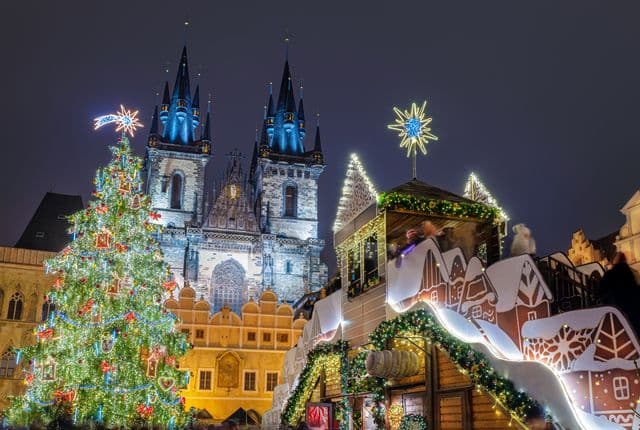
Christmas markets (late November through December) — Old Town Square and Wenceslas Square host the main markets, but the locals prefer the market at Náměstí Míru in Vinohrady. Smaller, less crowded, and with better food stalls. A December visit pairs well with the Medieval Dinner Show — the candlelit medieval cellar atmosphere fits the winter mood perfectly.
Easter markets (March or April) — similar to Christmas markets but with spring decorations, painted eggs, and braided whips (a Czech Easter tradition that is stranger than it sounds). The city is less crowded than summer but fully alive.
Summer gardens (June through September) — the castle gardens, Wallenstein Garden in Malá Strana, and the Franciscan Garden near Wenceslas Square are all open and at their best. Petřín Hill becomes the city's backyard park, with the observation tower, mirror maze, and rose garden.
Harvest season (September through October) — wine festivals in Vinohrady, the burčák (young wine) season across Moravia, and the shift to autumn colours along the Vltava. A second visit to Prague in autumn catches the city at its most photogenic and least overcrowded.
Our Approach
We treat repeat visitors differently from first-timers. The pre-tour conversation is longer and more specific. We ask about your previous visit — what you saw, what you loved, what felt rushed. From there, we build a tour that fills the gaps and adds depth where your first trip was surface-level.
Most returning guests book either the underground tour or the car tour. Both are designed to show a Prague that standard walking tours do not reach. But the real value is in the customization — your guide can combine elements of multiple tours into a single day that matches exactly what you want from this visit.
Book a Private Tour
Your second visit to Prague deserves more than retracing your first. Tell us what you have already seen, and we will build a tour around what you have not. Book a private tour — exclusively yours, with your own guide.
FAQ
Is it worth booking a guide if I have already visited Prague? It depends on what you want. If you are returning to relax and wander, you may not need one. If you want to see the underground, lesser-known neighbourhoods, or take a day trip with historical context, a guide makes the second visit substantially different from the first.
What is the best tour for someone who has already seen the main sights? Our Hidden Prague Underground and Alchemy tour is the most popular choice among returning visitors. It visits spaces beneath Old Town that are not accessible without knowing where to look — medieval cellars, Romanesque rooms, and an alchemist's lab rediscovered during the 2002 floods.
Can you create a custom tour based on what I missed last time? Yes. We ask about your previous visit during the booking conversation and design a route that fills the gaps. A private tour means the itinerary is yours — we can combine walking, driving, and specific sites into a single experience.
What day trip do you recommend for a second visit? Kutná Hora. The Cathedral of St. Barbara, the Sedlec Ossuary, and the medieval silver-mining history make it the most rewarding day trip for visitors who have already seen Český Krumlov.
Is Prague worth visiting more than once? The short answer is yes. Prague is a city that reveals more with each visit. The first trip covers the landmarks. The second trip shows you how the city actually works — its neighbourhoods, its layers of history, and the spaces that do not appear in standard guidebooks.
You May Also Like
Want to see Prague for yourself?
Take our flagship Prague tour-6-640x430.jpg&w=3840&q=75)