Prague vs Rome — Which City Should You Visit?
Quick verdict: Prague offers more value for money, a more walkable historic center, and far shorter queues — while Rome brings ancient ruins, world-class art, and Italian food that needs no introduction. If your budget matters and you want a compact European capital you can explore on foot, Prague wins. If you crave antiquity and Mediterranean sun, Rome has the edge.
Every season, guests ask us some version of this question: "We're choosing between Prague and Rome — which one?" The honest answer is that these cities scratch different itches. But since you're reading this, you probably need to pick one. Here's how they actually compare, based on what we hear from the thousands of travelers we guide through Prague every year.
At a Glance
Category | Prague | Rome
Average daily budget | €60–90 | €120–180
Beer (0.5 l draft) | €2–3 | €5–7
Dinner for two | €30–50 | €60–100
Walking distance (center) | ~4 km end to end | ~7 km scattered
Queue at top attraction | 15–30 min (Prague Castle) | 1–3 hours (Colosseum)
Best season | April–October | March–May, Sept–Oct
Public transport | Metro + trams (excellent) | Metro + buses (crowded)
Tourist crowds | High but manageable | Extreme year-round
Safety | Very safe | Pickpocket risk
English spoken | Widely | Less outside tourist areas
Architecture and History
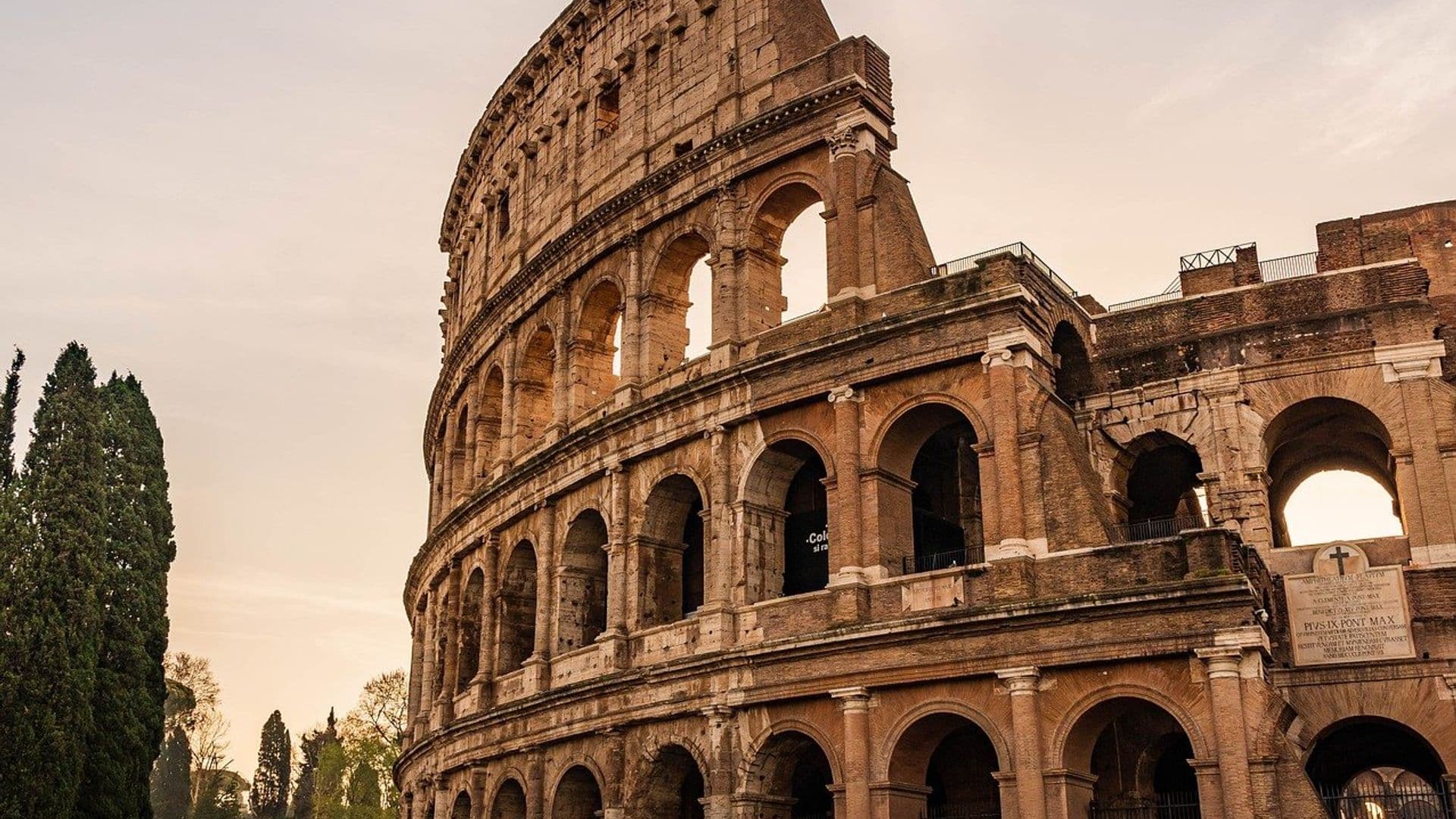
Rome has roughly 2,700 years of history layered on top of itself. You walk over ancient aqueducts, past Renaissance palaces, and through Baroque churches — sometimes all on the same block. The Colosseum, the Pantheon, and the Forum are among the most recognized structures on Earth. Nothing in Prague competes with that raw antiquity.
But Prague's architecture tells a different story, and it tells it more coherently. The Old Town has remained almost completely intact since the 14th century — it was never bombed in either World War and escaped the demolitions that reshaped most European capitals. Walking from Old Town Square to Prague Castle, you pass through Romanesque, Gothic, Renaissance, Baroque, and Art Nouveau streetscapes in under two kilometres. Our guests regularly say Prague feels like an open-air museum, and the comparison is fair.
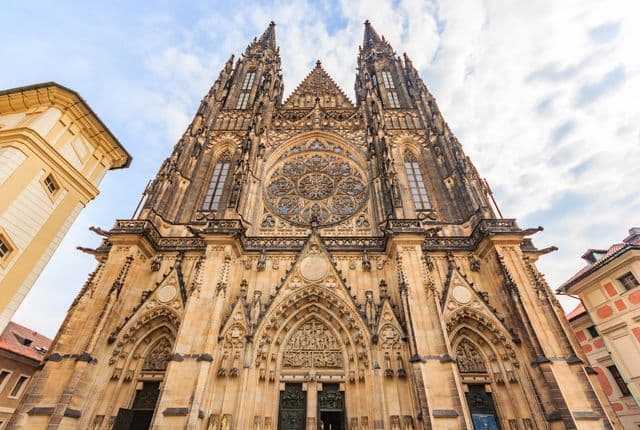
Prague Castle is the largest ancient castle complex in the world — about 70,000 square metres. St. Vitus Cathedral took nearly six centuries to complete, and the stained-glass windows by Alfons Mucha inside are something you won't find replicated anywhere. Rome's Vatican is more famous, but Prague Castle is free to enter at ground level, and the courtyards are almost empty before 9 AM. We walk our guests through at that hour, and they're often stunned by the silence.
Food and Drink
This is where Rome flexes. Italian cuisine is arguably the world's most popular, and eating in Rome — even casually — delivers pasta, pizza, and gelato at a level most cities can't touch. A plate of cacio e pepe in Trastevere at a neighborhood trattoria is a hard experience to beat.
Prague's food scene is different but worth taking seriously. Czech cuisine is hearty Central European cooking — svíčková (marinated beef with creamy sauce and dumplings), vepřové koleno (slow-roasted pork knee), and trdelník (the spiral pastry you'll see everywhere, though locals rarely eat it). The city also has a rising modern food scene, with restaurants like Field and La Degustation holding Michelin stars.
Where Prague wins decisively is beer. Czech beer is the best lager on Earth — this isn't opinion, it's the country that invented Pilsner. A half-litre of fresh Pilsner Urquell at a neighborhood pub costs around 55–70 CZK (roughly €2.20–2.80 as of 2026). In Rome, the same size beer runs €5–7. Our guests who arrive from Italy often remark that Prague beer prices feel like a gift.
Cost of Travel
Prague is dramatically cheaper than Rome. A couple can eat well, visit major sights, and enjoy evening entertainment in Prague for what Rome charges just for accommodation and meals. Hotel prices in Prague's center run 30–50% lower than equivalent properties in Rome's centro storico. Museum entries rarely exceed €15 in Prague. The Colosseum, Vatican Museums, and Borghese Gallery in Rome each cost €16–20+, often with mandatory timed reservations.
Street food in Prague — a sausage from a stand near Wenceslas Square or a trdelník from a vendor — costs €2–4. Roman street food (supplì, pizza al taglio) costs €4–8. The savings compound quickly over a four or five-day trip.
Crowds and Queues
Both cities are popular. But there's a meaningful difference in how that popularity feels. Rome's top attractions have queues measured in hours. Without pre-booked skip-the-line tickets, you can wait two hours or more for the Colosseum, the Vatican Museums, or the Borghese Gallery. Even with tickets, the Sistine Chapel is packed shoulder to shoulder most days.
Prague has crowds on Charles Bridge and around the Astronomical Clock at midday, but the congestion is concentrated. Step one street away from the main tourist corridor and you'll find yourself nearly alone. We know the timing tricks — the Astronomical Clock courtyard clears out by 8:30 AM, and the Lesser Town side of Charles Bridge is quieter after 7 PM in summer. Compared to Rome's relentless density, Prague's crowds are easier to navigate.
Walkability
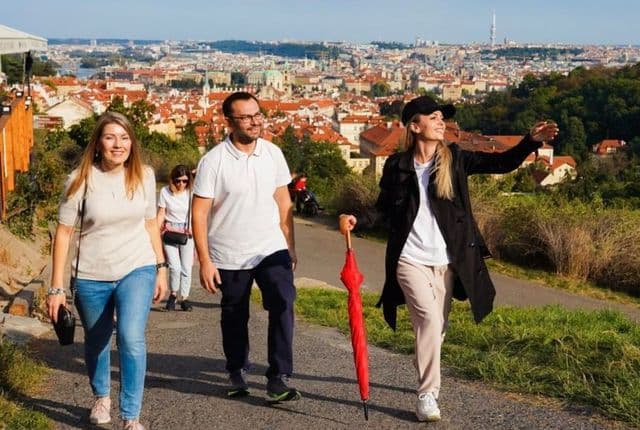
Prague's historic center is remarkably compact. Old Town Square, Charles Bridge, Prague Castle, the Jewish Quarter, and the Lesser Town are all within a 30-minute walk of each other. You can see the essential highlights in a single day on foot without ever needing a taxi or metro.
Rome sprawls. The Colosseum, Vatican, Trastevere, Spanish Steps, and Pantheon are scattered across a much larger area. Walking between them is possible but tiring — most visitors end up taking the metro or buses to cover ground. Rome also has more hills, more traffic, and less pedestrian-friendly infrastructure than Prague.
A private guide makes all the difference when exploring this part of Prague.
Our All Prague in One Day tour covers Prague Castle, Charles Bridge, Old Town, and the Jewish Quarter in a single walk — something that would be impossible to replicate with Rome's spread-out landmarks.
Nightlife and Evening Culture
Rome's evening culture revolves around the passeggiata — the evening stroll — followed by dinner that starts at 9 PM and wine that flows freely. It's warm, social, and quintessentially Italian. Trastevere and Testaccio are the neighborhoods that come alive after dark.
Prague's nightlife has a different character. The city has one of Europe's most active bar scenes, anchored by centuries of brewing tradition. Craft beer bars, rooftop terraces along the Vltava, jazz clubs in medieval cellars, and a legendary club scene in Žižkov and Vinohrady. The Medieval Dinner Show at U Pavouka Tavern offers something neither city does elsewhere — a candlelit feast with fire dancers, sword swallowers, and unlimited drinks in a Gothic cellar. Guests tell us it's the evening highlight of their trip.
Day Trips
From Prague, you can reach Český Krumlov (a UNESCO town frozen in the 16th century), Karlštejn Castle, Kutná Hora's Bone Church, and Karlovy Vary's colonnades and hot springs — all within 90 minutes by car or train. Central Europe's density of castles and medieval towns makes Prague an ideal base for exploring far beyond the city.
From Rome, day trips go to Pompeii, Tivoli (Villa d'Este and Hadrian's Villa), Ostia Antica, and Orvieto. These are extraordinary destinations, but train connections are slower and costs higher. Rome's day trips lean toward ancient ruins; Prague's lean toward castles and small towns.
Safety
Prague is one of the safest capital cities in Europe. Violent crime against tourists is virtually nonexistent, and the most common issue is mild overcharging at tourist-trap restaurants (easily avoided by checking menus for prices in CZK rather than EUR). Walking at night through most neighborhoods — including the Old Town and Vinohrady — feels perfectly safe.
Rome has a more significant pickpocket problem, particularly around Termini station, crowded buses, and the Colosseum area. It's not dangerous, but it requires more vigilance. Petty theft is a daily reality for Roman visitors in a way it isn't in Prague.
Which One Should You Choose?
Choose Prague if: you want a beautiful, walkable European city at half the cost — where you can see Gothic, Baroque, and Art Nouveau architecture without fighting massive crowds, drink the world's best beer for €2, and take day trips to castles and medieval towns.
Choose Rome if: ancient history is your priority, Italian food is non-negotiable, and budget is secondary. Rome offers an intensity of history and art that few cities on Earth can match.
If you have 10+ days: do both. Prague to Rome is a 2-hour flight, and the contrast between the two cities makes each one more memorable. Many of our guests visit Prague first and Rome second — they tell us the affordability and walkability of Prague makes the transition to Rome's chaos easier.
Why Not Both?
A Prague-Rome combination is one of the strongest two-city European itineraries you can build. Spend three to four days in Prague, fly to Rome for four to five days, and you'll experience the full spectrum of European history — from medieval Bohemia to the Roman Empire. Budget airlines connect the two cities for as little as €25 one way.
Experience Prague With a Private Guide
When you're ready to explore Prague, skip the crowded group tours. Our full-day private walking tour covers every major landmark at your pace, with a licensed guide who knows the shortcuts, the quiet courtyards, and the stories behind every facade. Exclusively yours.
Browse all our private tours of Prague and the Czech Republic to find the right fit.
Frequently Asked Questions
Is Prague cheaper than Rome?
Significantly. Average daily spending in Prague runs €60–90 per person, while Rome typically costs €120–180. The biggest savings are on food and drink — a quality restaurant dinner in Prague costs roughly half what it does in Rome, and beer is a fraction of the price.
Can you do Prague and Rome in one trip?
Yes. Direct flights connect the two cities in about two hours, and budget airlines often price them at €25–50 one way. A week split between Prague (3–4 days) and Rome (3–4 days) makes an excellent itinerary.
Which city is better for first-time Europe visitors?
Prague is easier as a first European destination — it's compact, very safe, English is widely spoken, and the lower costs reduce stress. Rome has more iconic landmarks but demands more planning and a bigger budget.
Is Prague or Rome more walkable?
Prague. The entire historic center fits within a 30-minute walking radius, and all major sights connect naturally on foot. Rome's attractions are spread across a larger area and typically require some public transport.
You May Also Like
Want to see Prague for yourself?
Take our flagship Prague tour-6-640x430.jpg&w=3840&q=75)